July 8 , 2026
Today I plan on exploring further, and that will involve renting a scooter and traveling to the southern tip of the island. An early start, a taste of most of the buffet at the breakfast, quick greetings with some of the eclectic mix of guests, including the two Japanese women, the Turkish family, two older Swiss-Thai women, paying the manager for my last three nights here, a relatively expensive stay, but considering the quality of the establishment and in comparison to the competition, well worth it. The weather finally seems to be changing, although I will unfortunately not be finding the time to stray to the beach and sink into the waves.
Koh Chang — White Sands
Koh Chang — White Sands
Despite the number of lauded coffee establishments in White Sands on the map, there really are effectively only a few that are worthwhile, and that includes the Marin outlet and the small place I visited when I arrived that is attached to the Alina hotel across the street. Next door to a fairly mediocre place is a travel agency and scooter rental place where I decide to make the major life commitment of ฿200 (ca. CAD $9) for a day’s outing, going through the requisite checks, then am off on the trip to the south.
Koh Chang — White Sands
Koh Chang
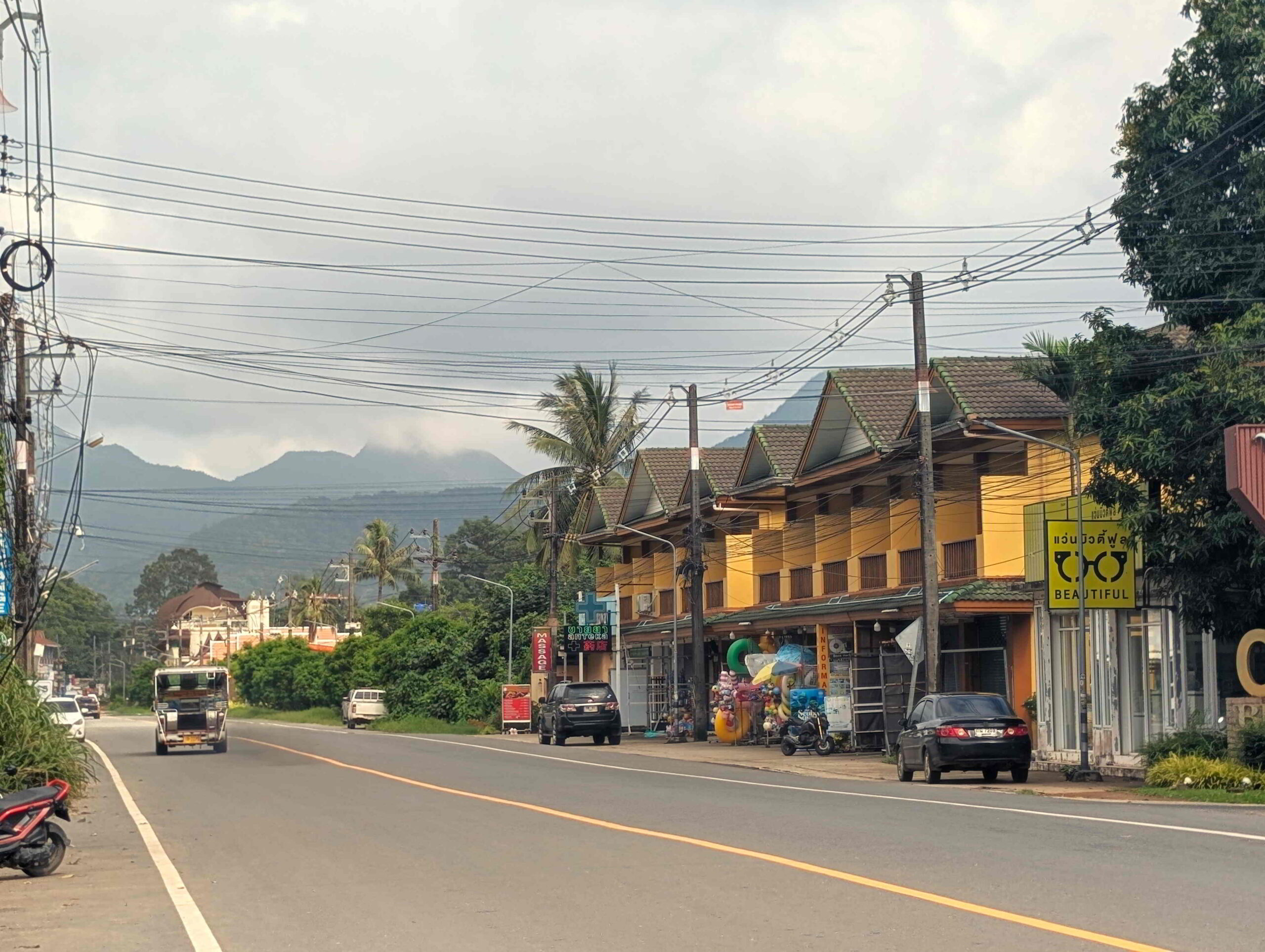
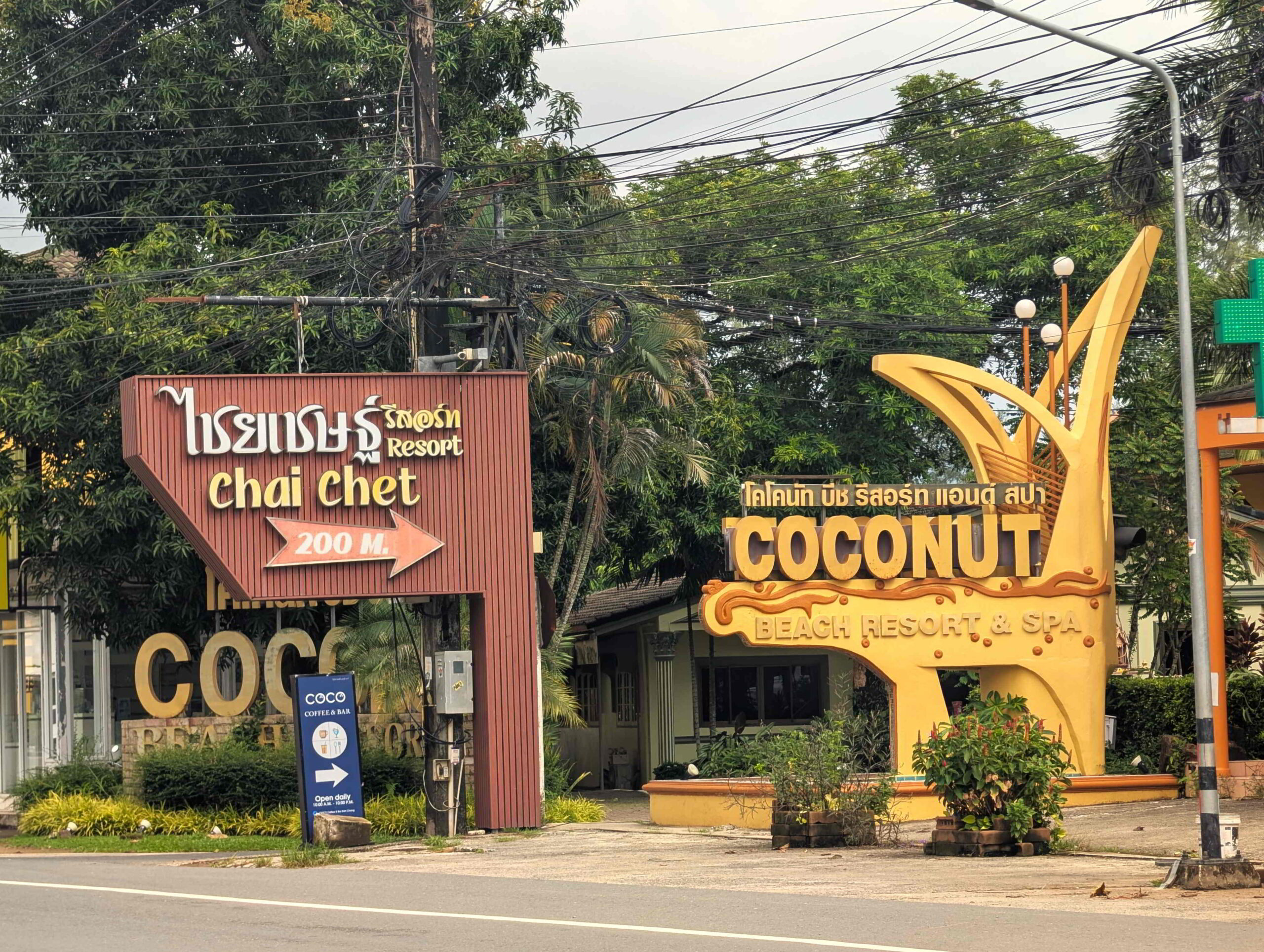
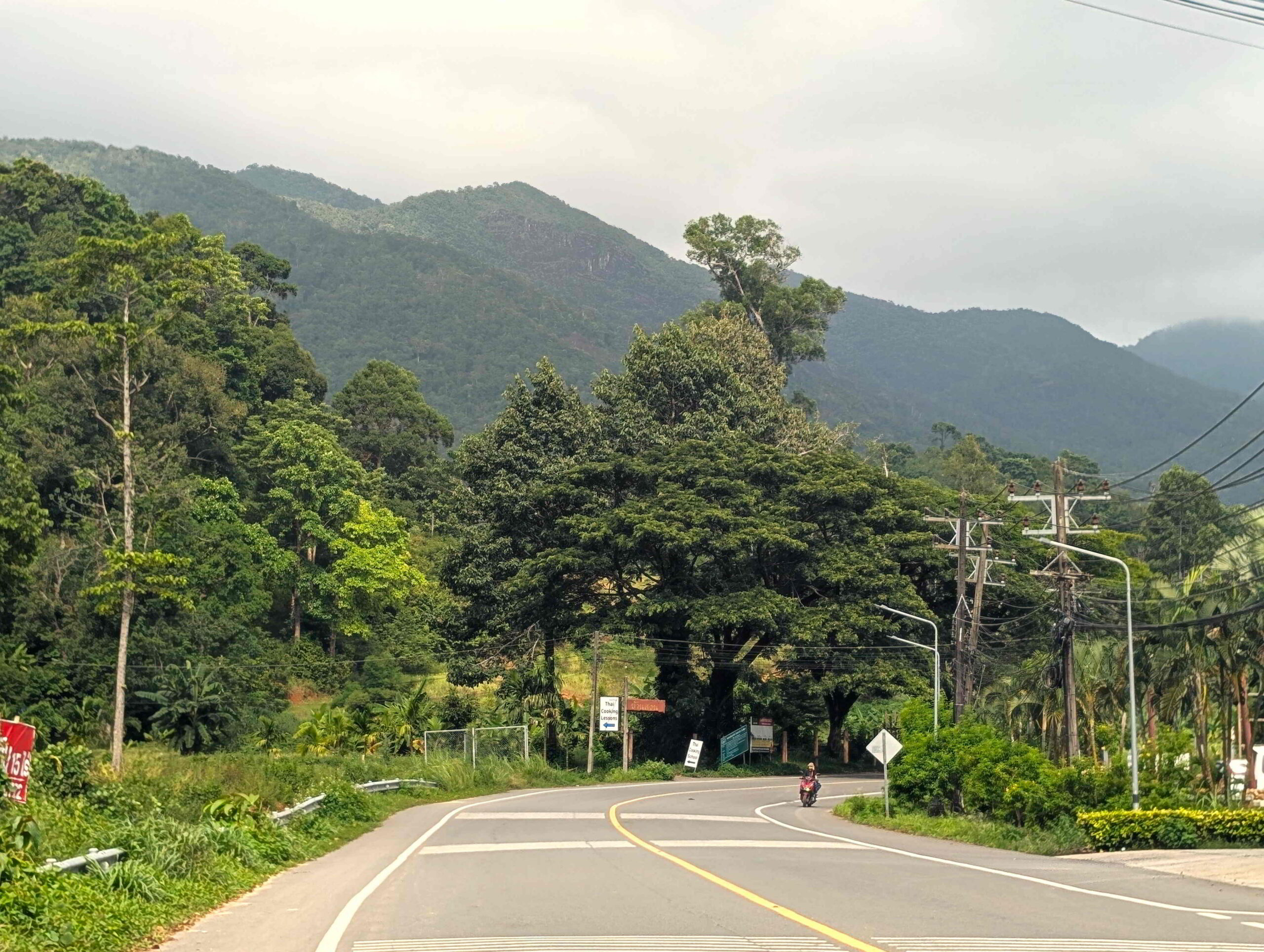
White Sands quickly disappears from view, only to be replaced by an endless roadside sprawl of lounges, bars, massage parlours, restaurants, hotels, resorts, convenience stores, cosmetics establishments, and so on. But who are these places catering to? There doesn’t seem to be any beach in the vicinity, and as I can see from exploring select side roads radiating toward the water, it isn’t possible to reach even the most innocuous beaches or waterfront, as all of the property surrounding the roads has been bought up and gated. So it seems the island suffers the same fate as the standard overdeveloped resort-heavy islands such as the Dominican Republic, where only one public access point exists for a 20 km-odd stretch of beach that comprises Punta Cana. This is a definitive sore spot for me, but leads me to question who comes here and feeds into this hapless tourism experience? Are the tourists that come here that desperate or uncritical?
Koh Chang
Koh Chang
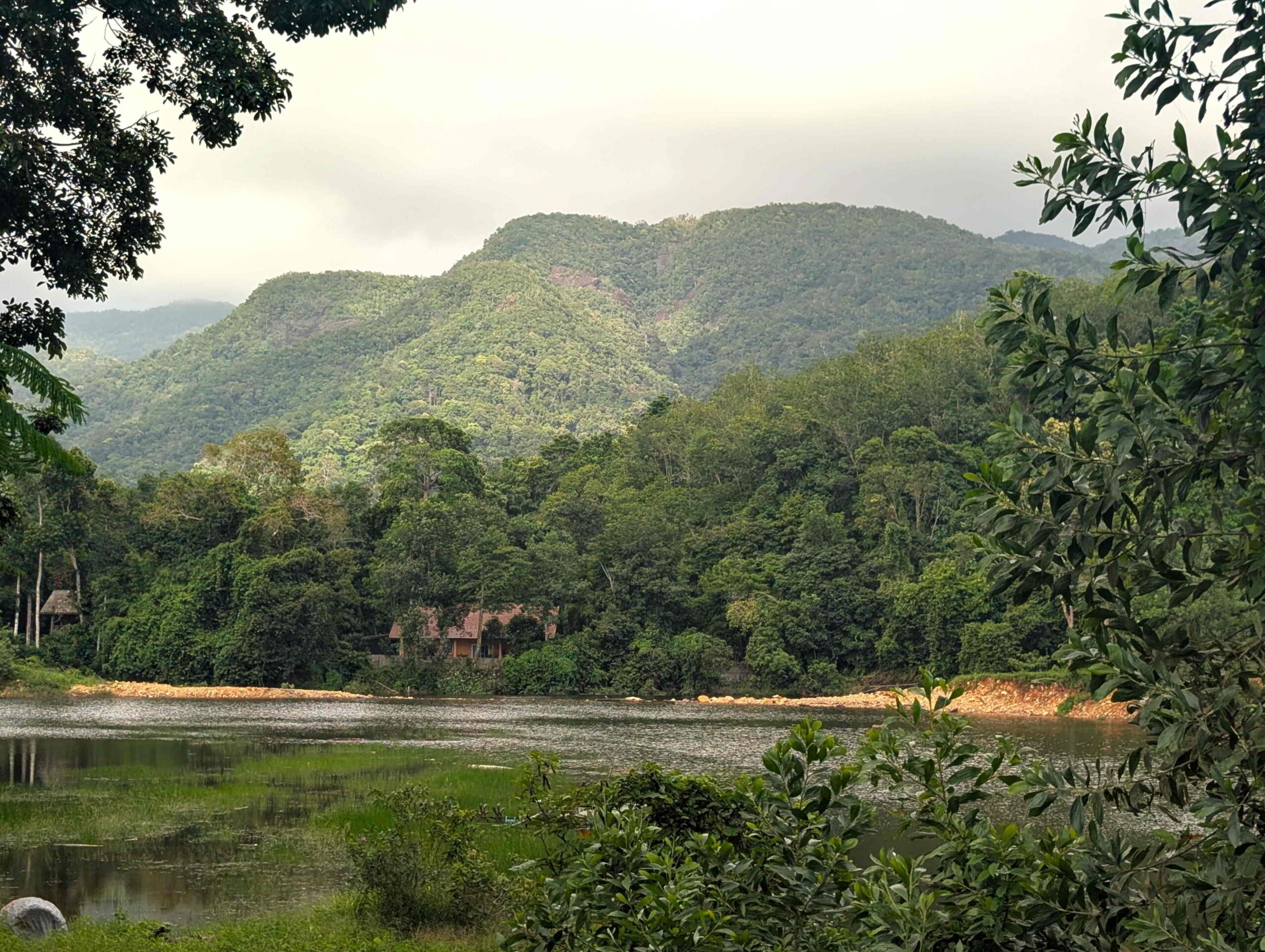
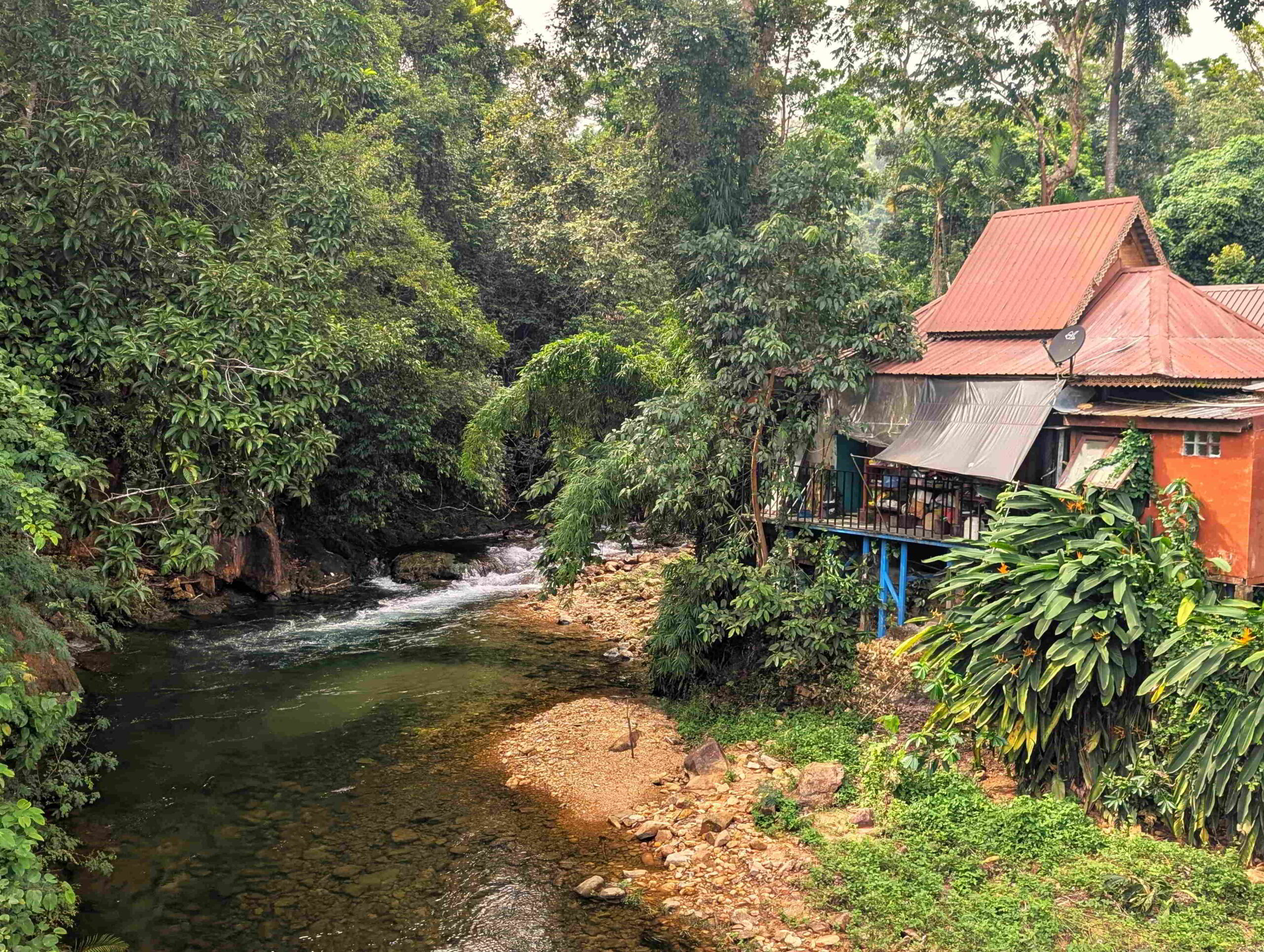
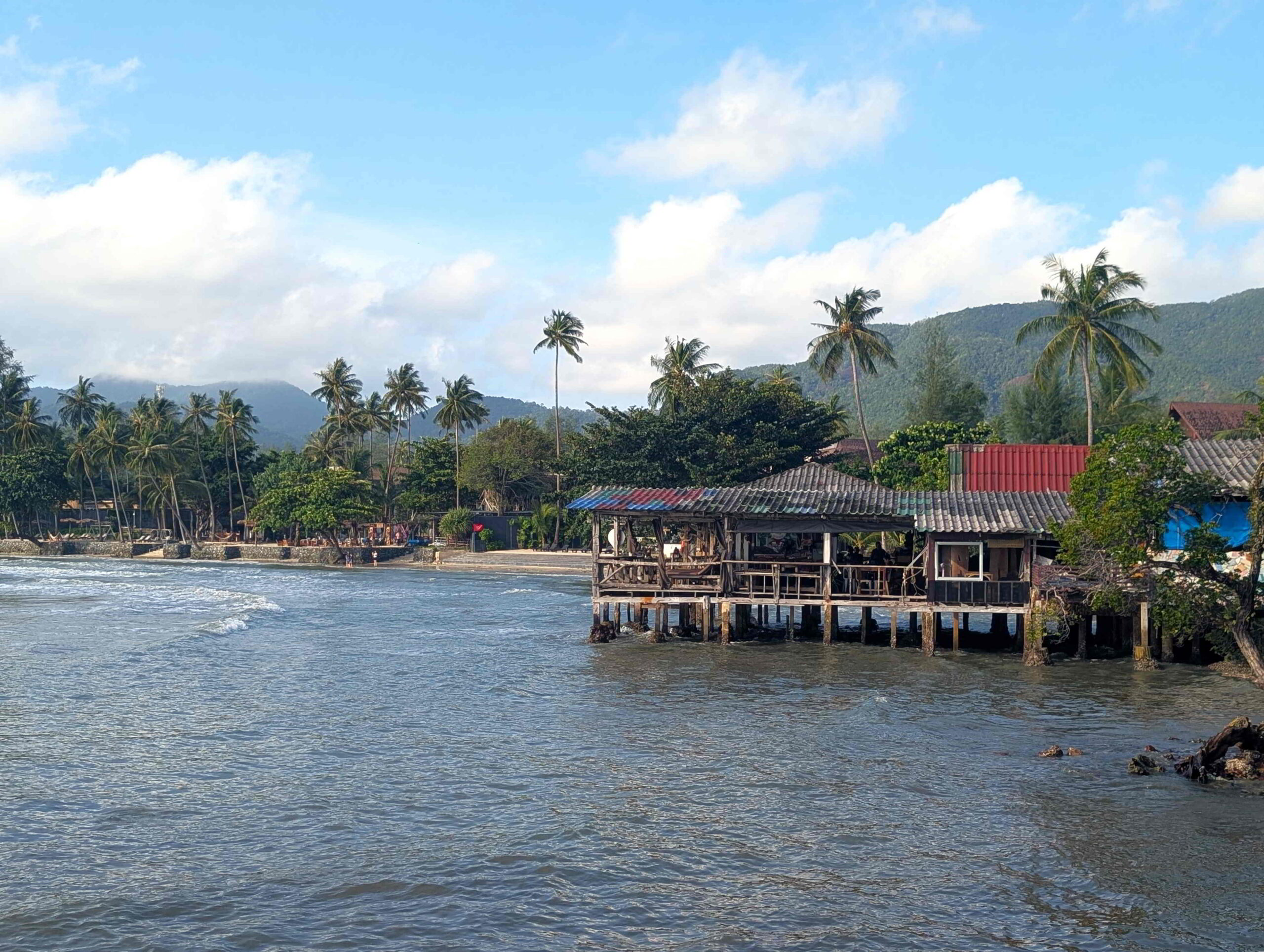
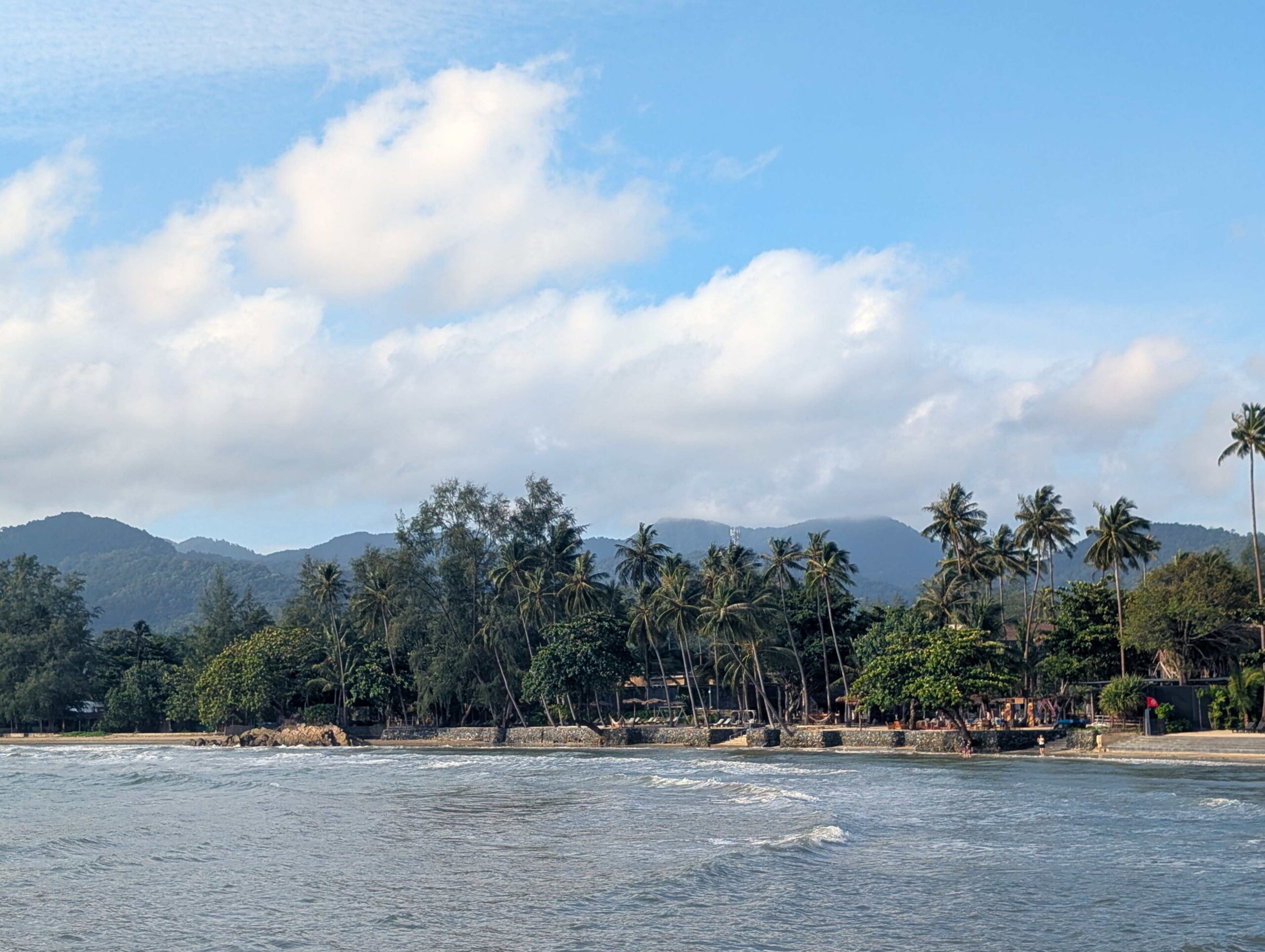
I putter along southward, finding it difficult to believe the extent to which the roadside is saturated with restaurants, bars, hotels, massage parlours, coffee shops, convenience stores, fruit stands, and so on. There is no semblance of any human activity other than catering to the whims of tourists. I pass by a school, which seems almost like a shocking deviation from the norm. But why would people even come here? None of the hotels have beach access, and the waterfront that may be accessible in the upper west section of Koh Chang is largely just rocky, with little or no sand.
Koh Chang
Koh Chang
While the nicer hotels such as where I am staying in White Sands could be costly, the places here would have to be incredibly cheap to be competitive — or perhaps the visitors who come here are the millenarian Europeans who have visited so many times that it doesn’t matter — they just need to somehow justify their existence on their endless vacation entitlements.
Koh Chang
Koh Chang
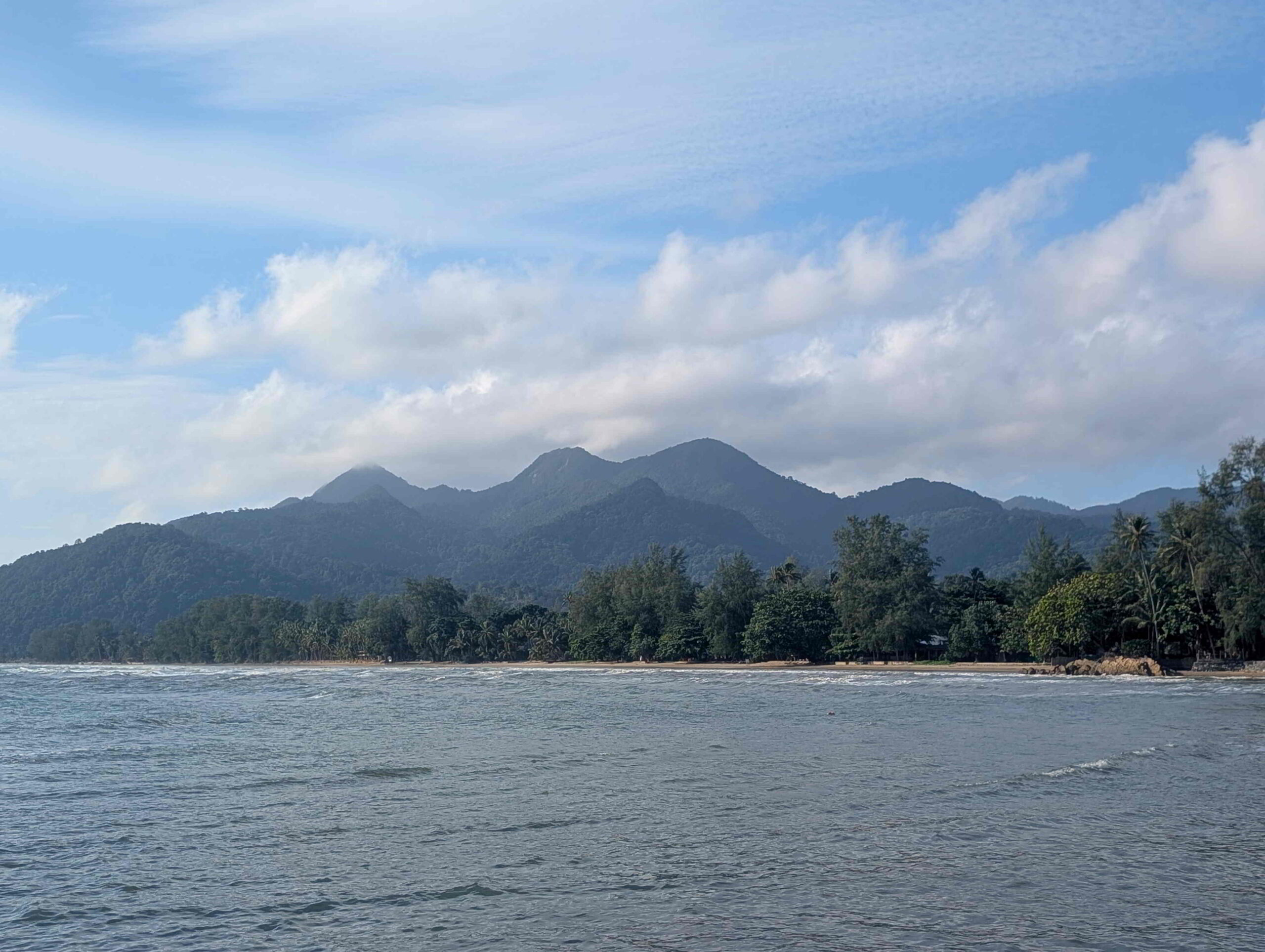
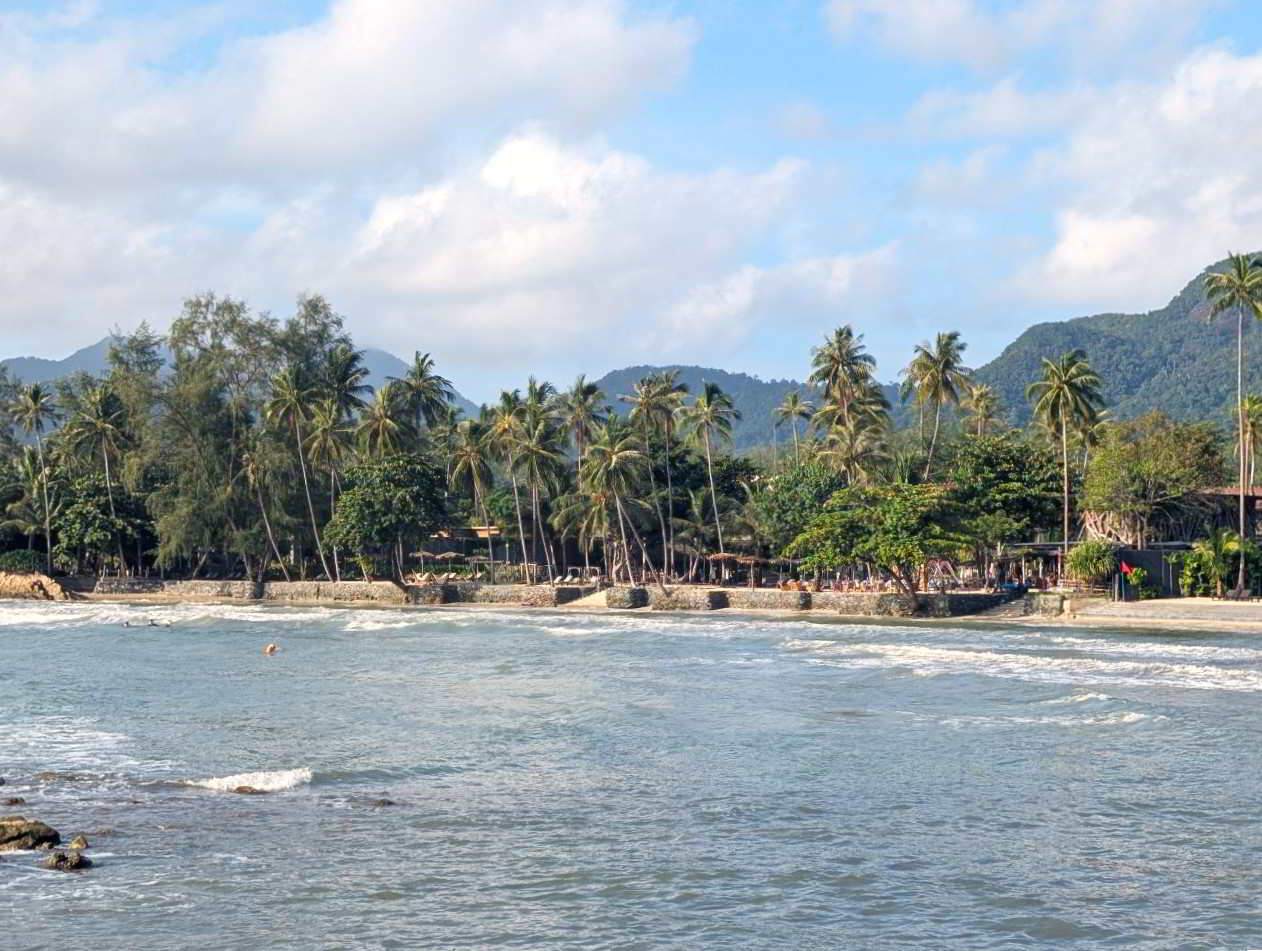
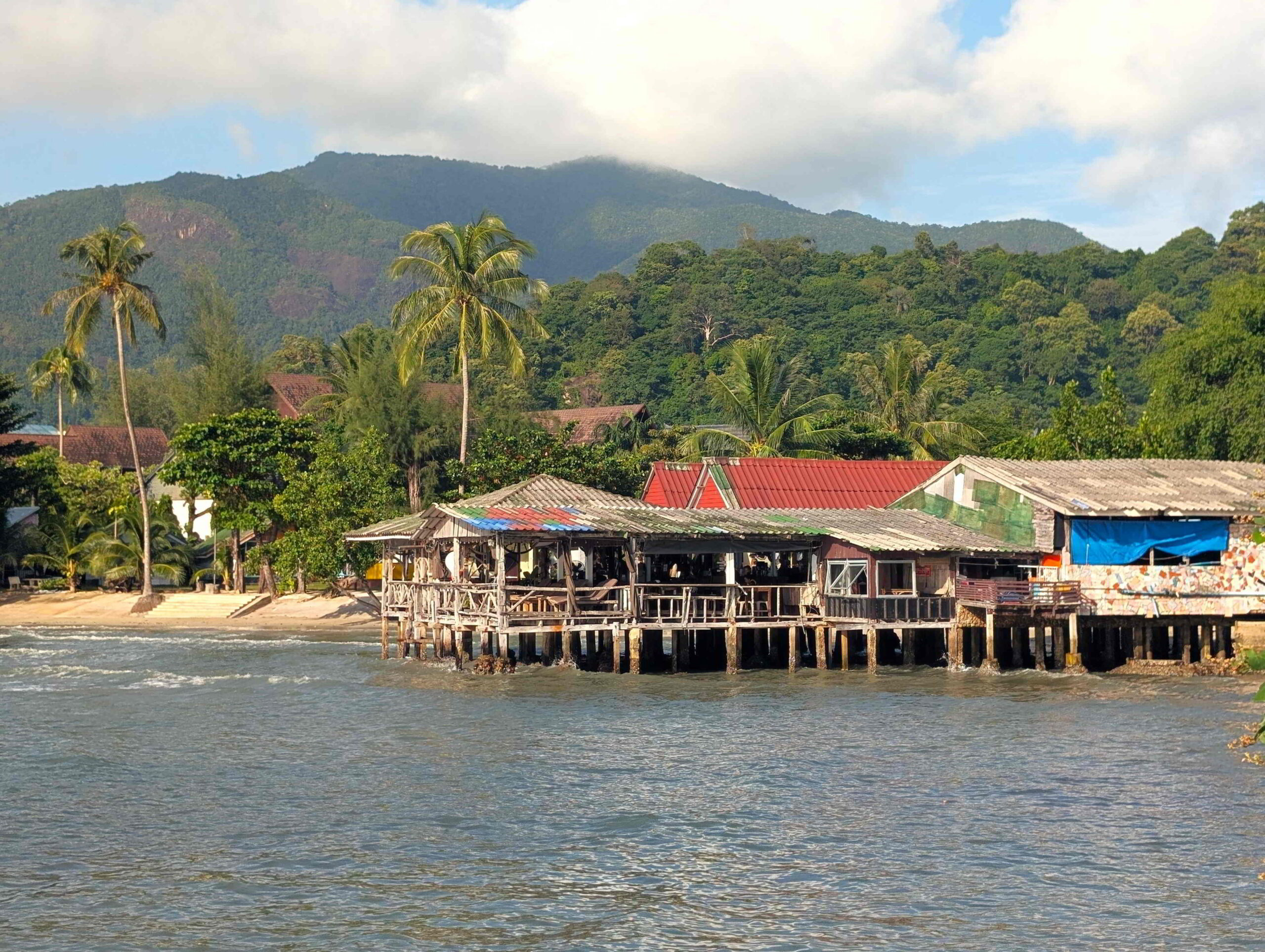
I see the same problem arising here as in so many other beachfront idylls that have sold their souls to mass tourism — any access to a beach is blocked off by development, and while the beaches in theory are public, there is no way of accessing them via public roads, as the entire perimeters of the roads have been blocked by private properties that have deliberately gated access to the beach. I see no signs along the main road pointing to the beach, another deliberate ploy to discourage visitors from even thinking about visiting beaches that they in theory should be able to visit. Once upon a time this was a natural paradise with an organic feeling — now it is a beautiful postcard that has morphed into a relentless money machine.
Koh Chang
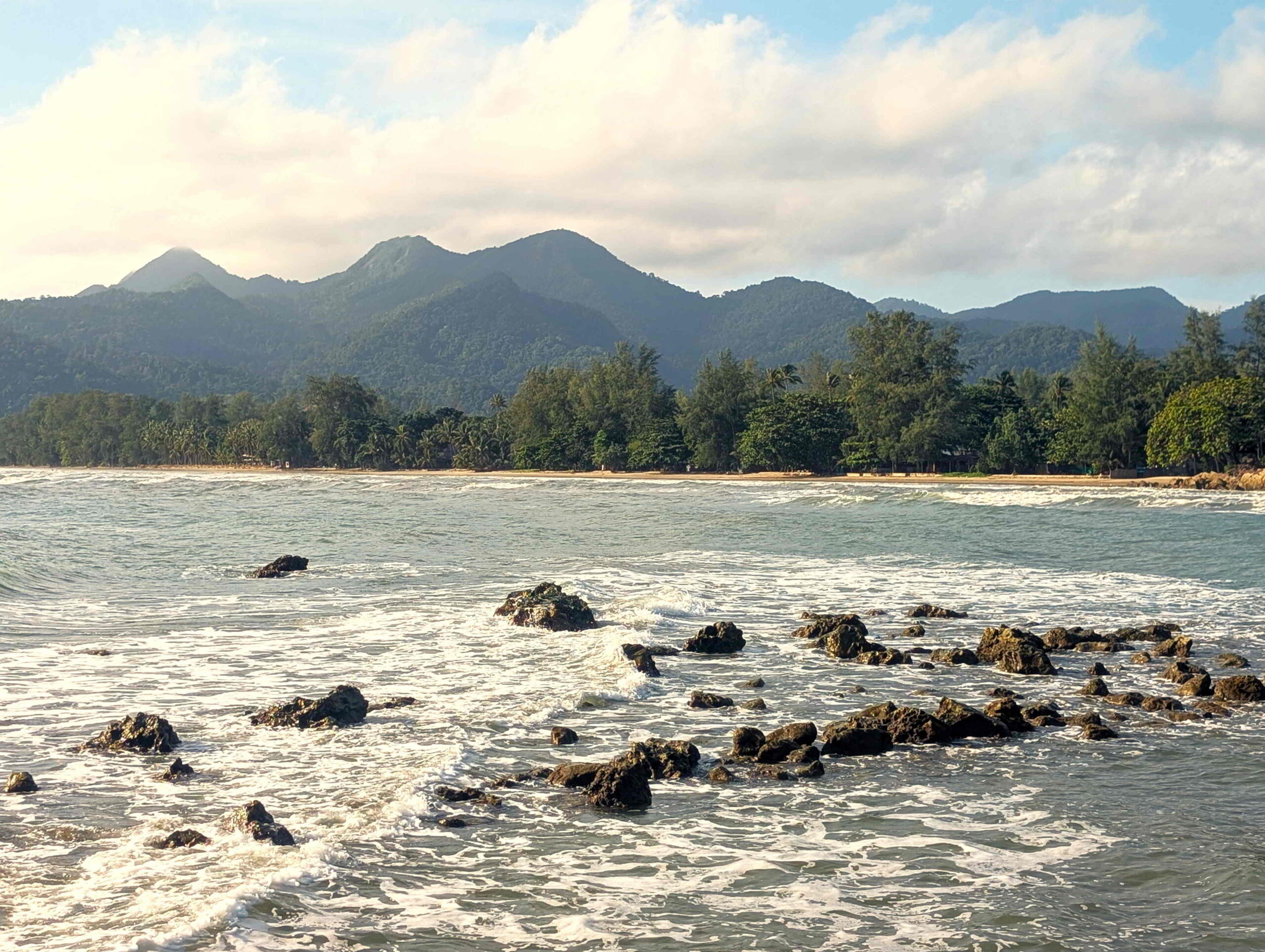
Koh Chang
I take the turnoff for a waterfall — that must have been the one the German was looking for the other day — and quite surprisingly, on the quiet country road there is what appears to be a German metzgerei (butcher shop) and restaurant. Still quite seduced by the allure of western gastronomic delights, I can’t help but stop to find out what Germanic culinary delights await me.
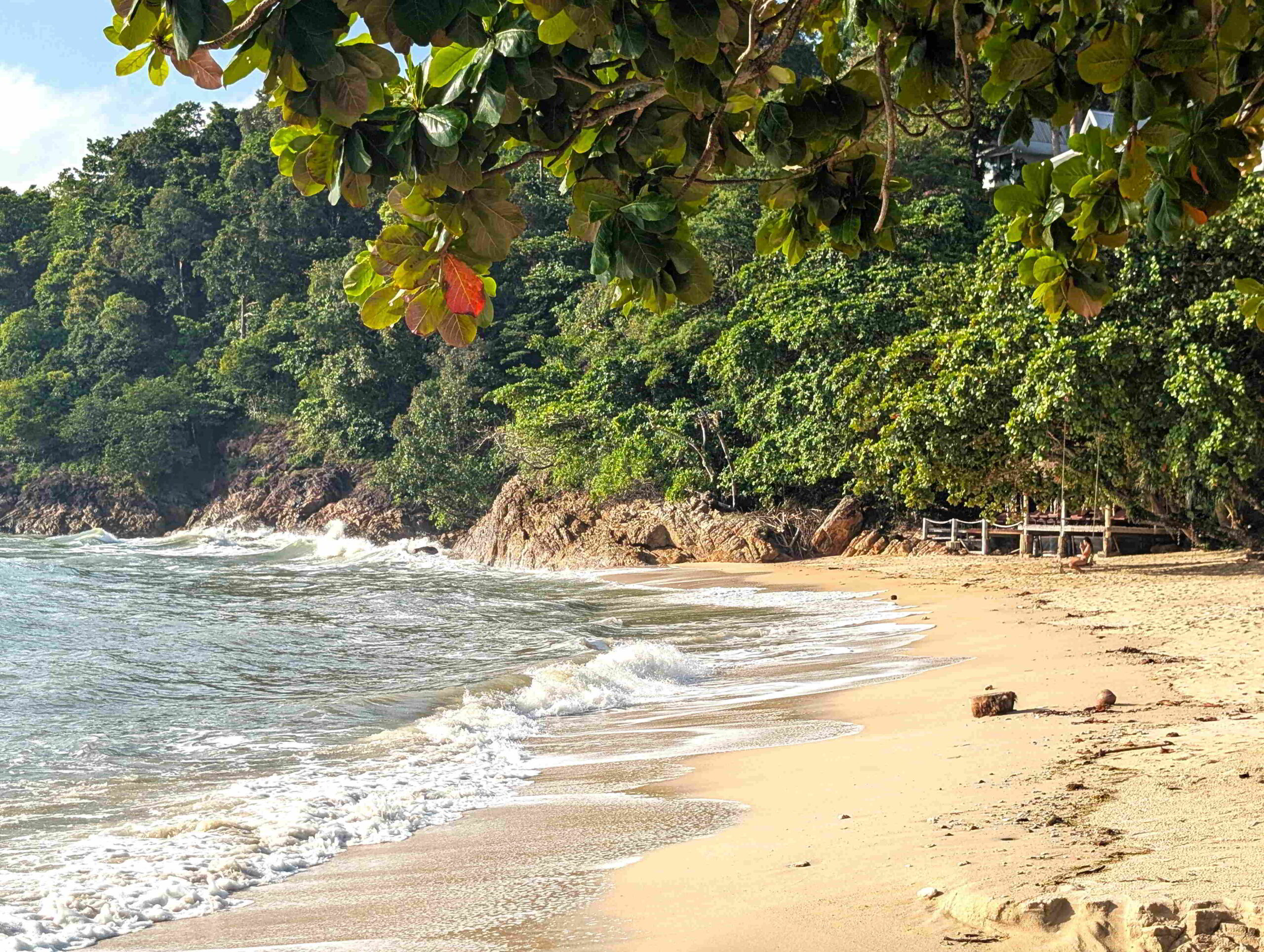
Koh Chang — Kai Bae Beach
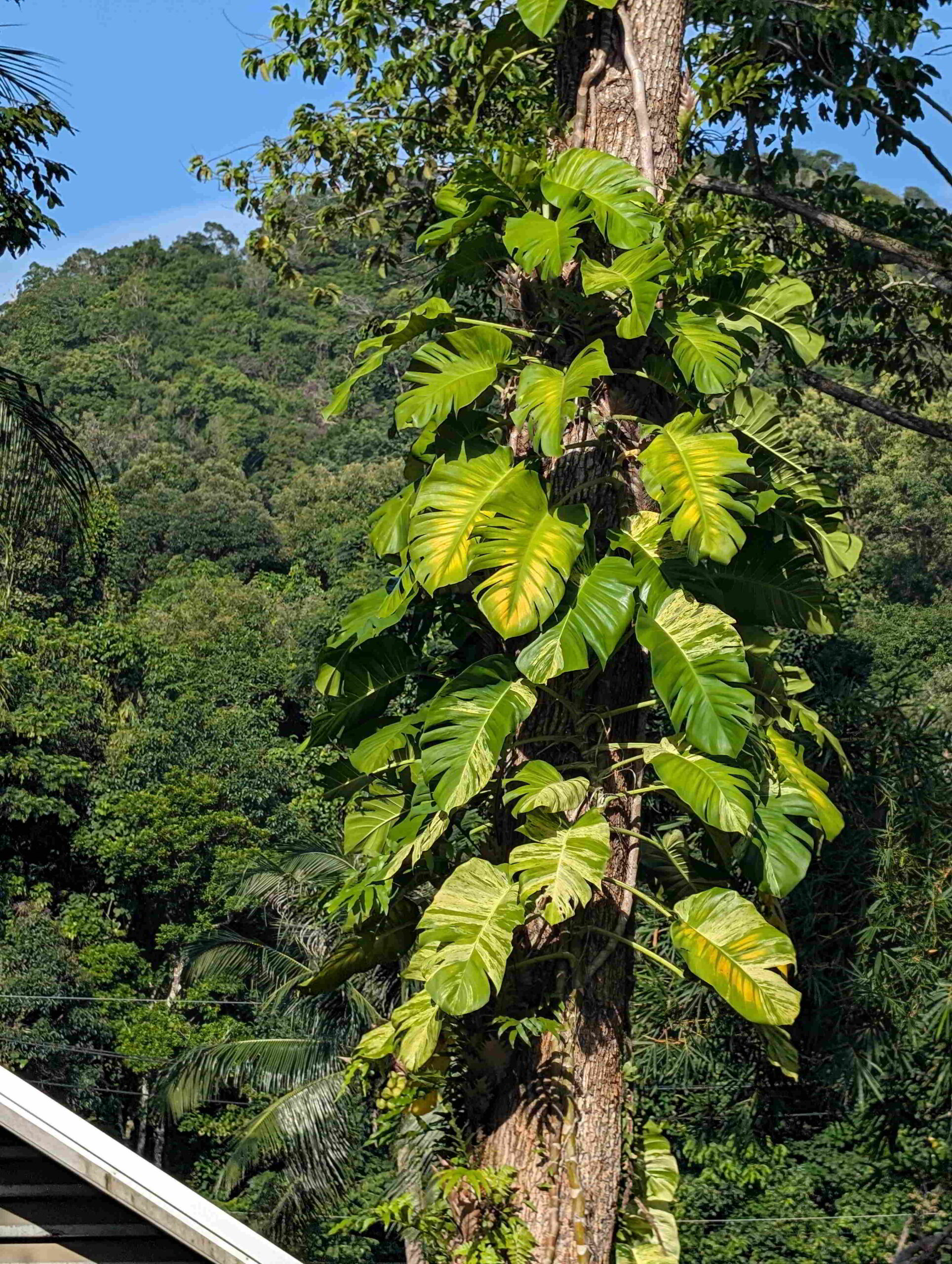
Koh Chang
A lone German from the Palatinate region seems to be enjoying his oversized currywurst to the fullest, and indeed, the food is very authentic, not that I am normally a huge fan of that kind of thing. But for ฿150, how can you go wrong? He has walked all the way here from the south of the island, an extravagant journey, to say the least, and he is certainly being creative with his time, given that his 18 year old son he came to the island with has no intention of even leaving their hotel room. On the cusp of his 18th birthday, he has different ideas as to how he will be celebrating.
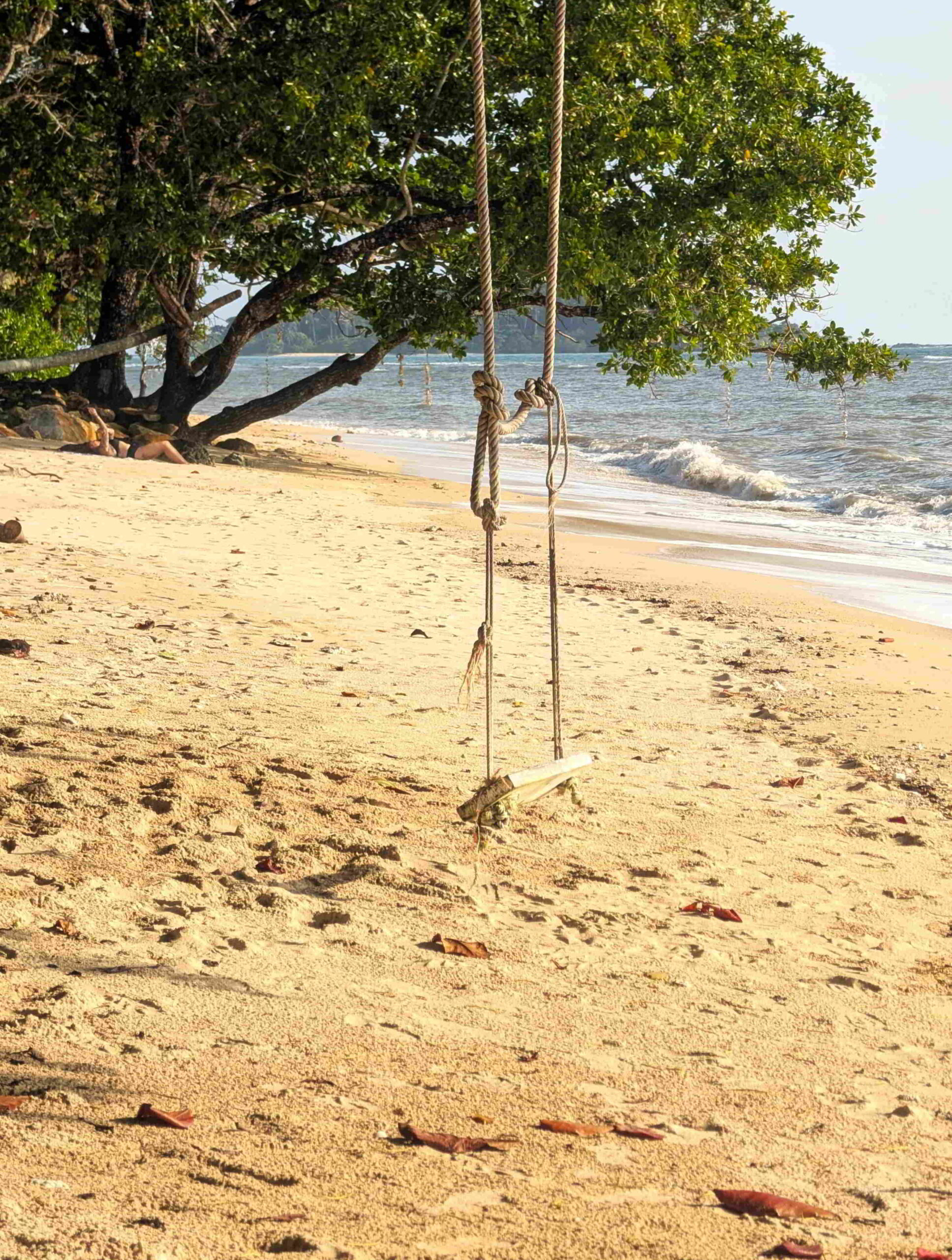
Koh Chang — Kai Bae Beach
Koh Chang — Kai Bae Beach
Today is their last day on the island, then they will return to Pattaya for four days (surprise, surprise), then Bangkok for four days, where his son is looking forward to seeing his mother’s relatives and celebrating in style, but not looking forward to seeing his mother, who returned to Thailand years ago. When the son was approximately six years old, his mother descended into a quagmire of drug abuse that the son never forgave her for.
Koh Chang — Kai Bae Beach
Koh Chang — Kai Bae Beach
Koh Chang — Kai Bae Beach
The man I speak with seems immeasurably far from such concerns; calm, collected, and of a generous spirit, deeply attached to the southern Palatine forest in Germany that is his home, showing me photos of hikes through the forest in various seasons. The power of the landscape of course draws upon its history and cultural associations, but not its absolute physical beauty.
Koh Chang — Kai Bae Beach
Koh Chang — Kai Bae Beach
Koh Chang — Kai Bae Beach
We finally bid our goodbyes and I am off to the Khlong Phlu waterfall, the entrance being not far beyond the restaurant. A stocky local waves me off at the entrance, indicating that the waterfall is closed. Closed? At 4:15 pm? When the sign on the parking lot clearly indicates that it closes at 4:30 pm? I later see that they charge ฿200 admission to visit the waterfall. Back home, that would trigger some fairly serious outrage, but here, where locals make a fraction of the wages, it’s just offensive.
Koh Chang — Kai Bae Beach
Koh Chang — Kai Bae Beach
Koh Chang — Kai Bae Beach
The attraction of nature is that it is precisely that, it occurs around us, integrates seamlessly into our life experiences, and isn’t just some other tawdry tourist attraction. This is definitely another drawback to being here; it isn’t even a universal Thai phenomenon, as in more isolated regions of the mainland that see few tourists, no one would consider charging that kind of money to take in some natural phenomenon.
Koh Chang — Kai Bae Beach
Koh Chang — Kai Bae Beach
Koh Chang — Kai Bae Beach
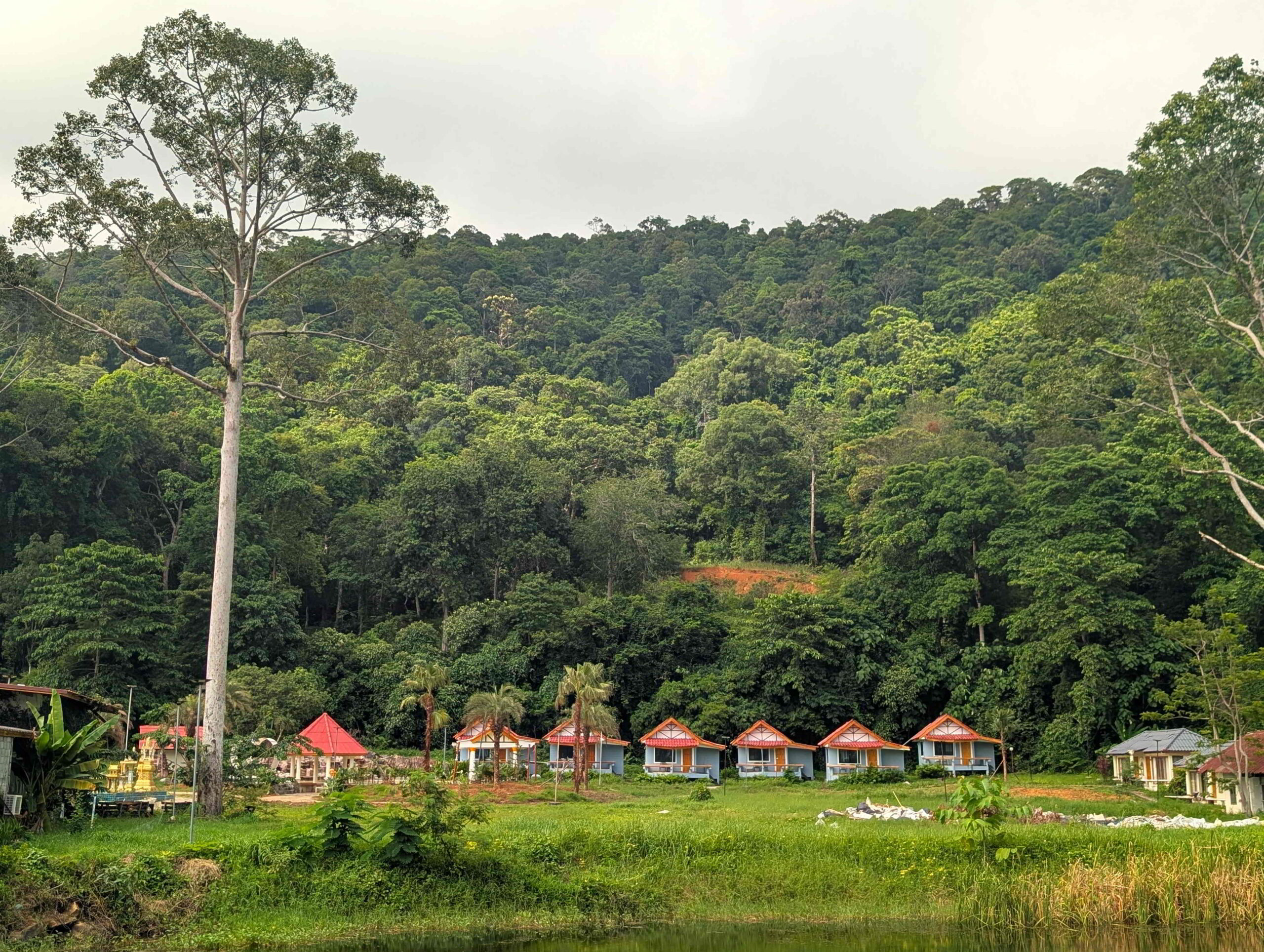
An ongoing morass of hospitality establishments follows that don’t seem to have any connection to the beach, and even the various small alleys radiating out from the main road that I explore only lead into the clutches of bungalows that may seem like tranquil places to wile away the time, as they are embedded in a quiet, forested setting, but hardly a reason to trek all the way to Koh Chang. It occurs to me later that many of these places may be the byproducts of the innumerable relationships consumed between itinerant farang and their Thai girlfriends, the latter wanting to find some suitable investment for the spoils reaped from their German, British, Australian, or what-have-you counterparts.
Koh Chang — Kai Bae Beach
Koh Chang — Kai Bae Beach
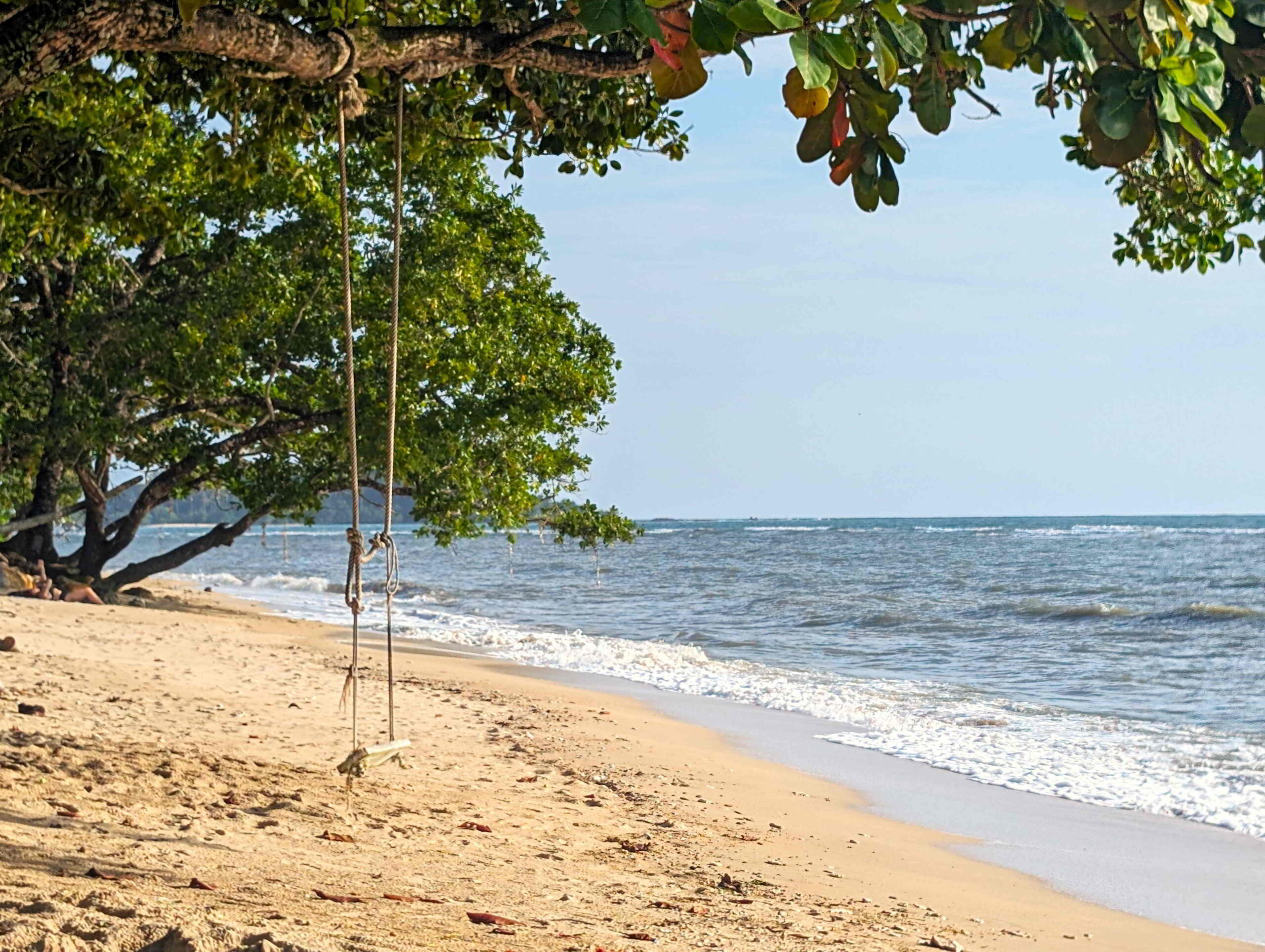
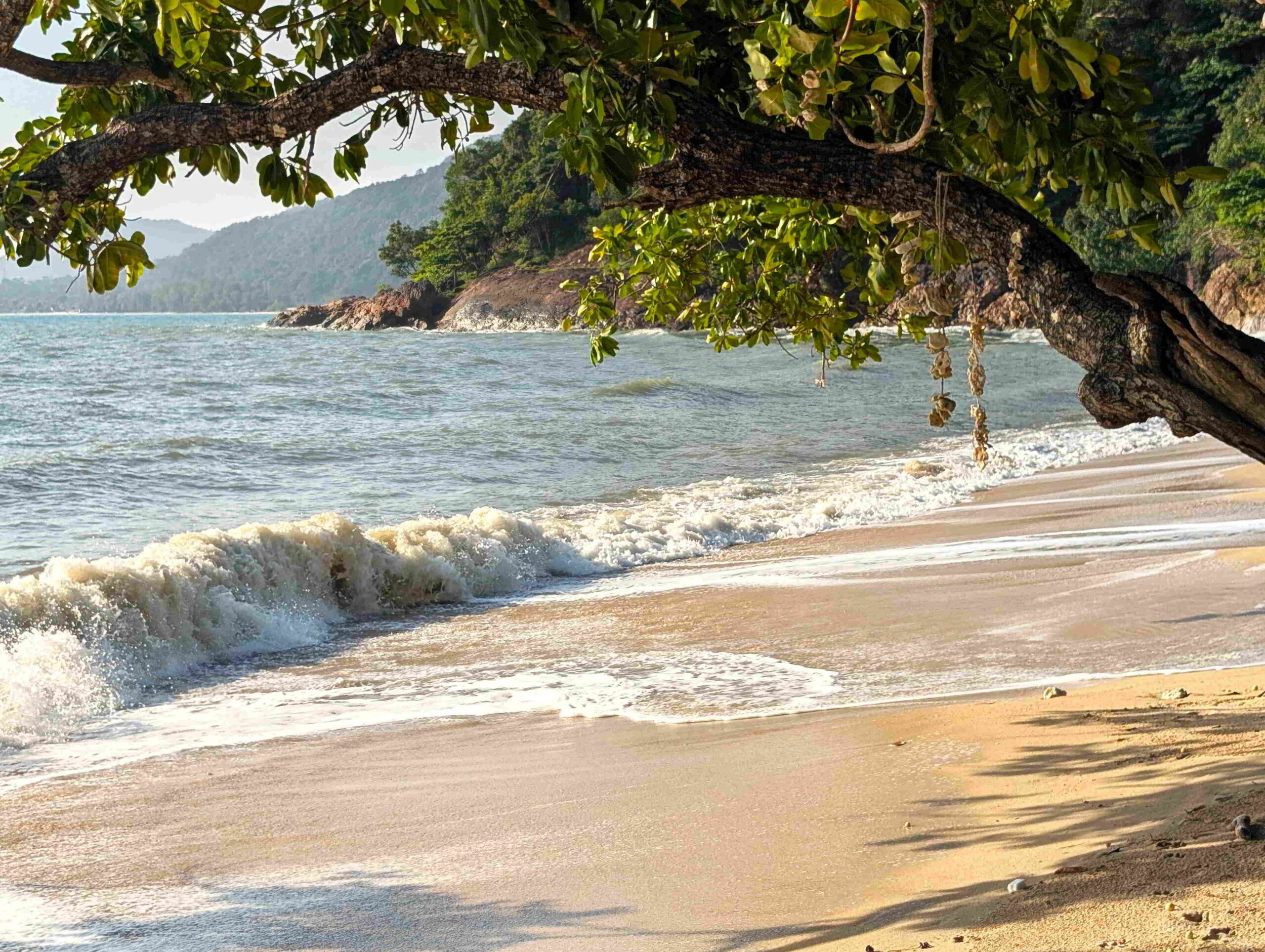
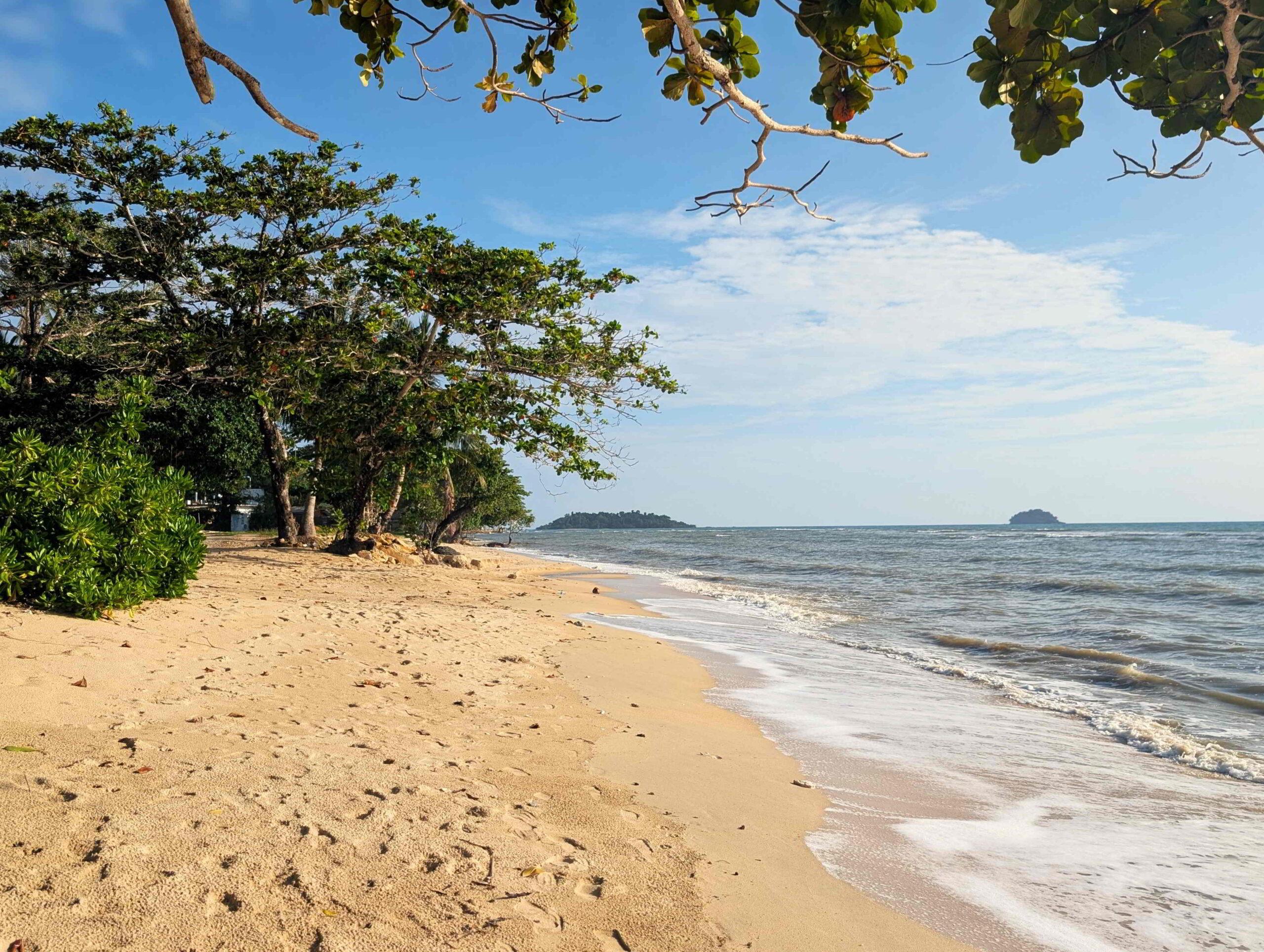
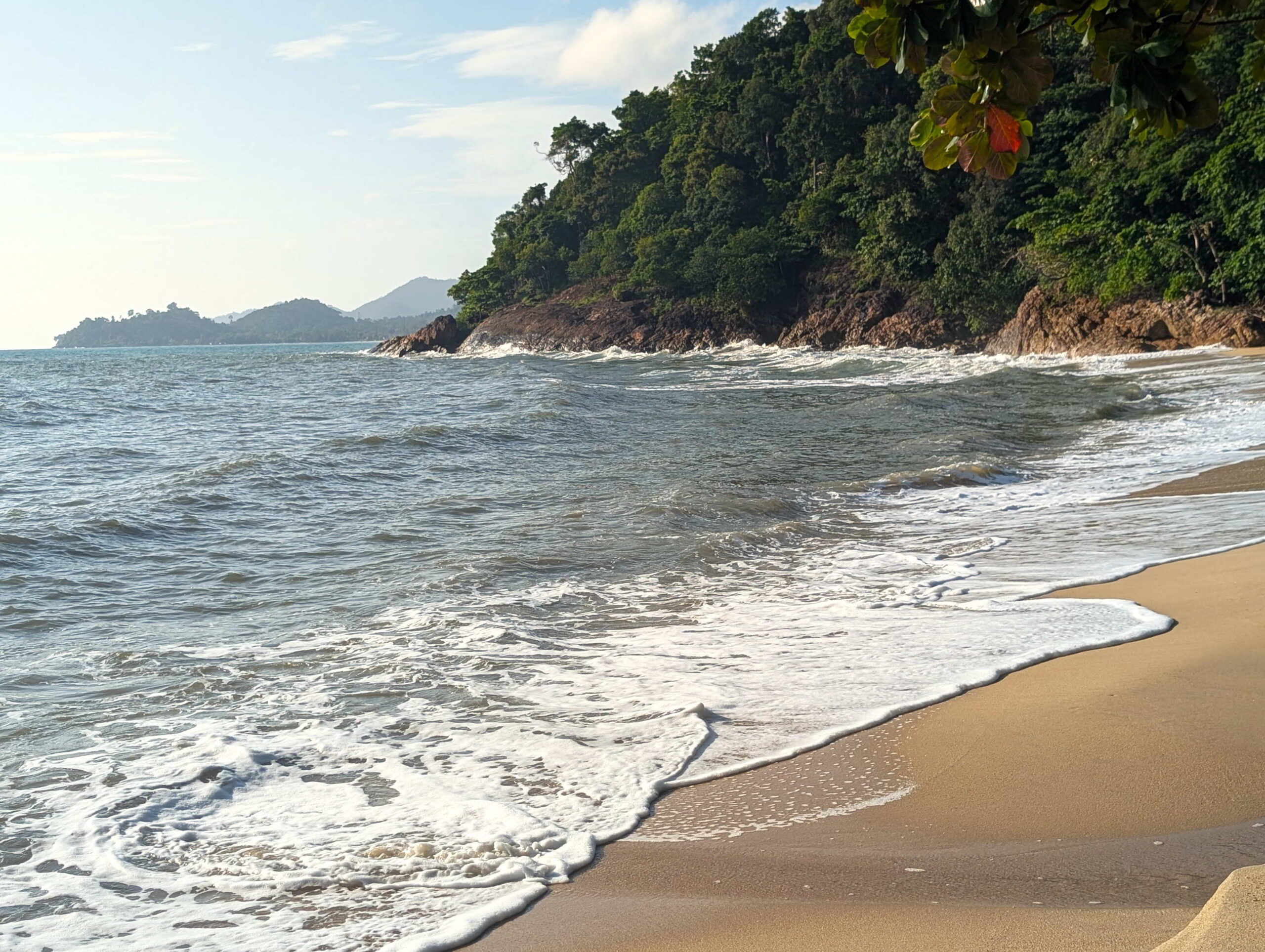
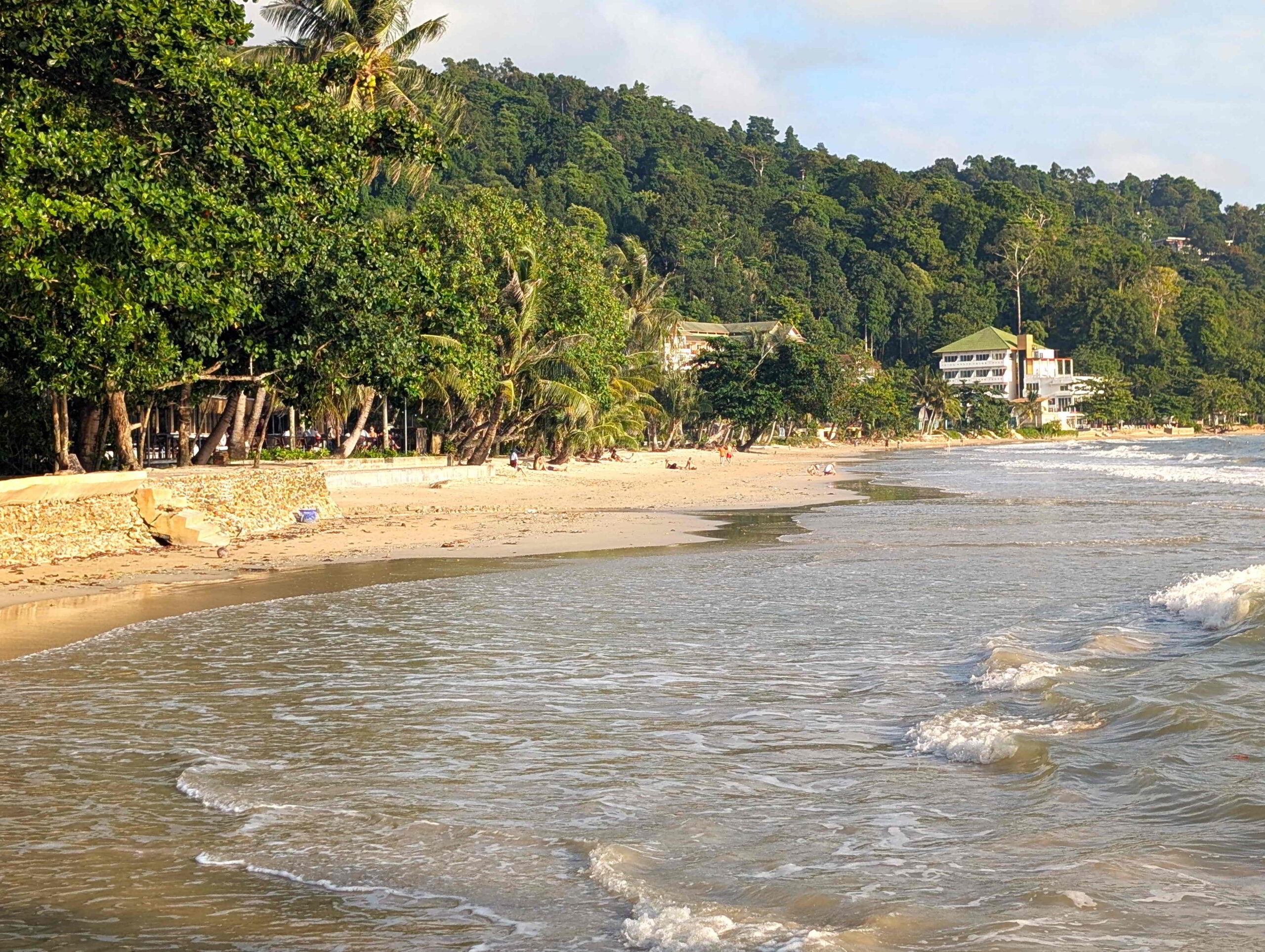
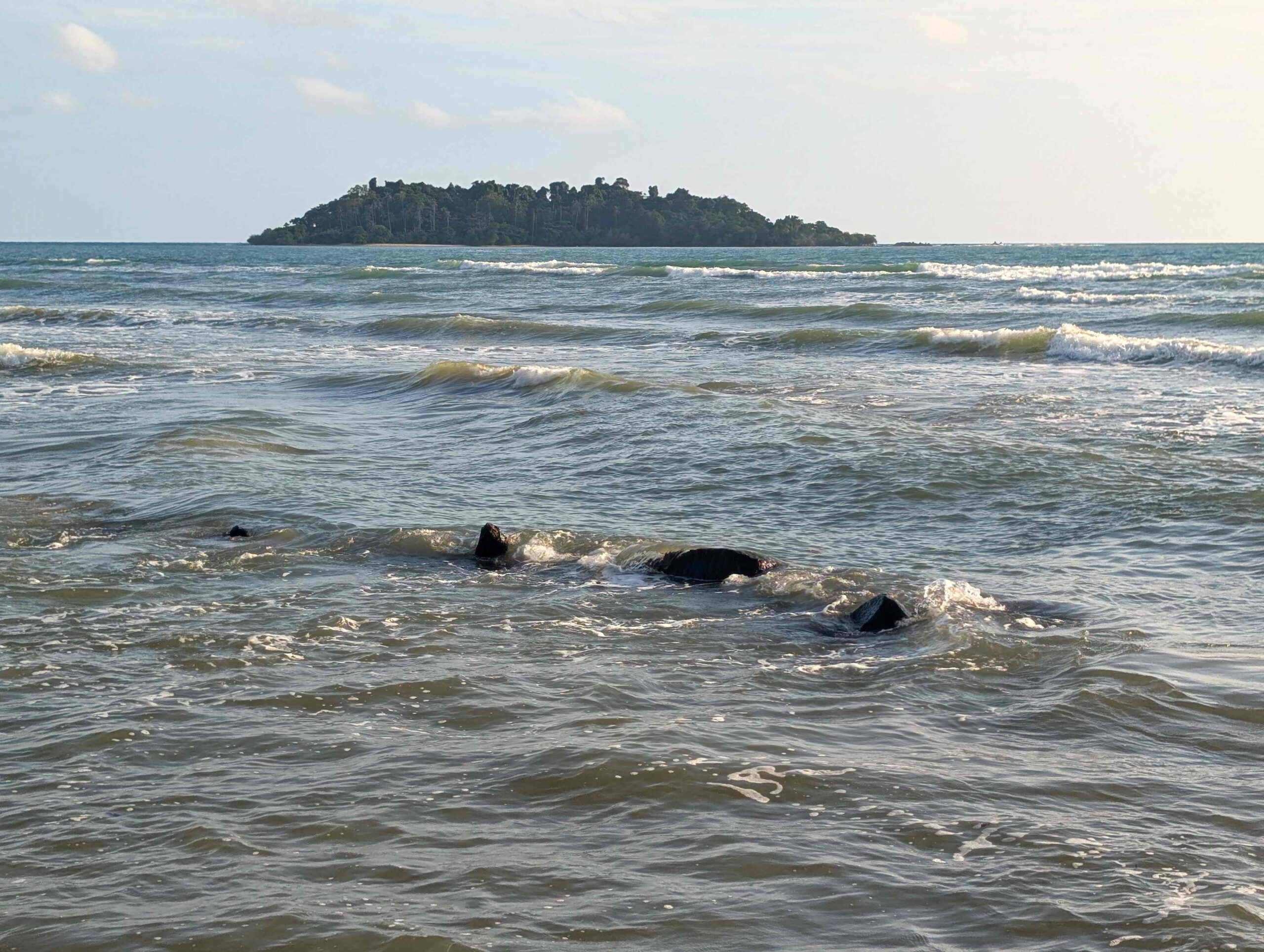
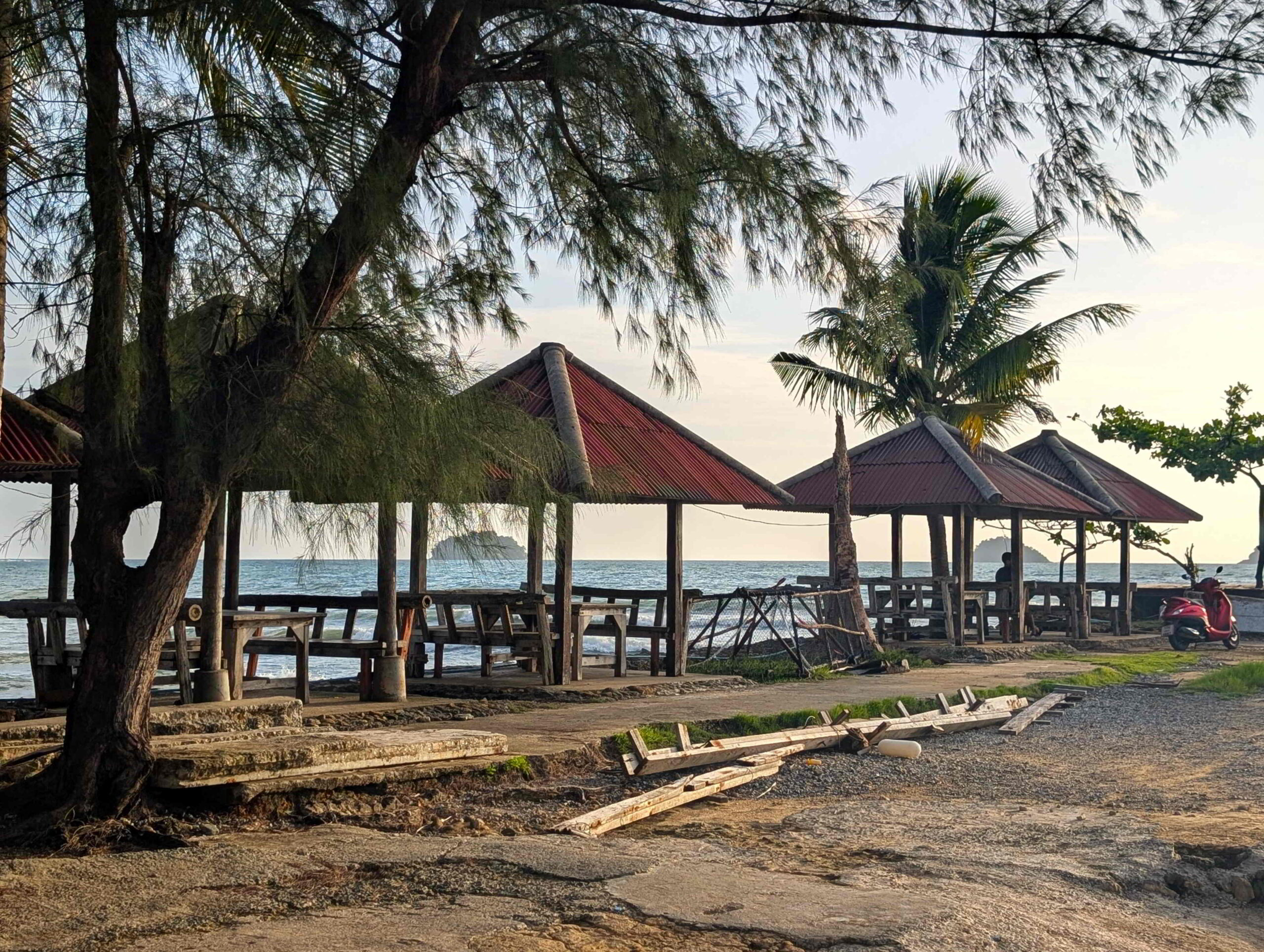
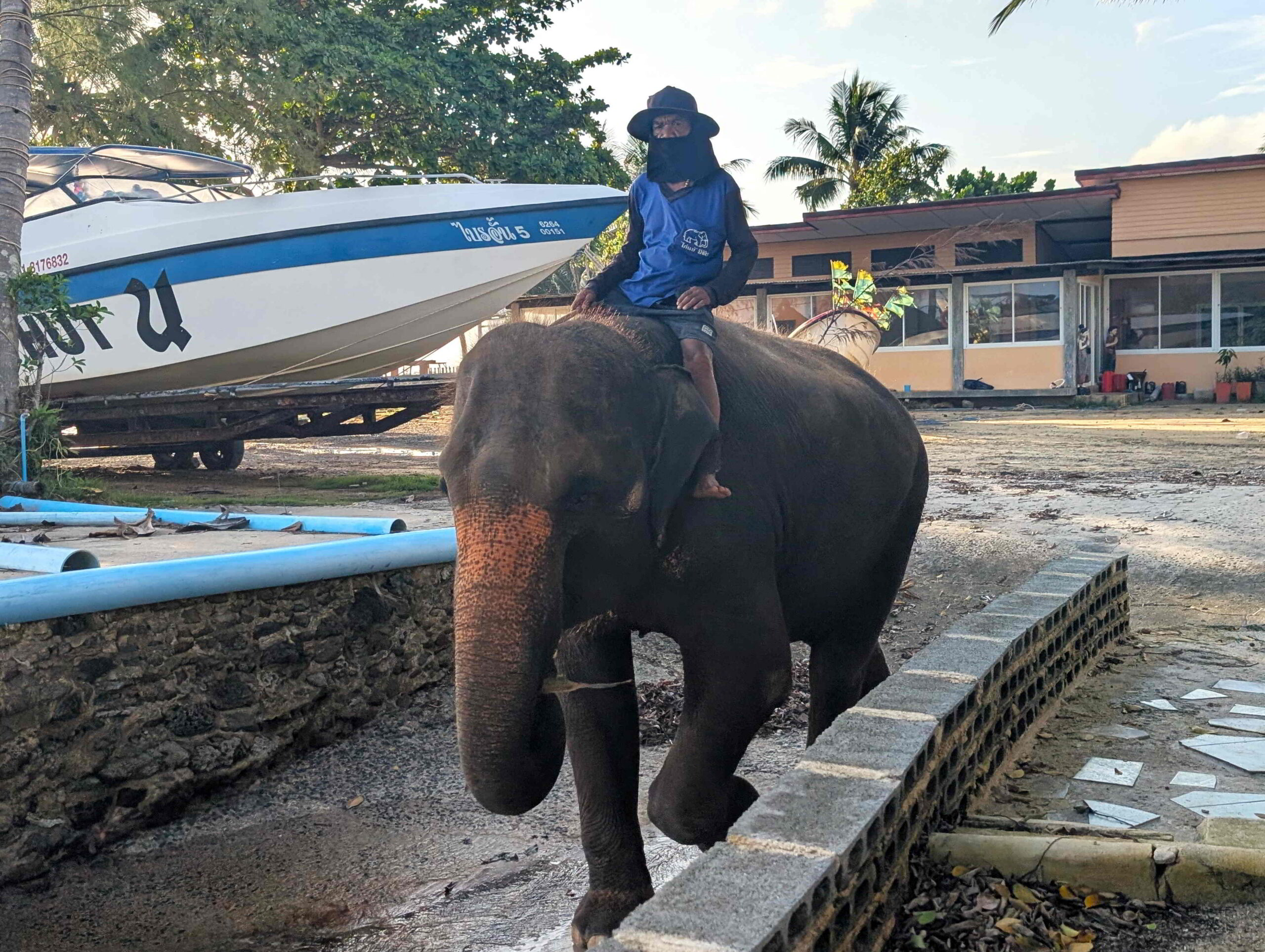
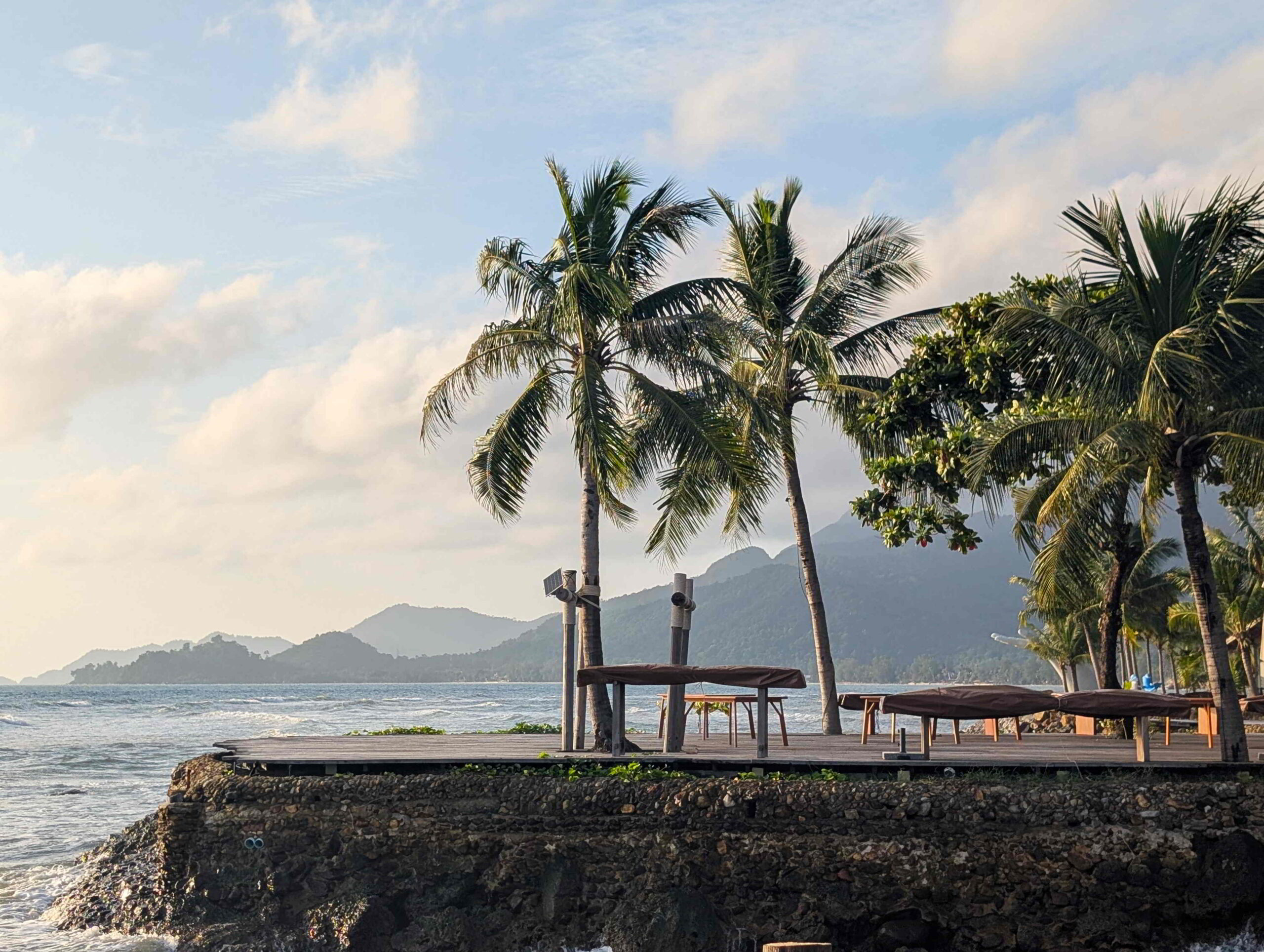
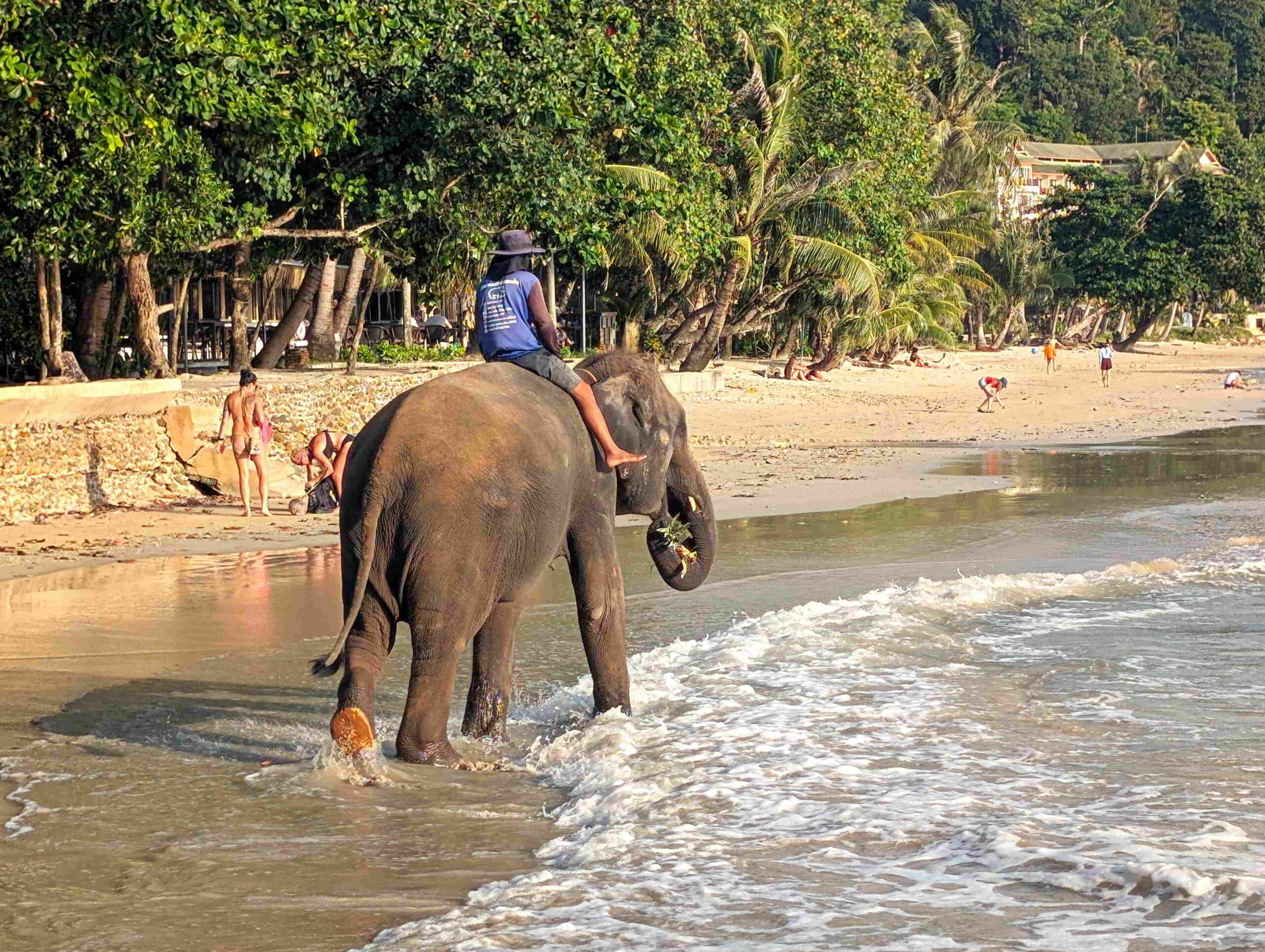
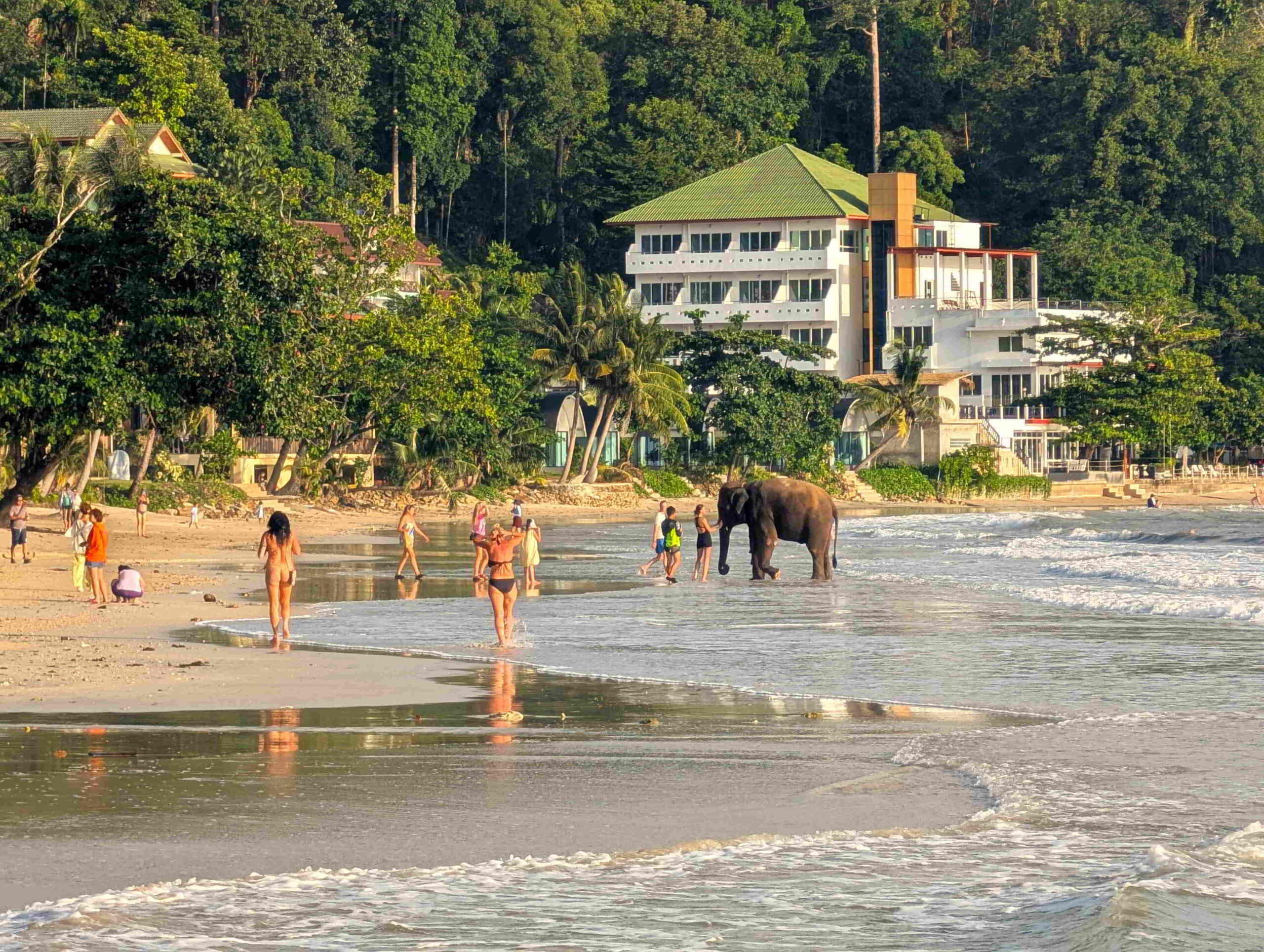
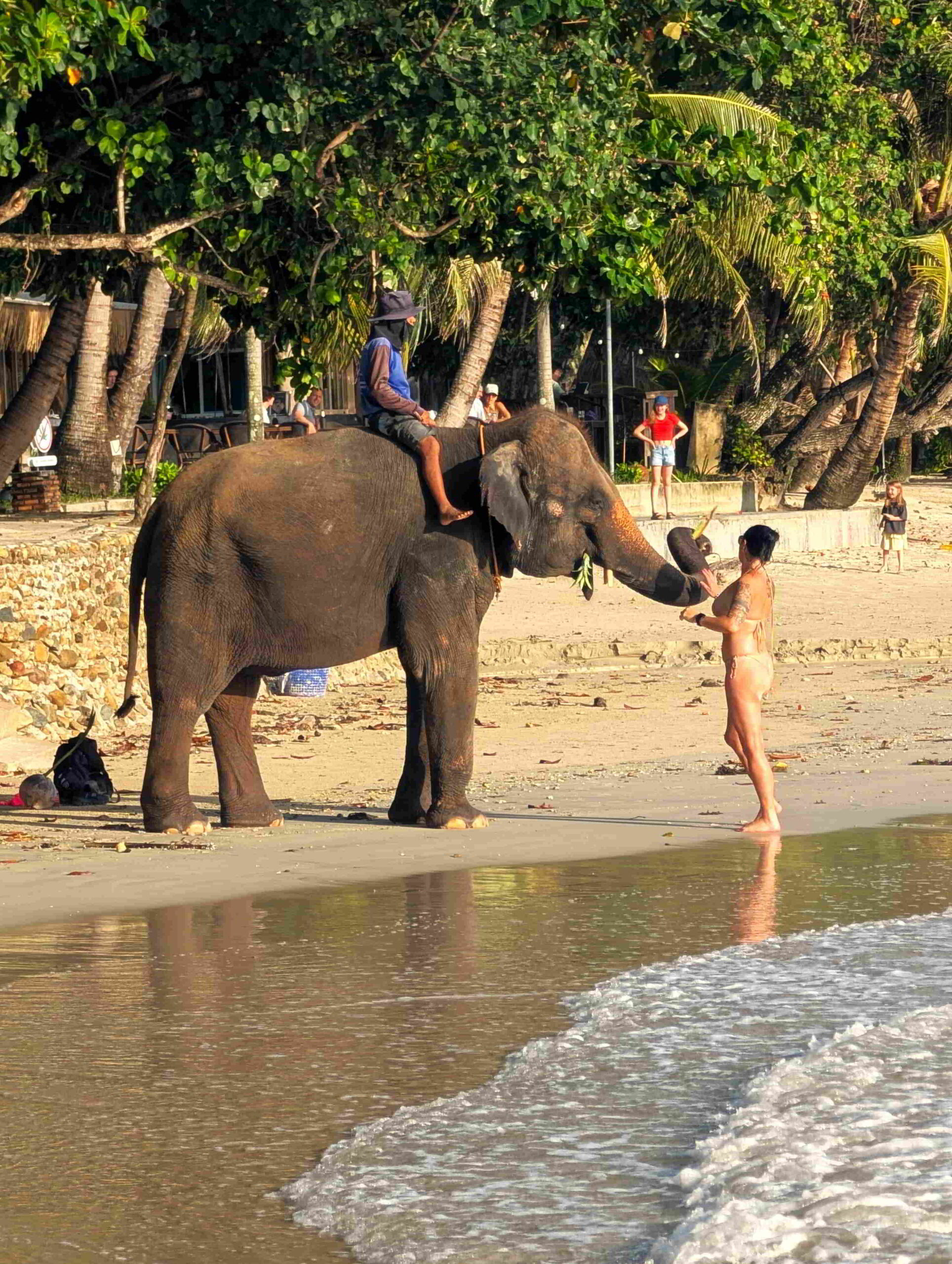
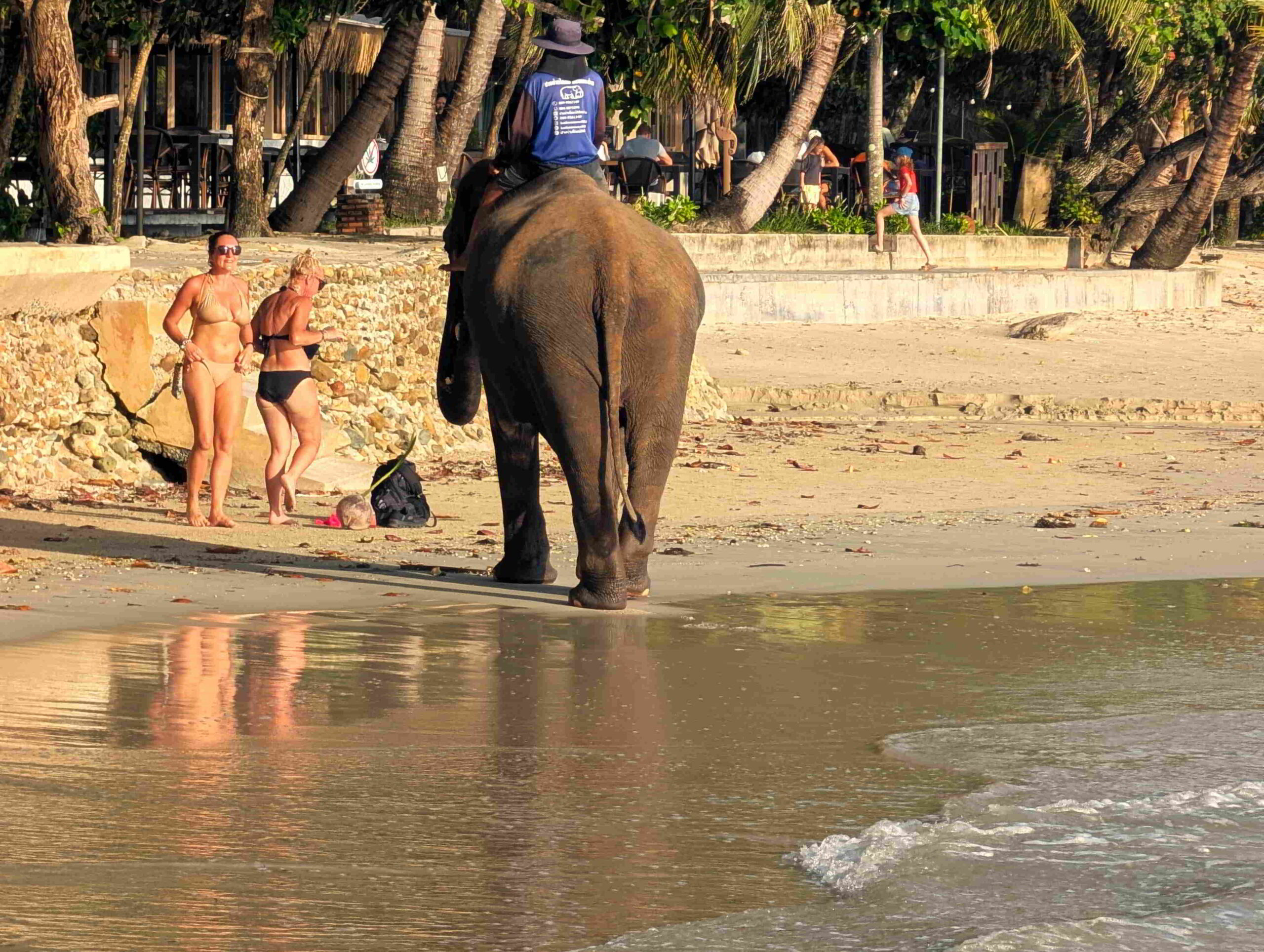
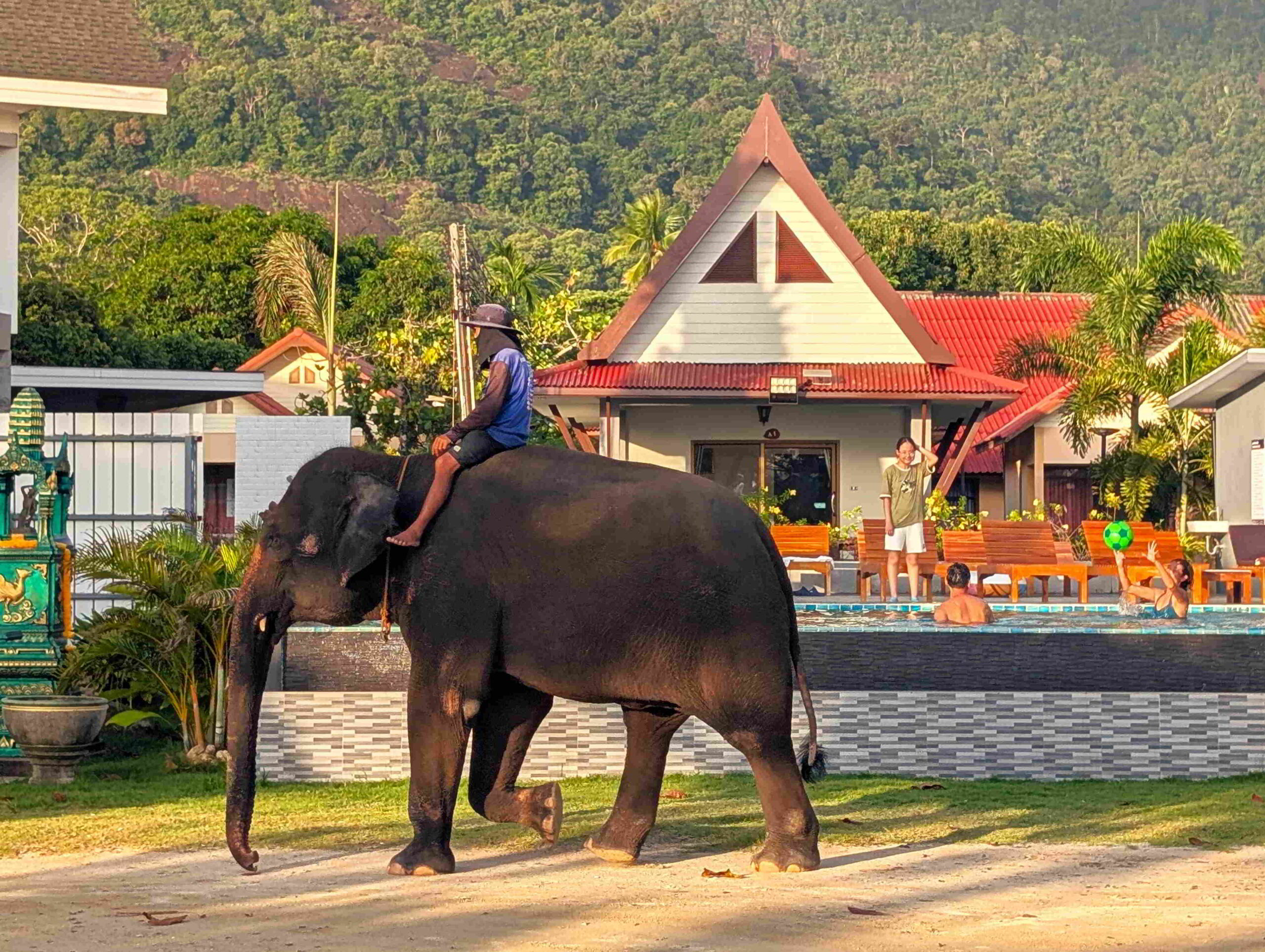
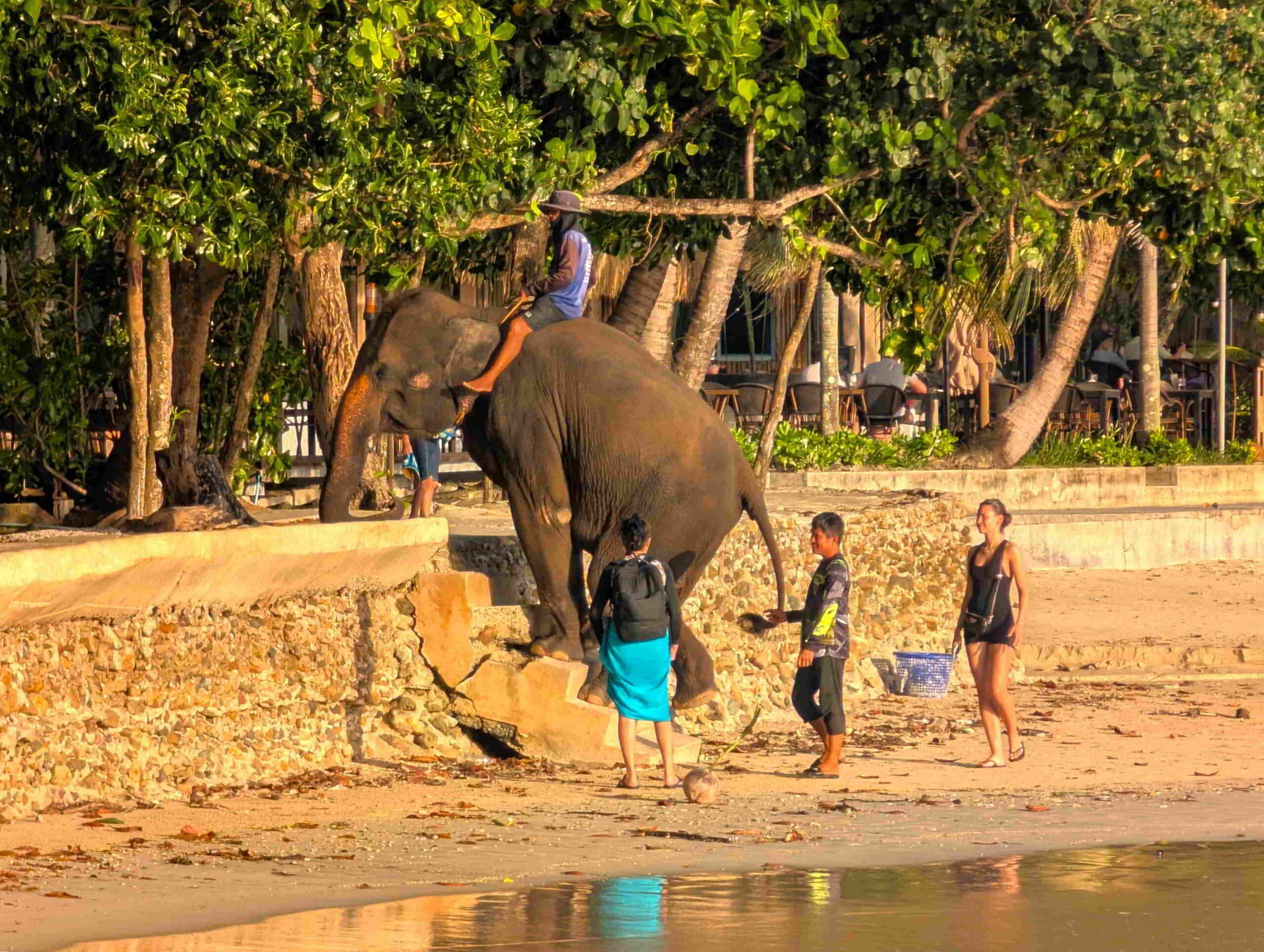
One side road takes me all the way to the shoreline, adjacent the run down resort at the Kai Bae beach, a credible strip of sand that is actually possible to access via a public road, surprisingly enough. Even more surprisingly, as I languish on a pier, contemplating the world of sea and sand before me, an elephant and mahout appear out of nowhere, the creature lumbering directly toward me, then onto the adjacent boat ramp, pivoting slightly and extending its trunk towards me. I jump backwards, unclear as to what the intentions are — they are certainly not very clear from the expressionless eyes staring above the mahout’s masked face.
Koh Chang — Kai Bae Beach
Koh Chang — Kai Bae Beach
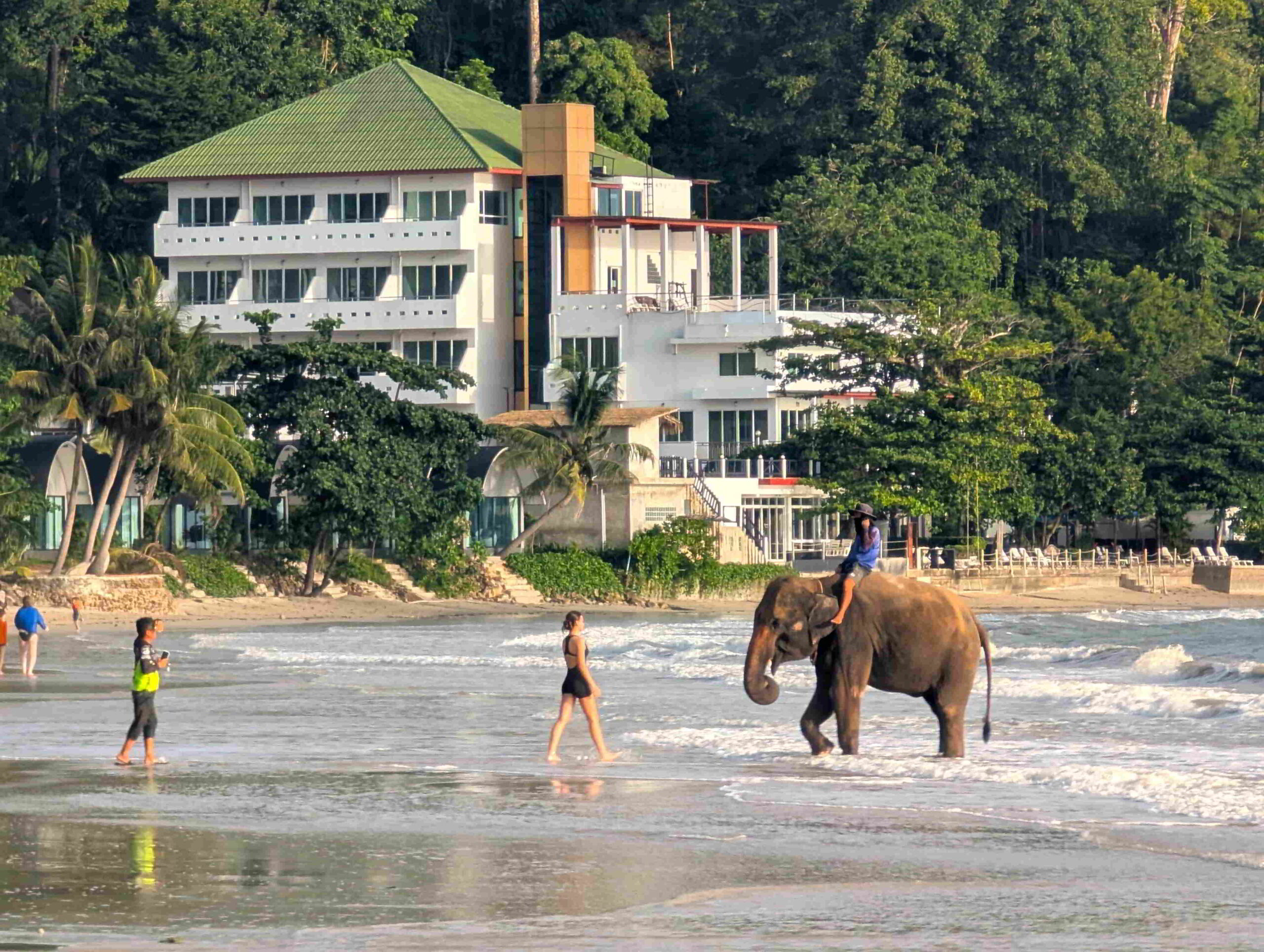
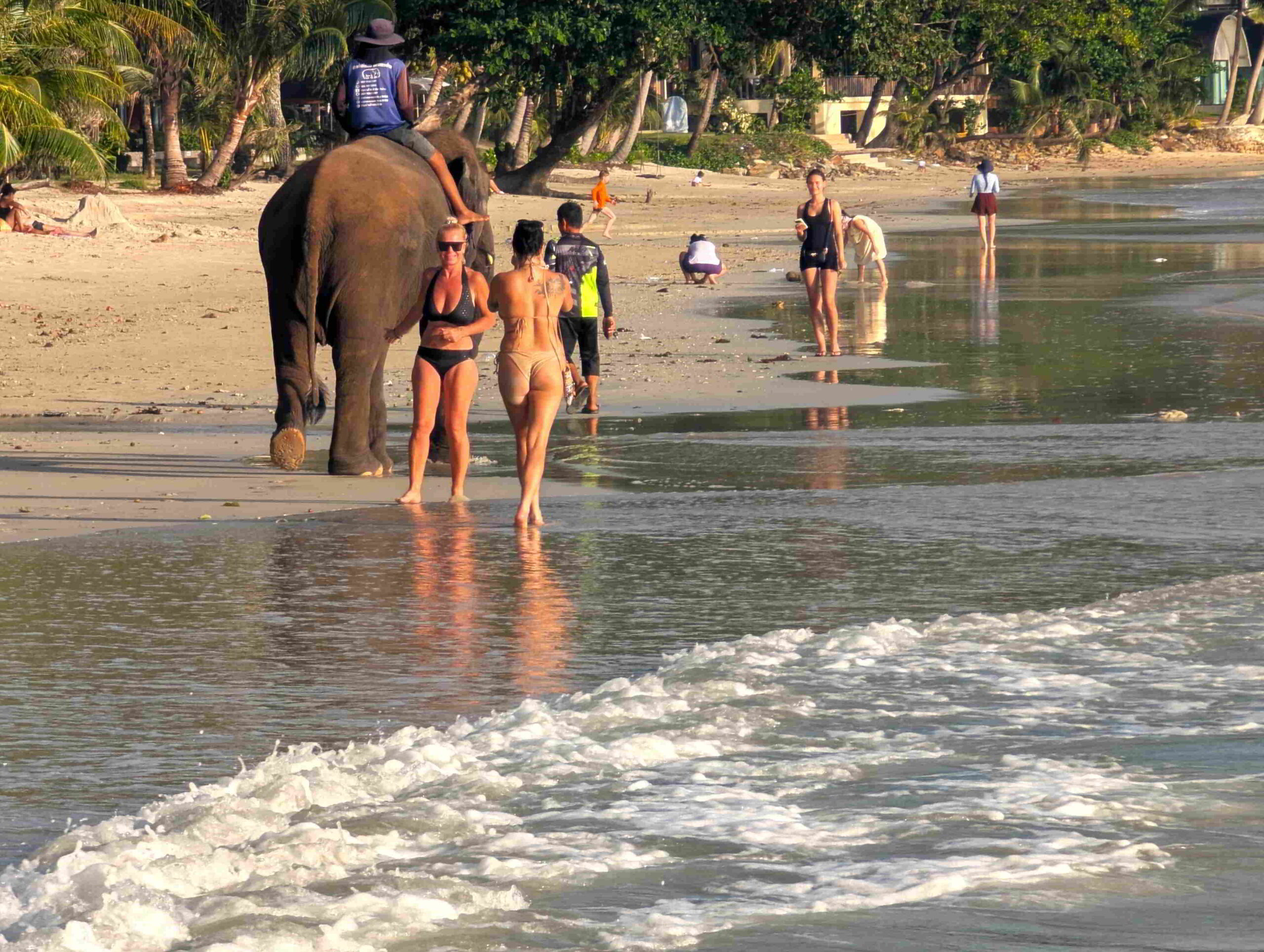
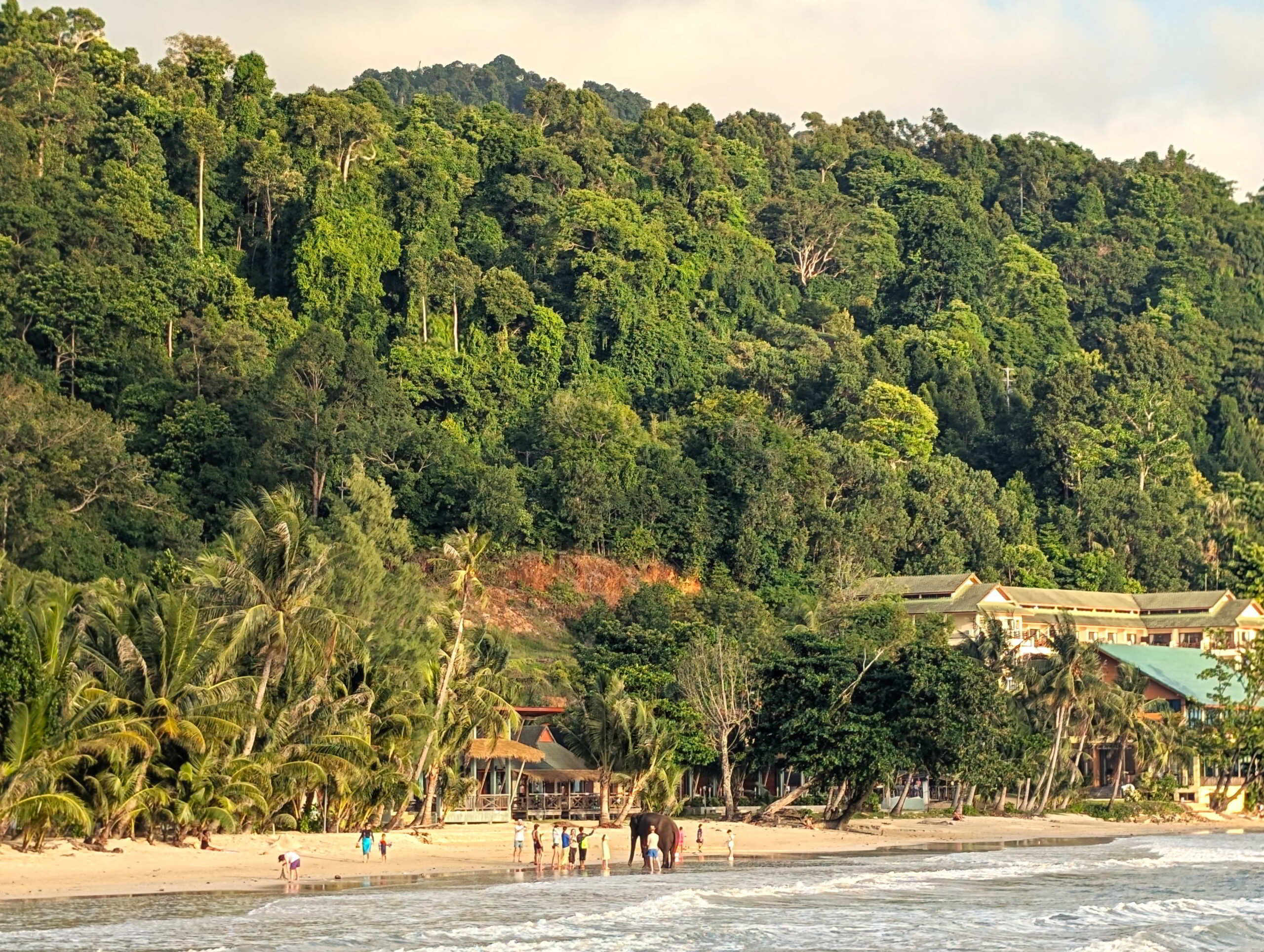
He continues through the shallows toward the young bikini-clad Caucasian women farther along the beach, engaging in a session of petting, squatting, various individuals climbing onto the elephant, and performing various tricks. I believe that the idea would normally be to pay a tour operator some fee to be able to visit an elephant enclave where visitors can take in such performances, but the elephant spectacle appearing on some random beach isn’t exactly what I would have expected. Unfortunately, even at what I would consider a reasonable distance, my photos of the elephant and cohorts are out of focus, a definitive failing grade for my newly acquired Google Pixel Pro 7 phone.
Koh Chang — Kai Bae Beach
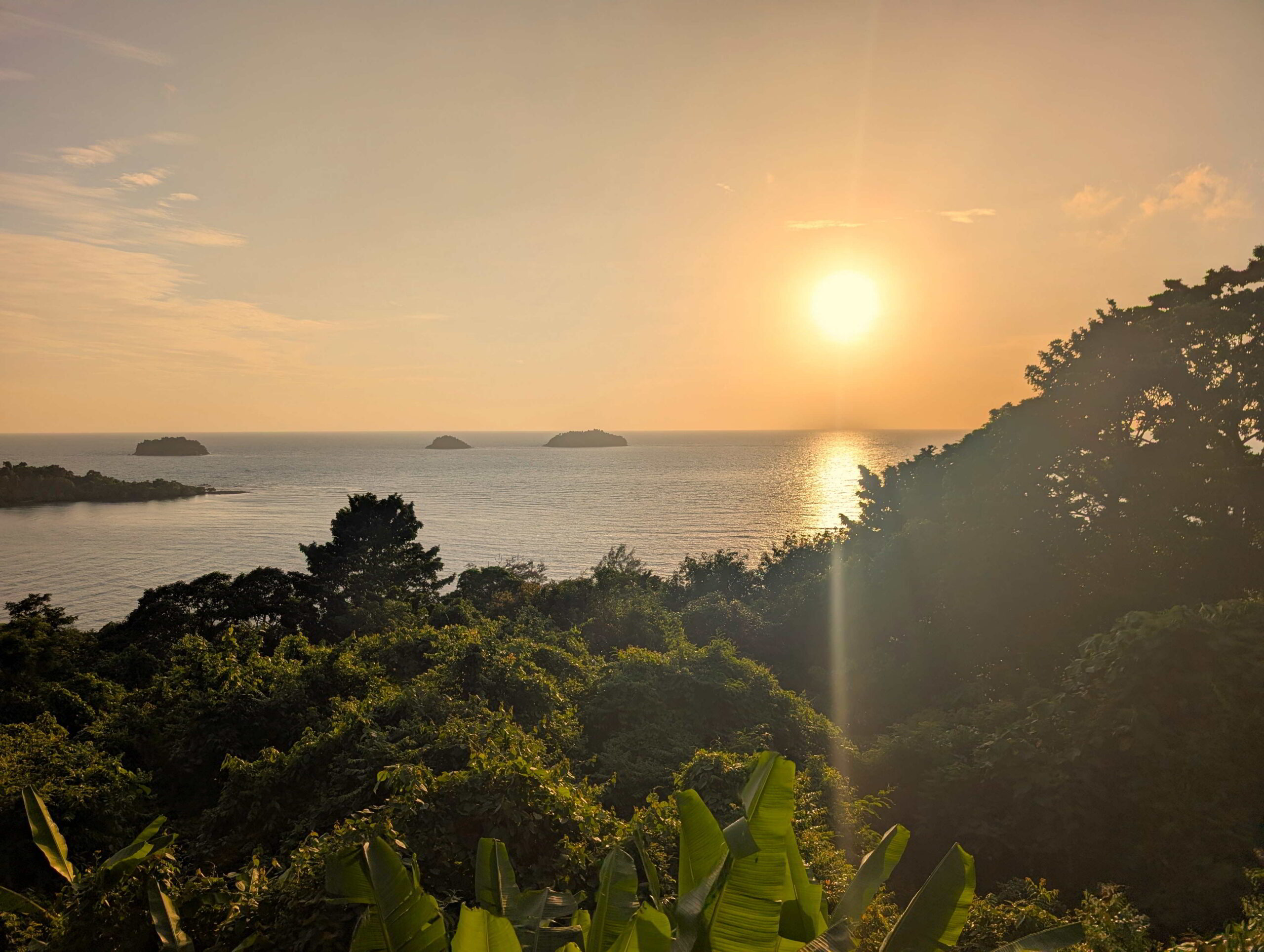
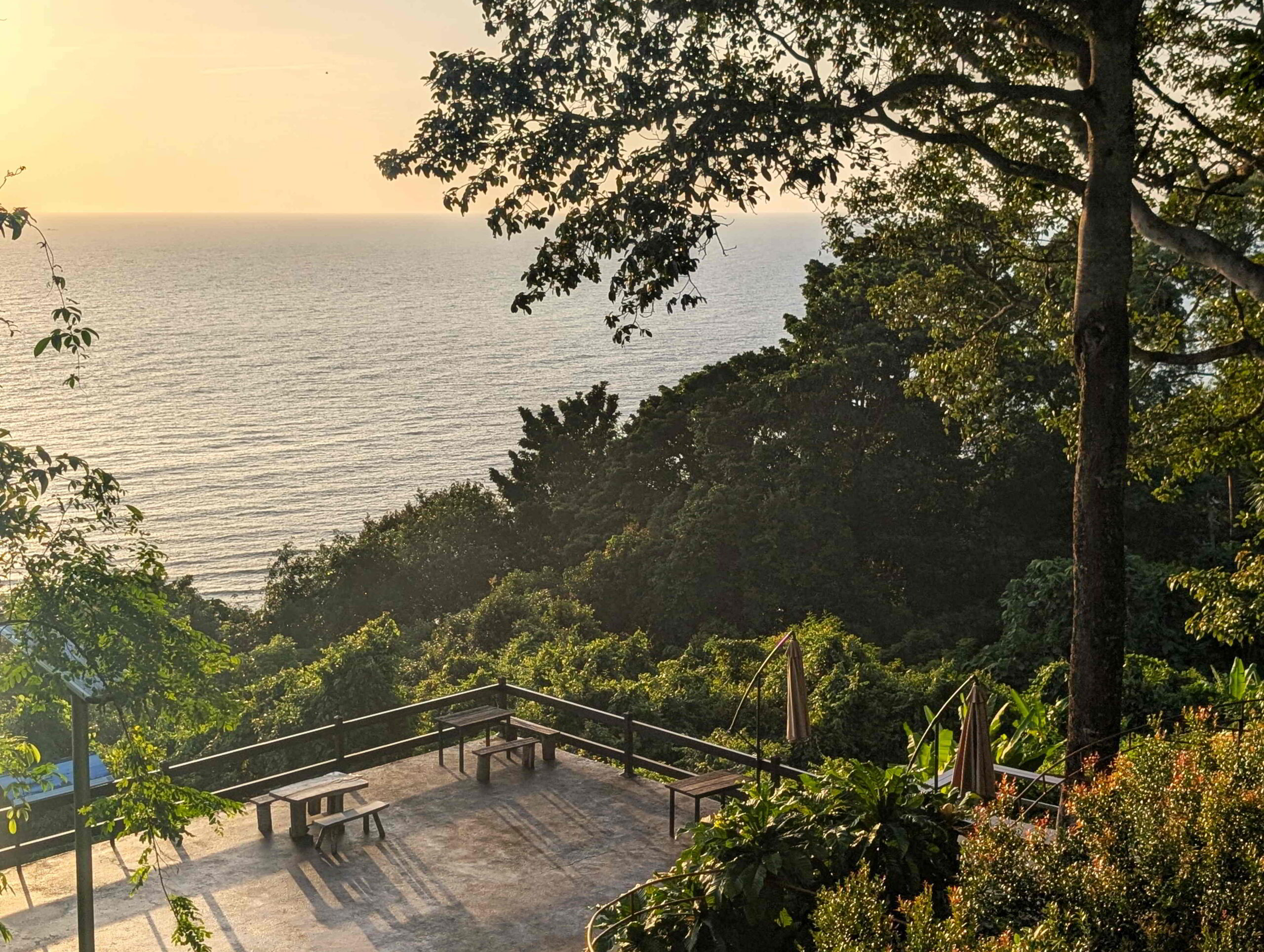
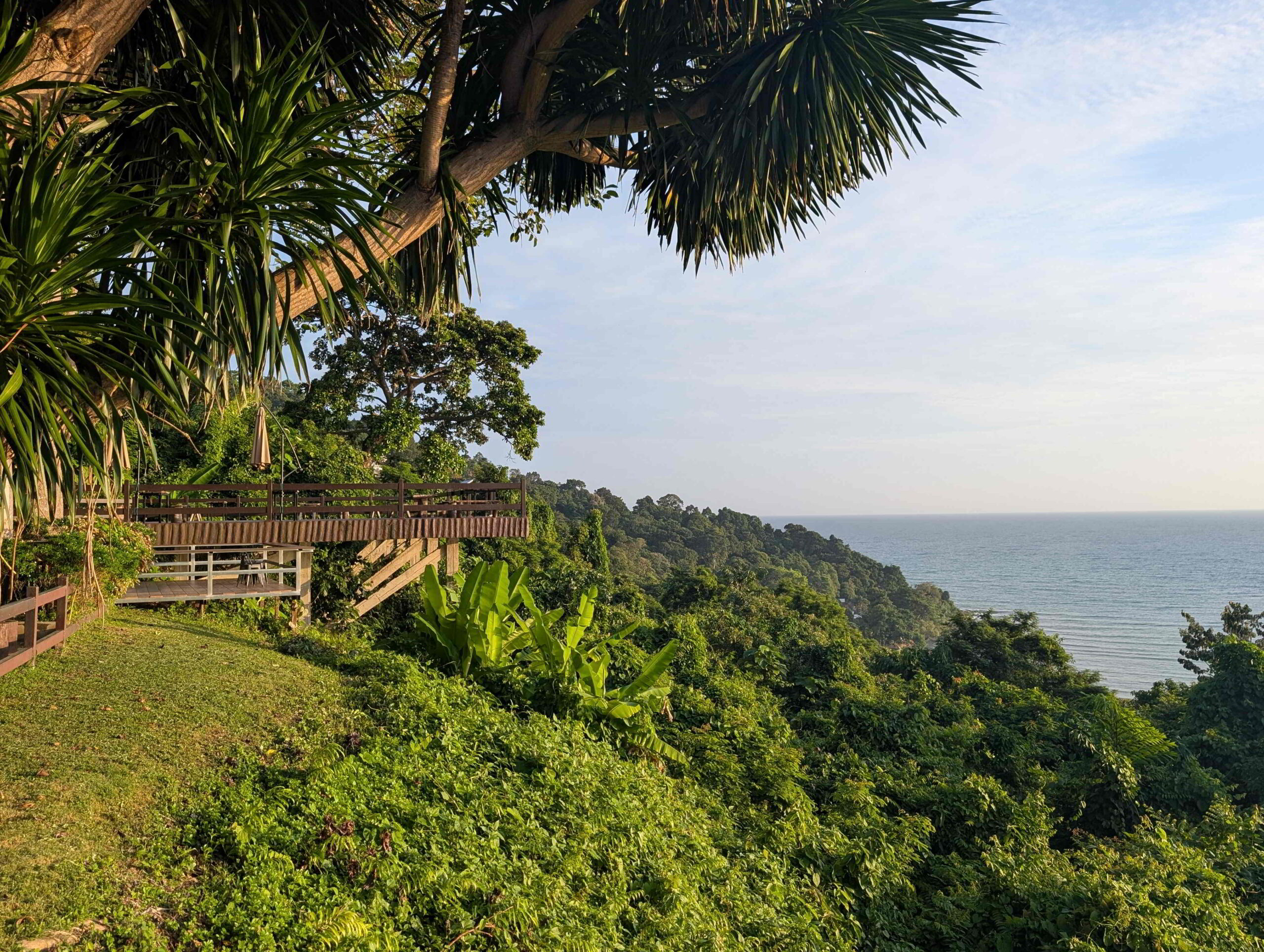
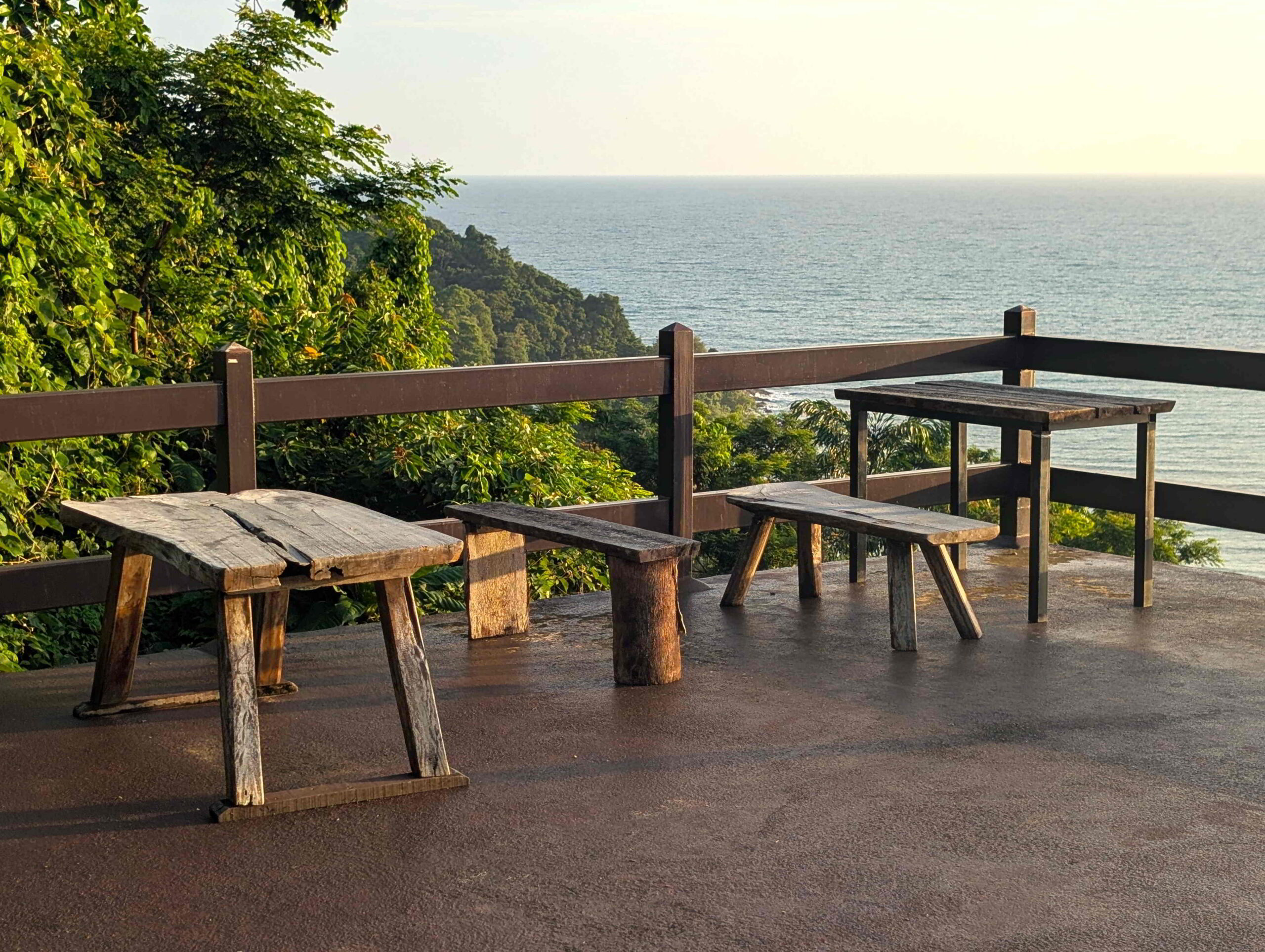
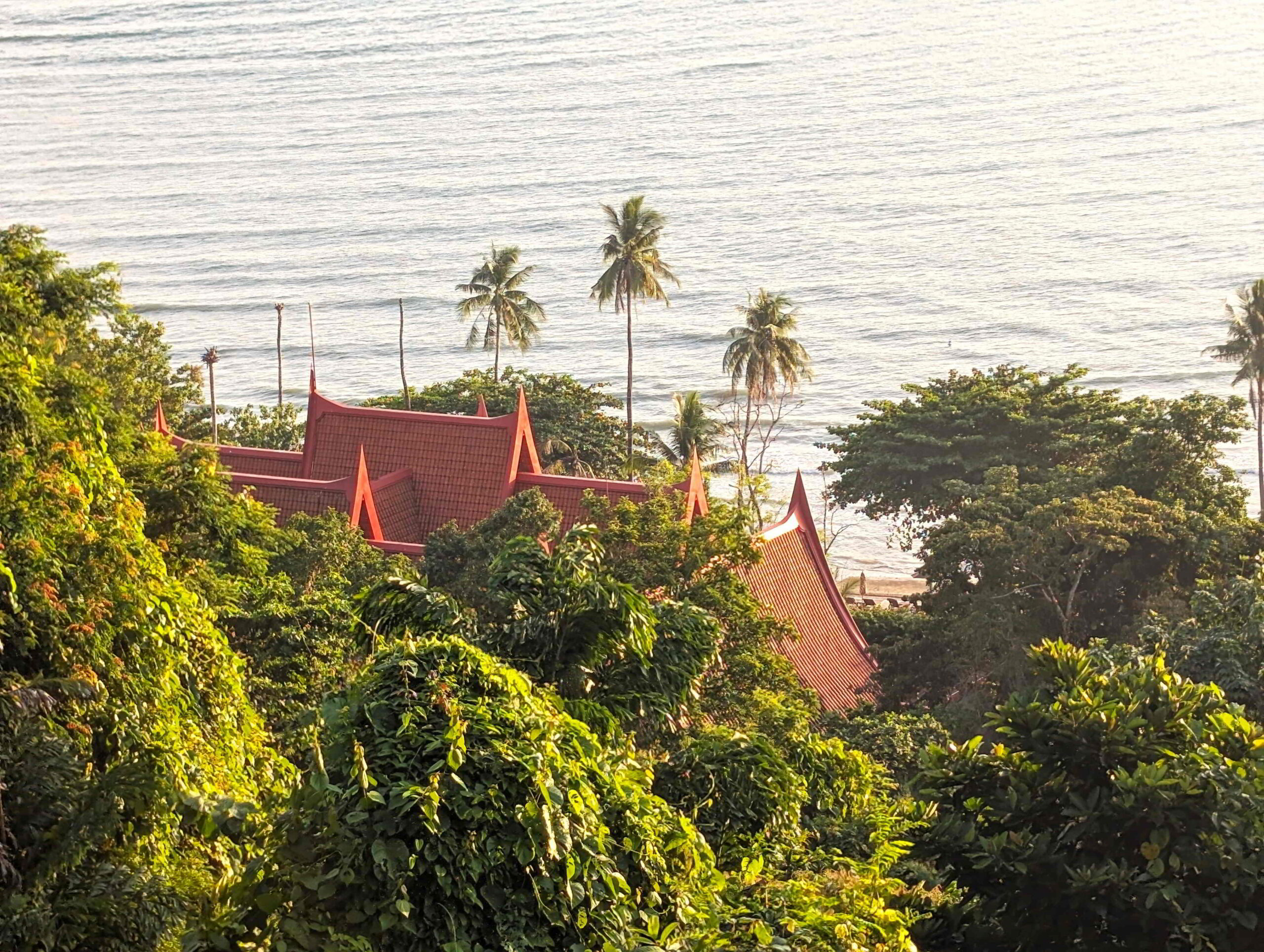
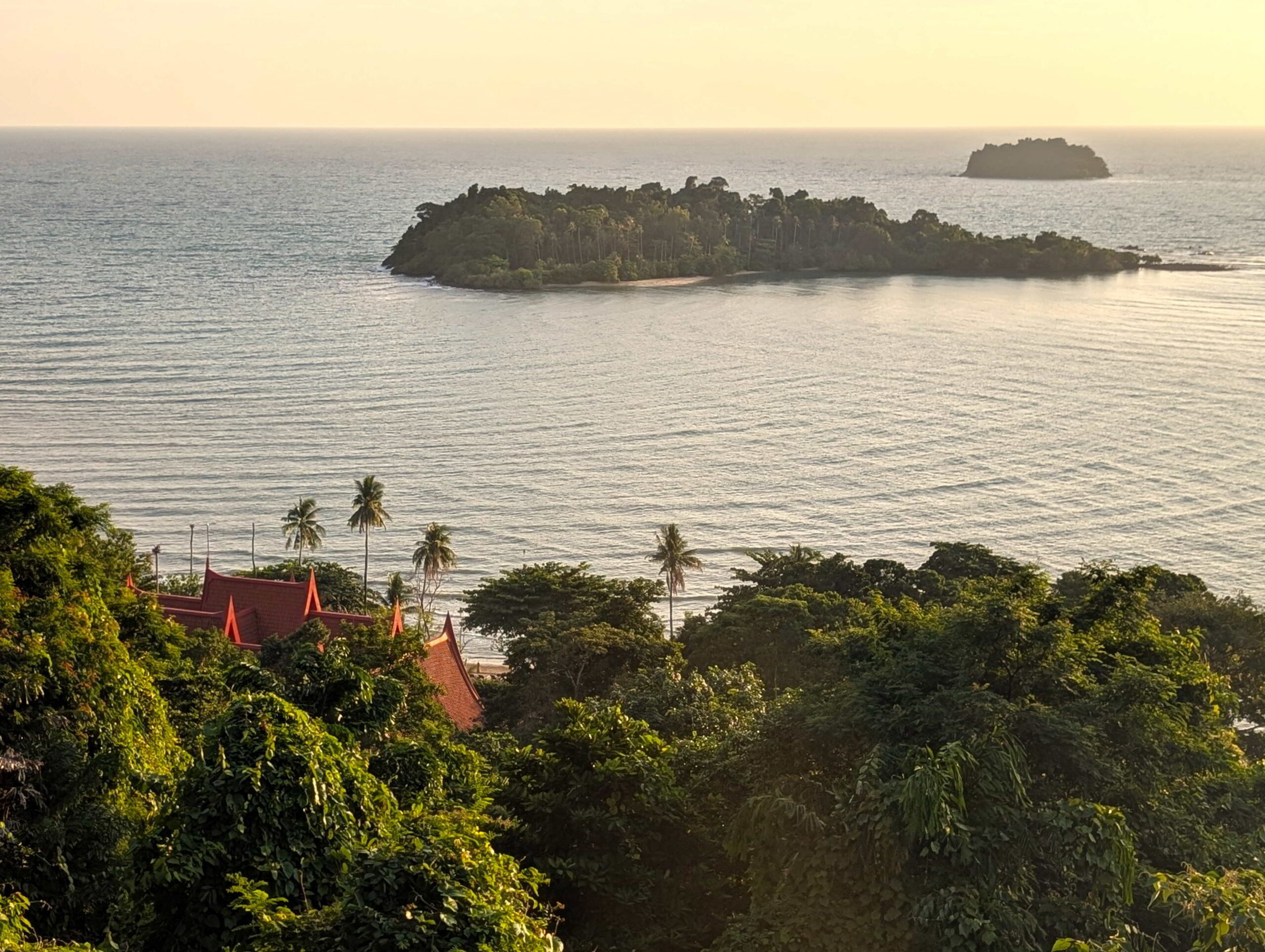
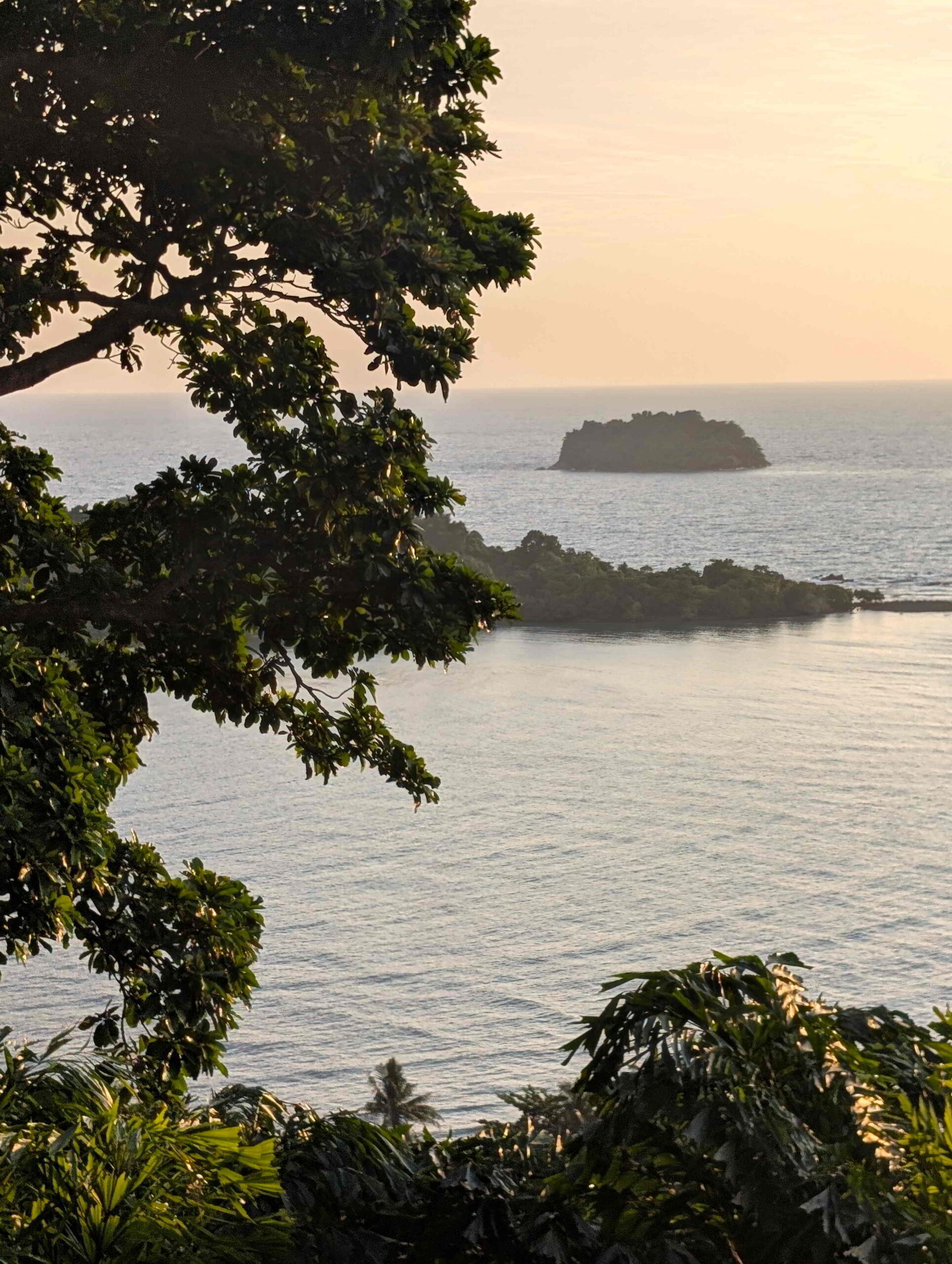
Past the endless sprawl of hospitality establishments, the road begins to climb steeply into the green, the pitch of the road a serious concern for my potentially underpowered bike, but no, it manages the steep climb with little effort. Following a succession of inclines, I wonder what comes next, and happily, there is apparently a viewpoint not far ahead. Another climb, and to the immediate right, I find the Kai Bae Viewpoint, a national park of sorts, providing access to a series of terraces overlooking the sound, and all for free!
Koh Chang — Kai Bae Viewpoint
Koh Chang — Kai Bae Viewpoint
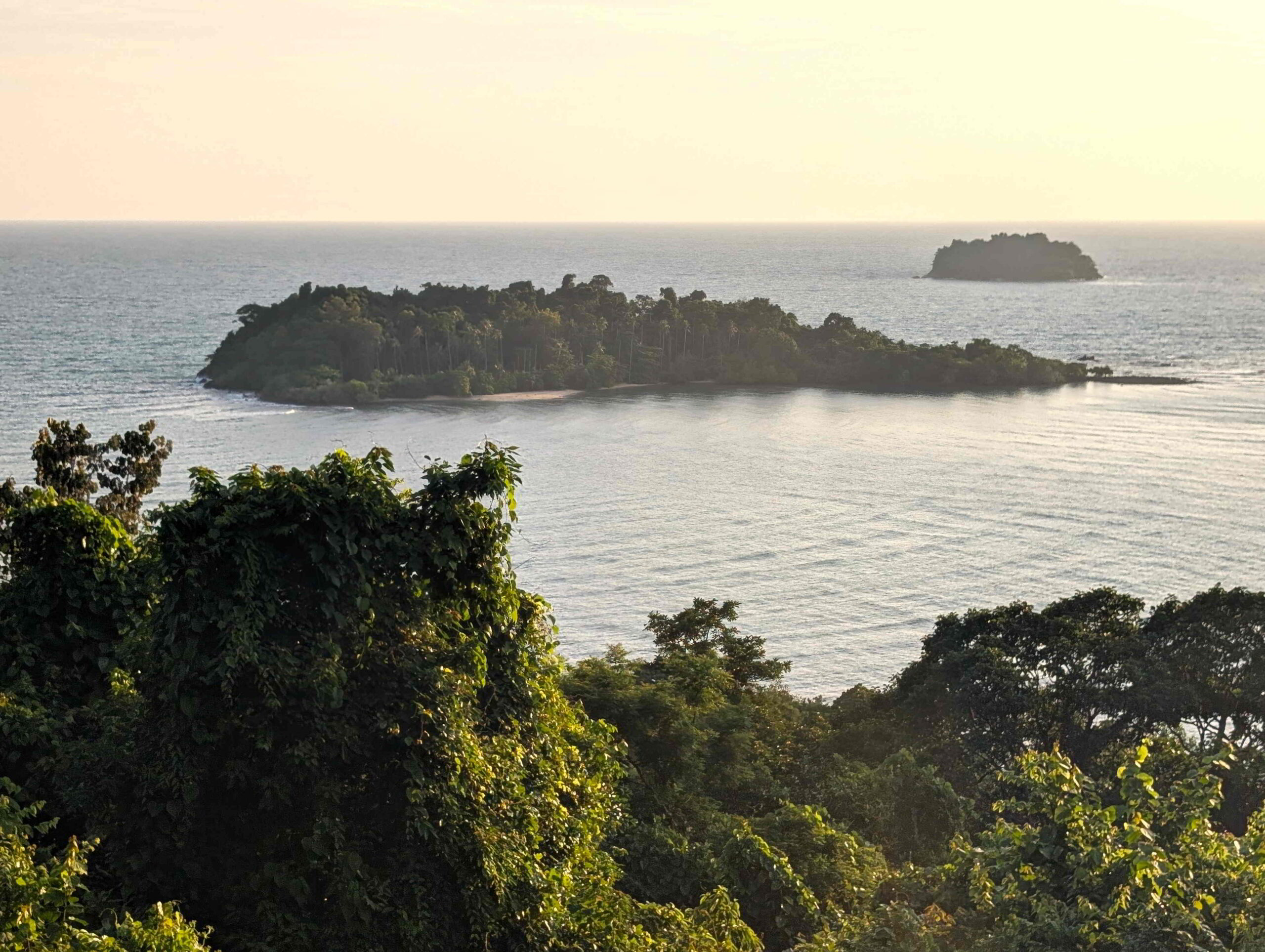
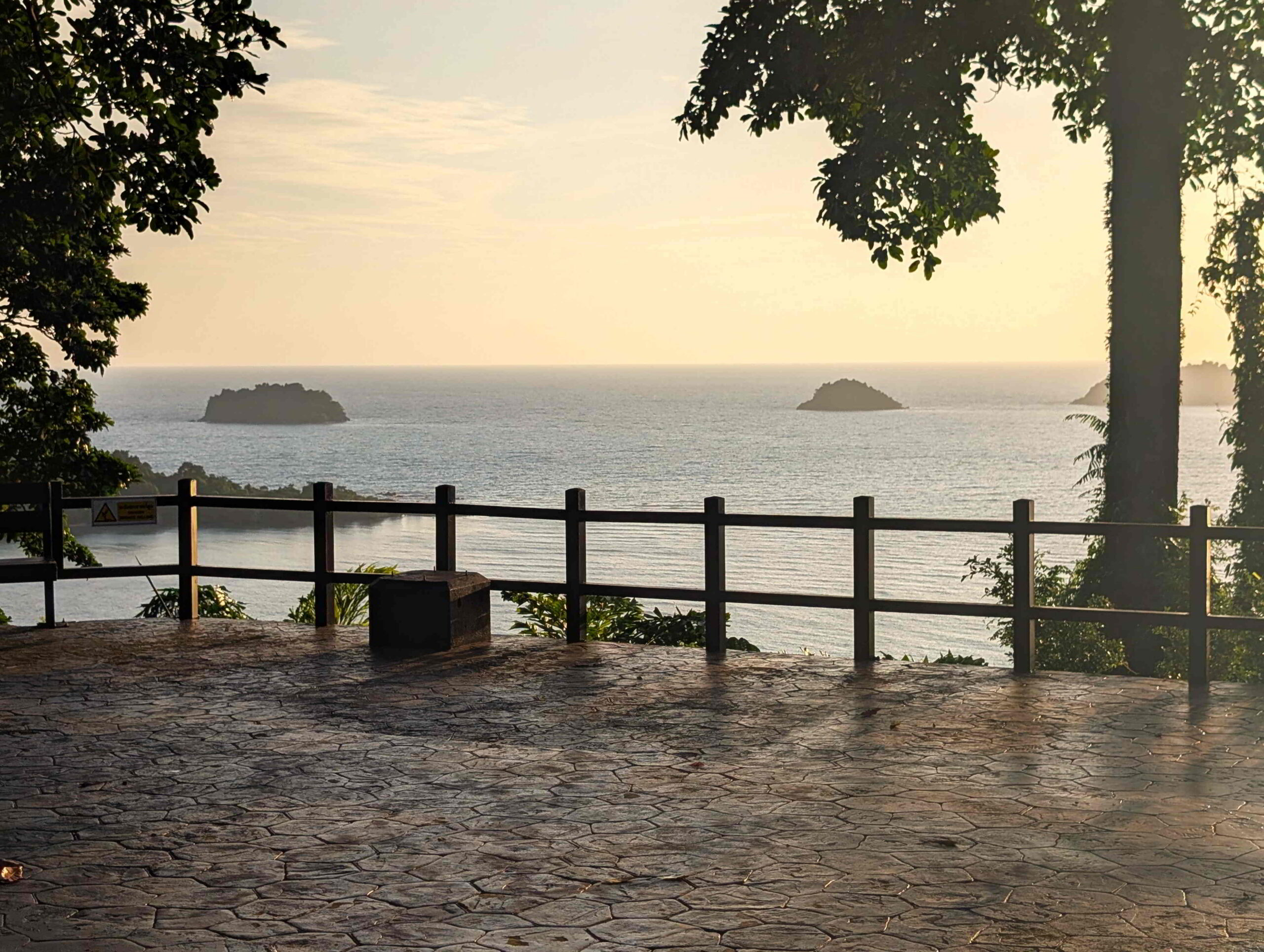
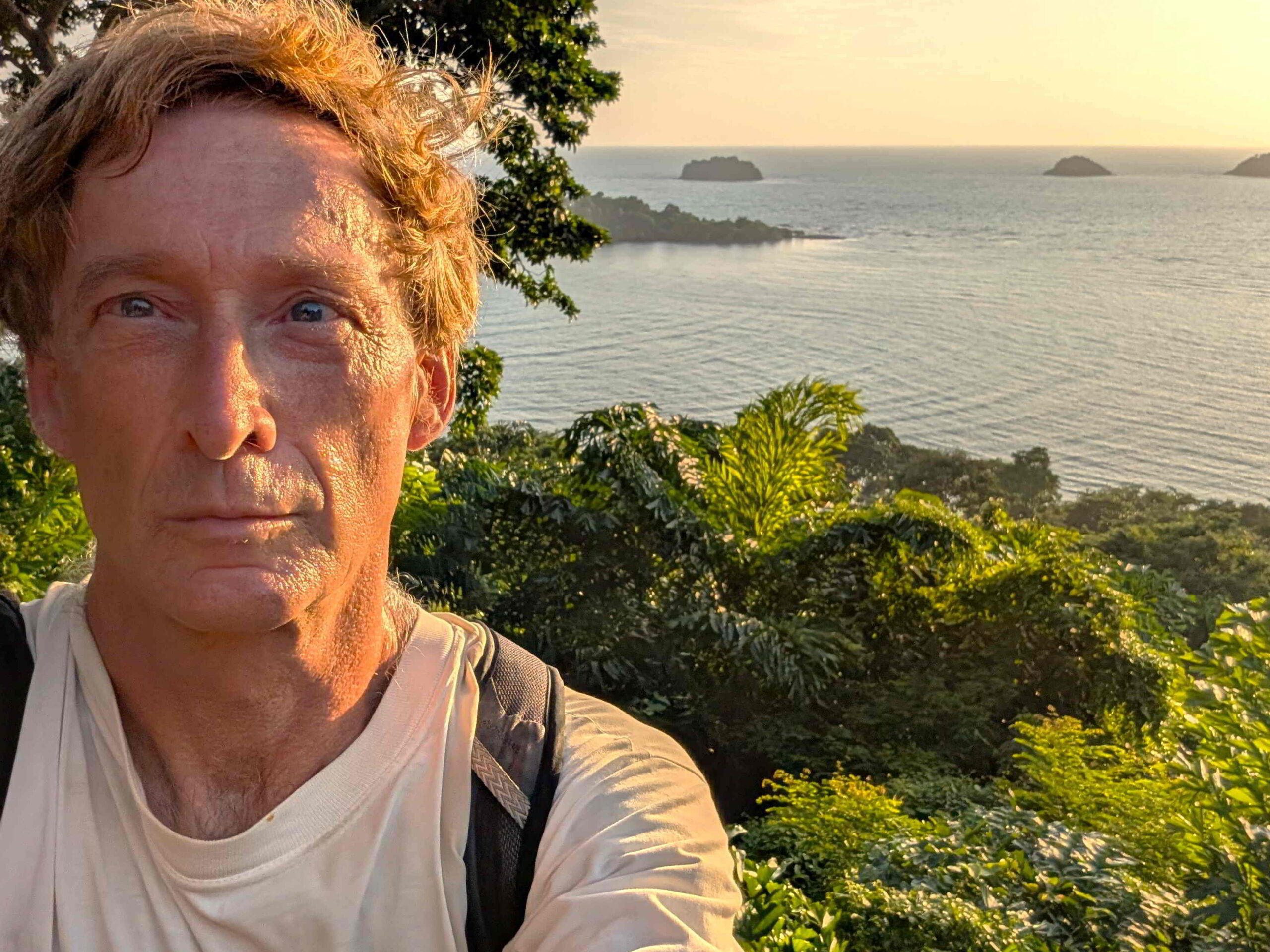
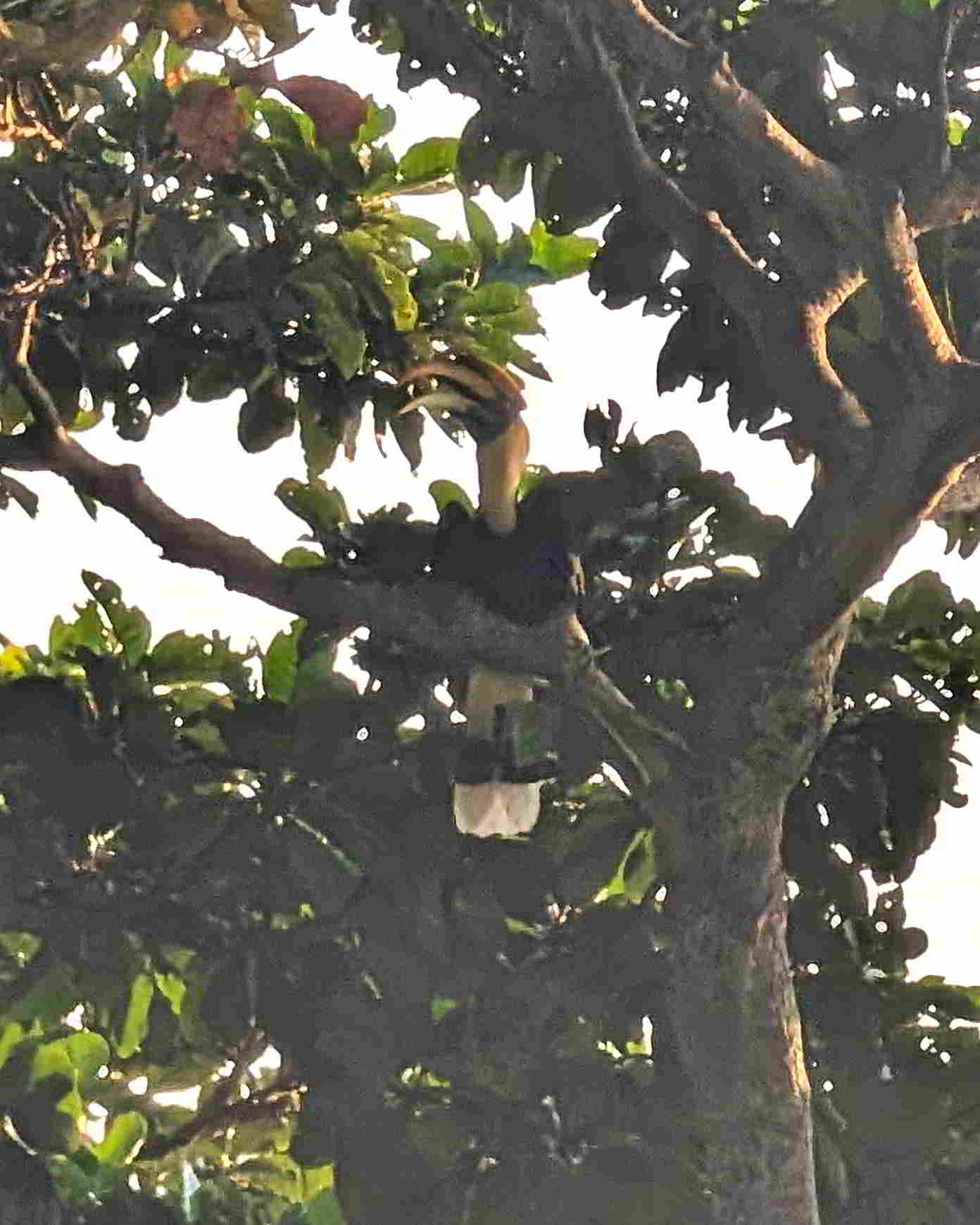
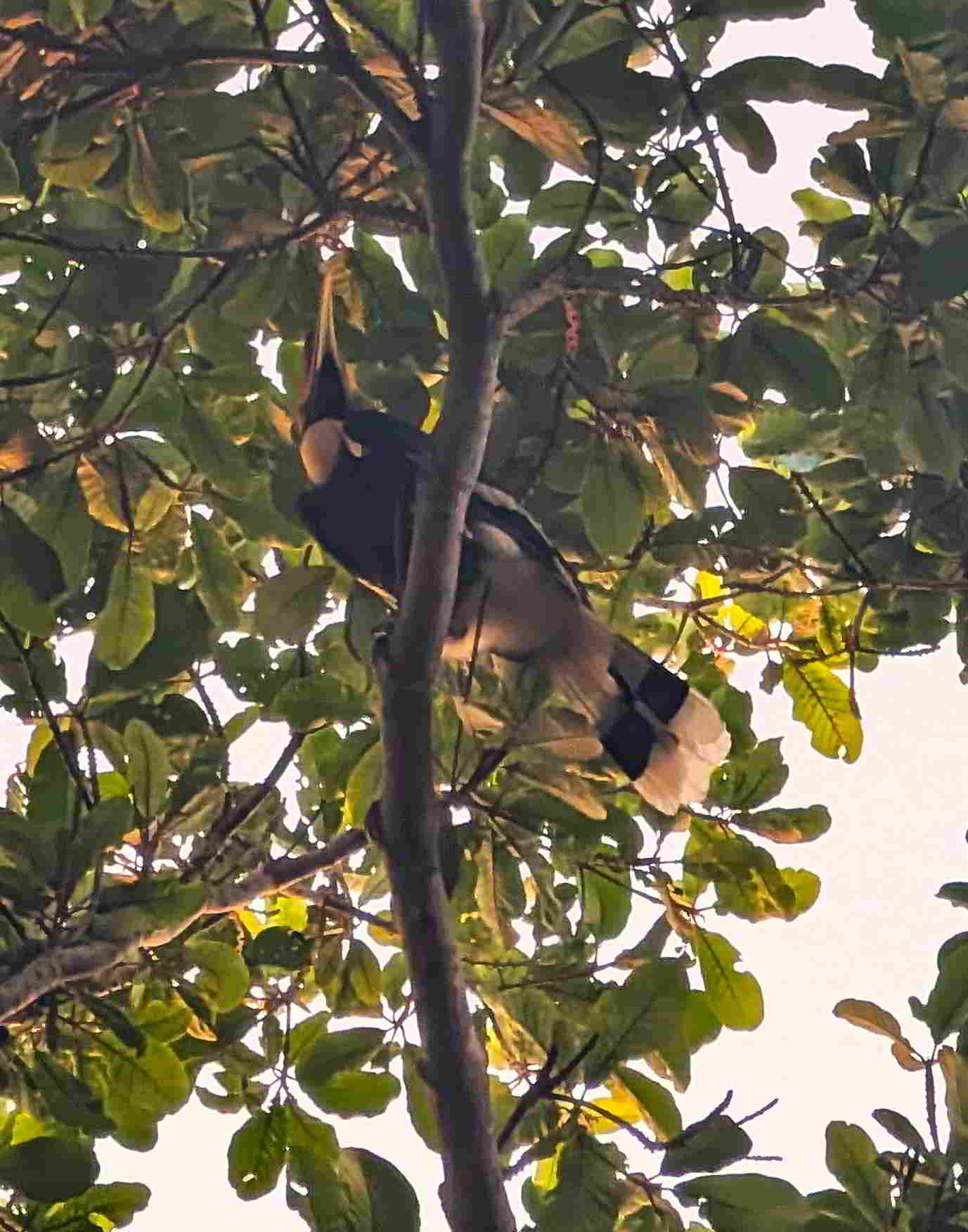
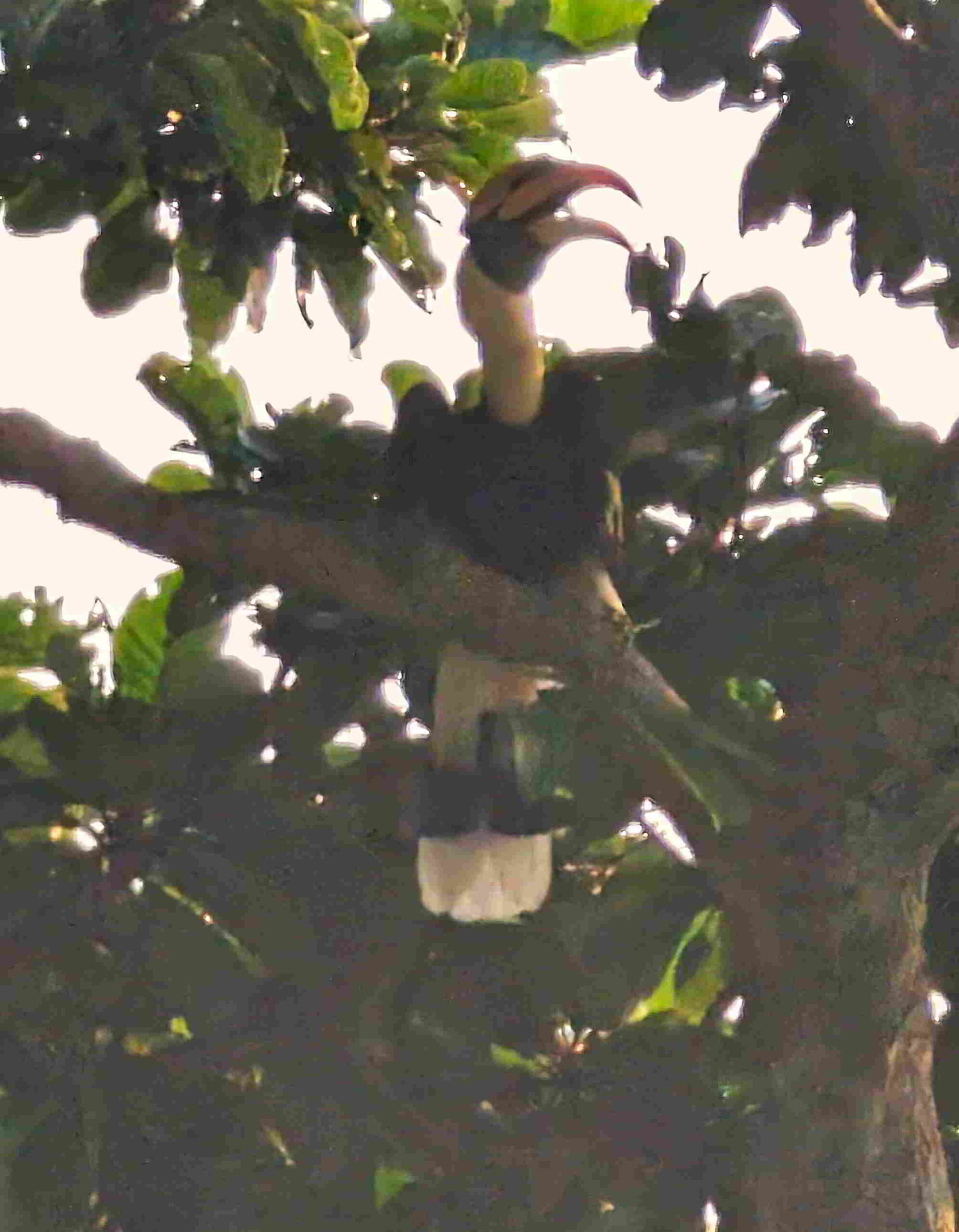
The periphery of the terraces consists of uninterrupted natural forest, the size of some of the hardwood giants testimony to the fact that this pocket has not been touched by development, unlike much of the coastal area to the north that has been ravaged by relentless development. Offshore, there is a group of small islands. There are only a few visitors in the park at this hour, including an Italian woman from Venice and a younger Chinese from Chengdu, who both manage to take spectacular shots of the enormous hornbills roosting in the trees around us. Lamentably, my vaunted Google phone doesn’t compete with their mobile devices, although lighting is also a challenge at this point of the waning afternoon.
Koh Chang — Kai Bae Viewpoint
Koh Chang — Kai Bae Viewpoint
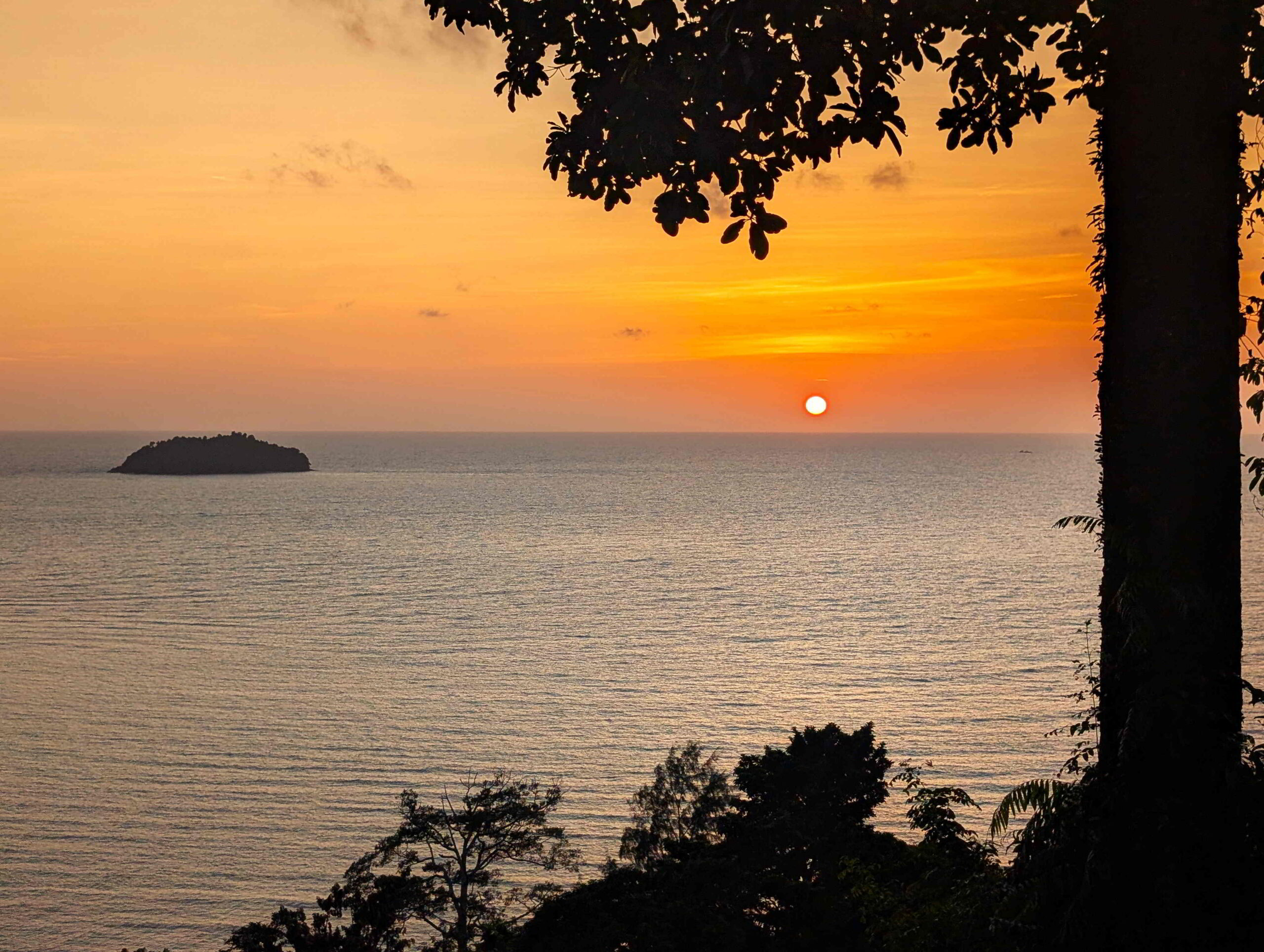
The water below and forest around us darkens with a slightly shimmering glow, and as the sun slowly descends on the horizon with an increasingly golden hue, there is little chance of the sky erupting in colour as it has in the last few days’ sunsets due to the absence of clouds. The Italian woman is enraptured by the natural beauty of the island, having come here many times before. I find her enthusiasm for the pristine nature she perceives of the island strange, given the rampant, unbridled development I have seen to the north of the viewpoint. She counters that the entire interior is untouched, the north side far less developed, and in fact, even the area of road further to the south affected by far less development than I have seen. I guess I will have to spend more time in the next few days plying the roads of the island, rather than just languishing in White Sands.
Koh Chang — Kai Bae Viewpoint
Koh Chang — Kai Bae Viewpoint
It is now getting dark, and probably not a good time to travel further to the south, particularly given how treacherous the roads are. The relentless urban blight I witnessed on the way down takes on a more resonant quality, the visual banalities of the world slipping away as even the most innocuous establishments achieve a renewed vigor with all manner of bright and whimsical lighting.
Koh Chang — Kai Bae Viewpoint
Koh Chang — Kai Bae Viewpoint
Despite the amount of eateries and bars in the continuous sprawl leading back to White Sands, almost all of the restaurants have at least some patrons, an even mix between Caucasians and Thai, including families, mixed families, young couples, and groups of young women. The presence of the young Thai women, older white men, and mixed Caucasian/Thai couples points to an outflow from Pattaya, while the families and younger whites comprise a more traditional tourist demographic.
Koh Chang — Kai Bae Viewpoint
Koh Chang — Kai Bae Viewpoint
I wouldn’t mind exploring the culinary wonders of some of the establishments on the road, but anything offered here will probably also be found in White Sands itself — and I do need to get to town to pay the owner of the rental scooter for another night before she closes for the day. Not far beyond is a modest Thai eatery set back some distance from the road, next to a Muay Thai ring. As could be expected in such a tourist enclave in southern Thailand, the Thai food will be excellent, and the galangal coconut soup I order is exquisite, the flavour of the broth tangy and fragrant, the freshness of the galangal and other canonical herbs imbuing the dish with an extraordinarily vibrant quality.
Koh Chang — Kai Bae Viewpoint
Koh Chang — Kai Bae Viewpoint
Coming from the culinary disaster of southwestern China, I still find it hard to believe that I am eating such inspiring food. The passion fruit juice I order couldn’t be better. Around me is a mix of young farang and farang/Thai families, almost all of the Caucasians German. It is becoming increasingly apparent that the island is taken over by Germans who can simply afford to spend copious amounts of time — and money — wiling away their time wherever, probably in the innumerable roadside motels and bungalows sequestered in the forest somewhere on the island.
Koh Chang — Kai Bae Viewpoint
Koh Chang — Kai Bae Viewpoint
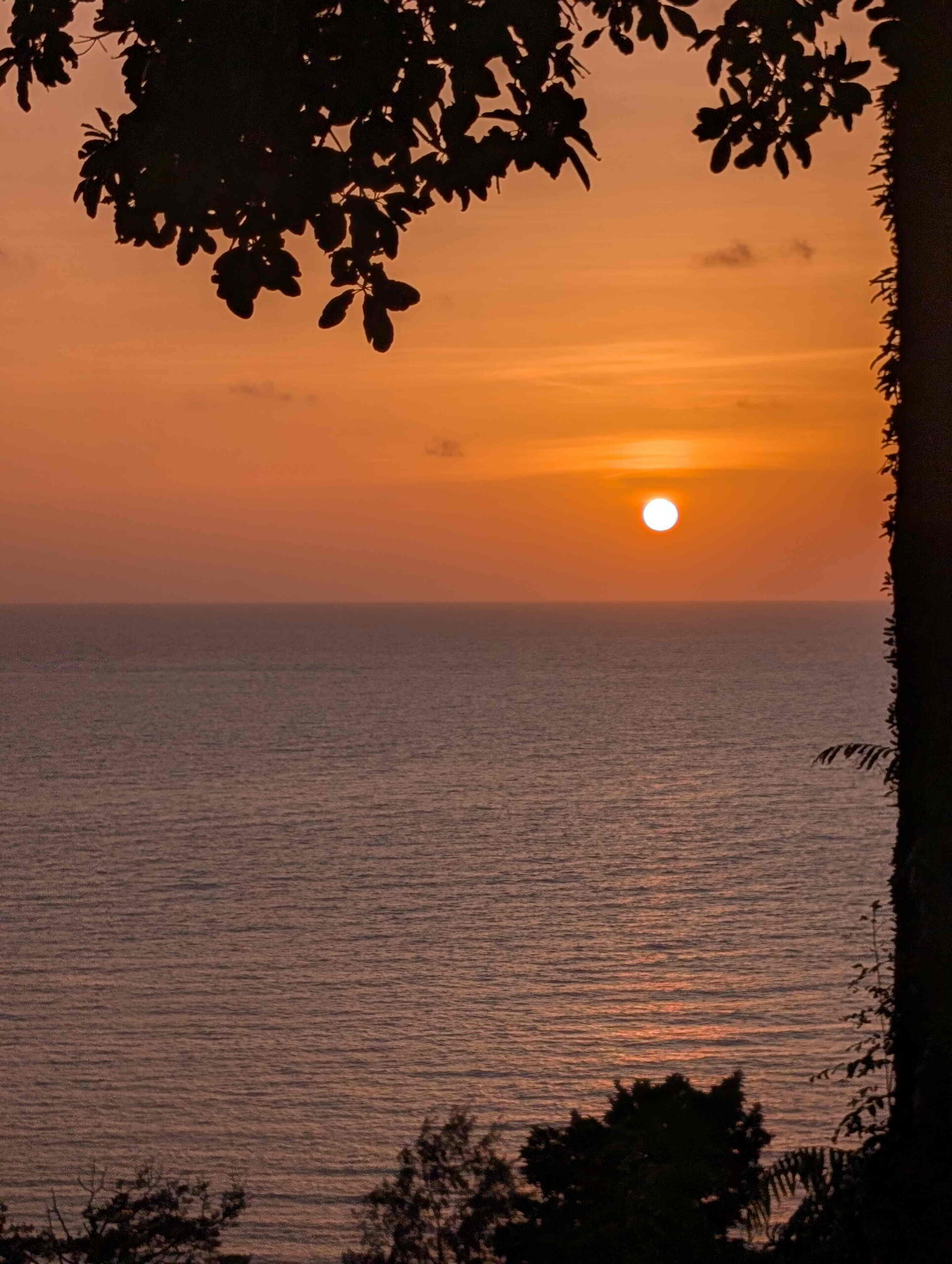
Koh Chang — Kai Bae Viewpoint