November 10, 2025
Besides packing up and getting ready for another move, this time into uncertain territory, given the inclement weather forecasted for the next few days. I also plan on visiting the Fairy Caves to the north of Keelung’s harbour, largely because they should be protected from the rain. My primary intent had been to visit the major museums in town, but alas, yet again it happens to be Monday, so that the museums are all closed.
On Zhong 3rd road, in a place I had deemed to be a food desert, I find a buffet-style restaurant with trays heaving with all manner of Chinese standards, not only flavourful, but seeing what I am about to eat helps. And a generous plate of diverse vegetables, noodles, rice, and stewed beef for a grand total of NT$130 also doesn’t hurt. At the corner with Xiao 3rd Road, the coffee shop I had already visited, the espresso as sublime as it was the first time around.
Keelung — Fairy Cave
Keelung — Fairy Cave
Keelung — Fairy Cave
Keelung — Fairy Cave
One of two buses offer relatively frequent service to the area of the Fairy Caves, although they do loop through a considerable fringe of Keelung, the neighborhoods not particularly interesting, but revealing how much larger the town is than a visit to the centre would reveal. Further to the west, the town also becomes quite modern, a surprising turn from the perennially dilapidated buildings that seem to be the norm.
Keelung — Fairy Cave
Keelung — Fairy Cave
Keelung — Fairy Cave
Keelung — Fairy Cave
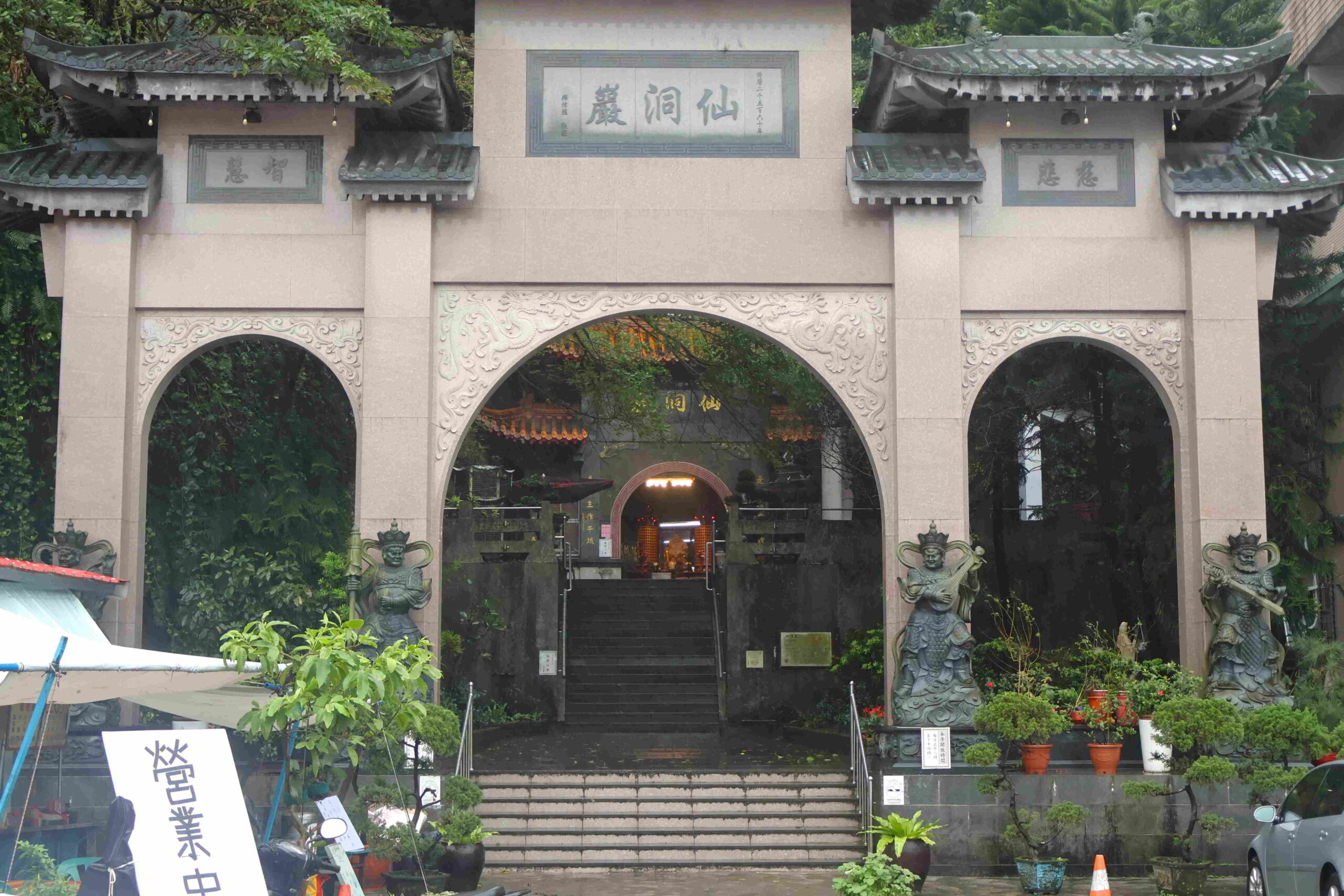
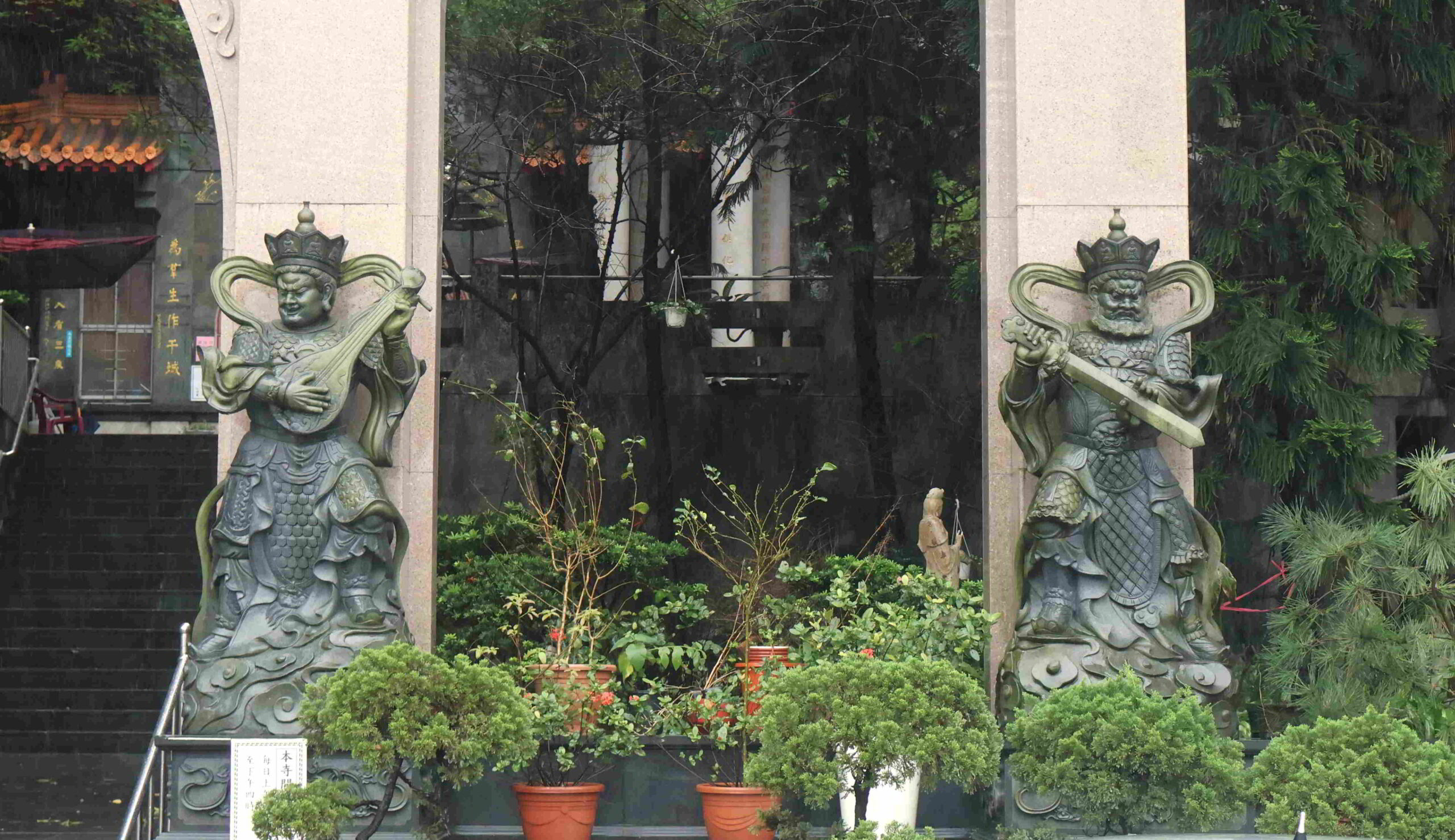
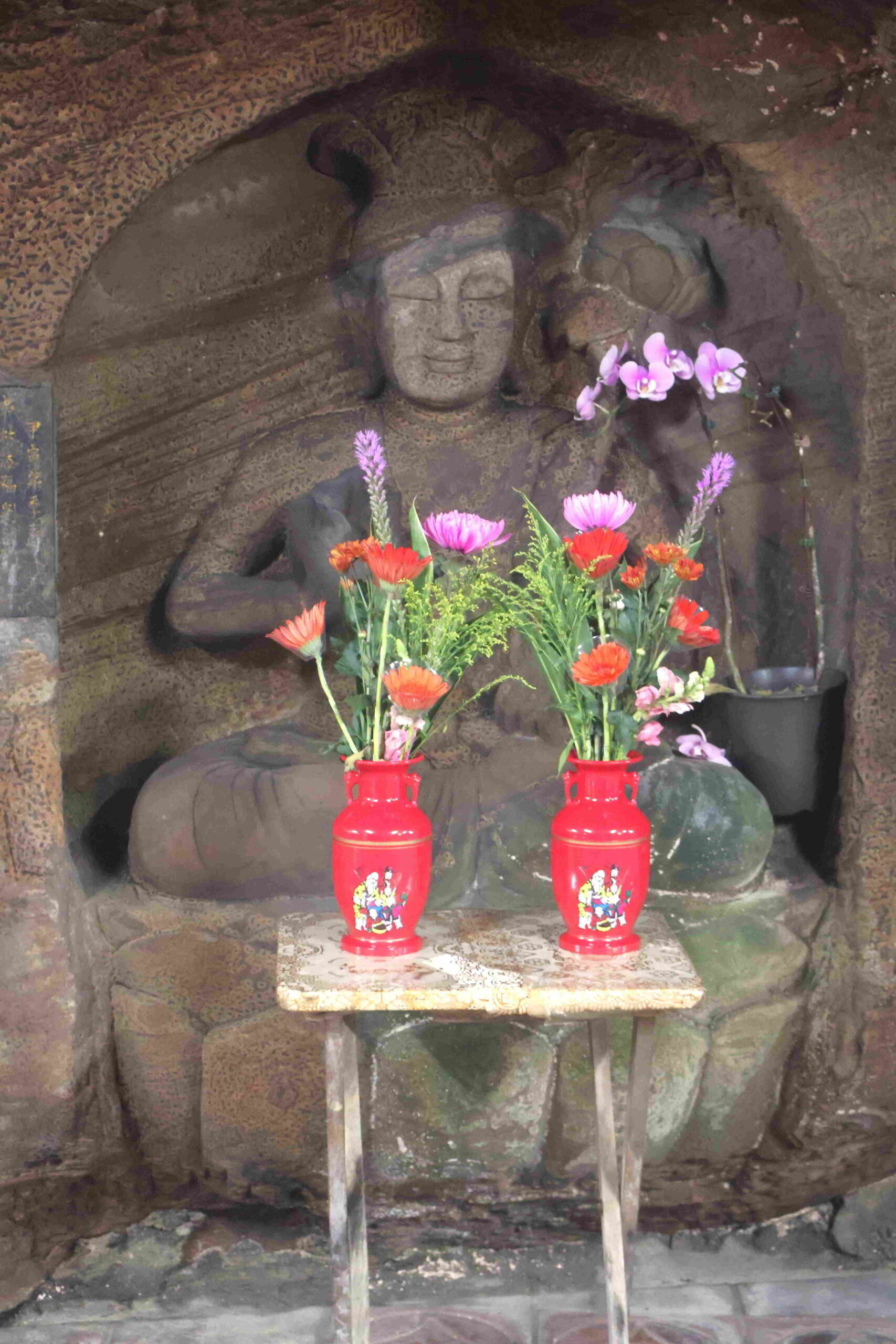
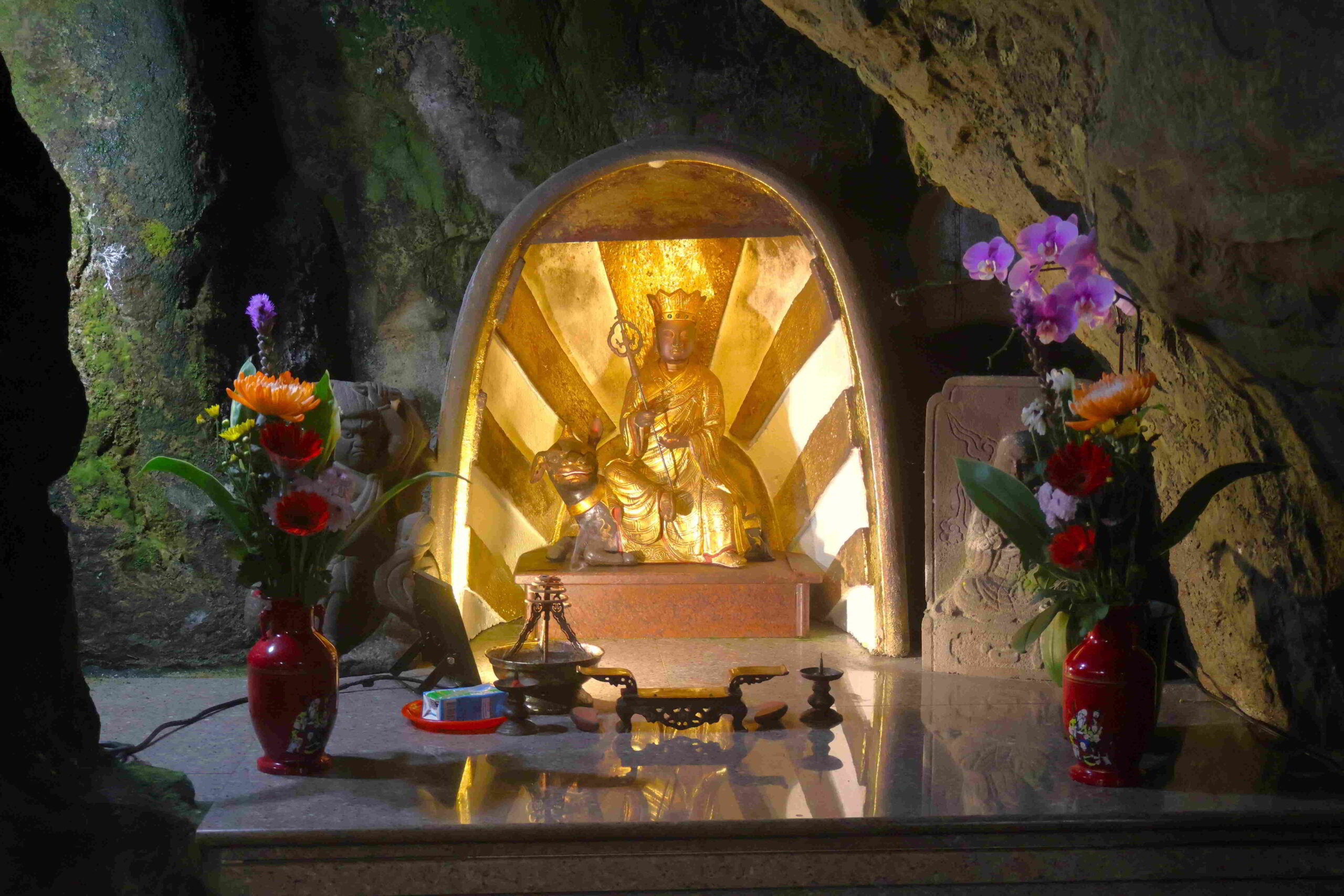
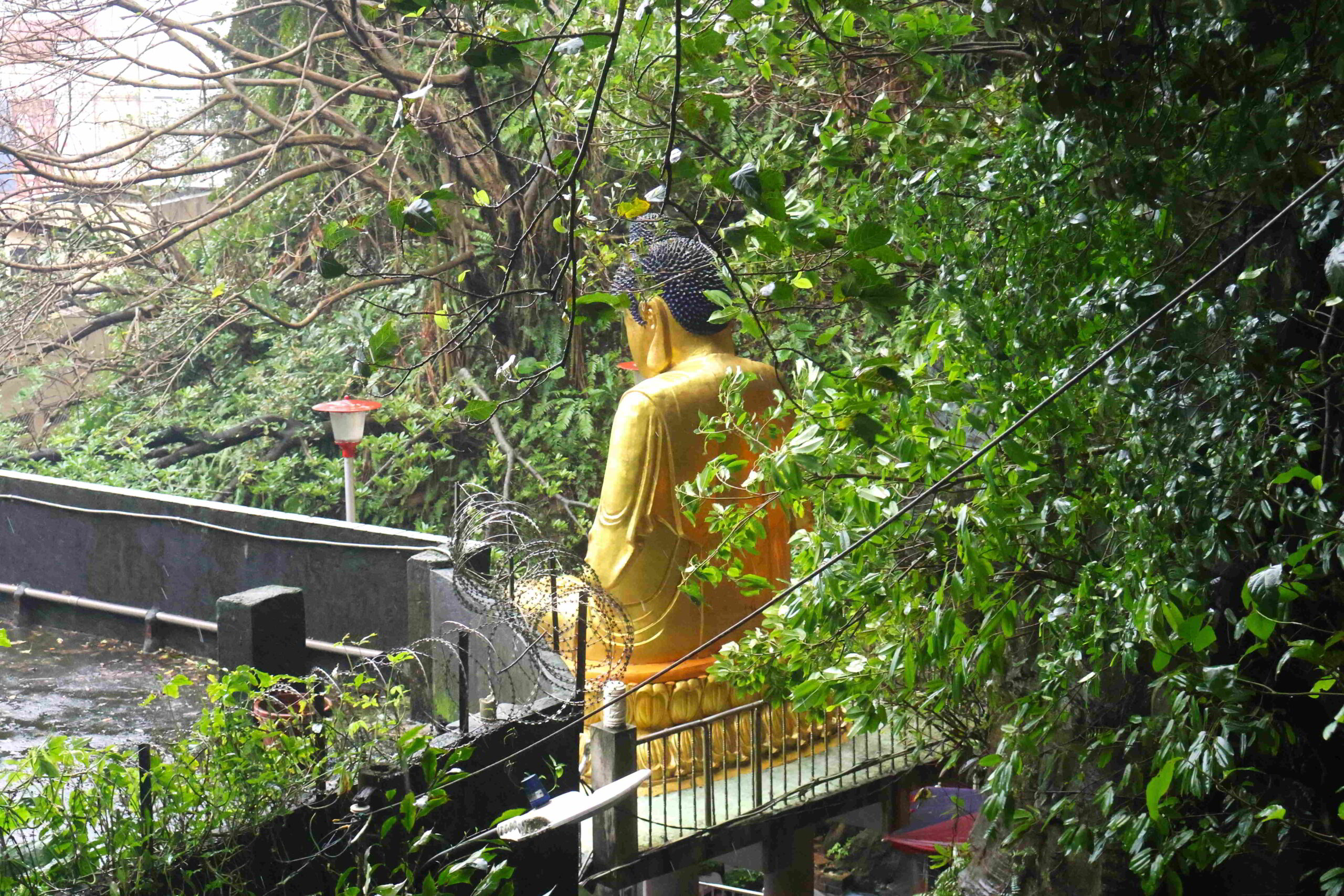
The caves are in an incongruous setting, tucked inland from the sprawling container port; from the bus stop through a decorative plaza, up a flight of steps to the entrance of the cave, views open up of the harbour, albeit screened by foliage, visibility also considerably reduced thanks to the ongoing rain and heavily clouded sky.
Keelung — Fairy Cave
Keelung — Fairy Cave
Keelung — Fairy Cave
Keelung — Fairy Cave
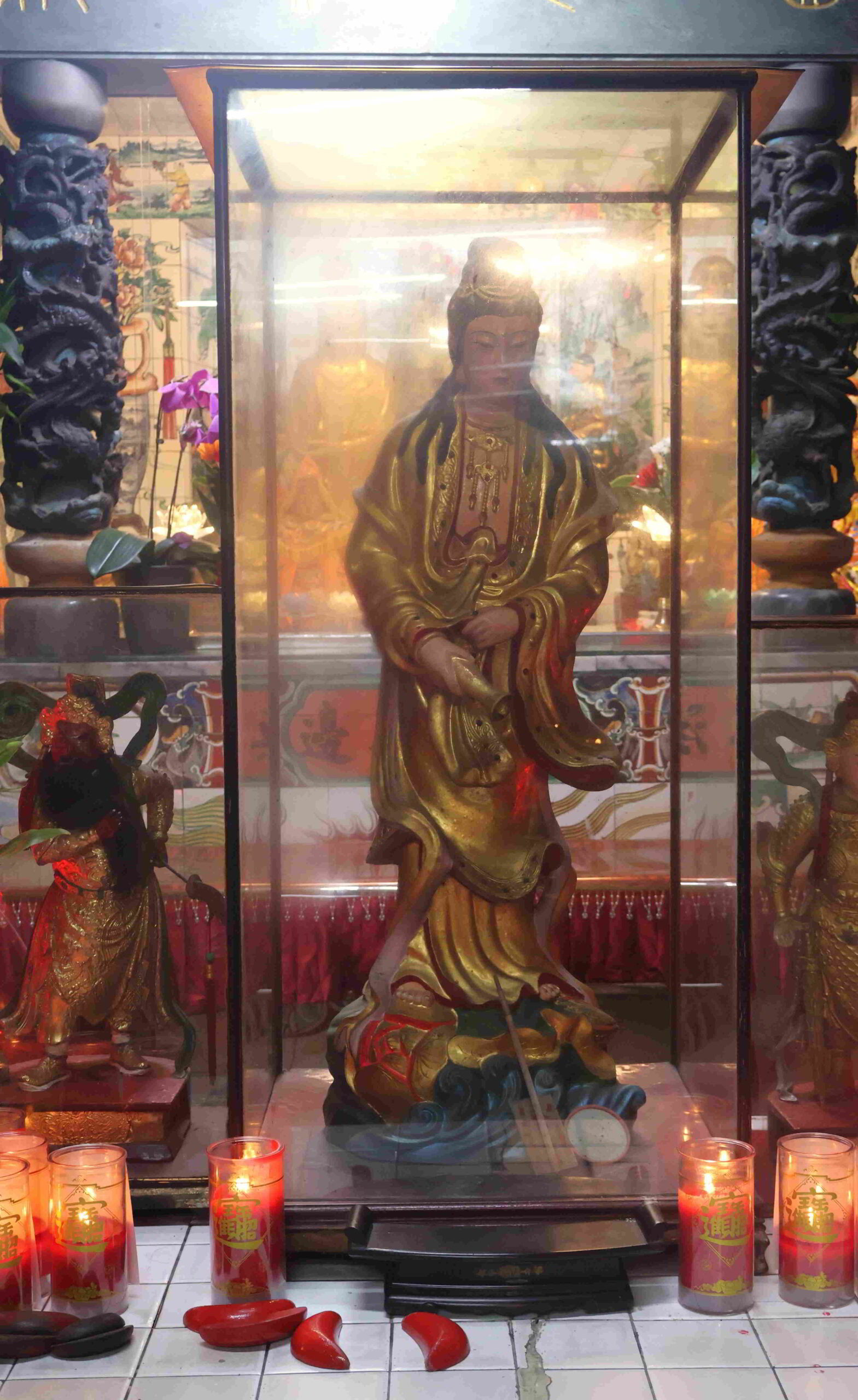
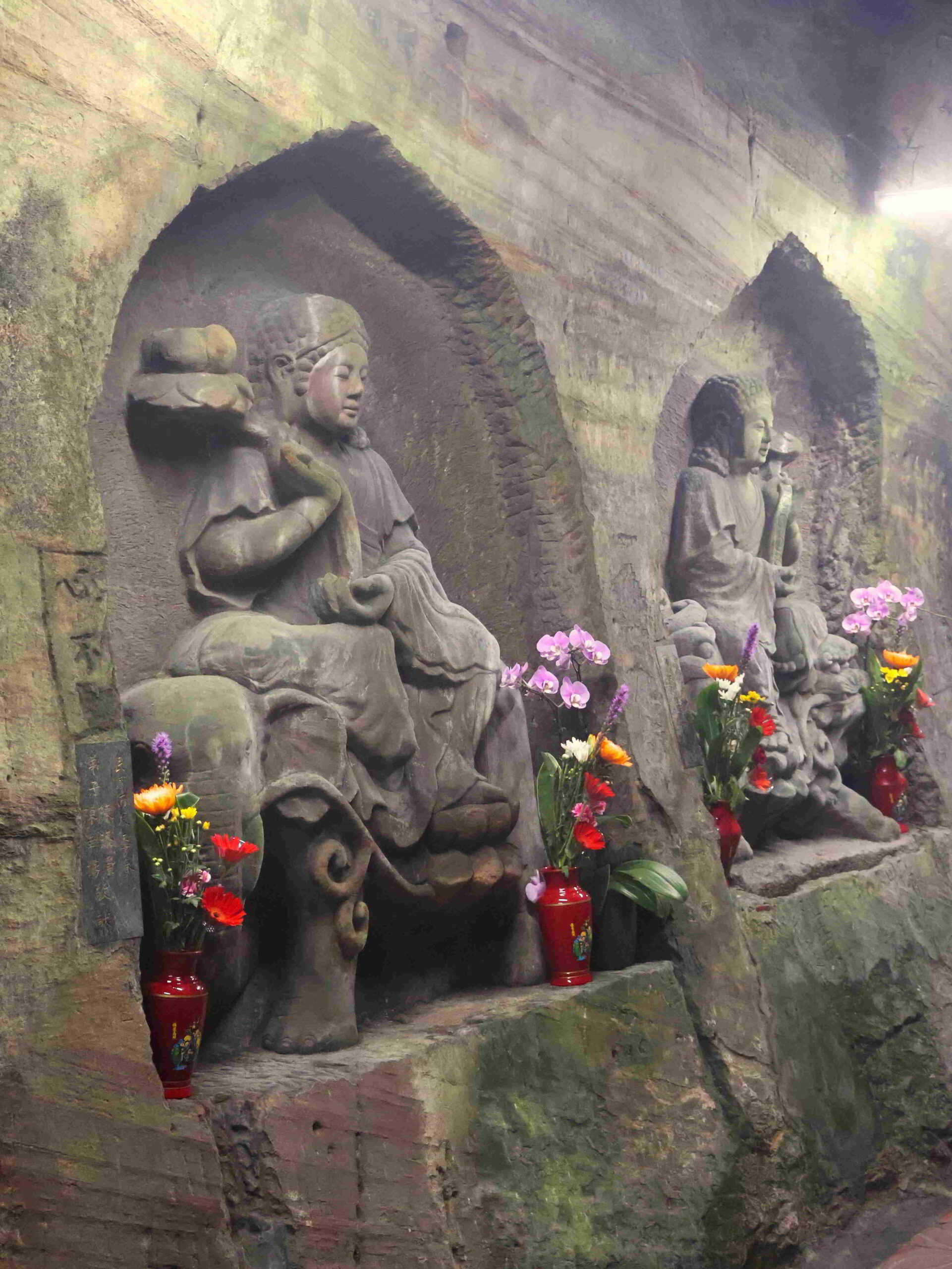
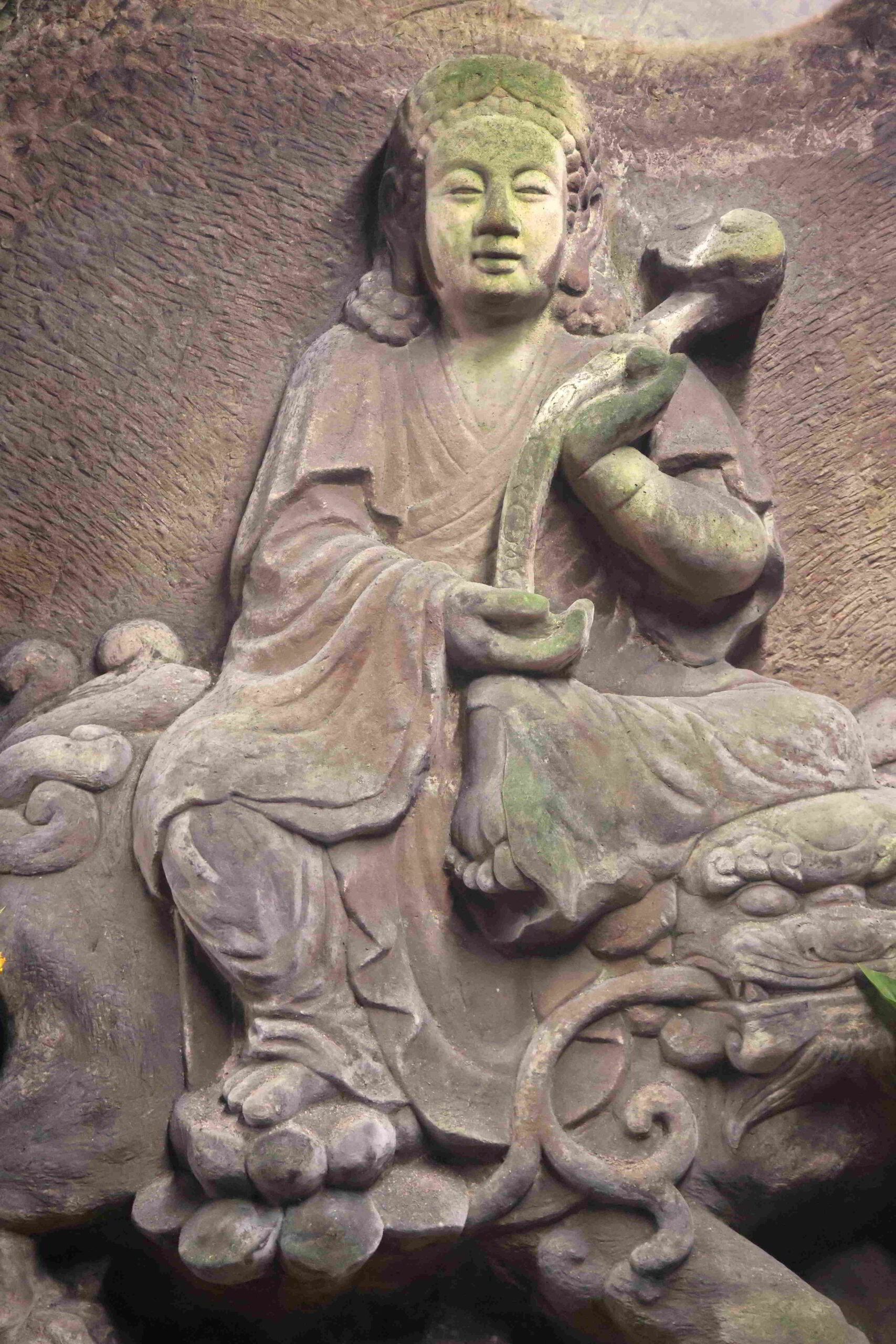
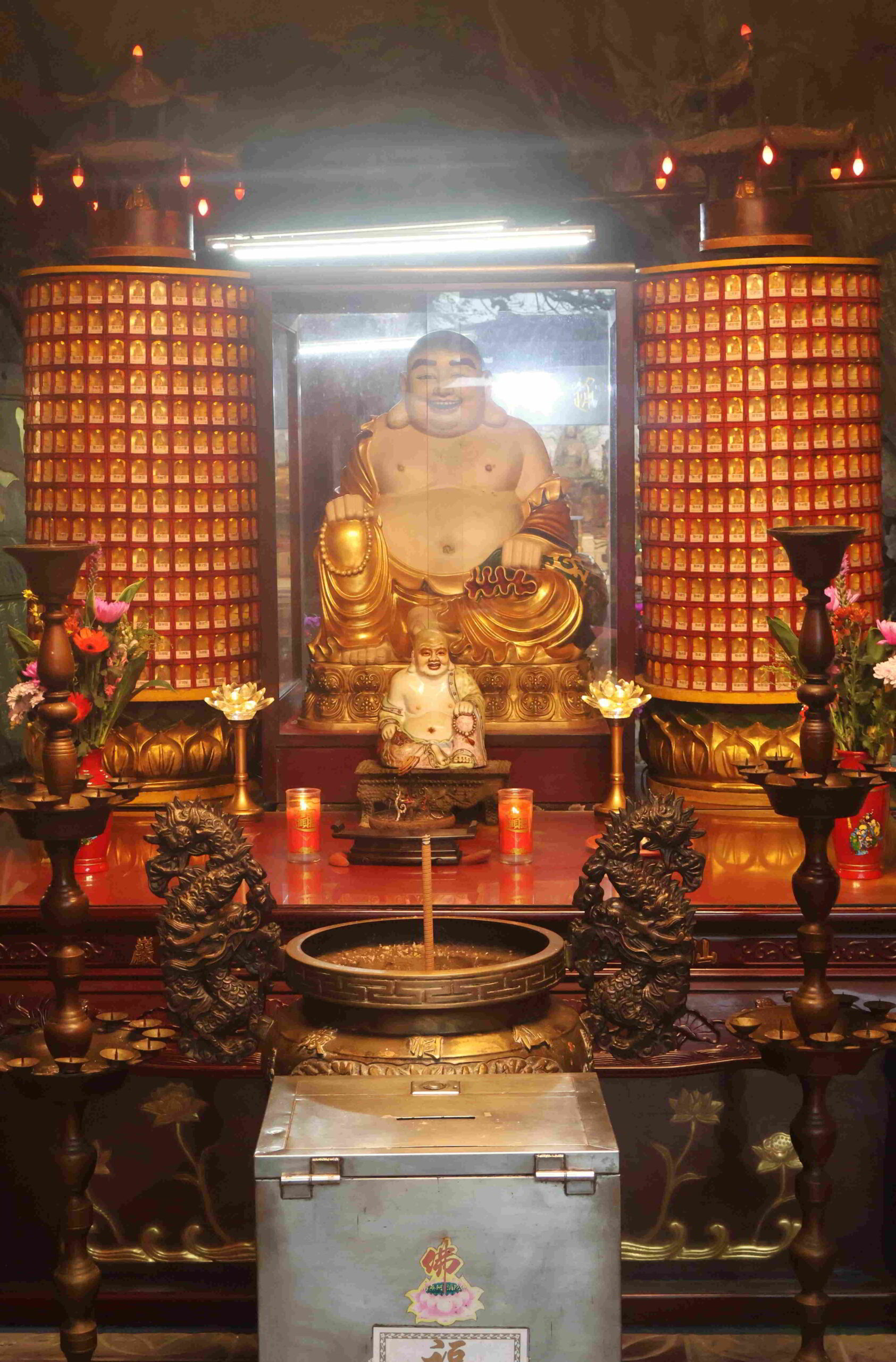
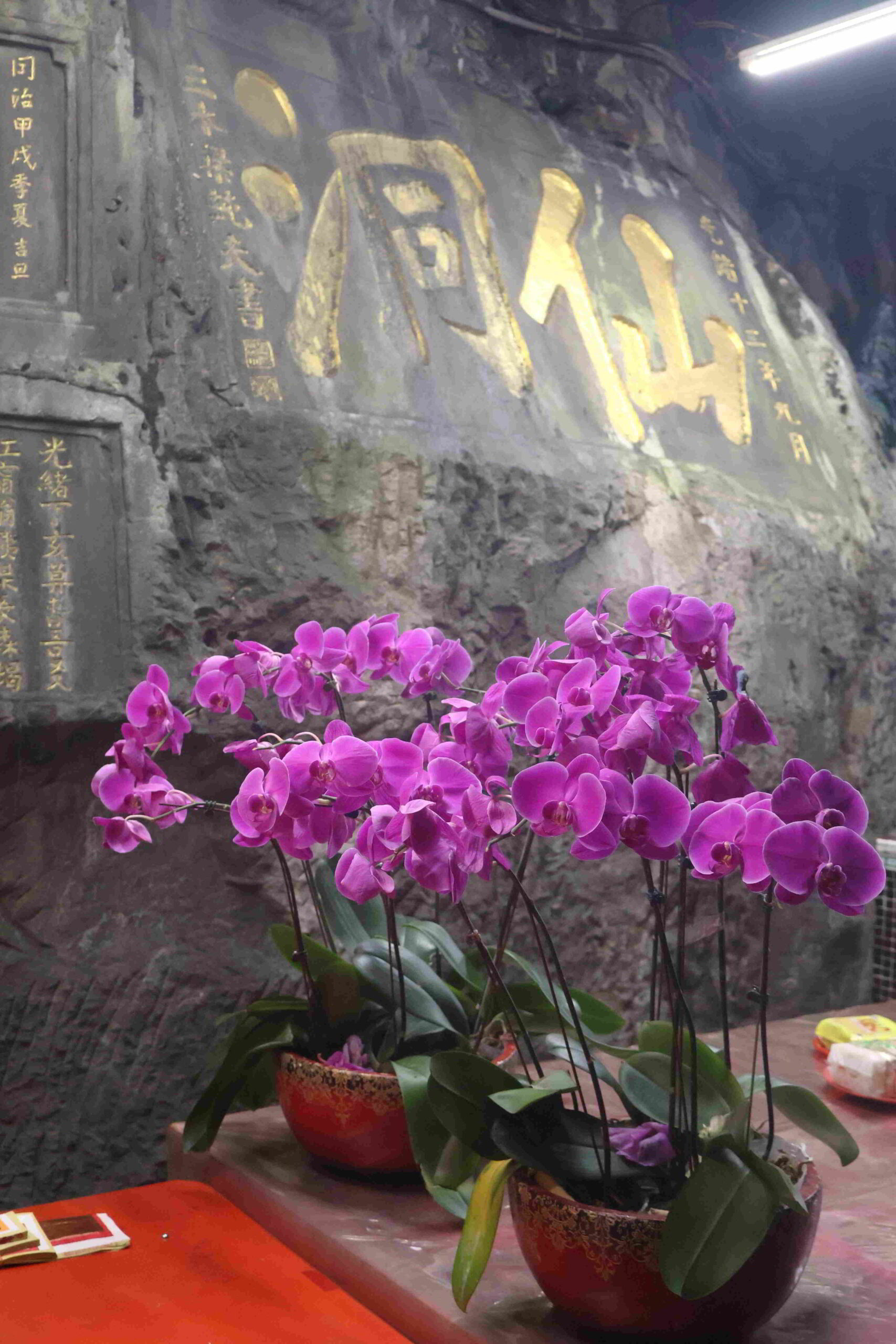
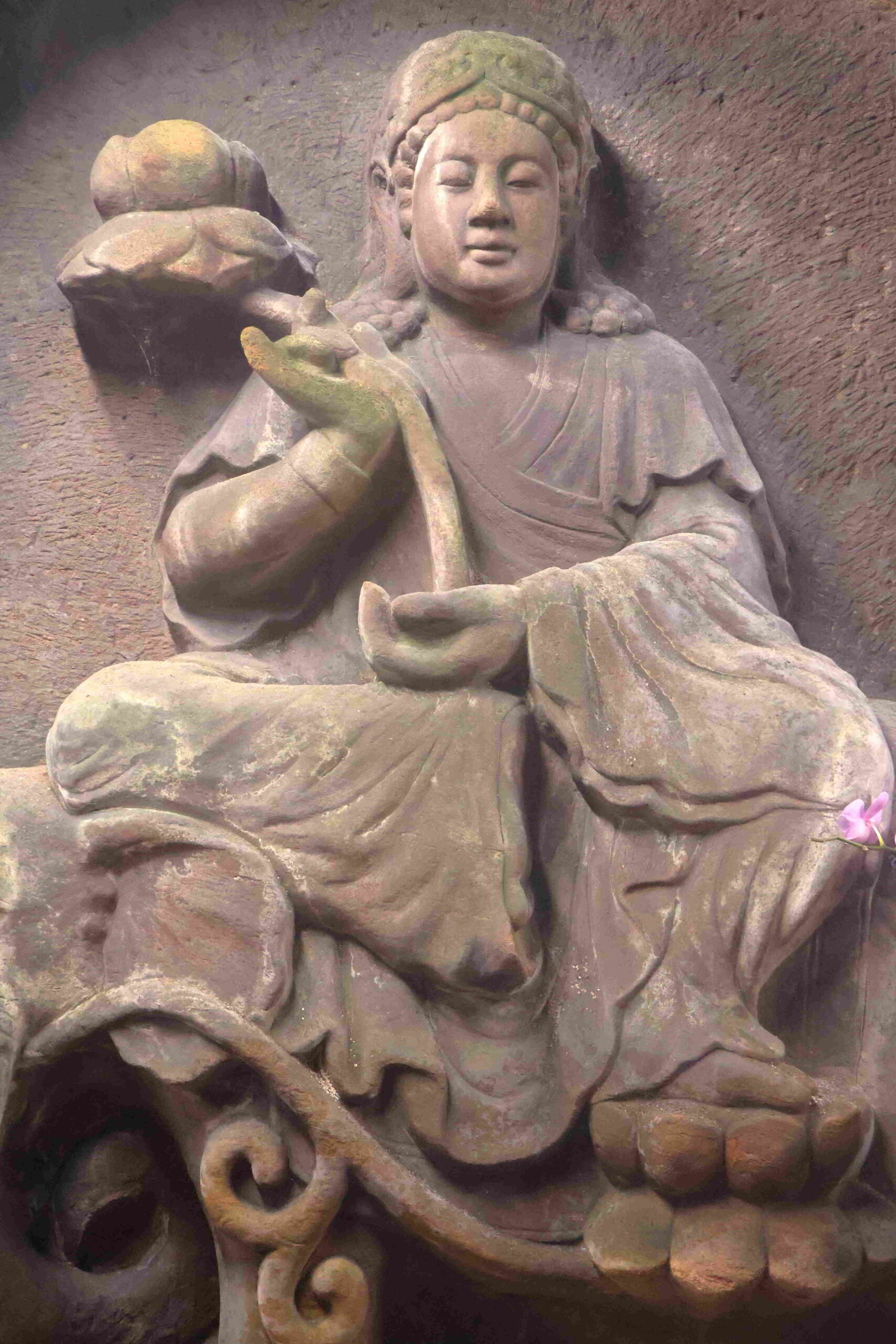
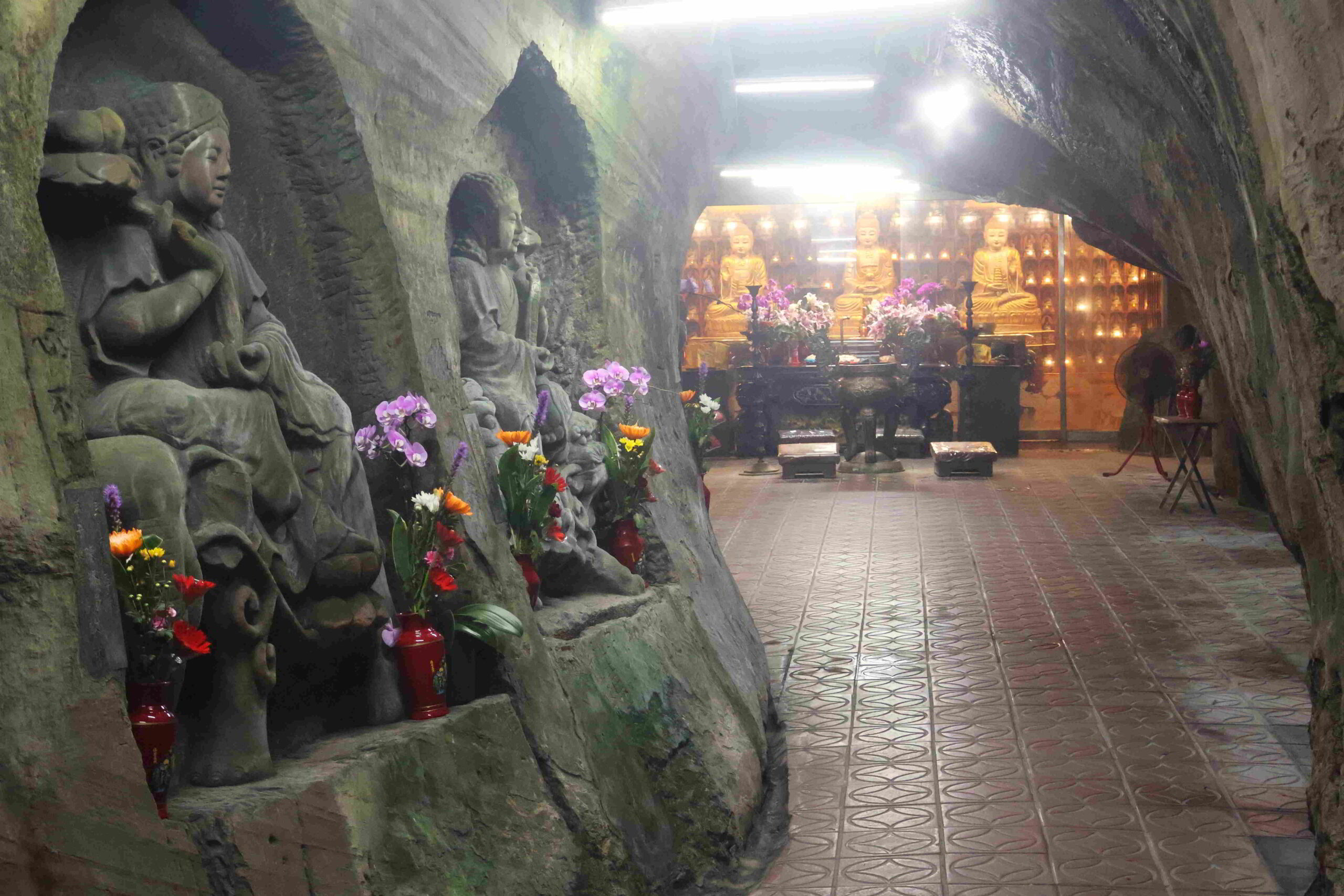
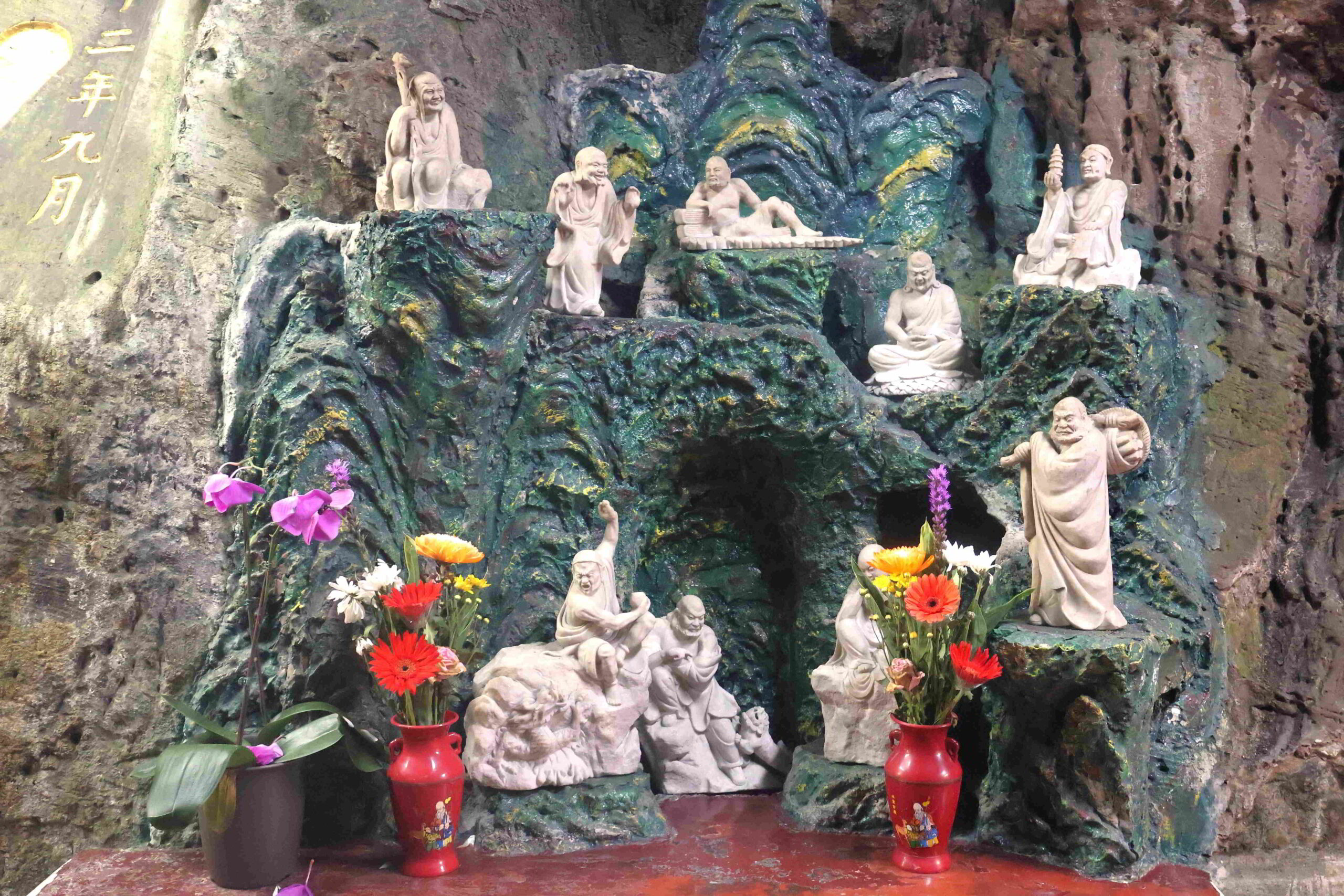
Inside, the cave is laced with the predictable Taoist temple gems, dragon pillars, xianglu incense burners, pillars of Guangming Deng blessing lights, floral offerings in the form of bouquets of blue orchids, sculptures of Taoist gods, some solitary, some enthroned in shrines and encased in intricately carved panels.
Keelung — Fairy Cave
Keelung — Fairy Cave
Keelung — Fairy Cave
Keelung — Fairy Cave
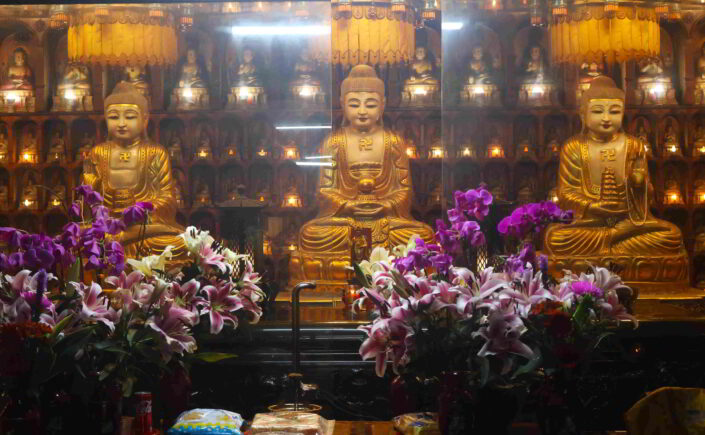
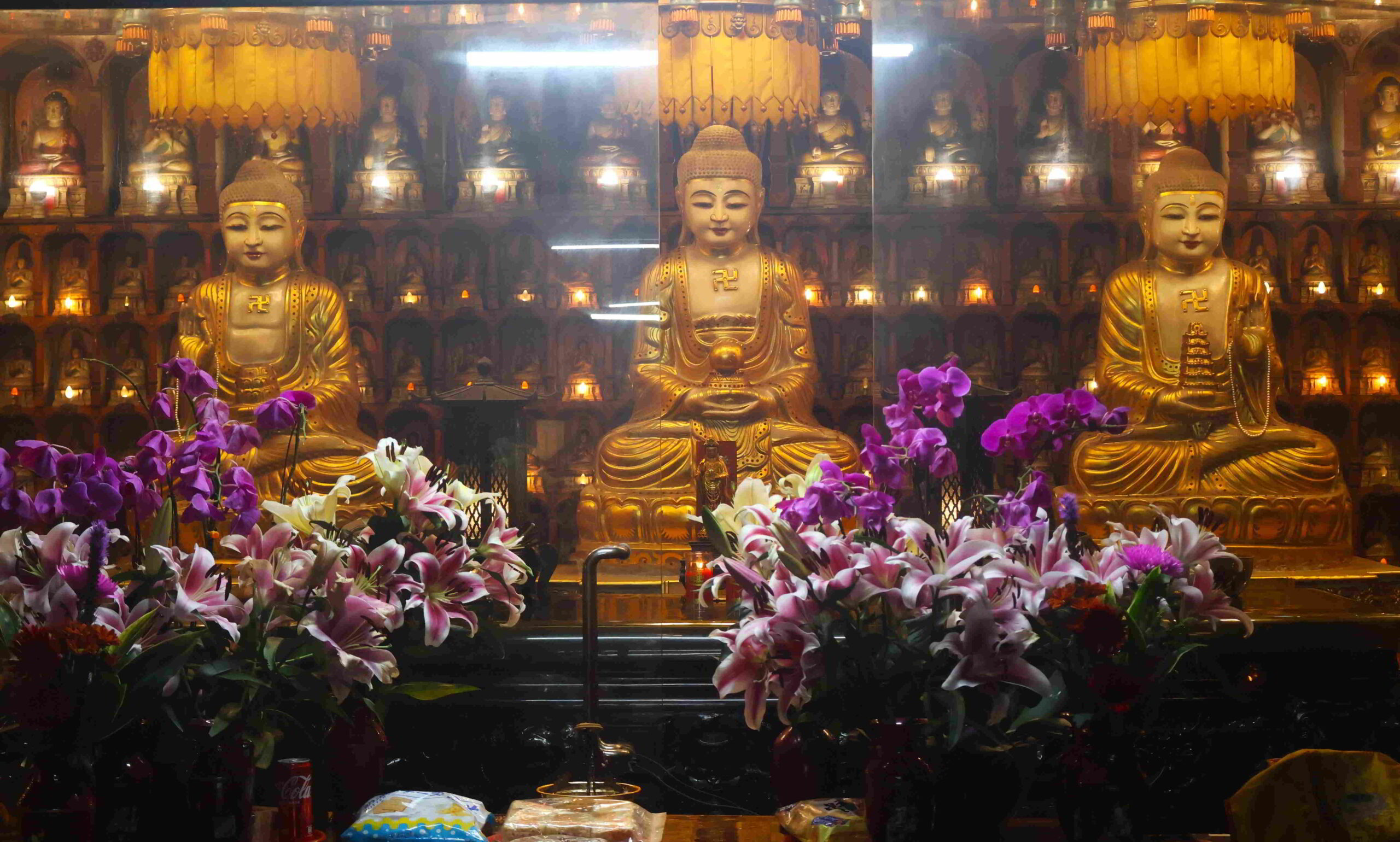
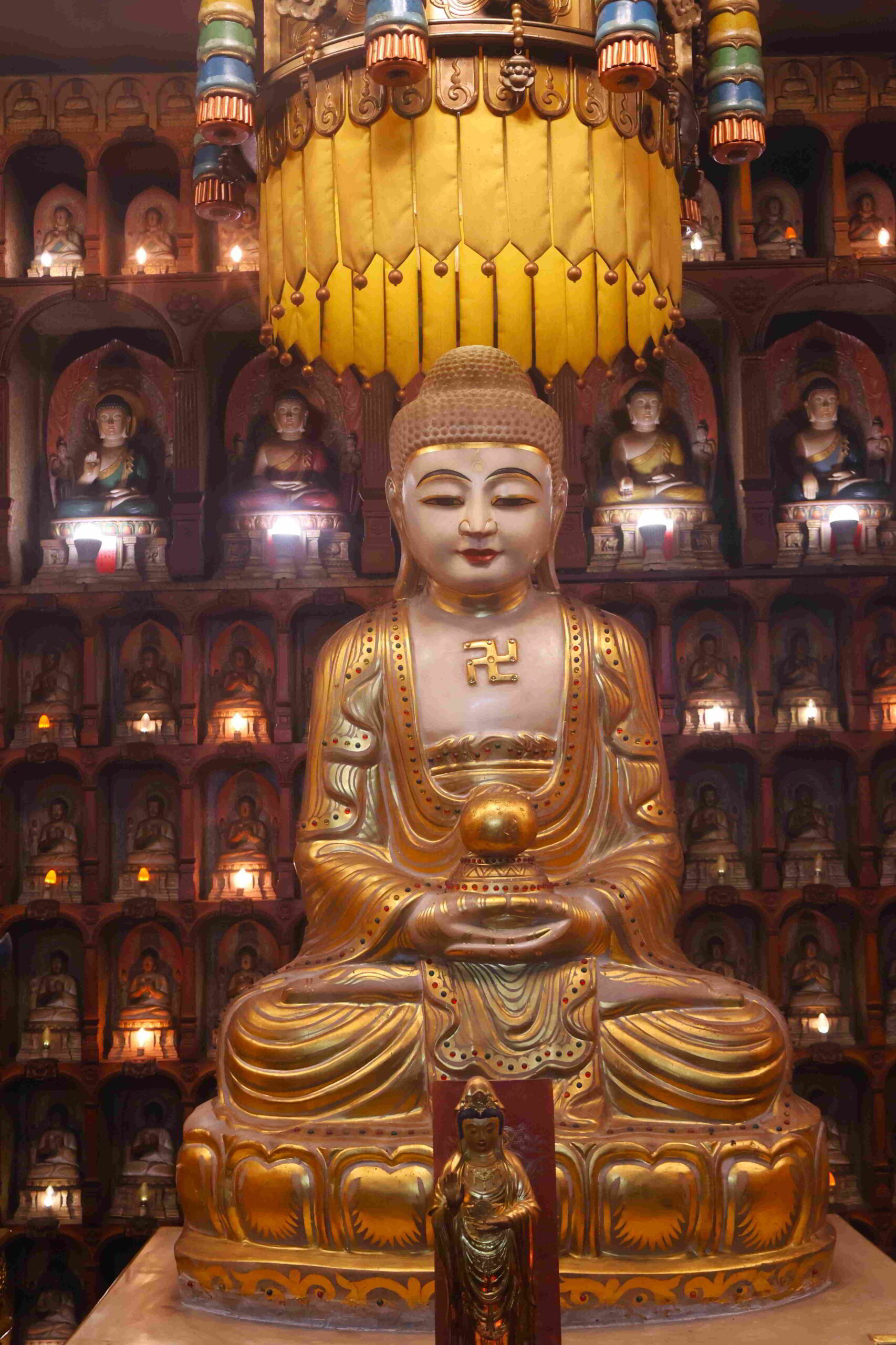
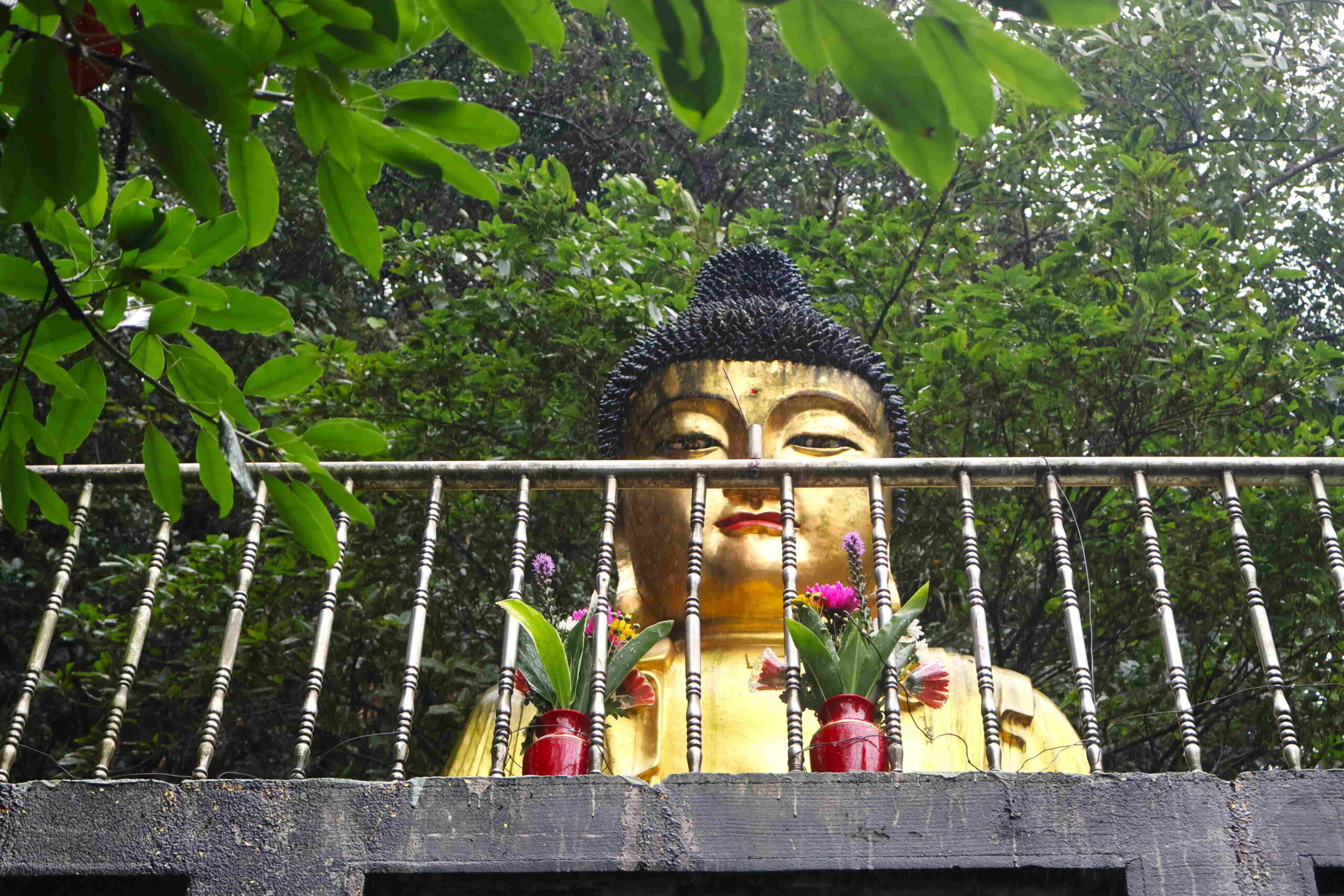
The principal temple doesn’t seem to be so large, culminating in a shrine containing what appears to be three identical Buddhas, in front of which stand voluptuous bouquets of orchids and lilies, the rear lined with small statues of Buddha and blessing lights. To the side of the altar runs a tortuously narrow channel presumably leading to another shrine, but the path is too long and challenging to navigate.
Keelung — Fairy Cave
Keelung — Fairy Cave
Keelung — Fairy Cave
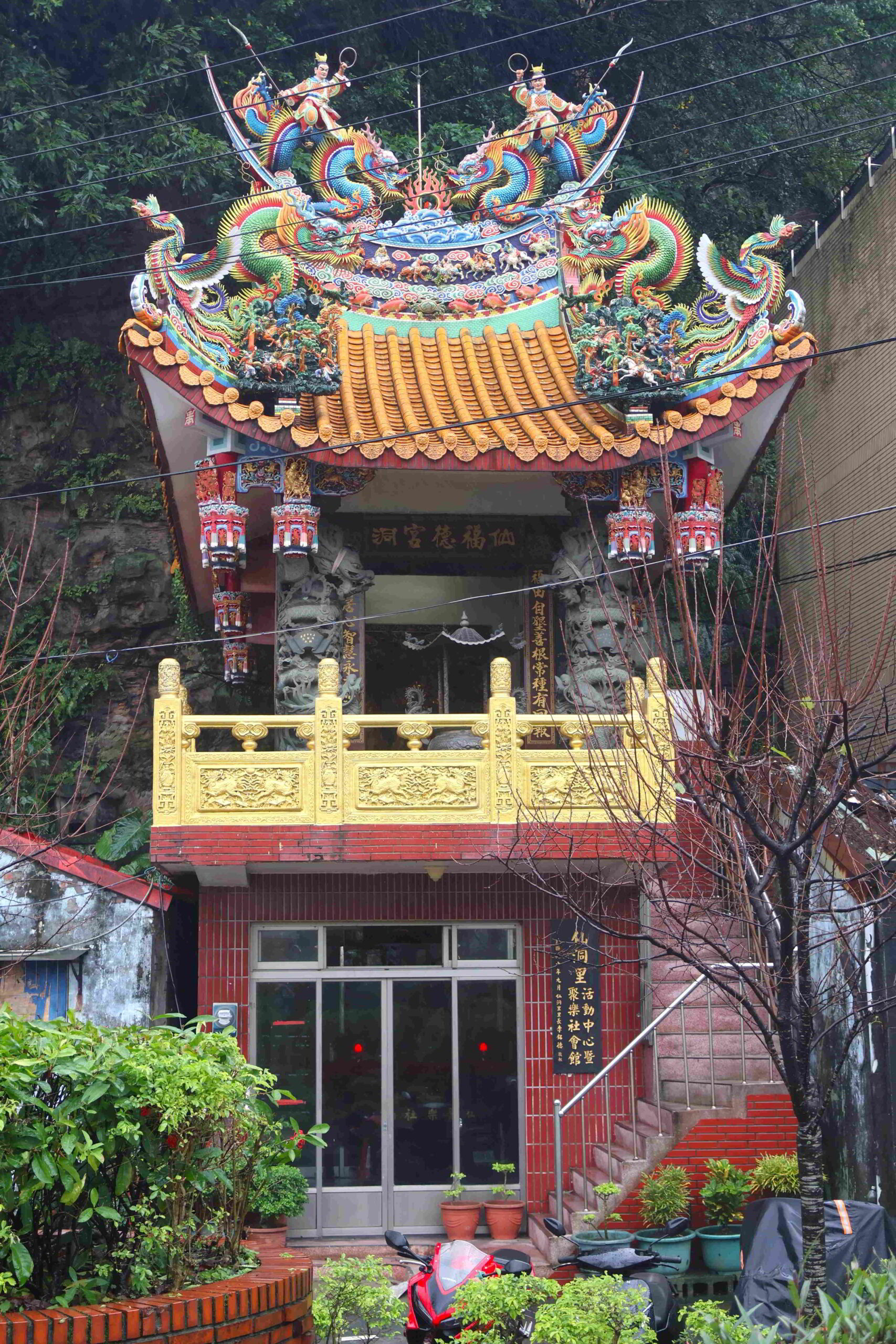
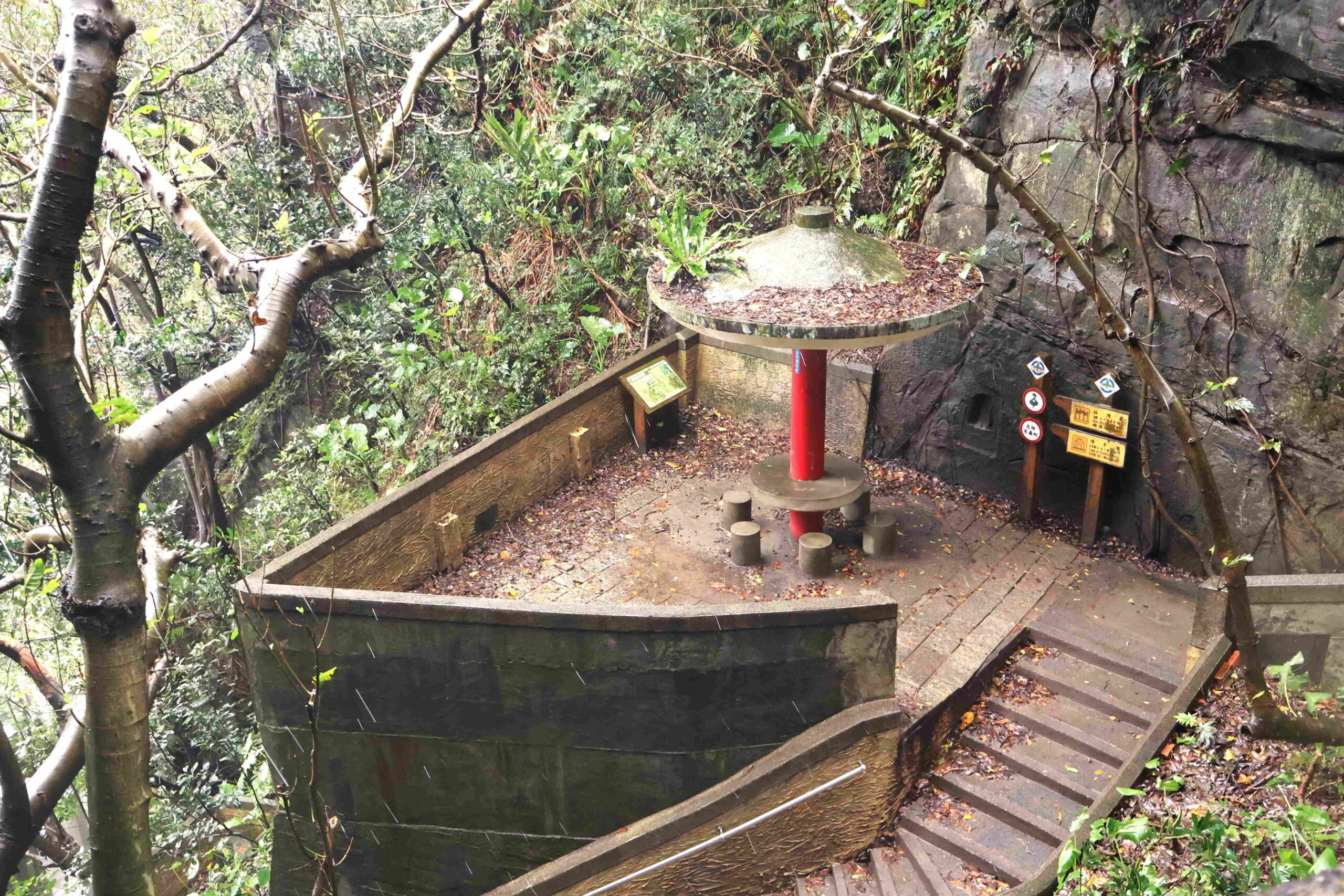
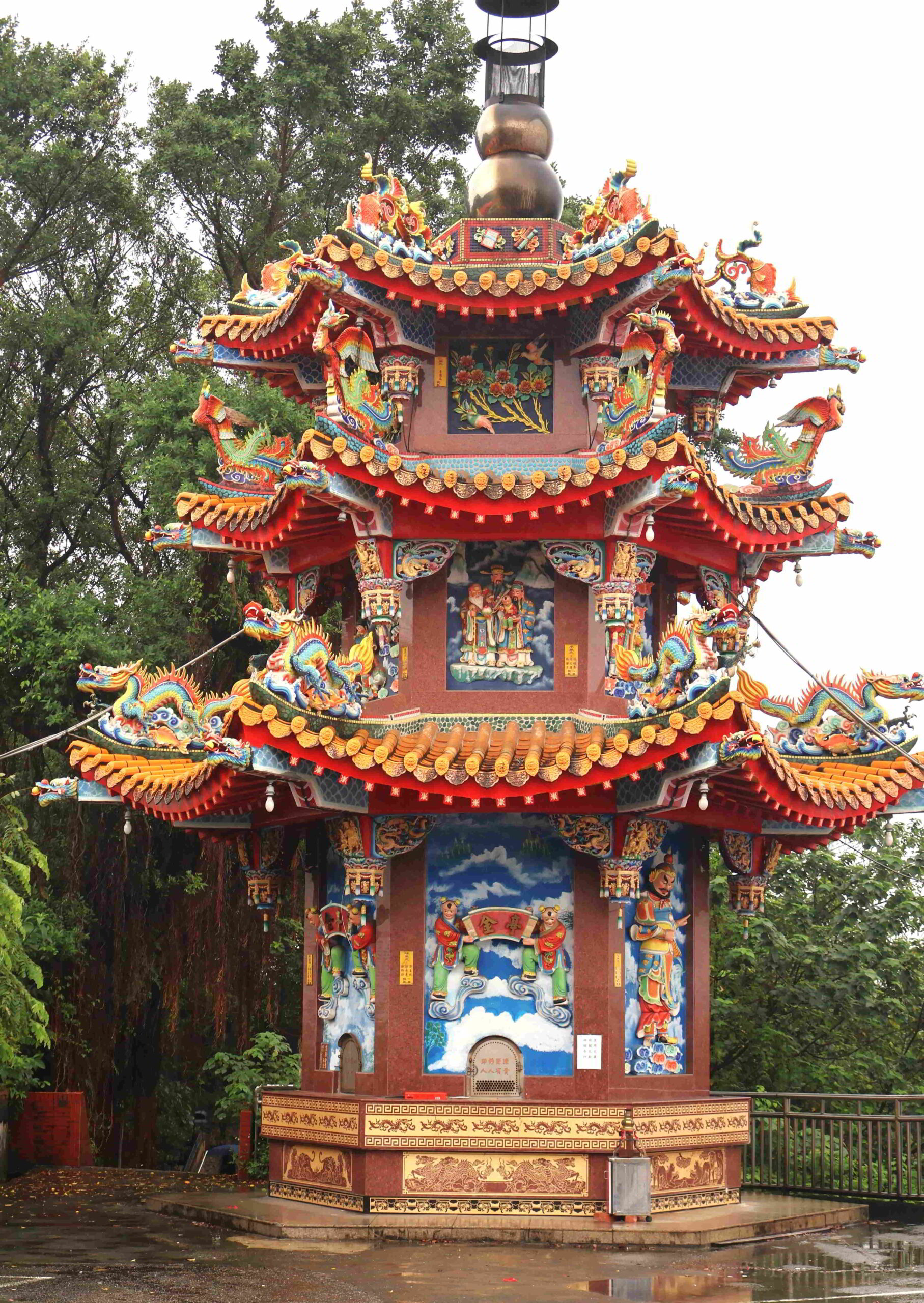
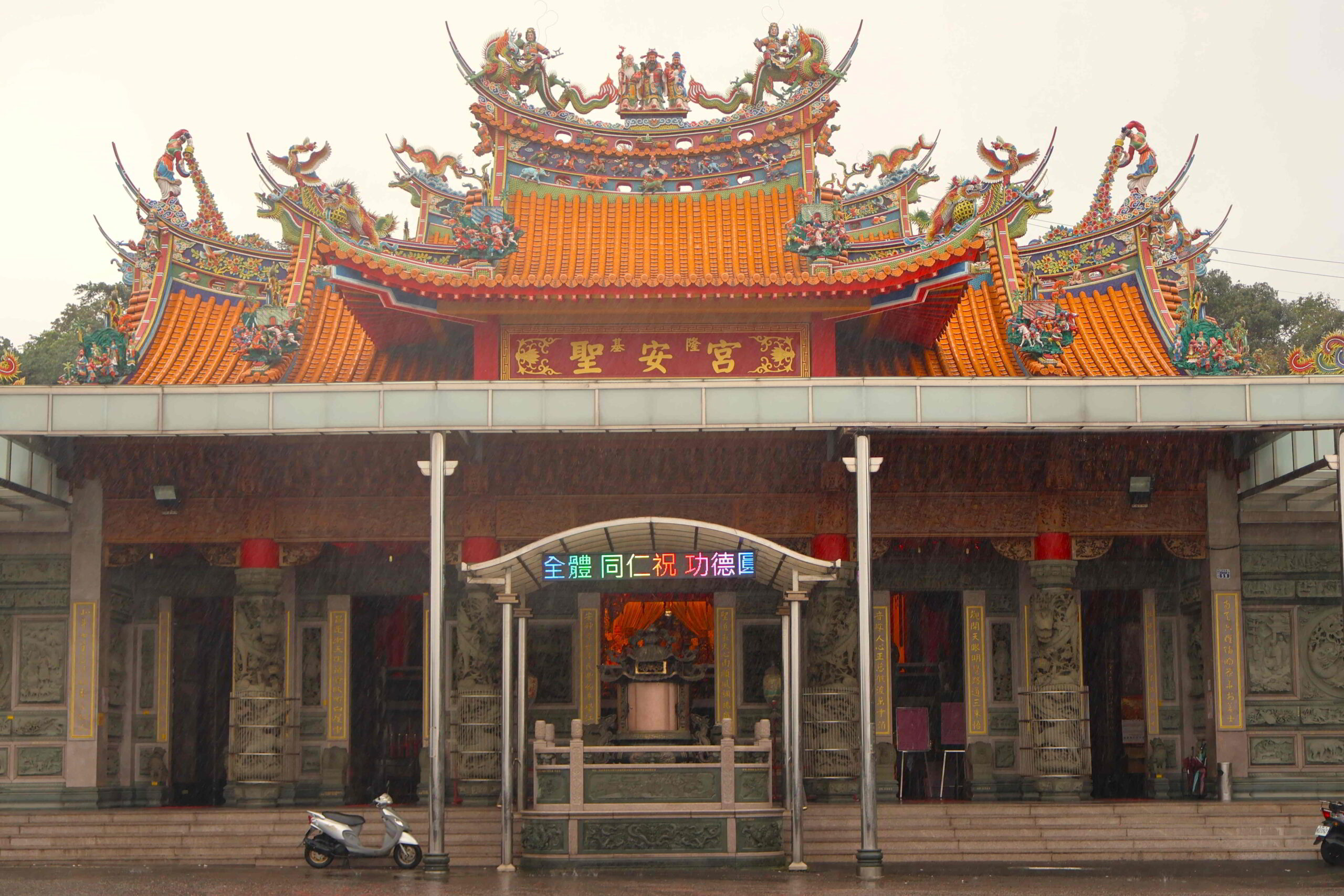
Returning to the entrance, a staircase leads up a cliff to a ramshackle garden of hardwoods overgrown with ficus vines, the battered walkways along the edge of the lookout offering spectacular views of the port facilities below, worth seeing if anything as counterpoint to the temple. At the far end, a large, flagstone-paved plaza offering more views of the harbour, at the rear of which stands the Sheng’an Temple, not exactly in a cave, but the fact that I can enter the temple and escape the pouring rain already presents a substantial advantage.
Keelung — Sheng’an Temple
Keelung — Sheng’an Temple
Keelung — Sheng’an Temple
Keelung — Sheng’an Temple
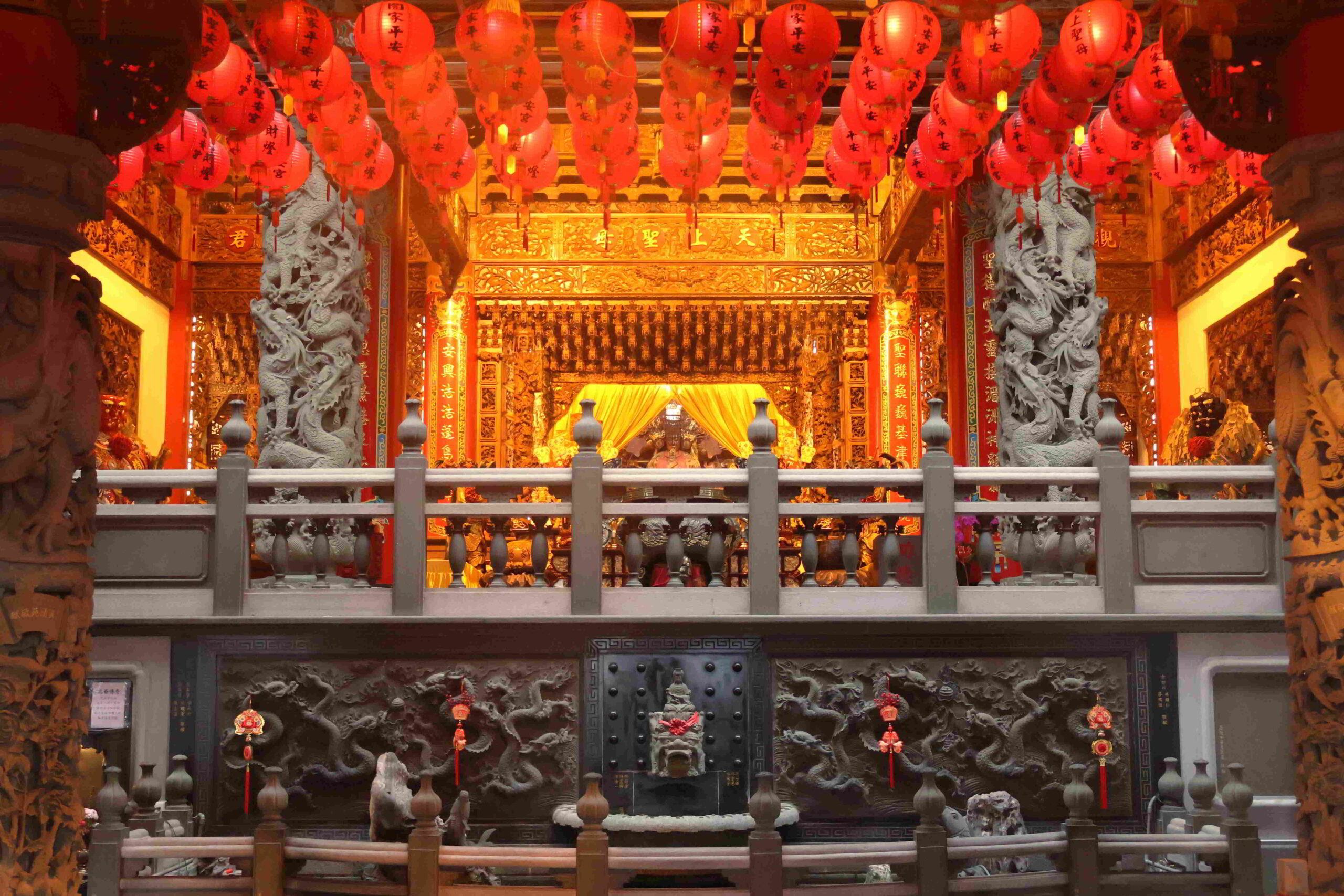
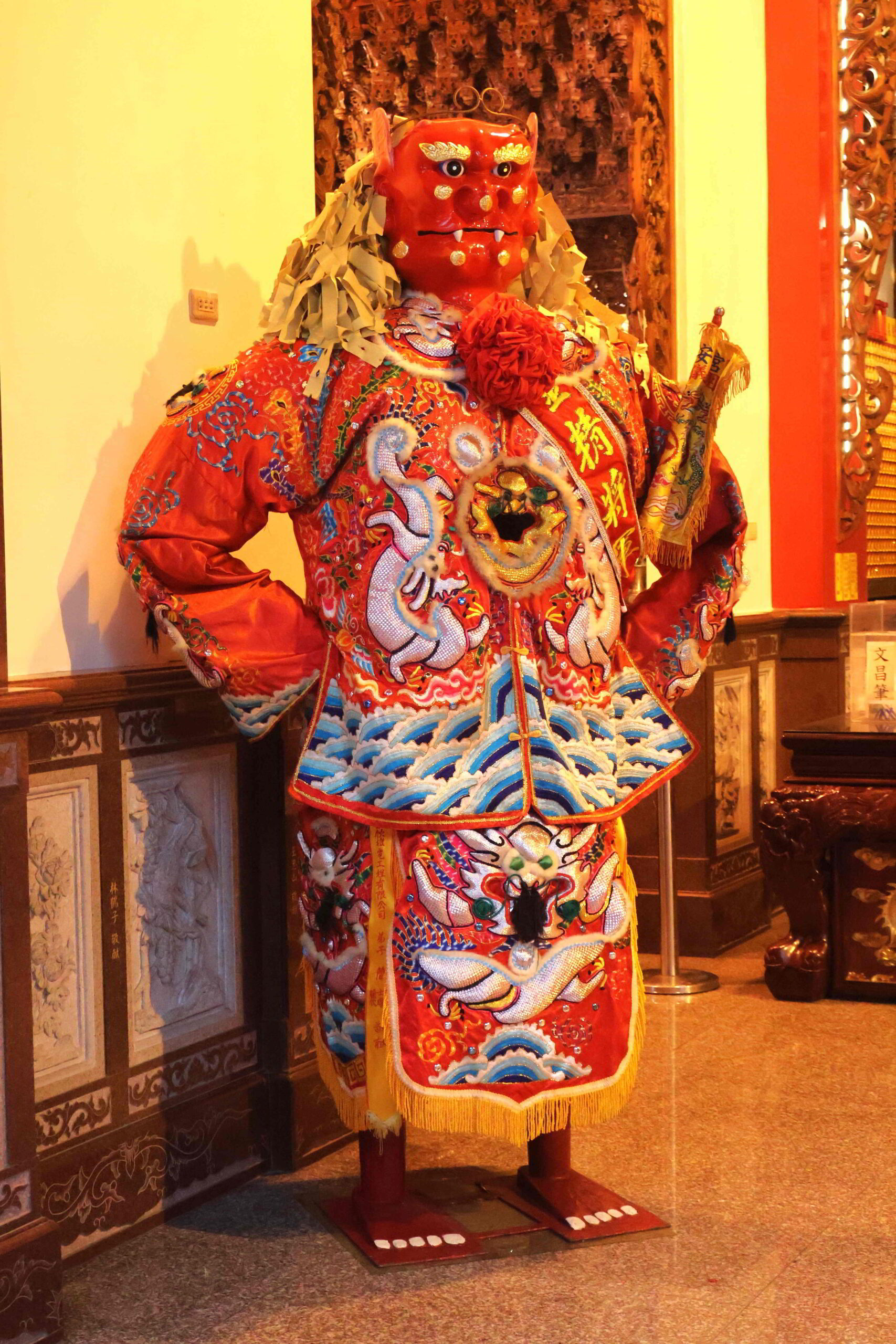
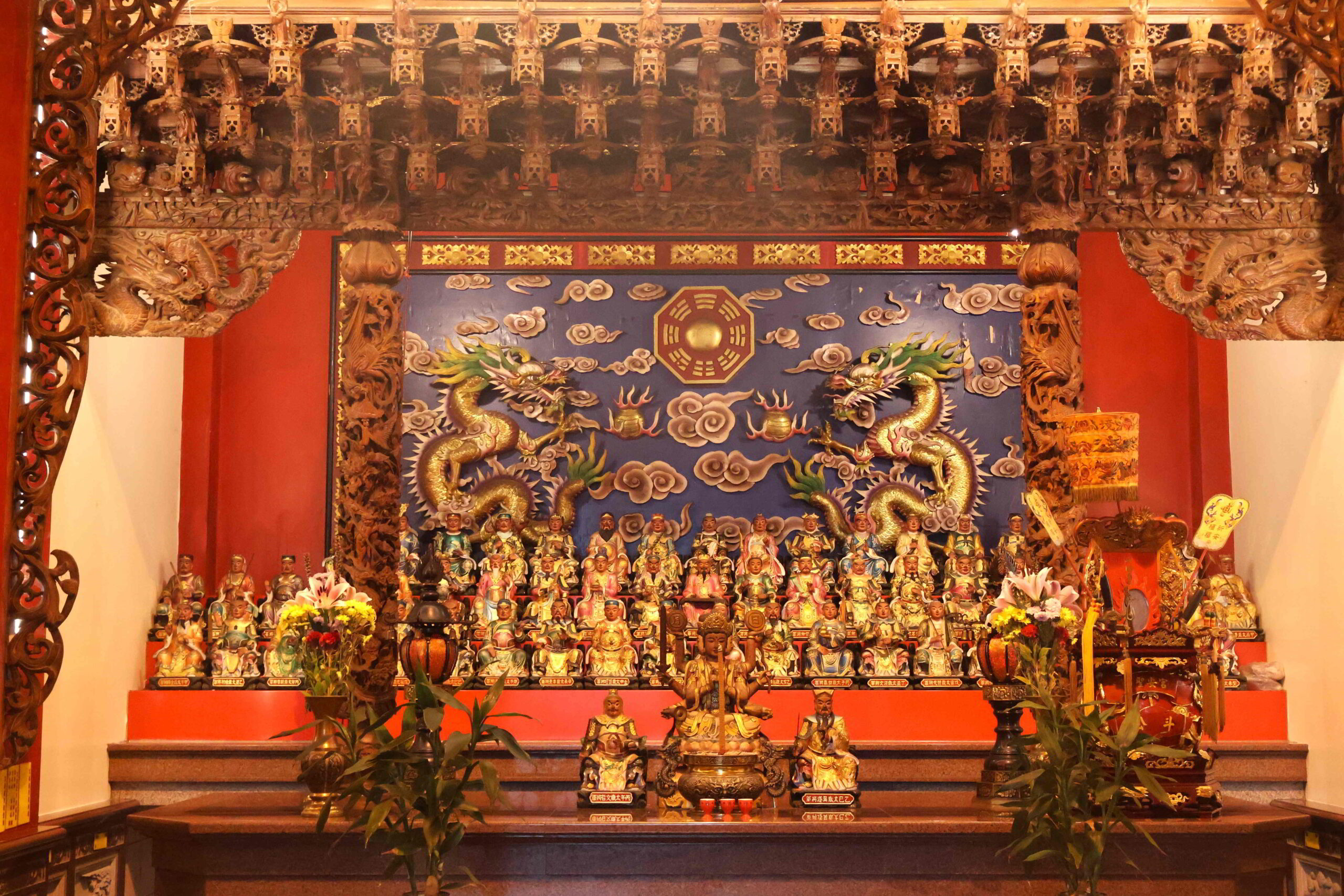
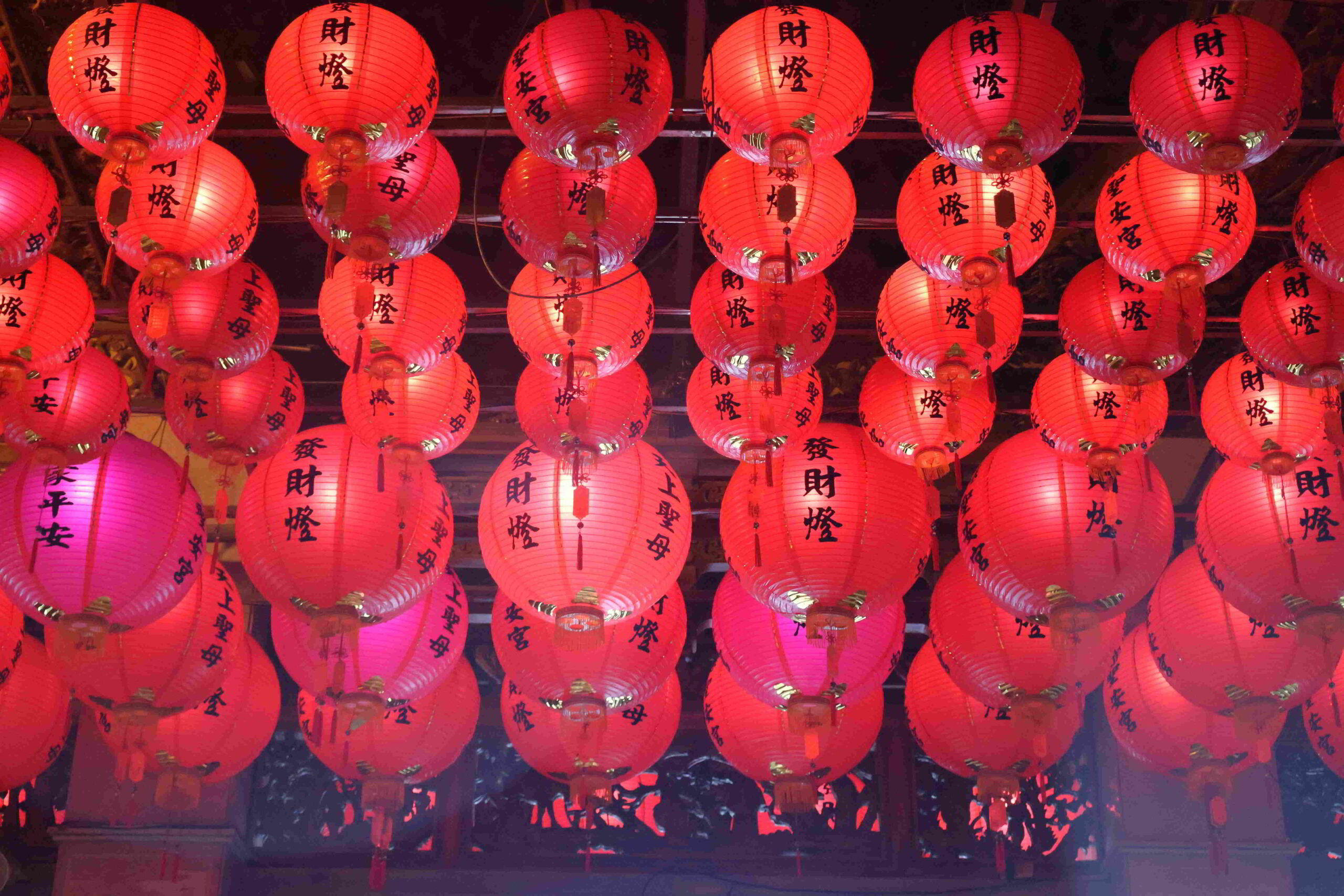
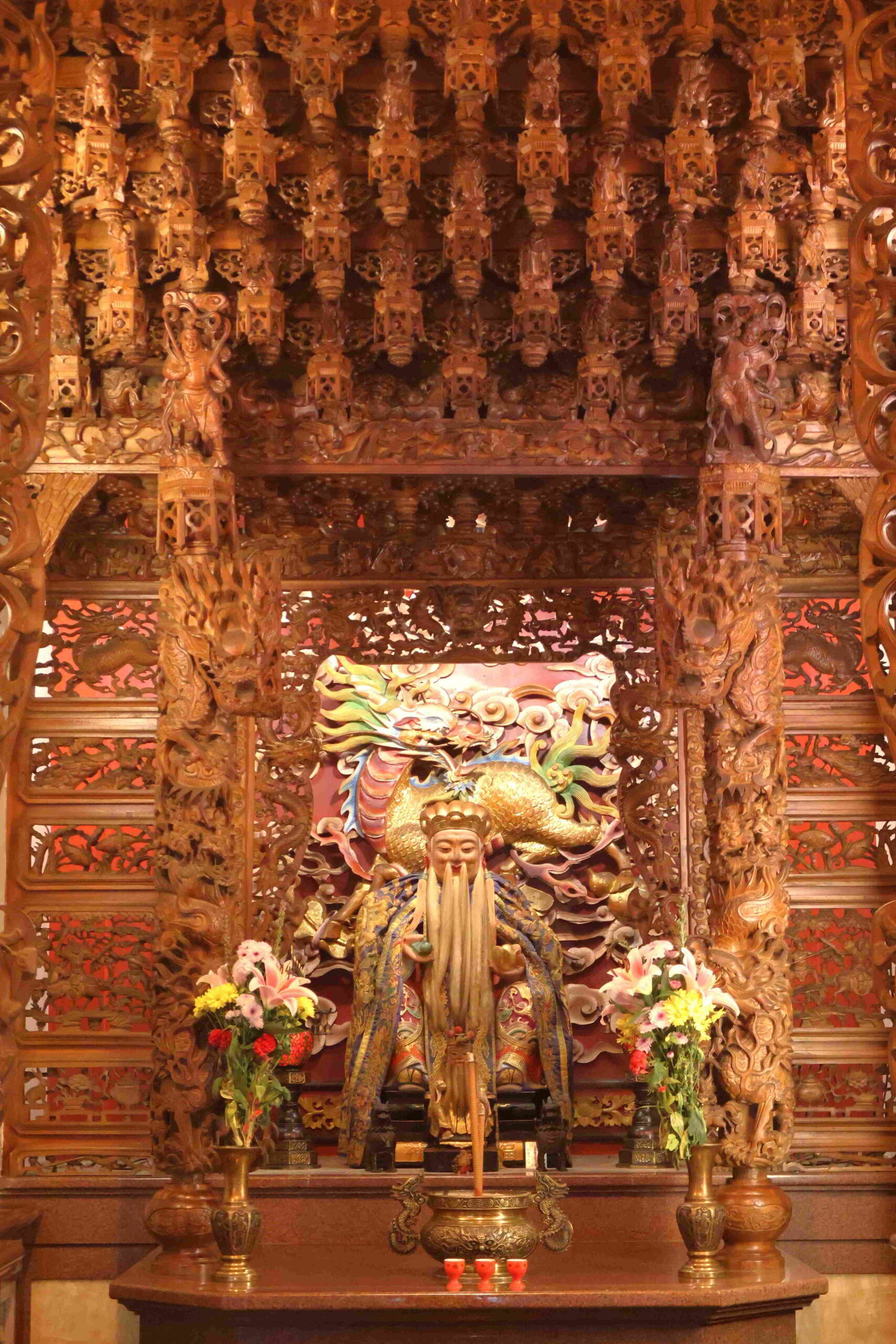
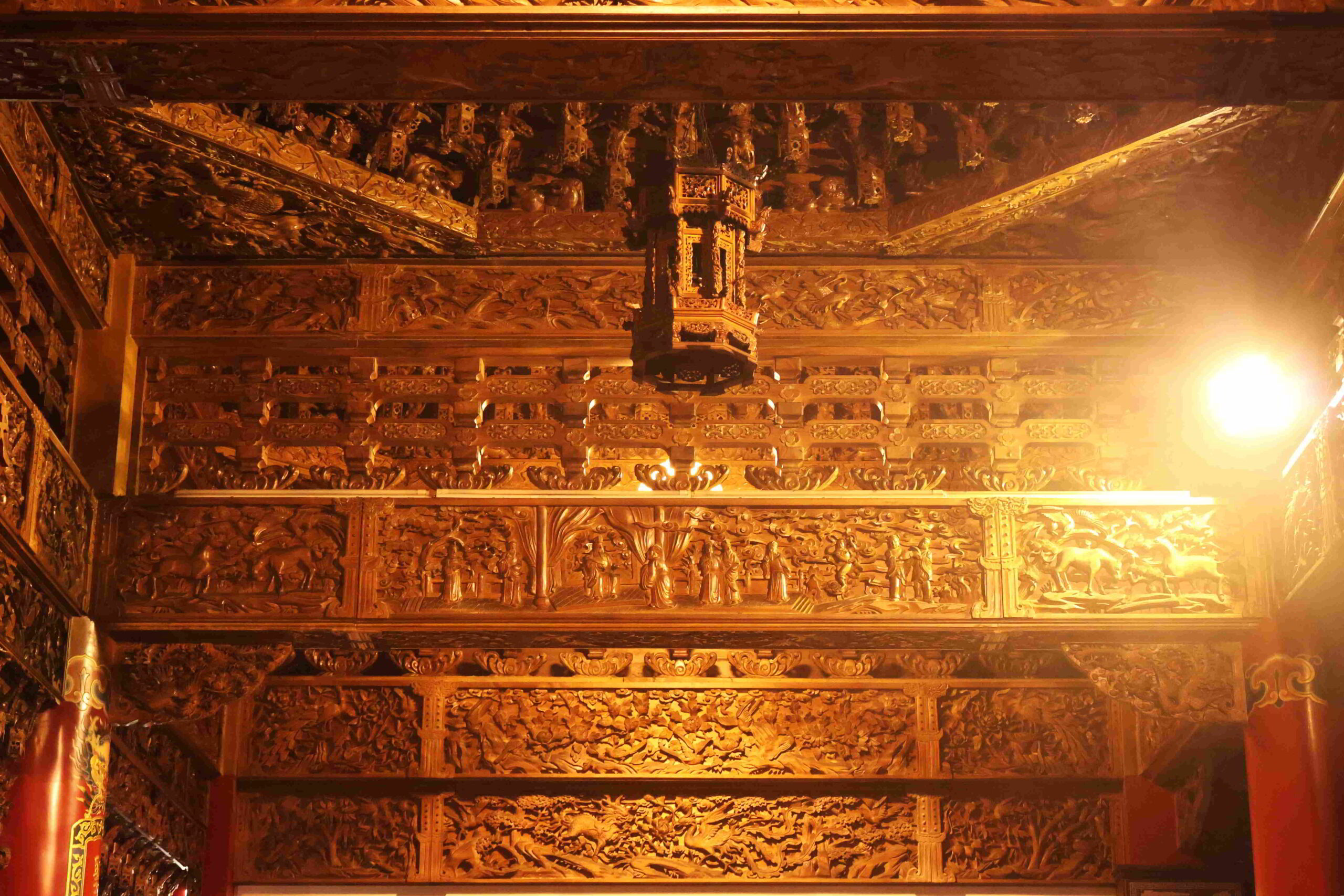
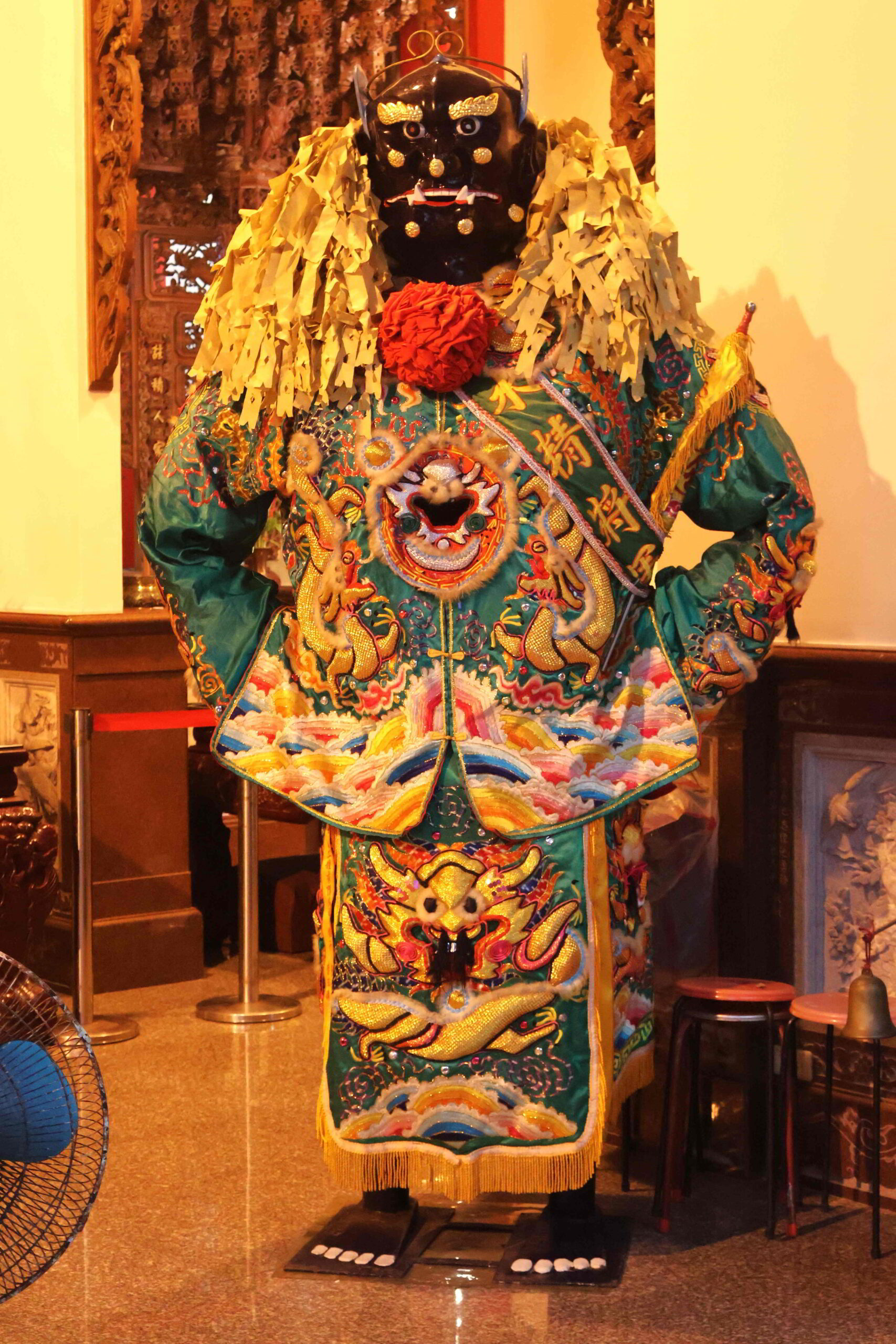
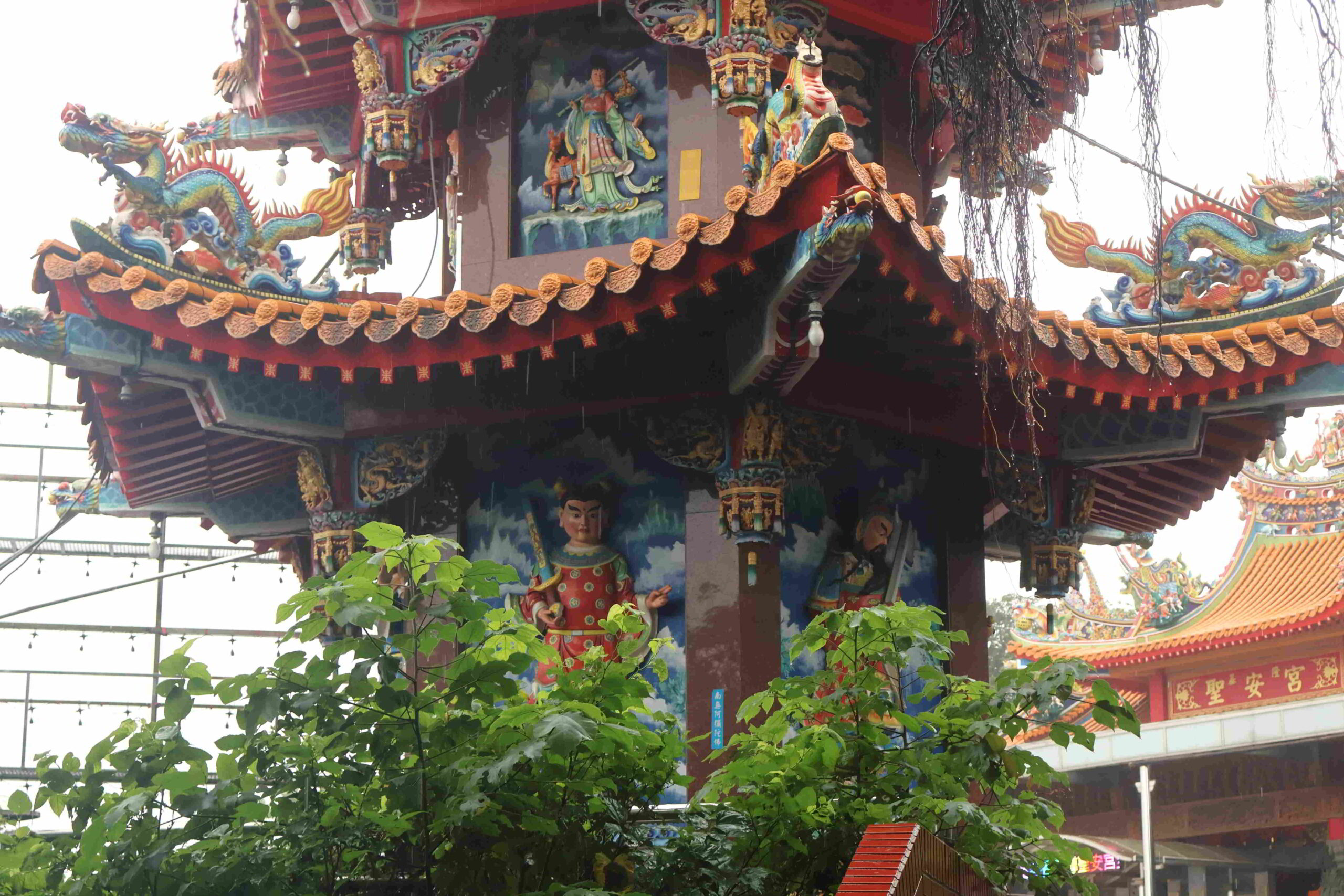
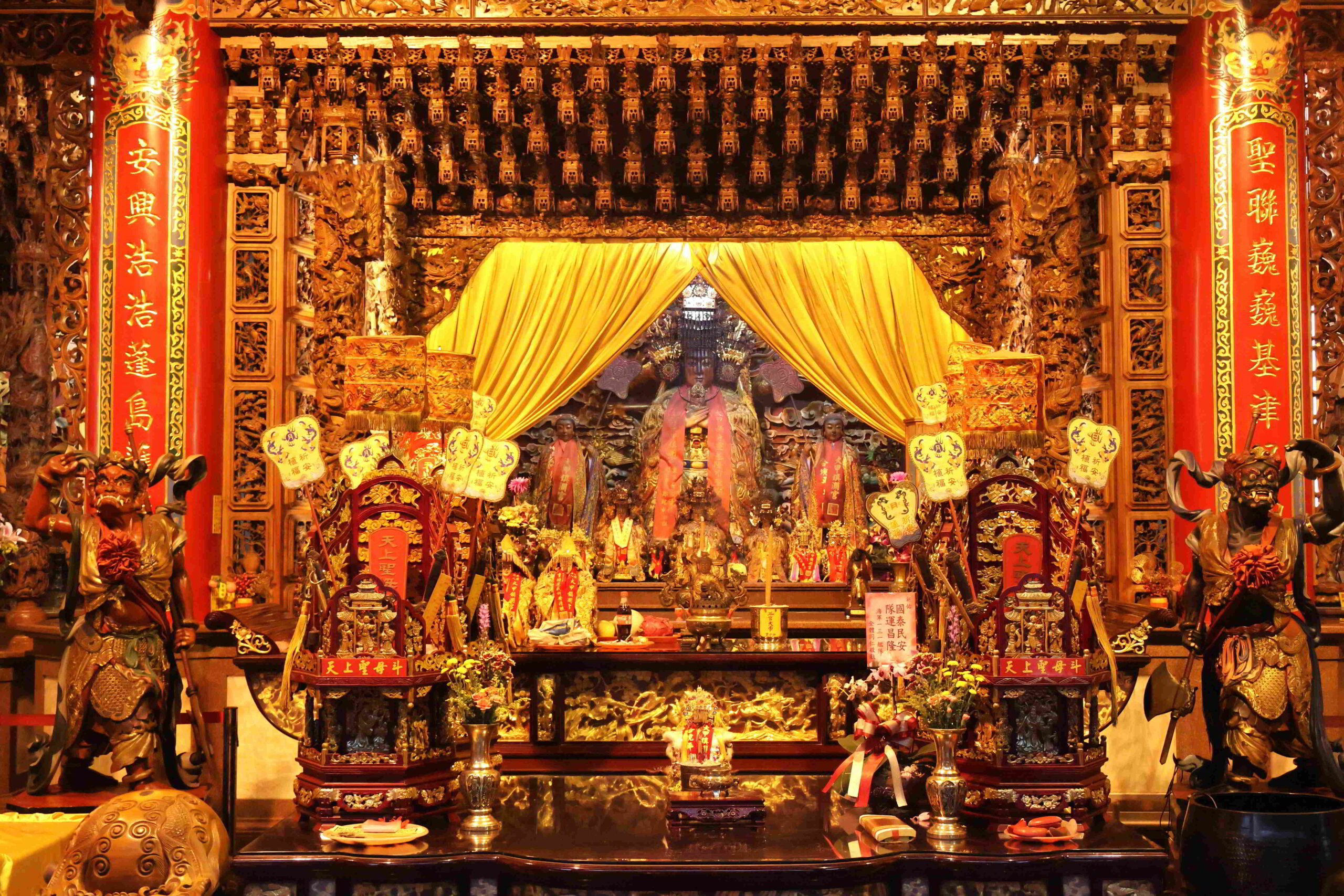
Beyond the moping wardens, I am the only guest, although upon leaving, an eager younger couple appears as well. The swallowtail roof ridges are heavily adorned with the predictable dragons, gods, and other mythical figures, and inside, the vista of sacred paraphernalia is framed by continuous rows of carved wooden lanterns, curtains of illuminated red lanterns suspended from above and dragon pillars to the side. The altars are piled high with small sculptures of gods (or bodhisattvas?), the enclosing walls dripping with gilt carved finery. Minor altars to the side of the principal one are guarded by giant grotesque guardians dripping in intricately-stitched finery.
Keelung — Sheng’an Temple
Keelung — Sheng’an Temple
Keelung — Sheng’an Temple
Keelung — Sheng’an Temple
As spectacular as the temple may be and as much as it offers welcome respite from the rain, I need to think of the time, given that I still have to return to the hotel, pick up my things, then travel to Jiufen, which judging by the bus information I have tried tracking, may not be that straightforward.
Keelung — Sheng’an Temple
Keelung — Sheng’an Temple
Keelung — Sheng’an Temple
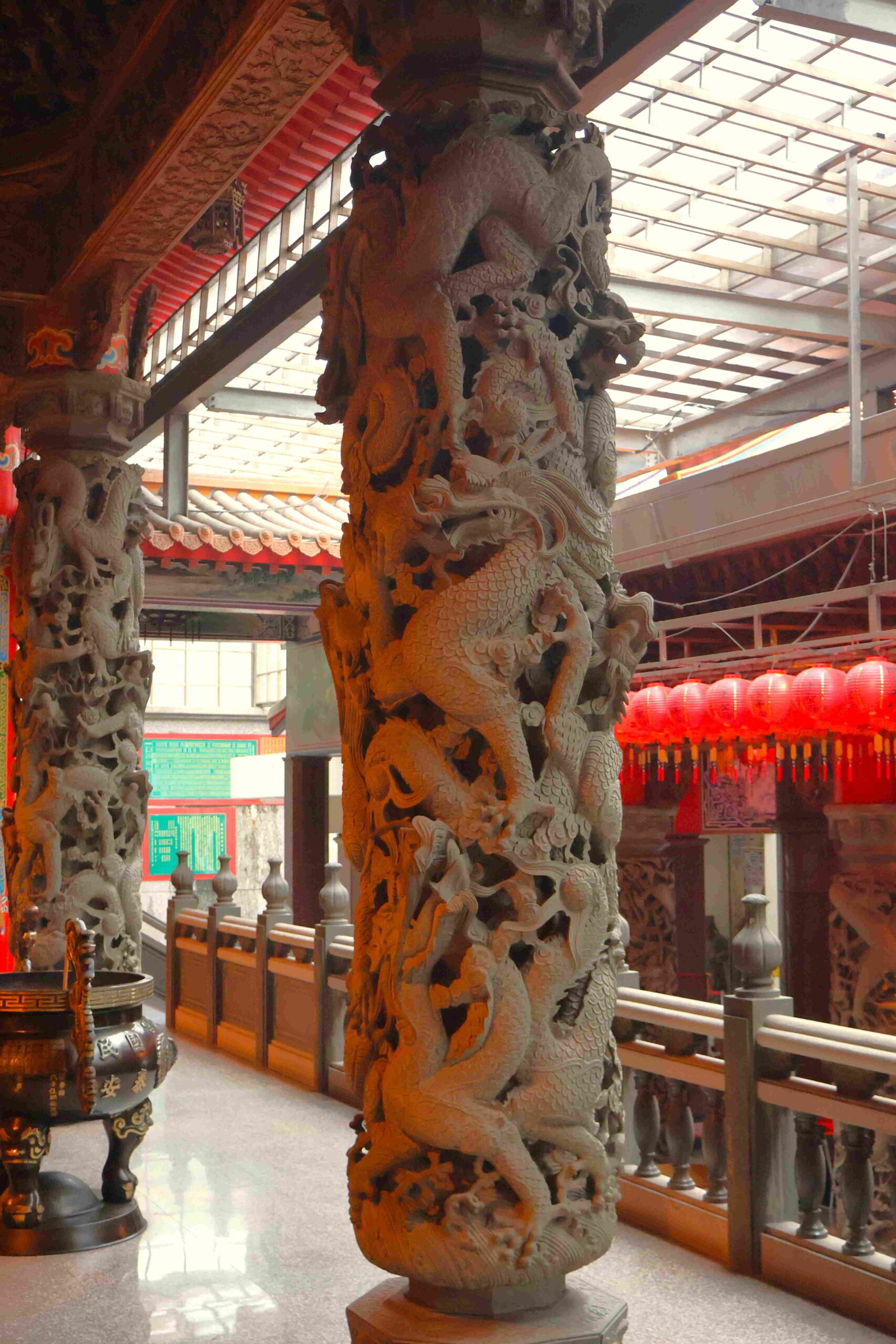
Keelung — Sheng’an Temple
That seems to be it for the Fairy Caves – other than the passage that is far too narrow and long to warrant safely exploring, I think I have seen all that the place has to offer. Interestingly, there were no other visitors while I was here (other than the couple at the Sheng’an temple) — nothing like a torrential downpour to keep people away. I laboriously descend the zig-zagging staircase to the street-level courtyard, then to the adjacent bus stop nearby. The bus weaves back along the same route I came and I disembark at a stop a mere block from my hotel. It couldn’t get more convenient — although the hard part is about to begin.
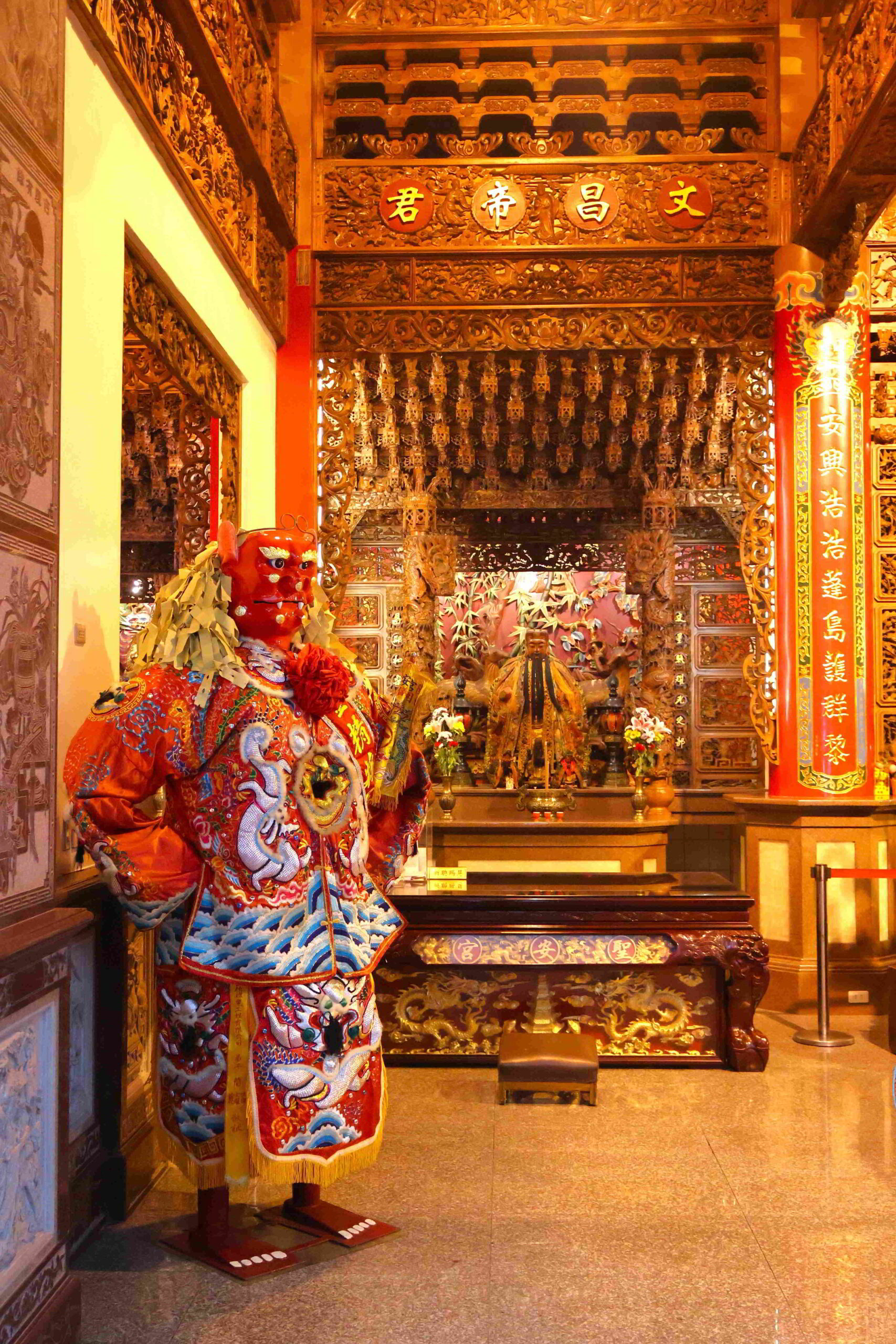
Keelung — Sheng’an Temple
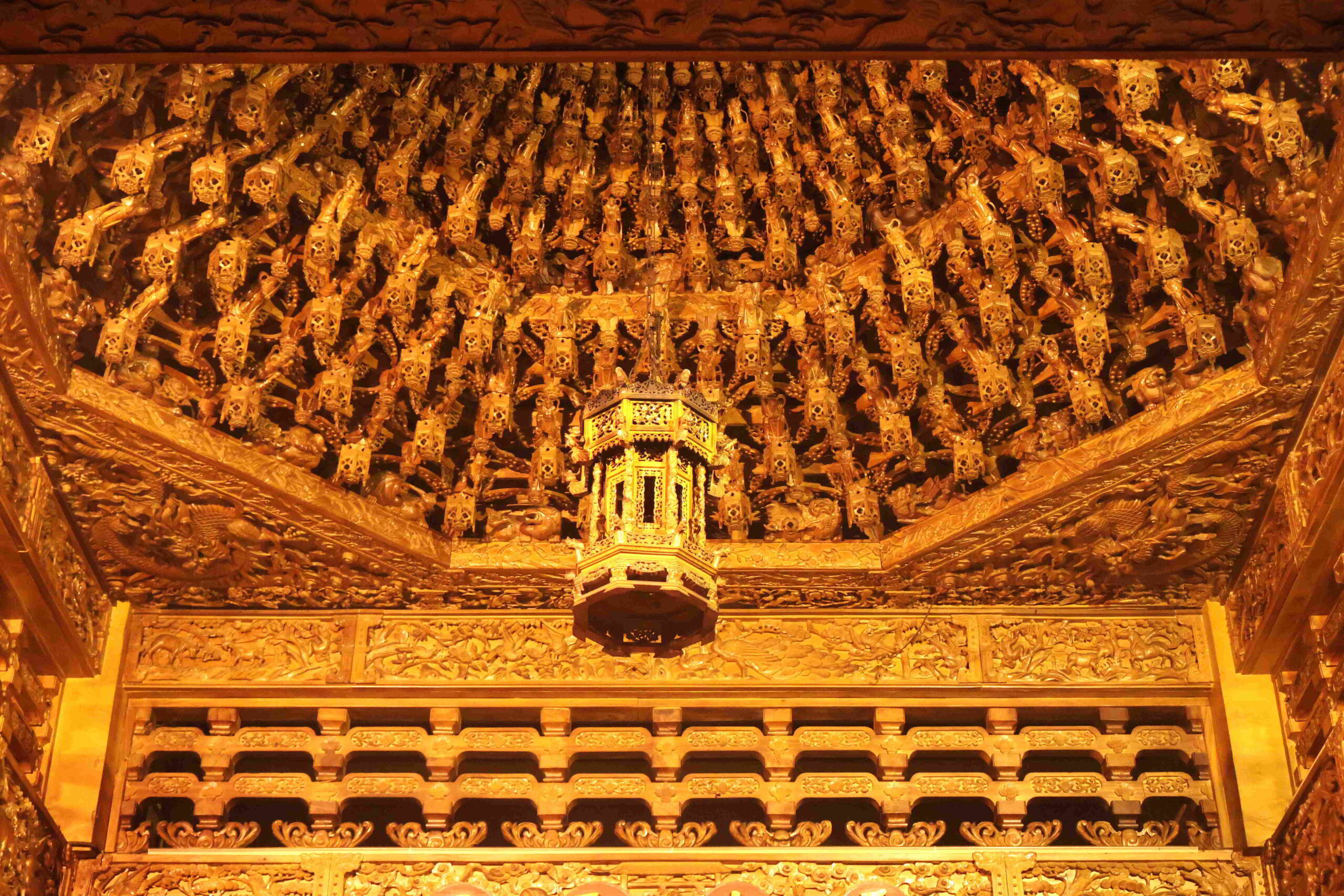
Keelung — Sheng’an Temple
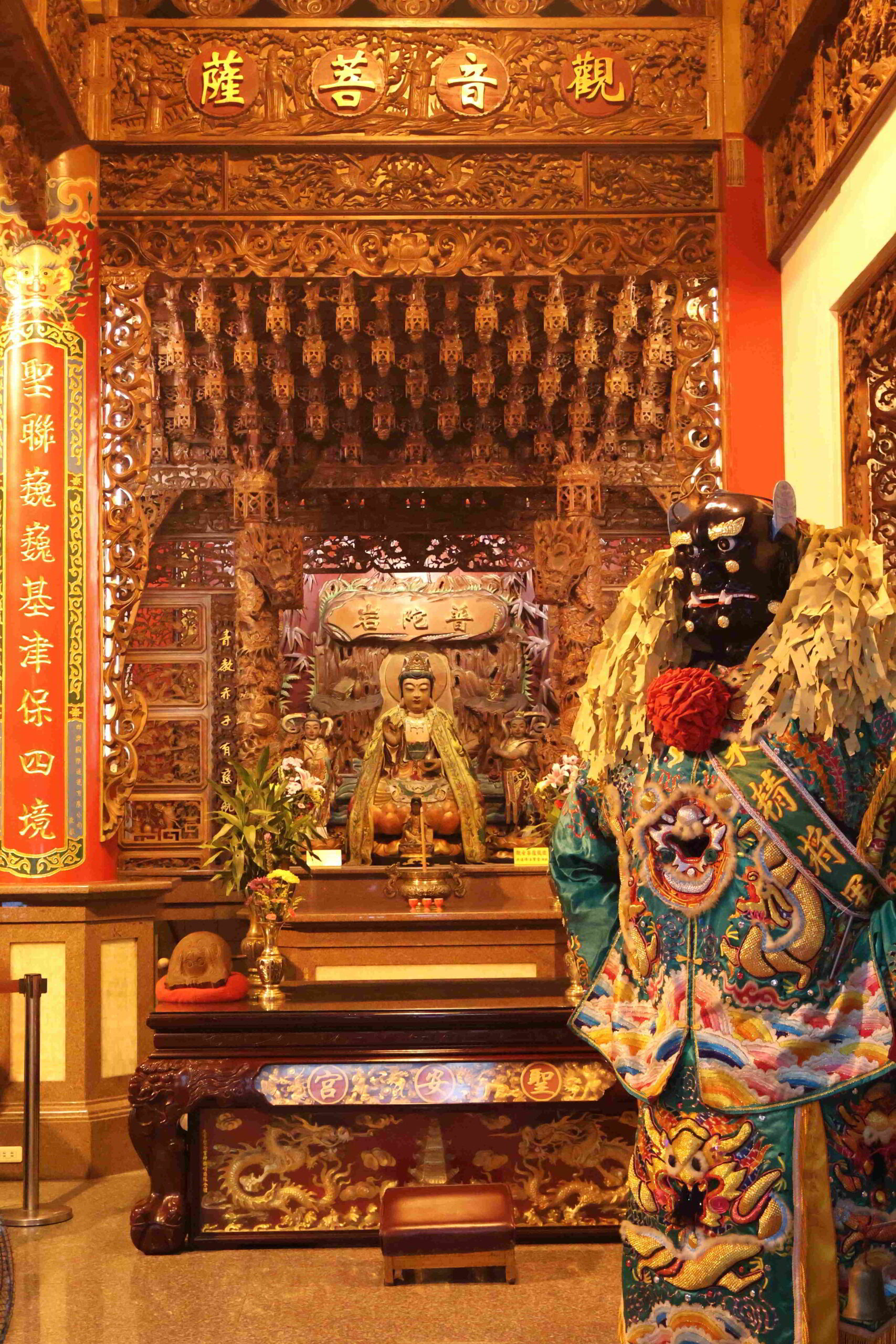
Keelung — Sheng’an Temple
I retrieve my things from the hotel and repack; given that the rain has backed off considerably, I will not wear my rain poncho, rather, revert to using the umbrella if necessary — but considering that most of the walk to the waterfront road is in the shelter of pedestrian arcades, there won’t be much chance of getting soaked even if the rain returns with any intensity. I had struggled with trying to find the stop where the bus to Jiufen halts along the waterfront, but as I arrive at the waterfront road and am about to trudge diligently to the expected stop, I see the 788 bus already parked across the street. Incredible timing! I hobble frantically toward the bus, waving, but Taiwanese drivers are not remotely as antisocial as in other countries (such as mine), and so it goes without saying that he waits for me. And better yet, I get a seat!
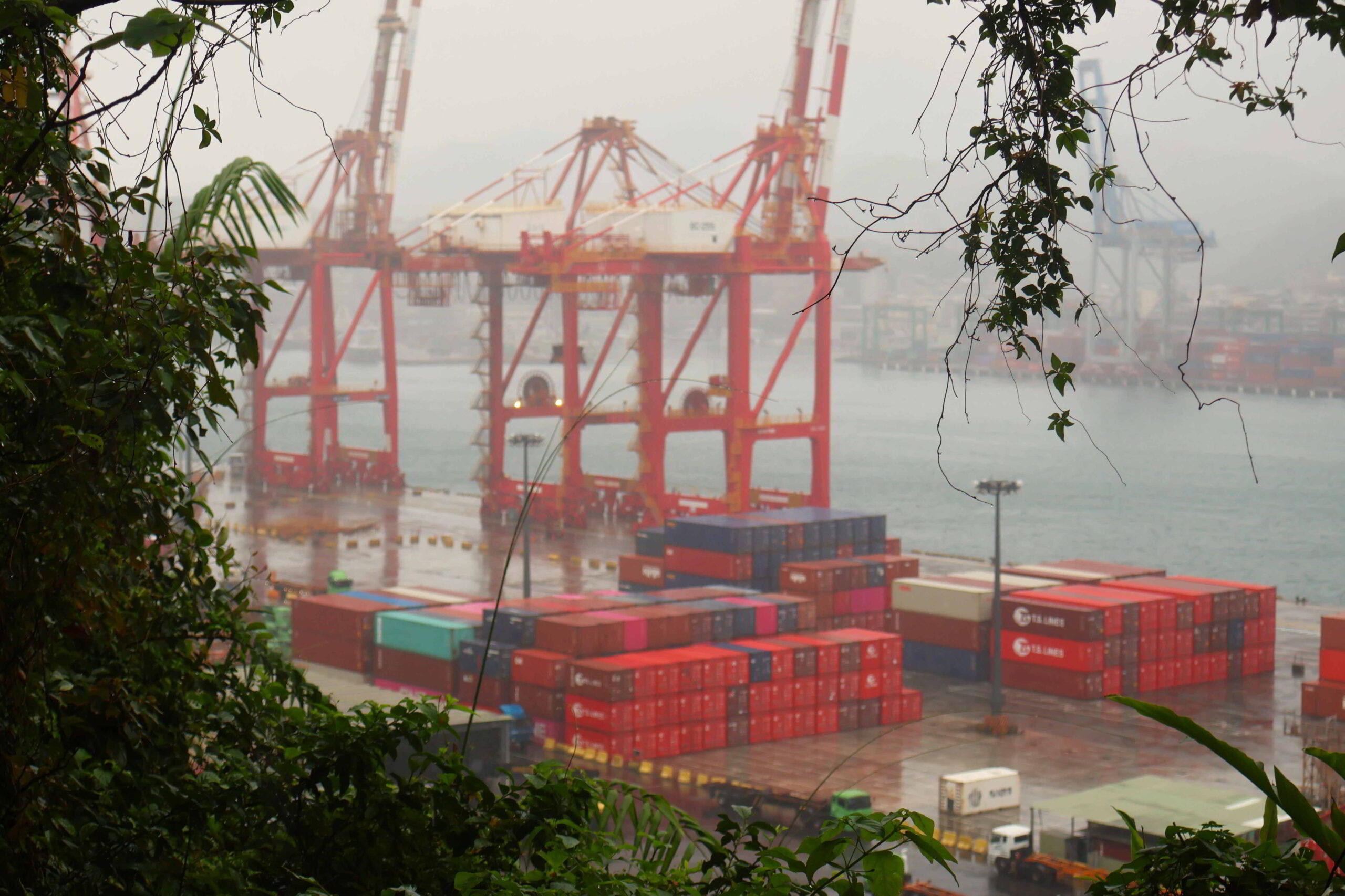
Keelung port
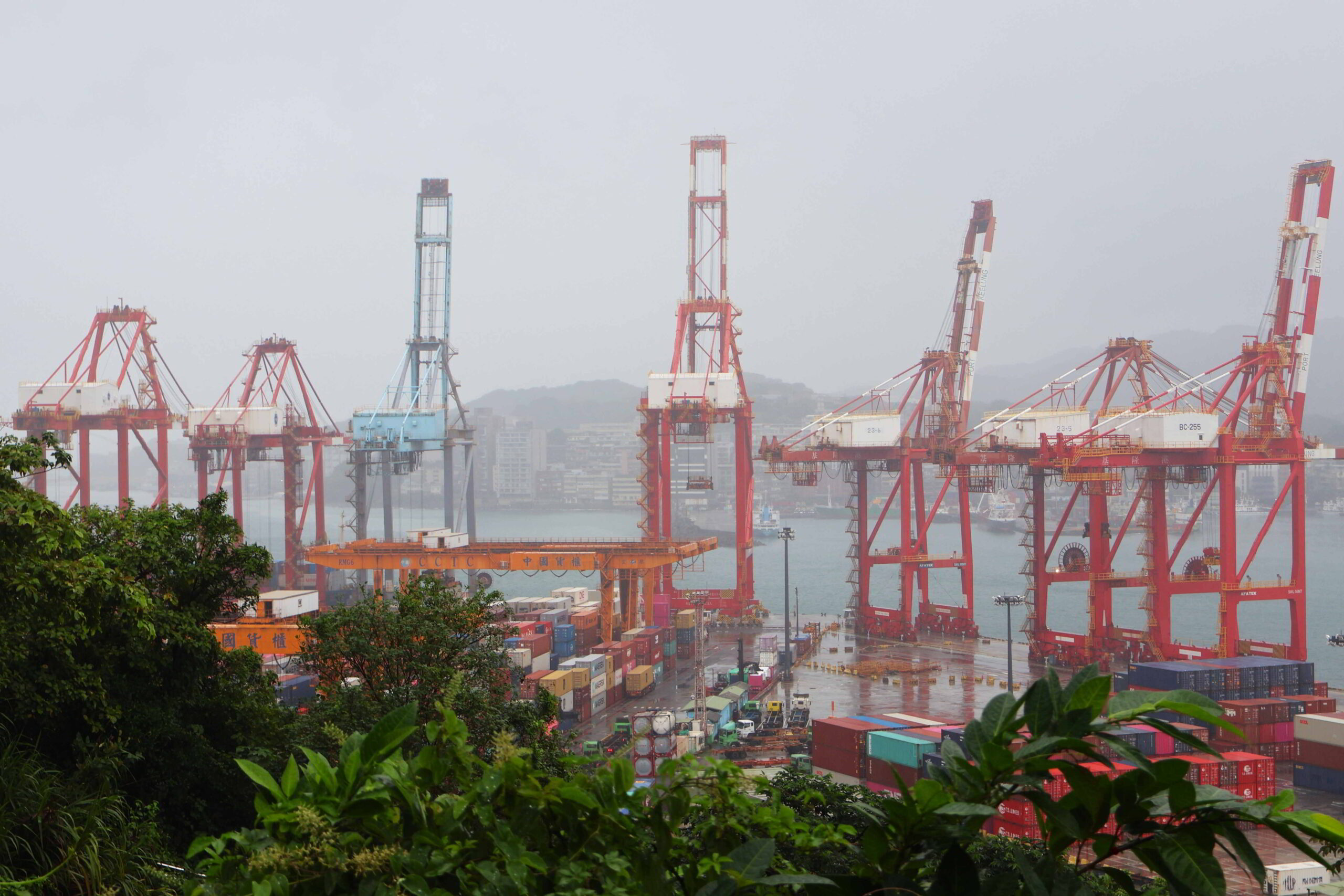
Keelung port
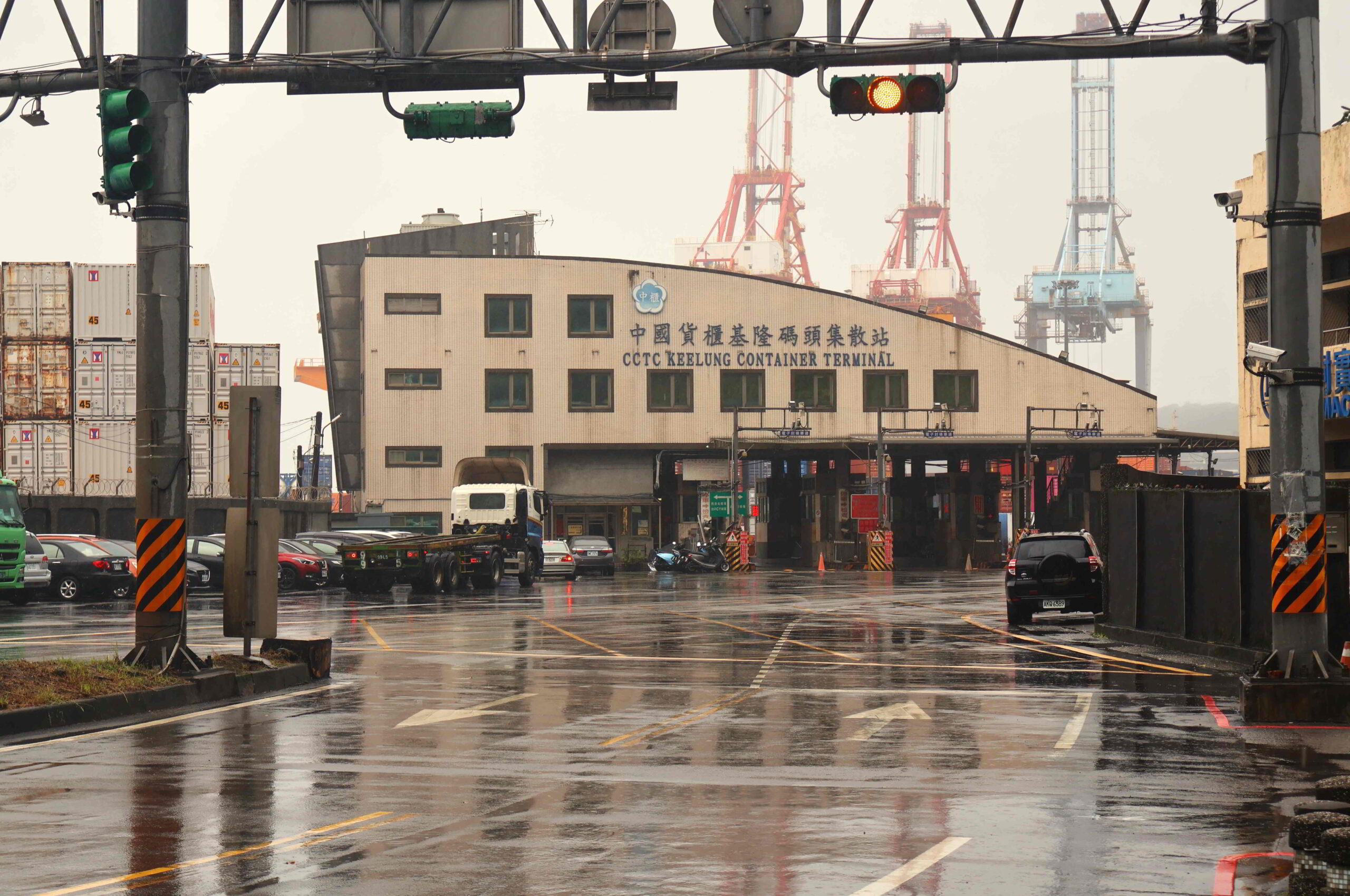
Keelung port
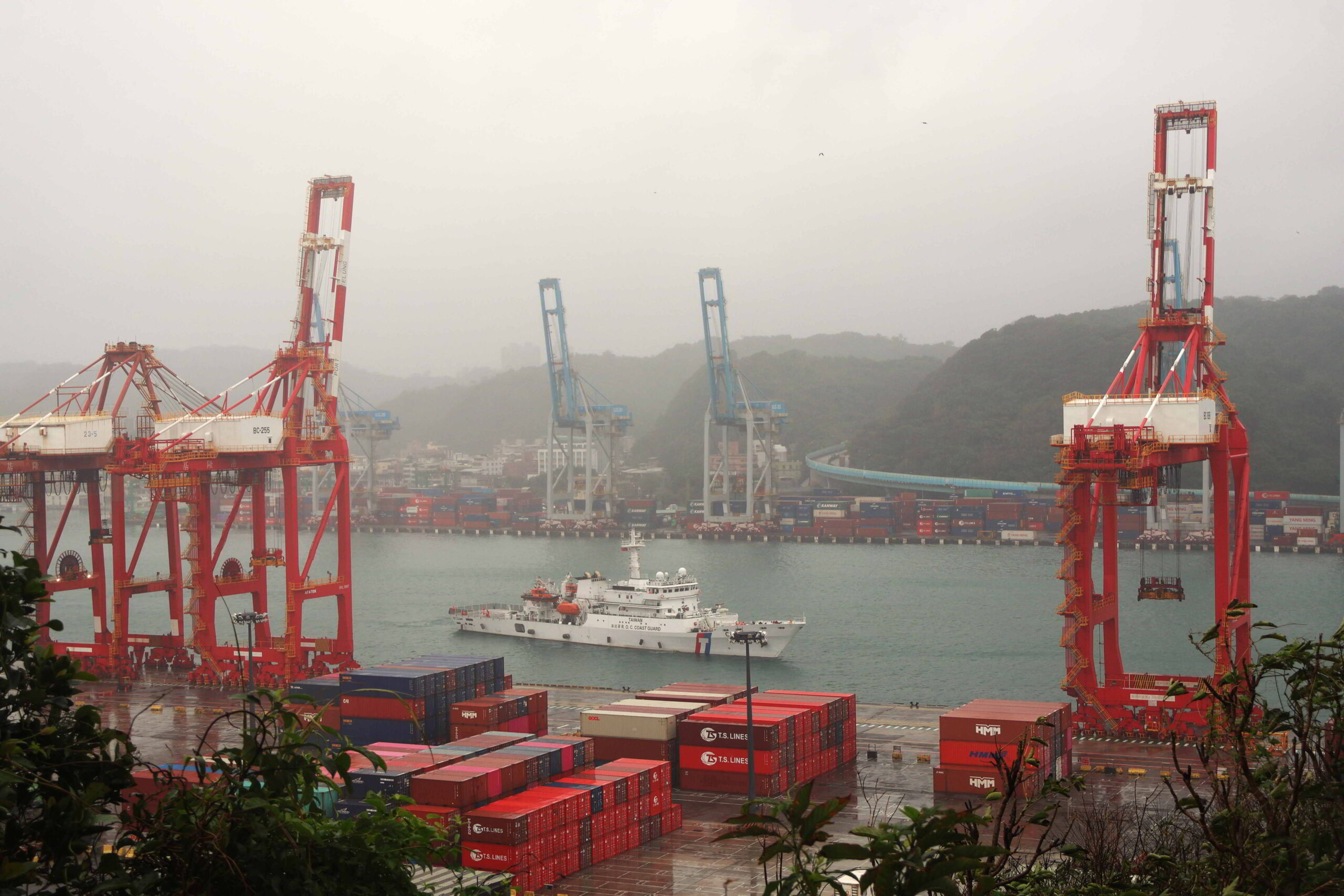
Keelung port
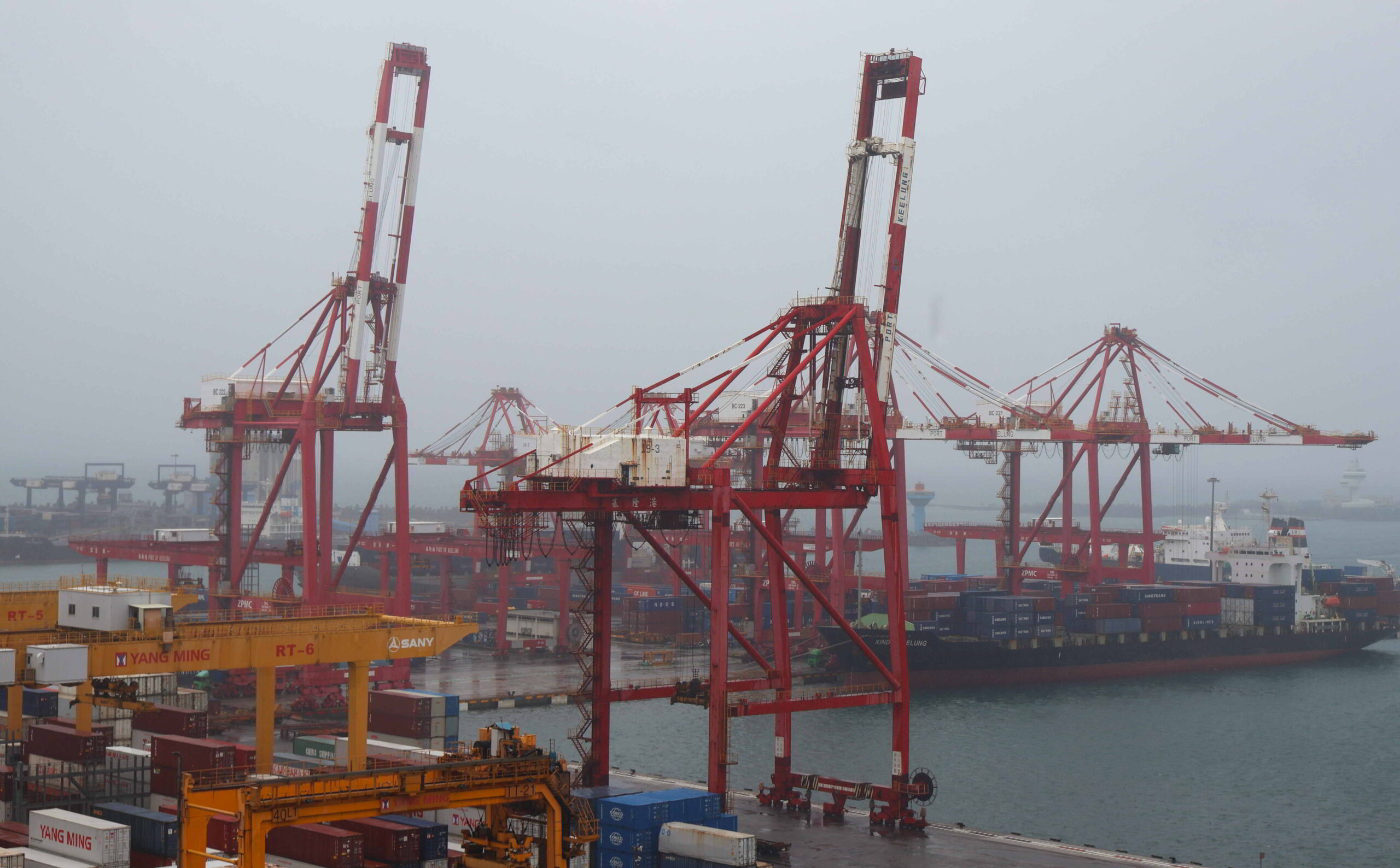
Keelung port
The rain holds off as we pass through the more affluent eastern confluence of Keelung, then further out, the landscape dissipates to more conventional residential buildings, but always concentrated along the roadside, the green hillsides providing a prominent backdrop, but never dominating the landscape we pass through. It would seem from my travels in the country thus far that the country is just one continuous urban sprawl, although perhaps that is only a characteristic of the area closer to Taipei.
The bus only goes as far as Ruifang, where I am deposited at a bus shelter that is already brimming with other people, of which three are a group of Czech backpackers. As we wait for another bus to complete the journey, we are petitioned by a cab driver for the princely sum of NT$200, or NT$50 for each of us, which is not a bad idea, considering the worsening weather. I normally never take cabs when traveling, and for a good reason: they can’t be trusted, in any country, and predictably, problems arise with this driver as well.
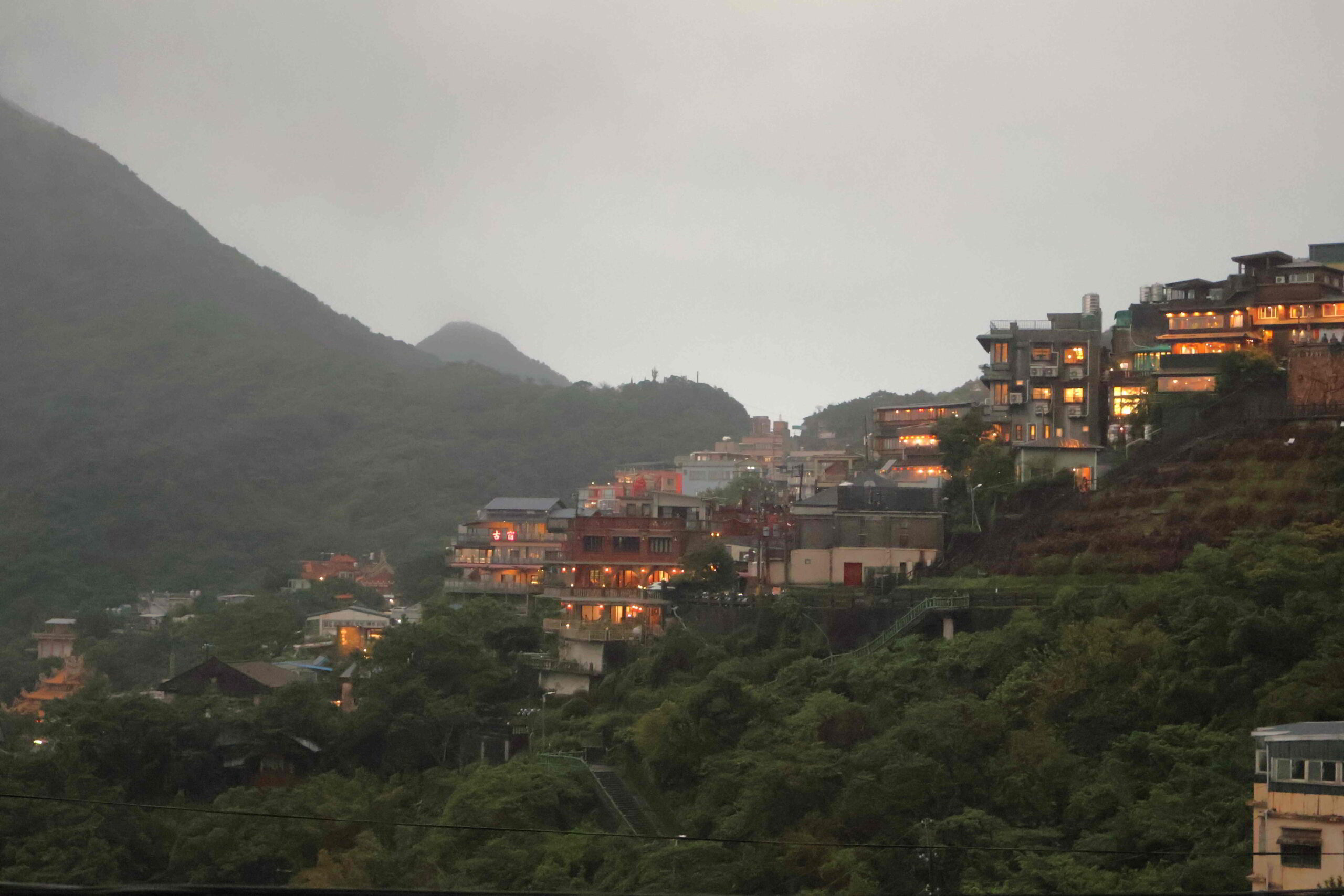
Jiufen
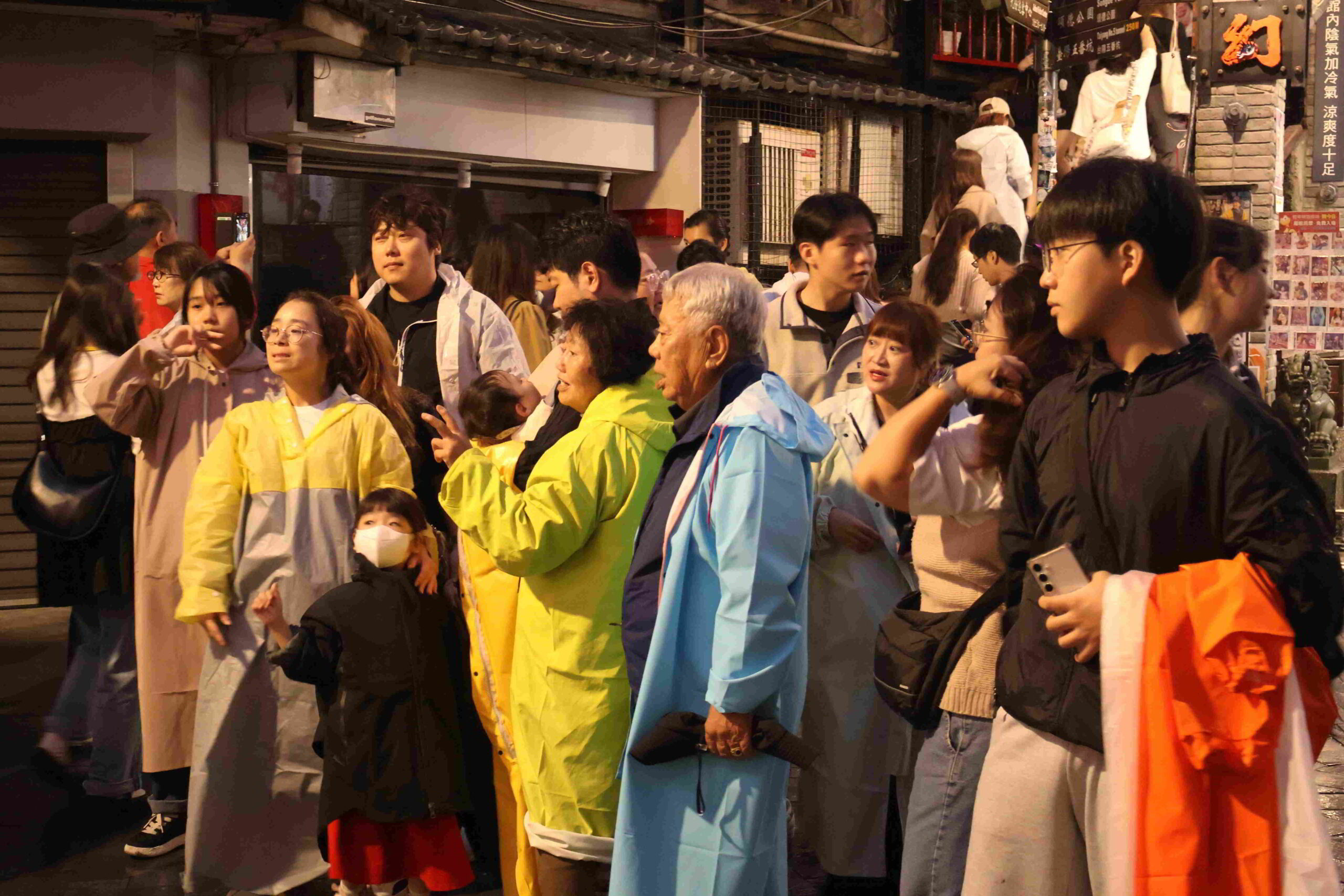
When we arrive in Jiufen, the driver tries to convince me that whatever arbitrary spot on the main road he has stopped at is adequate to deposit me, even though from the map it is obvious we are still at some distance from my lodging, and the rain has now returned with a vengeance. Surreal as it may seem, hordes of tourists swathed in raincoats mill around the road, despite the extremely unwelcoming weather.
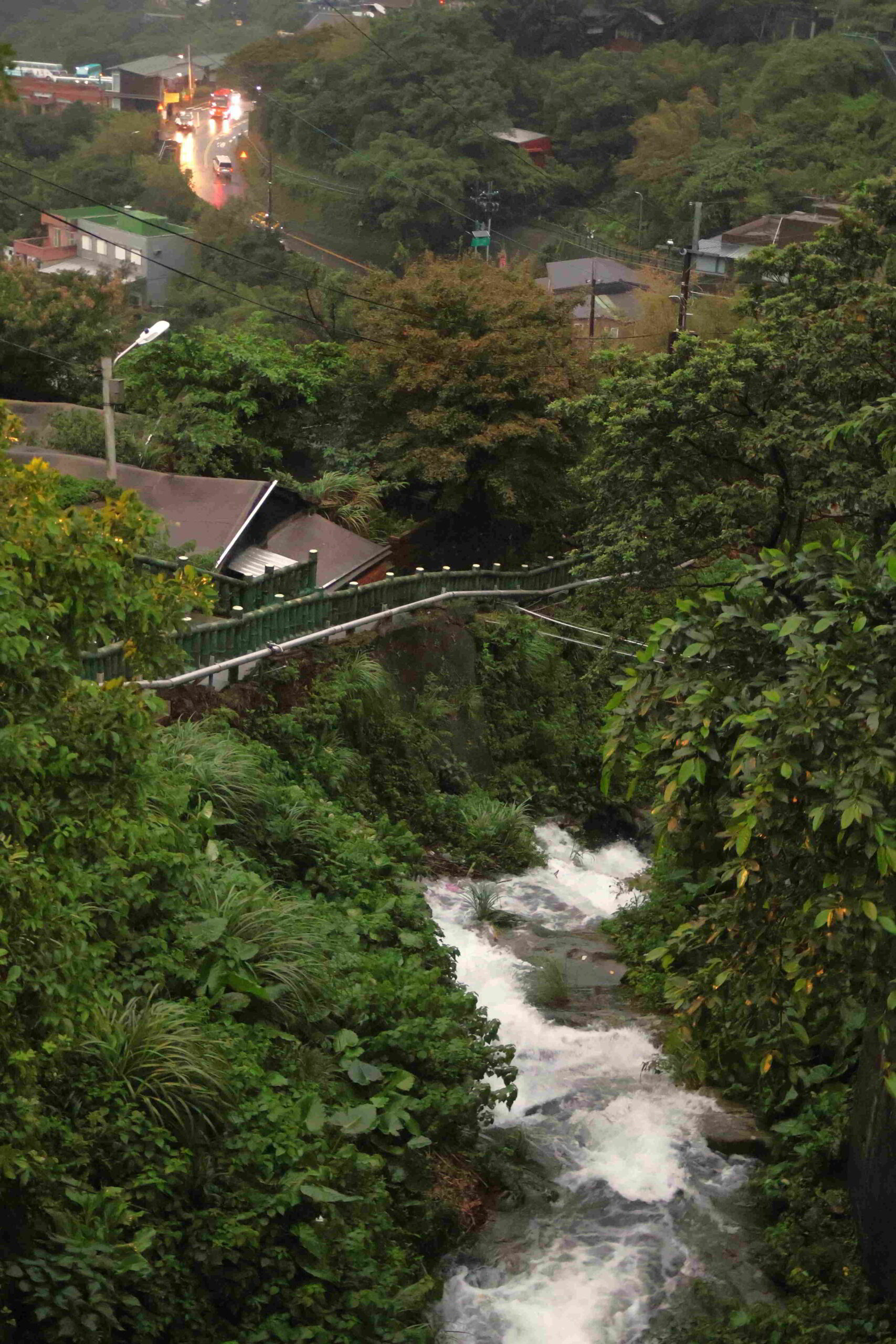
Jiufen
The driver backtracks, then takes a winding sideroad a considerable distance from the location he originally wanted to deposit me at, roughly paralleling the main road we were just on. The road is lined with mostly private houses and some private businesses, evidently largely catering to tourism, the buildings somewhat artful in their presentation. The drop below us is presumably precipitous, but you can’t see very much.
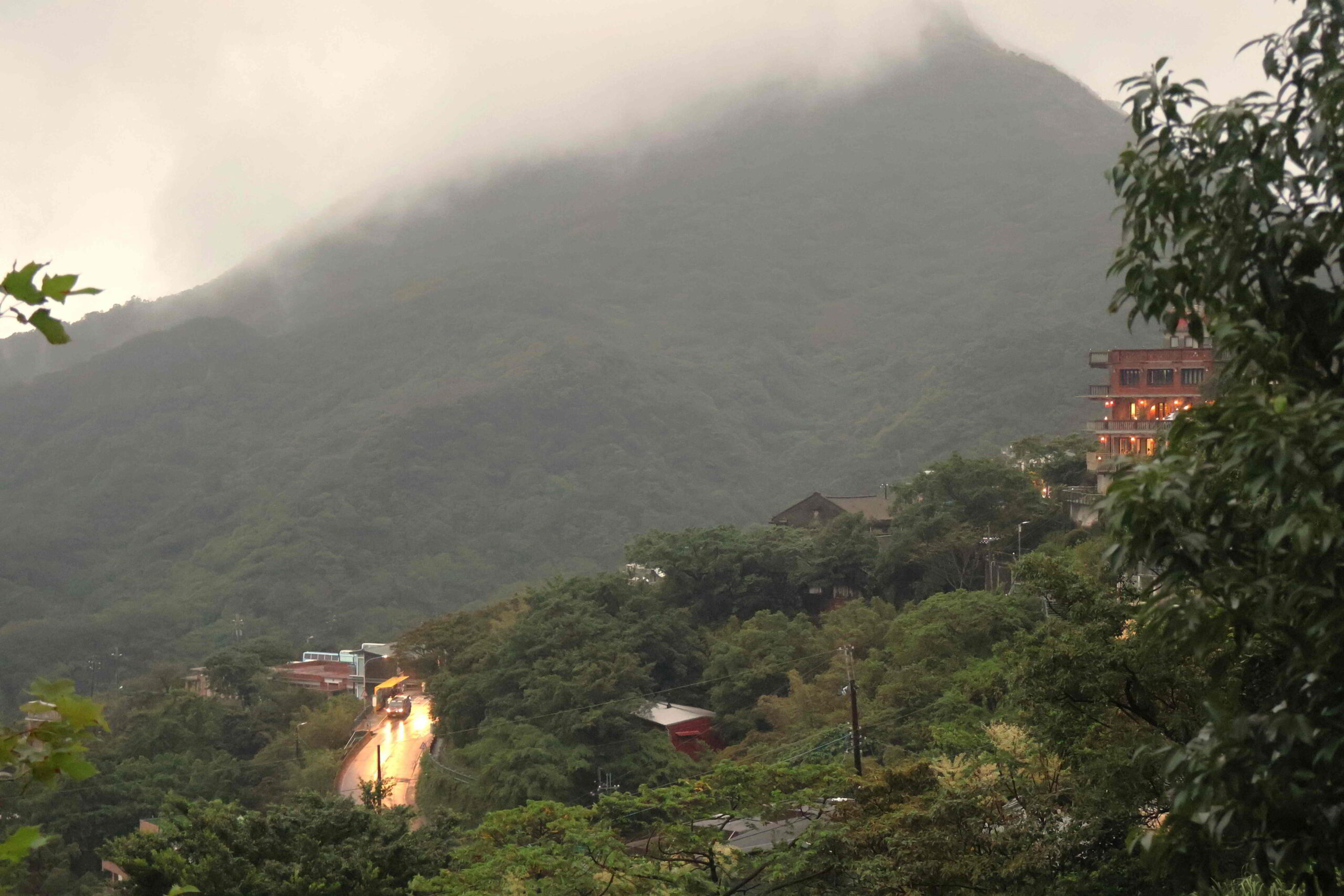
Jiufen
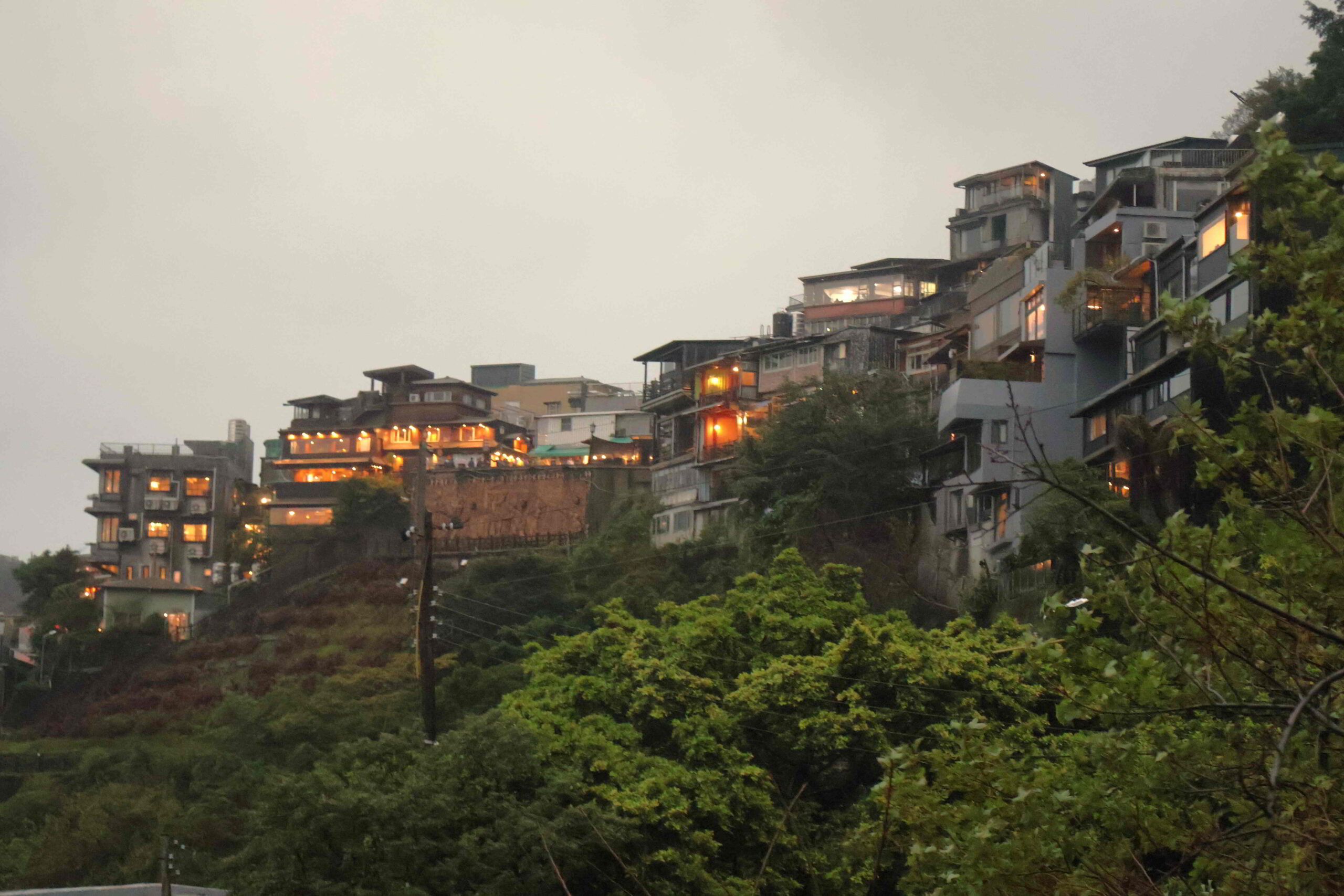
The driver drops me off at a tiny fork in the road, leaving me to make my way on foot in the torrential downpour the remainder of the way. The OwlStay bed and breakfast is somewhat of an unusual venue, a traditional local house that has been renovated to include a set of rooms that can be used by overnighting guests, with a shared bathroom. The place is both utilitarian and artful, the former thanks to the generous use of raw concrete and the latter with the combination of other materials and small aesthetic concessions, such as unusual wall decorations, the overall sensibility quite minimalistic.
Jiufen
My room contains a large, queen-sized mattress — hard of course — with a quilt, the cabinetry underneath to accommodate personal belongings, a shelf that spans the width of the narrow room, limited lighting, and a tiny window facing the street. There is a shared bathroom with sink, mirror, toilet, and shower, dressed in raw concrete with artistic touches. Overhead in the room, an AC unit, and in my room as well as every other space, dehumidifiers that are on 24/7 to allow things to dry. The rain outside is now utterly torrential and not about to abate, which means it is pretty much guaranteed that things will get wet! But I am not doing that badly so far …
Jiufen
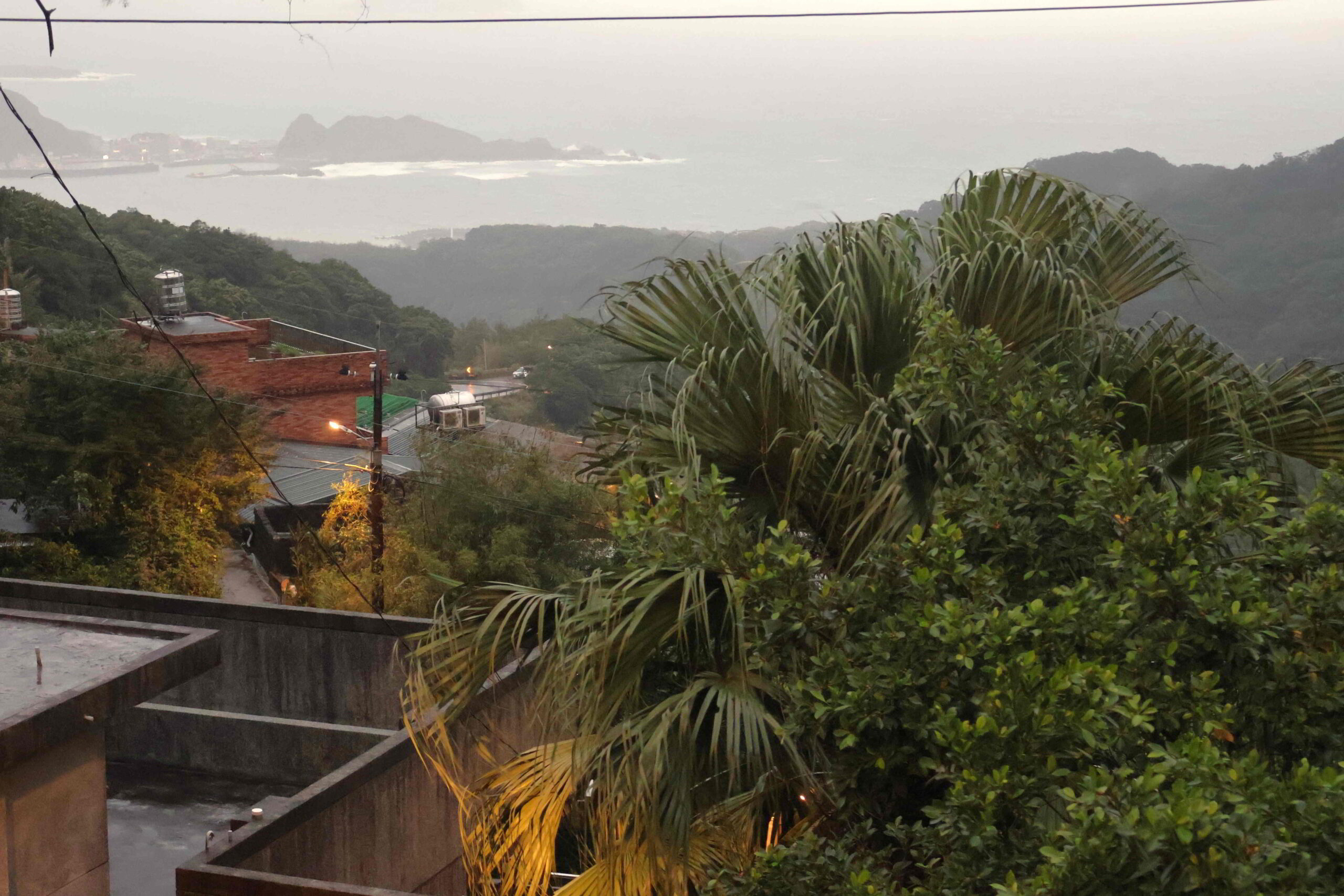
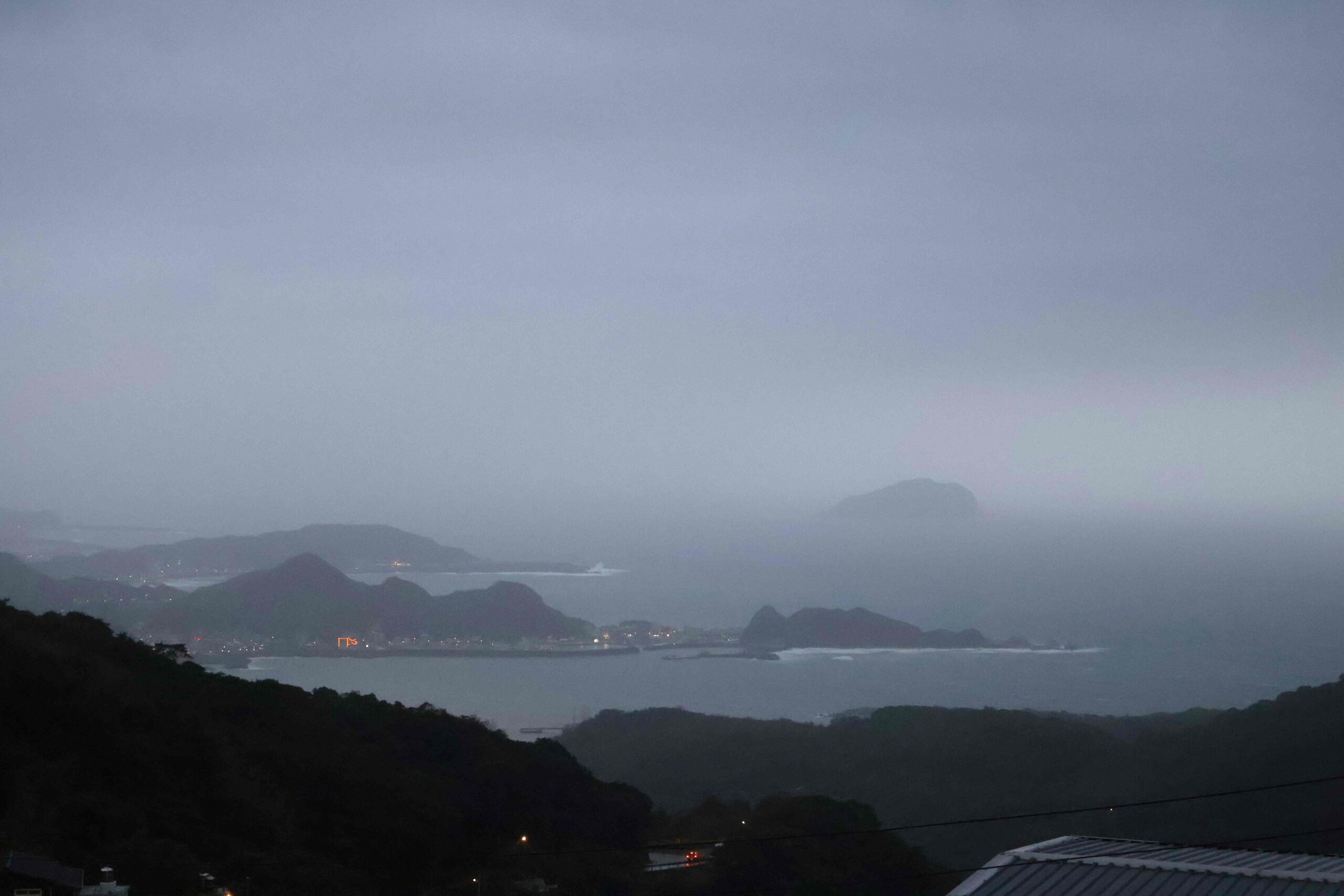
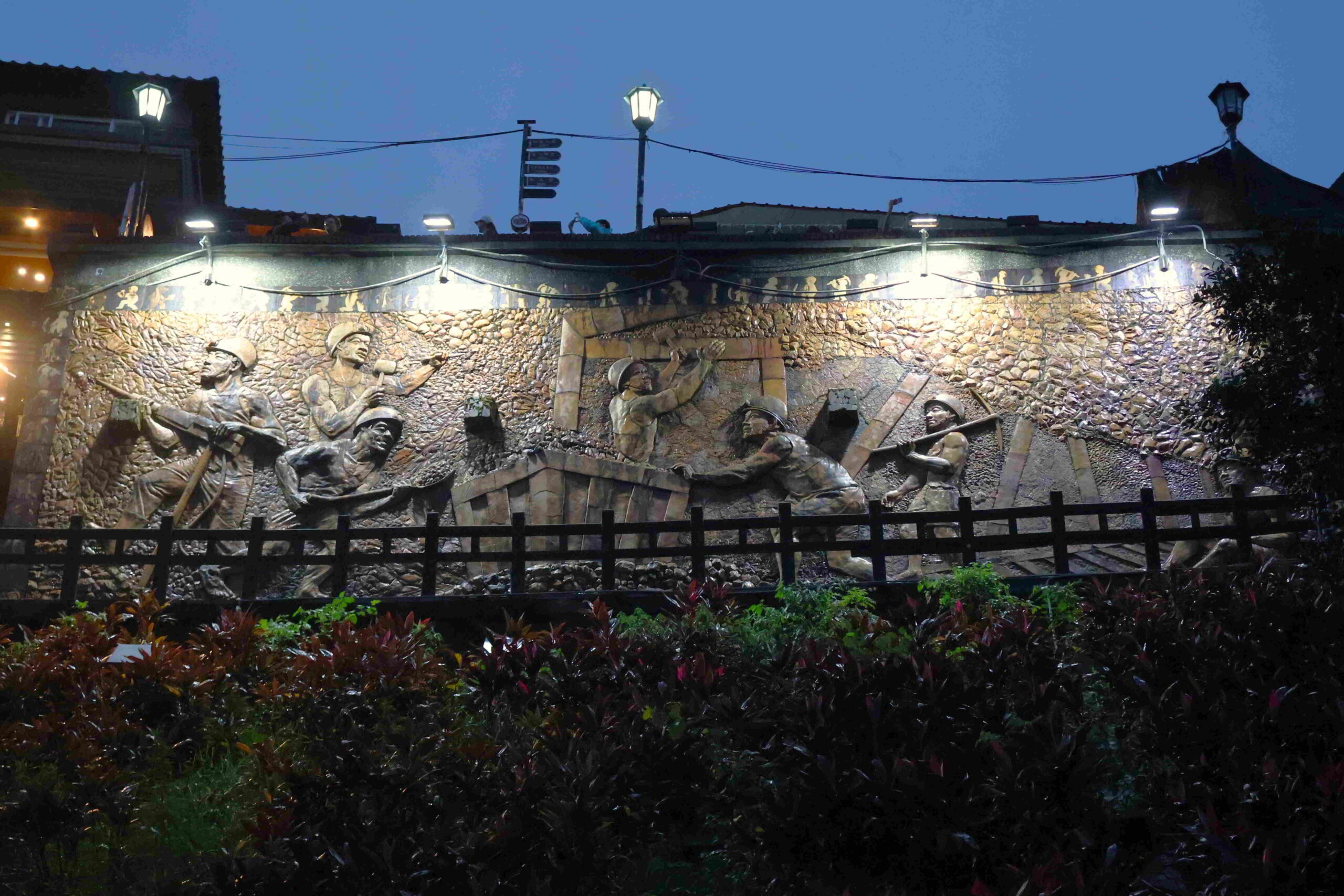
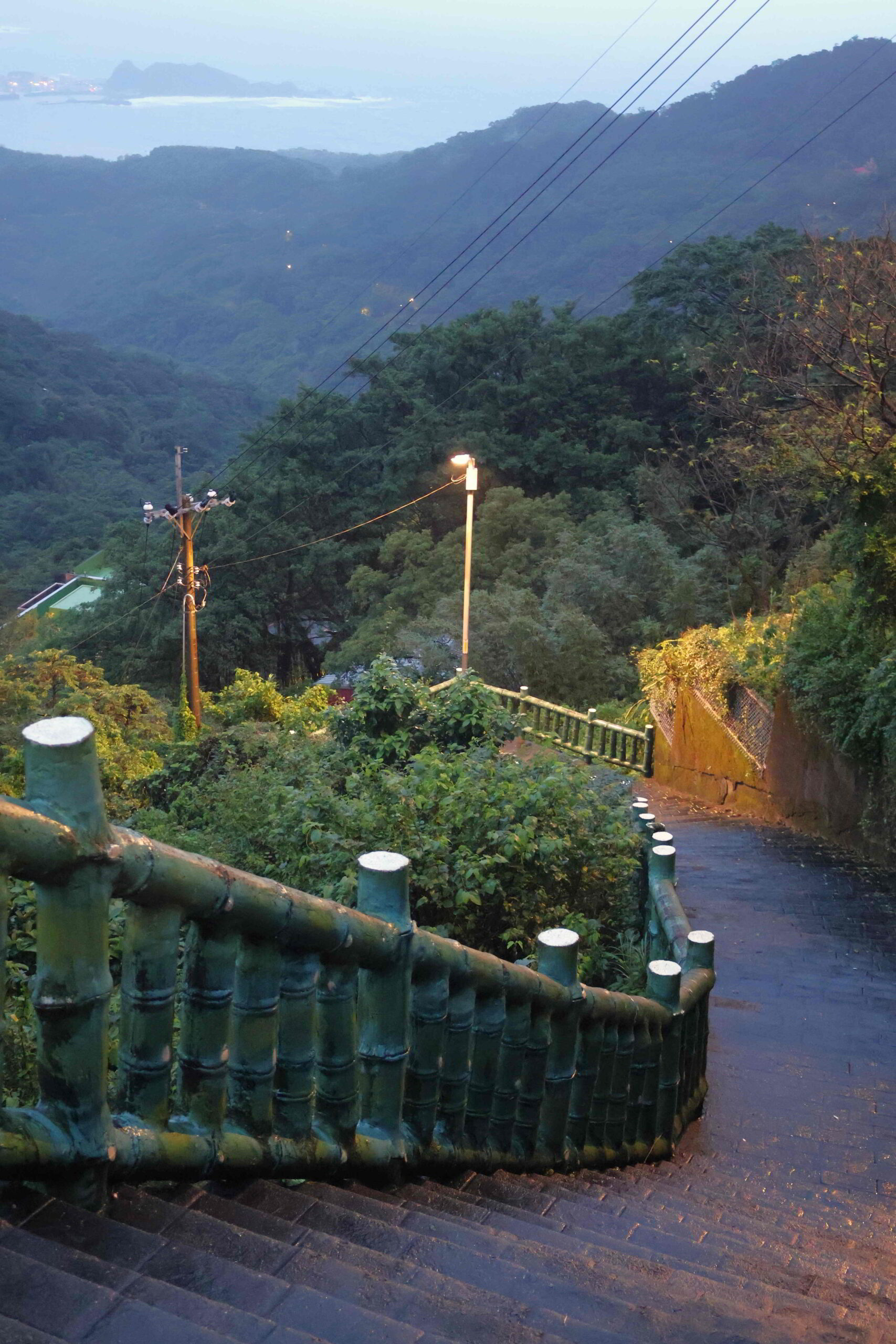
I would like to see some of the town before it gets dark, despite the terrible weather. Happily, the rain has largely abated when I leave the house, even though the weather is still incredibly dreary and dusk now rapidly approaching. The houses lining the narrow road weaving along the mountainside block any views into the valley below, but where the roadside is exposed, dramatic views are offered of the surrounding terrain, the distant mountain peak, the wisps of cloud drifting across, and the tendrils of houses laced along the dense green slopes.
Jiufen
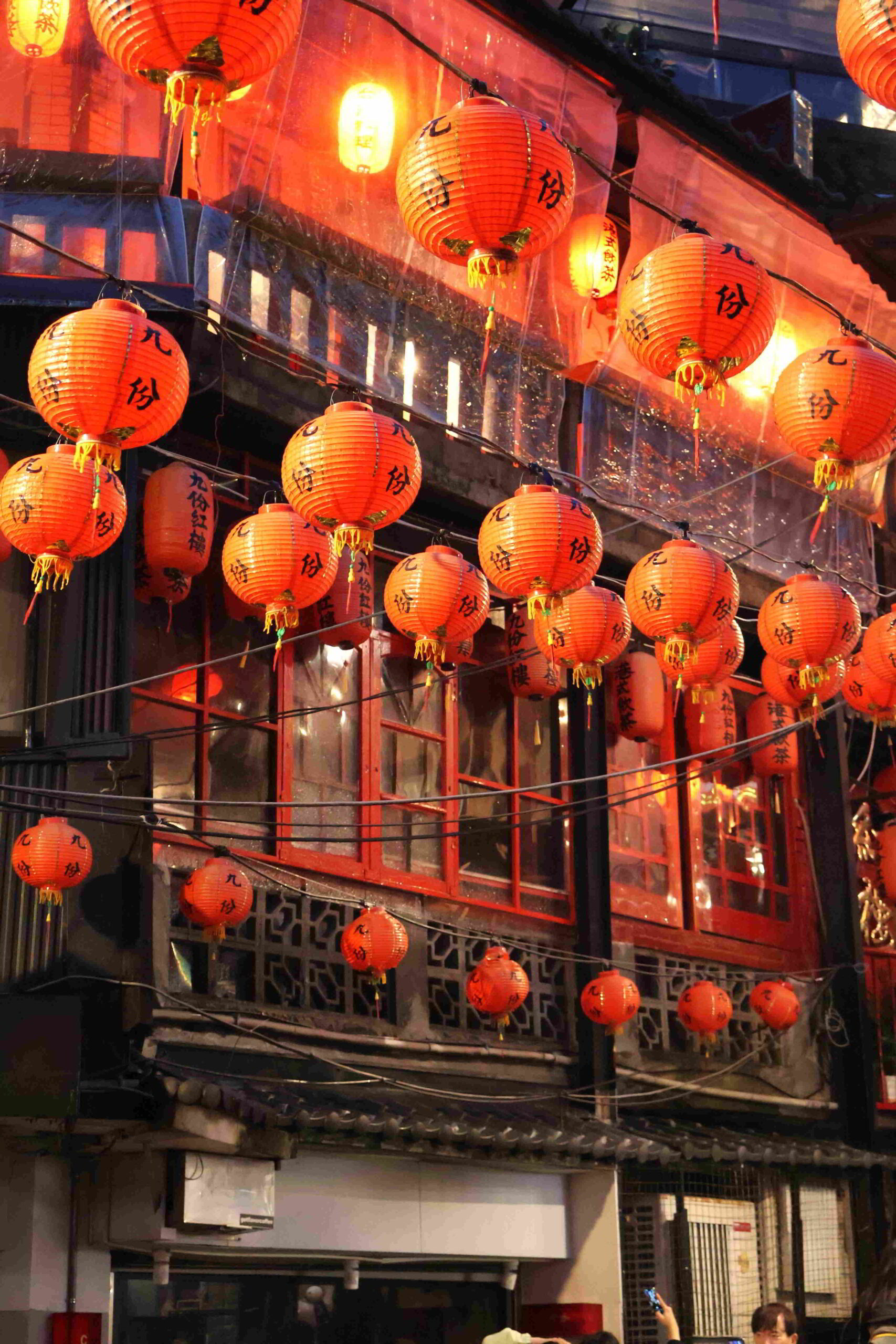
Visitors clad in head-to-toe impermeable rainwear wander along the alley, stopping to take pictures now that the rain has abated, even though darkness is fast approaching. Small, stylish souvenir shops and cafes offer their wares, their aesthetic sensibilities reflecting a tasteful sense of restraint and elegance reminiscent of Kyoto. The play of lights emanating from the residential structures growing from the carpet of dusking green presents a moody backdrop to my surprisingly inspiring late afternoon walk.
Jiufen
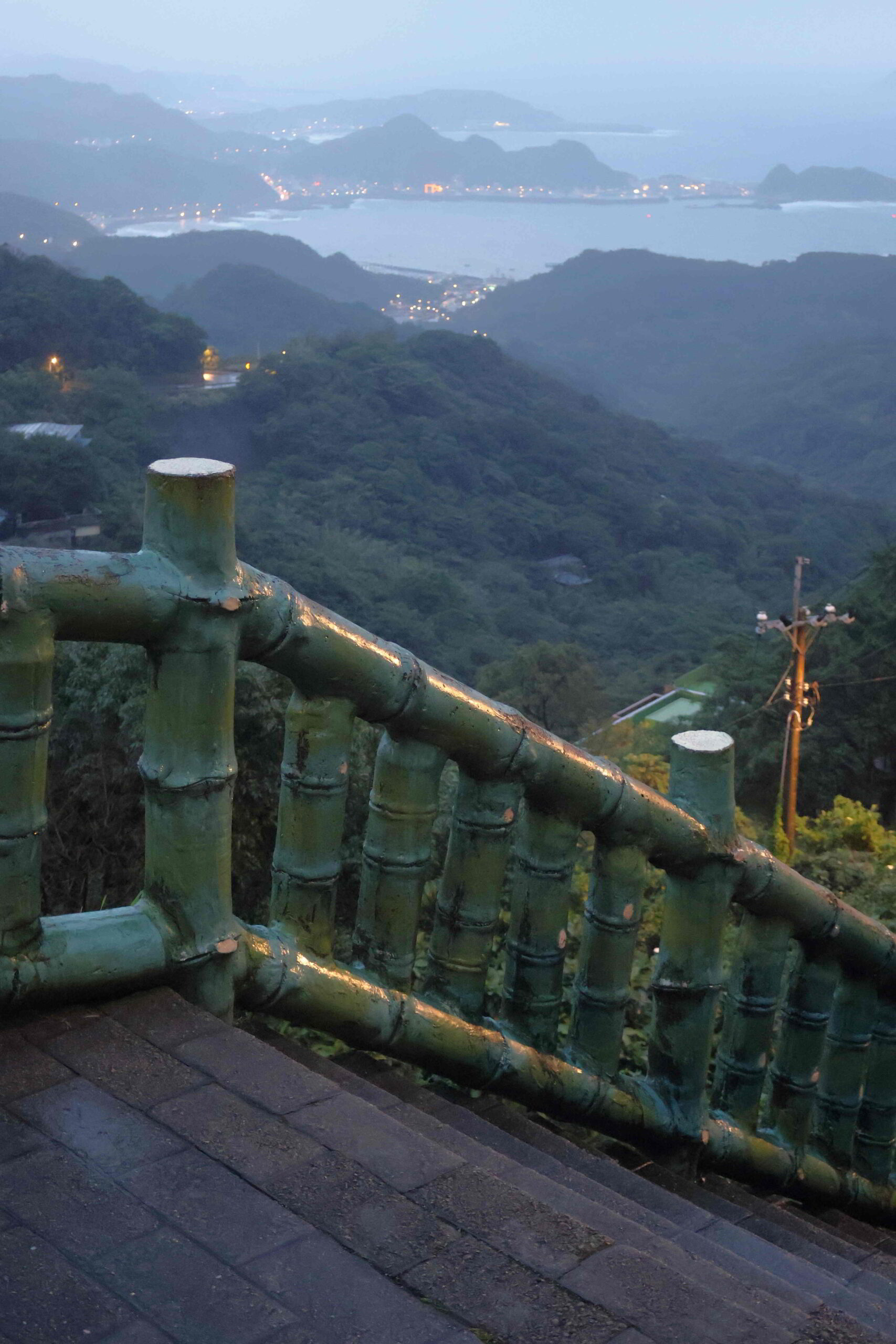
In the distance, the fractal shoreline and the sea, the lights of the human settlement tracing an outline against the coast. Winding staircases weave through the carpet of green toward the main road and further down into the darkness below. In open spaces, groups of tourists from Taiwan and neighboring countries battle their way through the confined alleys, chattering excitedly, taking pictures, and then are gone again.
The small restaurant the worker at the bed and breakfast recommended prepares an inexpensive and extremely tasty beef noodle soup and dumplings, much better than I had expected, and now I am ready for my excursion to the nearby town Ruifang, which apparently has supermarkets that are nonexistent in Jiufen. A group of people huddles under the roof of the bus shelter on the main road, even though it is no longer raining; a 788 passes by the shelter, the visitors presumably not realizing that they have to wave the bus down.
Jiufen
I get on the next 965 shuttle, and again, most of the guests remain in the shelter, although the buses all go to either Keelung or Taipei. The next challenge on this coach bus is trying to figure out how to request a stop, and finally, just before we arrive in the next town, I see that one of the buttons in the cluster of buttons that manage the lighting and air flow is for requesting a stop. A small, trivial thing, but every day brings new challenges — and trying to even walk to the front of the bus as it heaves from one curve to the next is a somewhat life-threatening exercise.
Jiufen
I saw nothing of Ruifang when I arrived earlier on, but can now observe that this small town is the beating commercial heart of the region, the roads lined with all manner of shops that cater to the needs of normal citizens, rather than selling souvenirs to tourists. Drugstores, shoe stores, stores selling produce, convenience stores, clothing stores, coffee shops, and naturally, the PXmart, the largest grocery store in the area — and the object of my visit!
Jiufen
Luisa coffee prepares an excellent coffee, and while the PXmart may not be a hypermarket, I only need to buy supplies to allow me to compose a tasty breakfast and perhaps sandwiches. The next challenge is getting back to Jiufen; while a sequence of buses is scheduled to appear at the bus stop on the main road in the direction of Jiufen, none appears. On the Google Maps schedule, the buses seem to approach, arrive, then leave again, but in reality, no bus appears. A regular stream of buses appears on the opposite side of the street heading in the direction of Taipei, but none in the direction of Jiufen.
Jiufen
In frustration, I ask locals passing by me for assistance, but no one speaks English, and the translation effort becomes too confused. I am about to walk eastward in the direction of the next stop, when seemingly miraculously, the 965 appears. Possibly the overhead electronic displays provide correct information about bus arrival times, but Google Maps definitely does not, at least in the small town environment we are in. While the service is supposed to be reliable in Taiwan, evidently it is not — the bus stop was also not in the place indicated on the map, which is troubling.
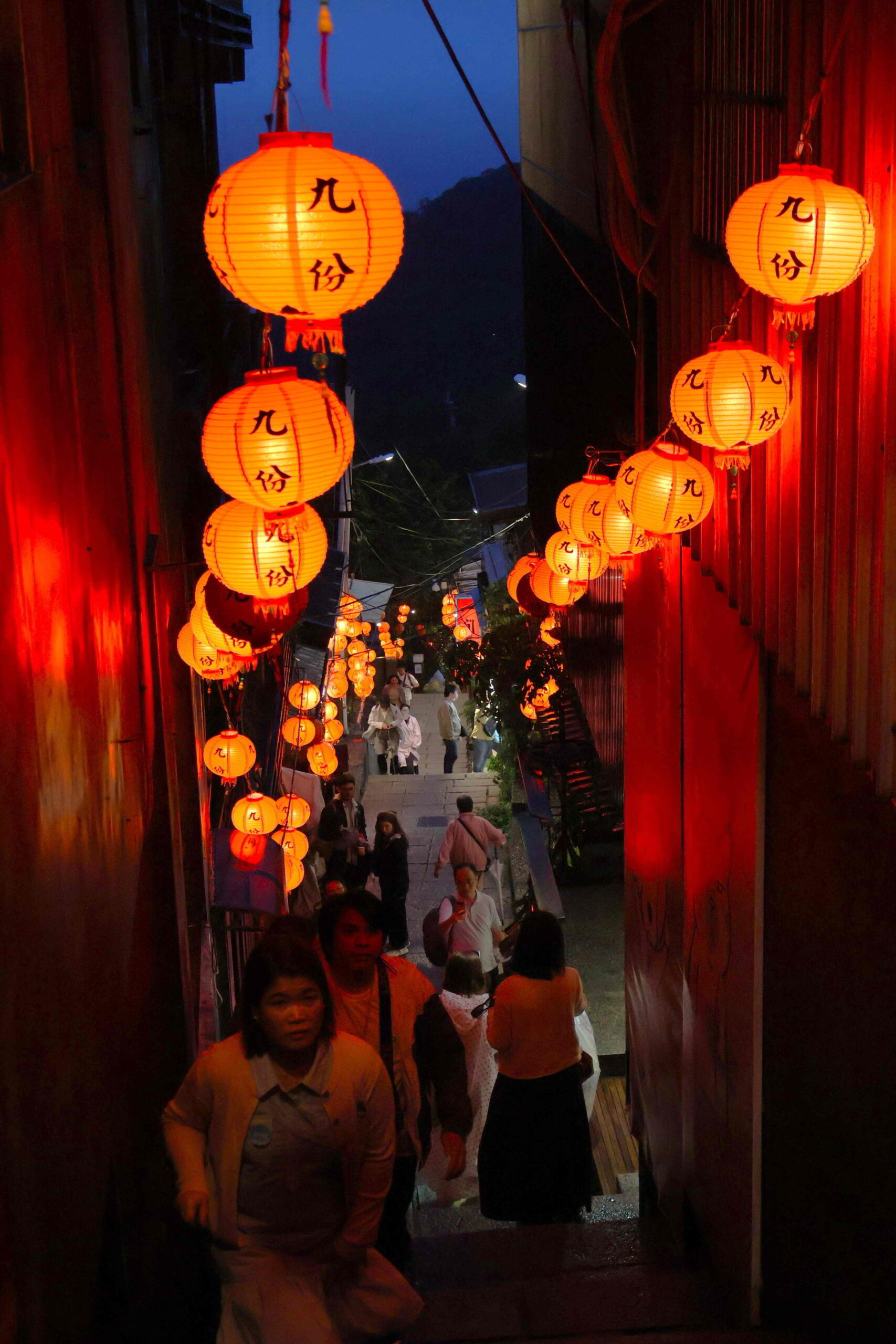
Jiufen
The last challenge of the day, clambering out of the bus onto the staircases leading up the hillside to the bed and breakfast I am staying in; trekking up a steep incline, carrying the daypack stuffed with food and plastic bags in one hand, my umbrella in the other, trying to look at the phone, all the while exposed to the torrential downpour … the joys of traveling!