July 13 , 2026
Bangkok — Koh Rattanakosin — Song Wat
Bangkok — Koh Rattanakosin — Song Wat
On my last day in Bangkok – and the last day of my trip — I had thought about taking the river boat up to Nonthaburi but instead will visit Song Wat road and Charoen Krung in the southeast of Koh Rattinakosin.
Bangkok — Koh Rattanakosin — Song Wat
It turns out that I already know a good part of the area, but it will have been a while. I had thought about paying for an entire extra night at the hotel so that I could return and relax in an air-conditioned environment prior to embarking on the long and grueling trip home, but beyond finding it hard to justify paying for an entire day only to enjoy an additional hour or at most two, I would also have to change rooms, which simply makes the expenditure not worth it. So I will pack, leave my things with the reception downstairs, and change my shirt when I return (assuming that it will be sweated through in the day’s heat).
Bangkok — Koh Rattanakosin — Song Wat
Bangkok — Koh Rattanakosin — Song Wat
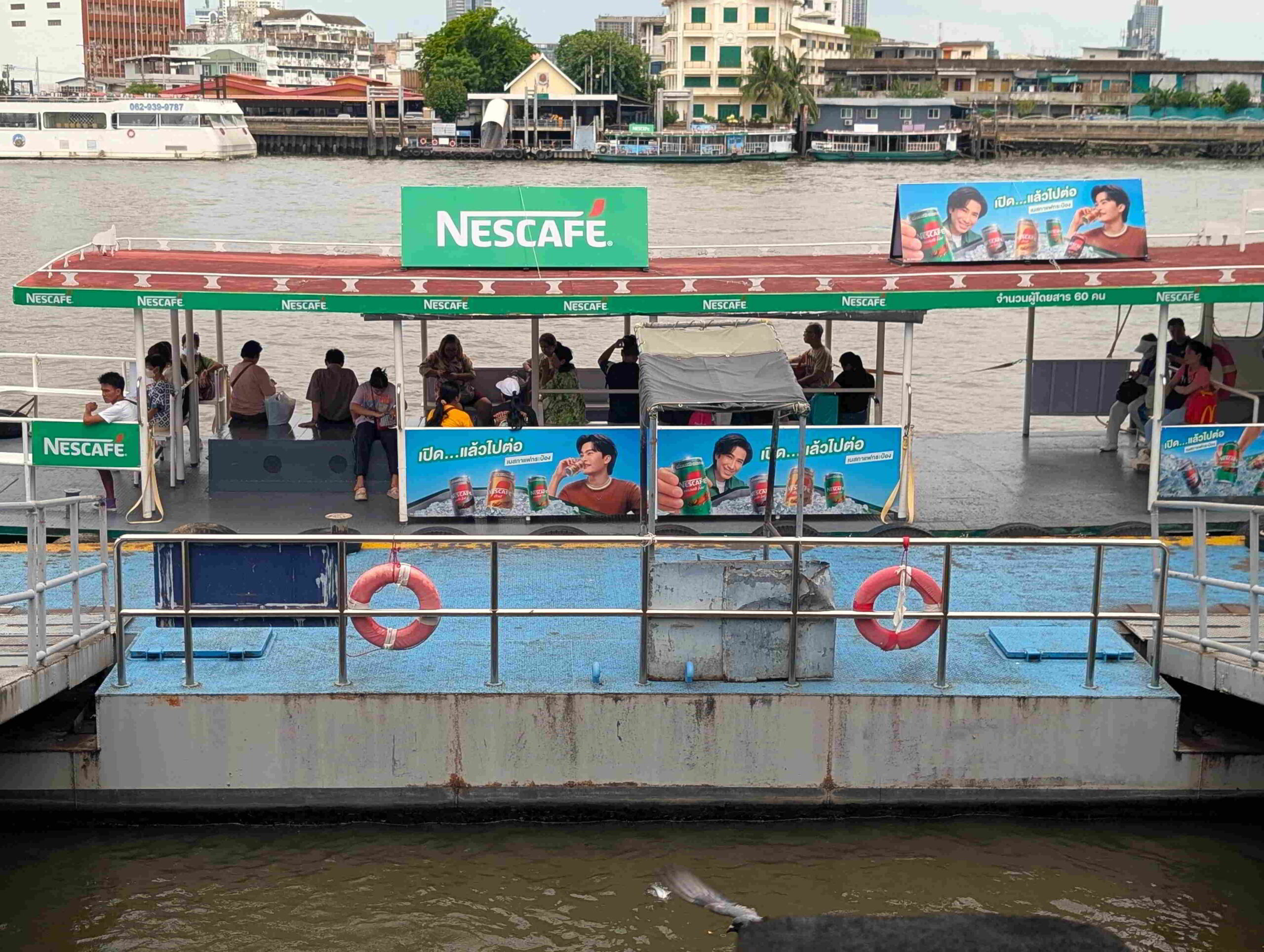
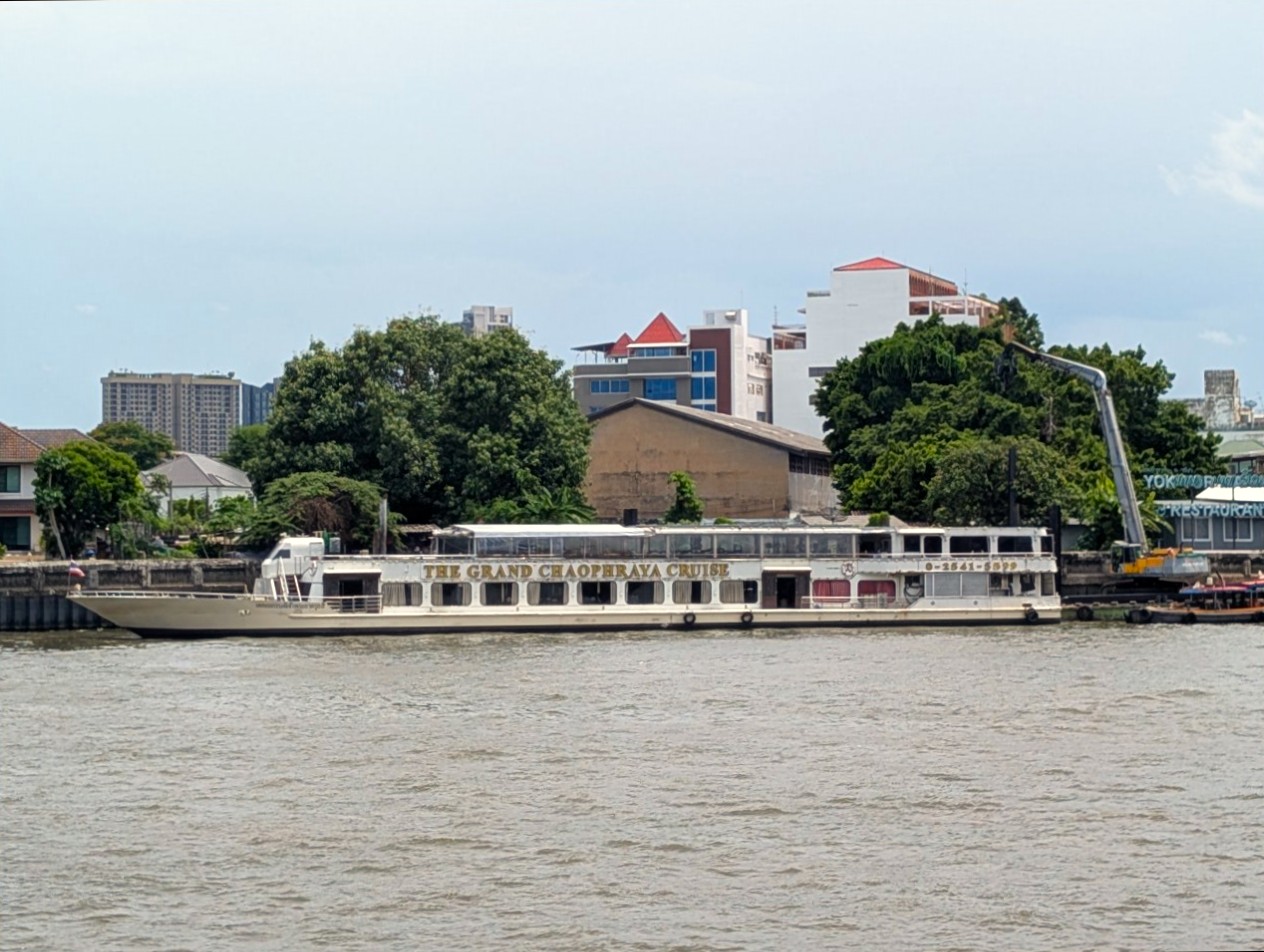
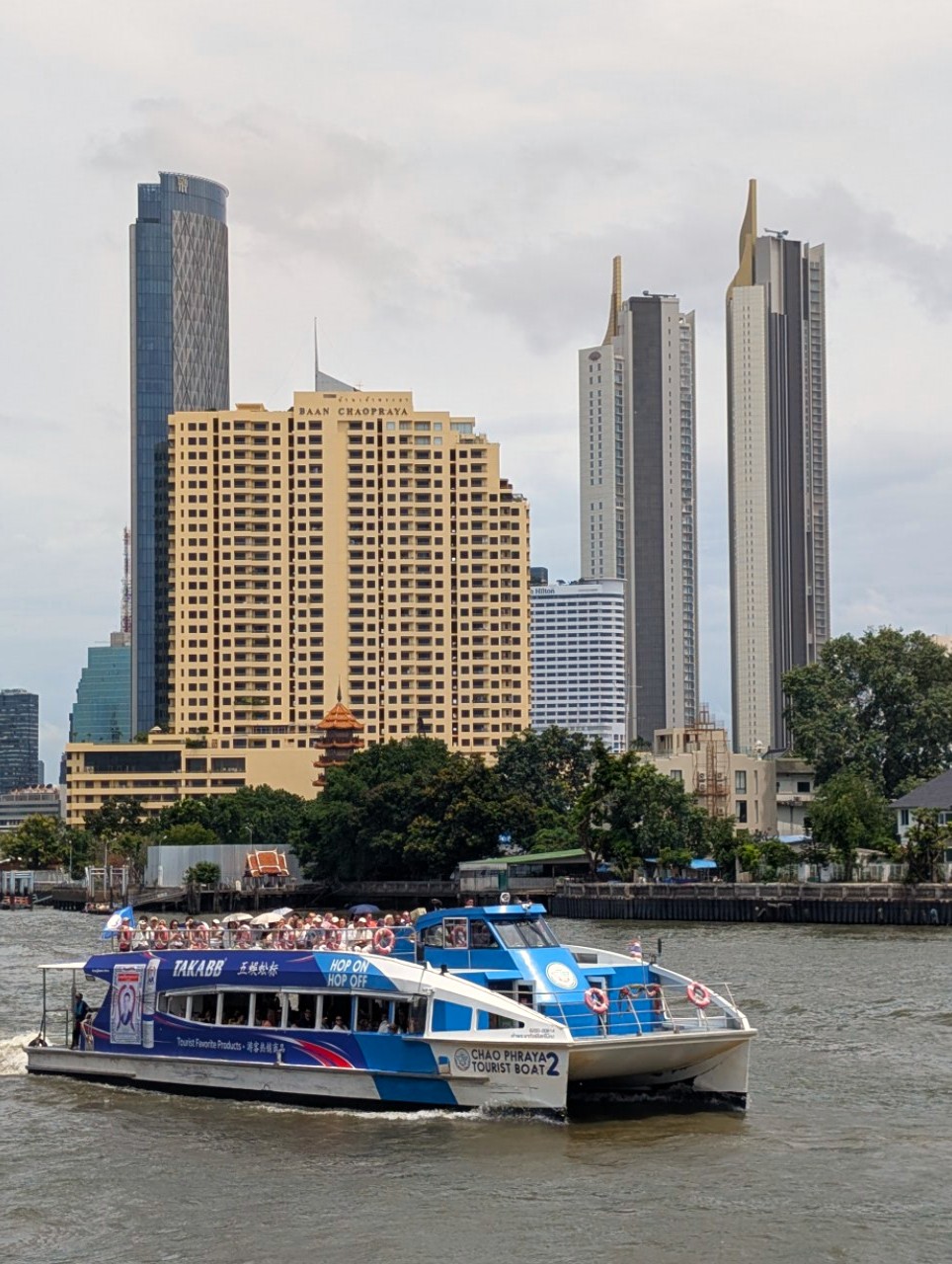
A Grab bike ride through the dense urban tapestry of the city from the Democracy monument running southeast toward the river. Notably, the inner city isn’t overwhelmed by towers, in fact, there are almost none, a concession to keeping the historic profile of the city as intact as possible. At the Chao Phraya river, the Rachawong pier is vaguely familiar, not that the piers on the river don’t all have similar characteristics.
Bangkok — Koh Rattanakosin — Song Wat
Bangkok — Koh Rattanakosin — Song Wat
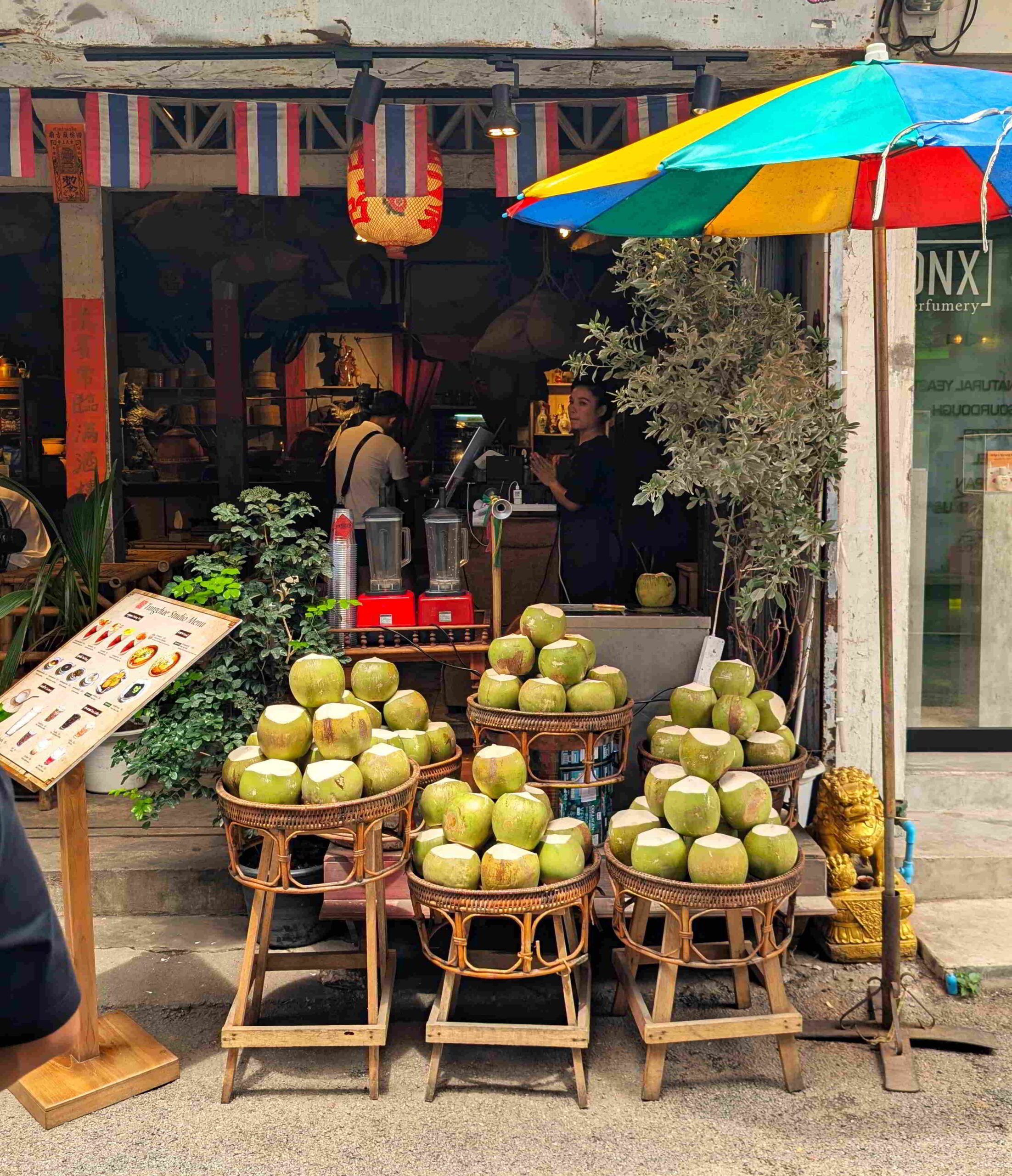
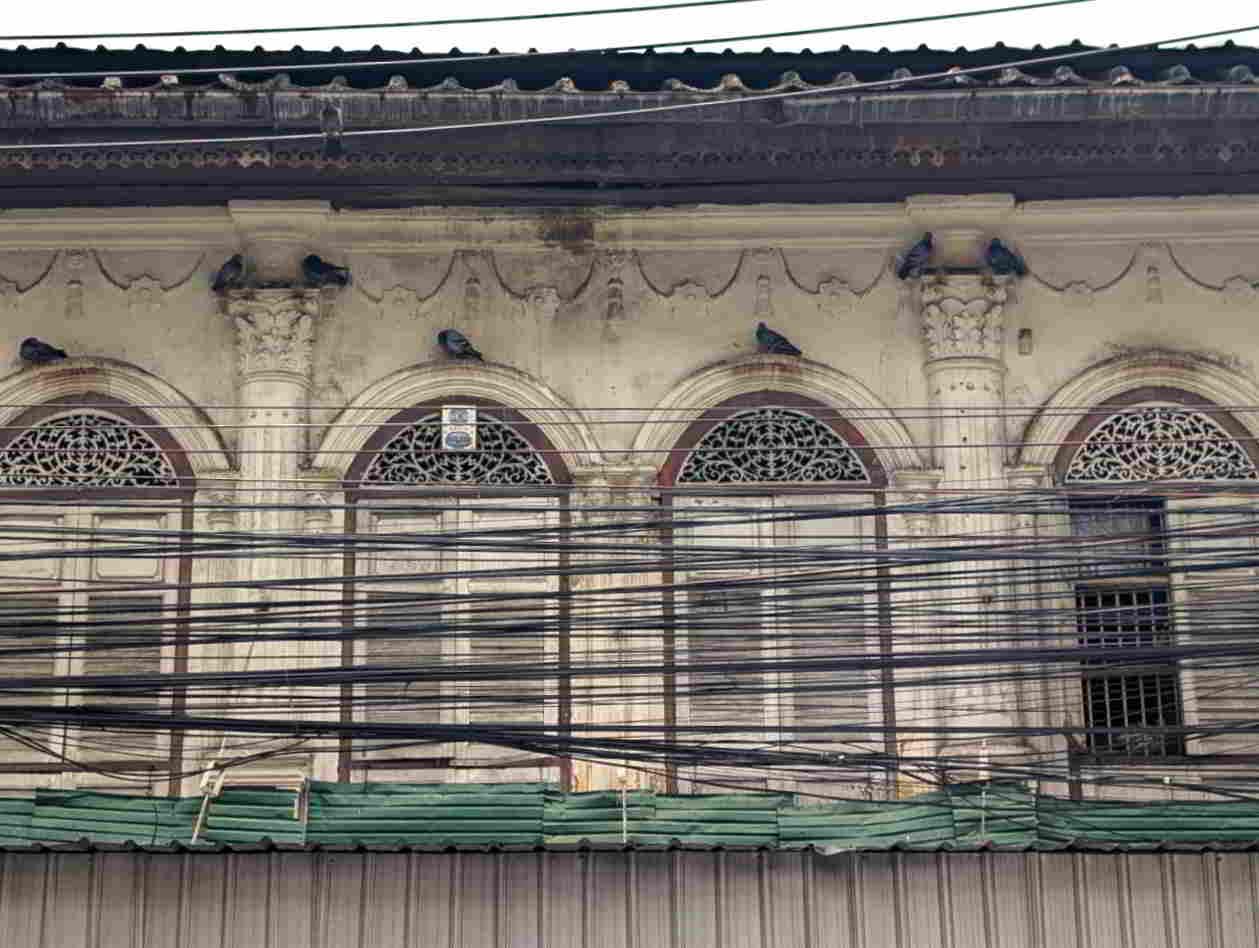
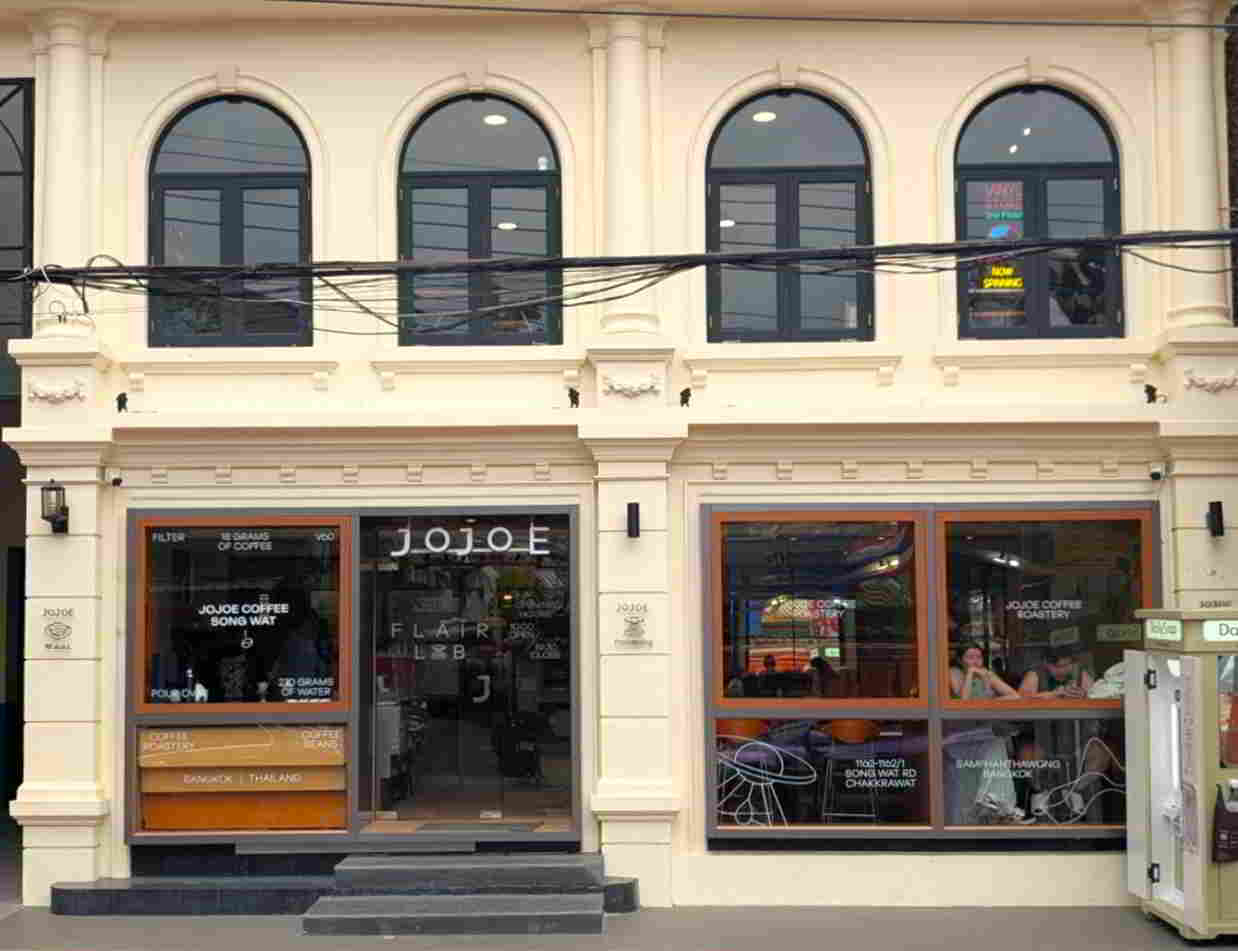
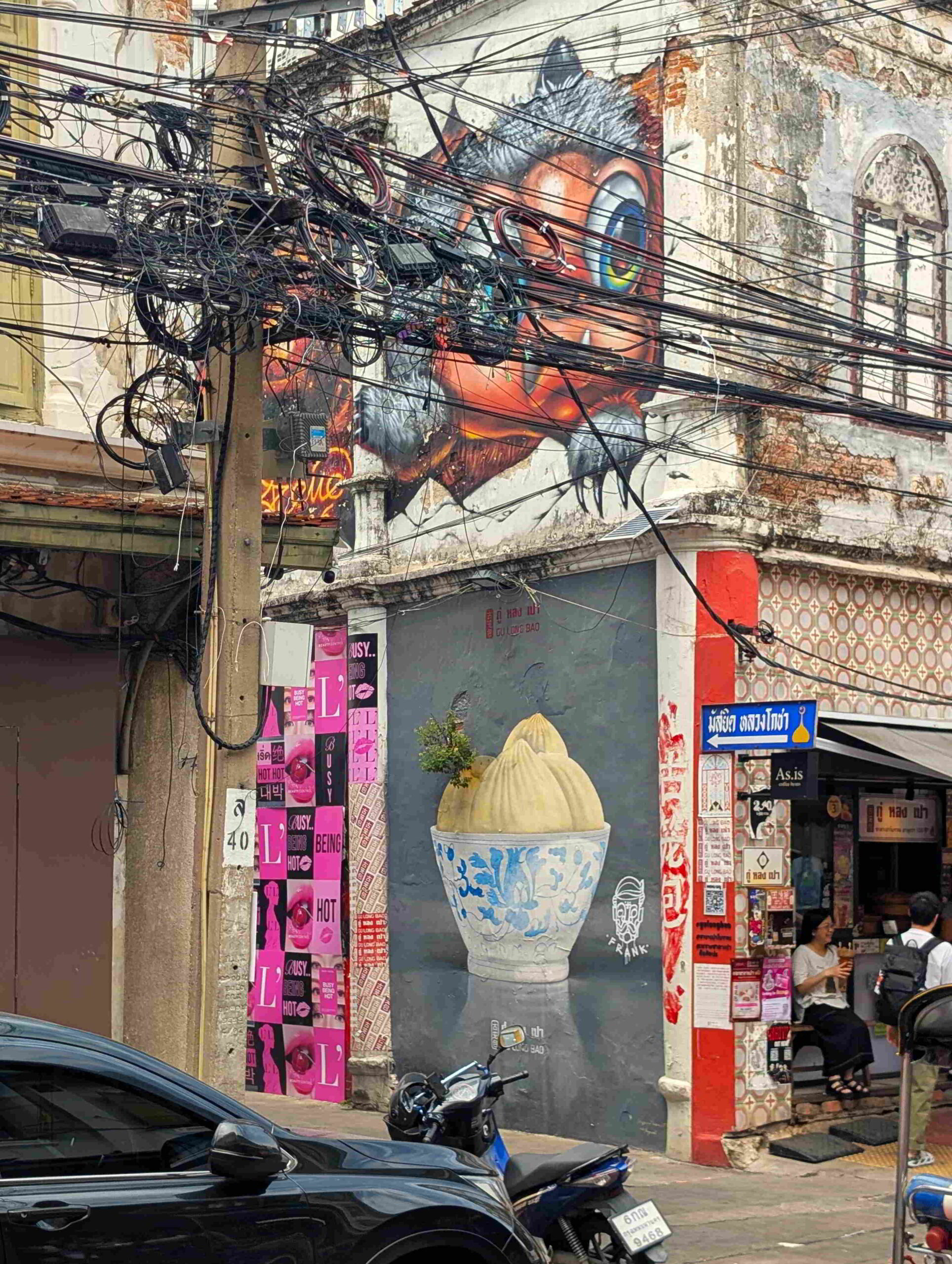
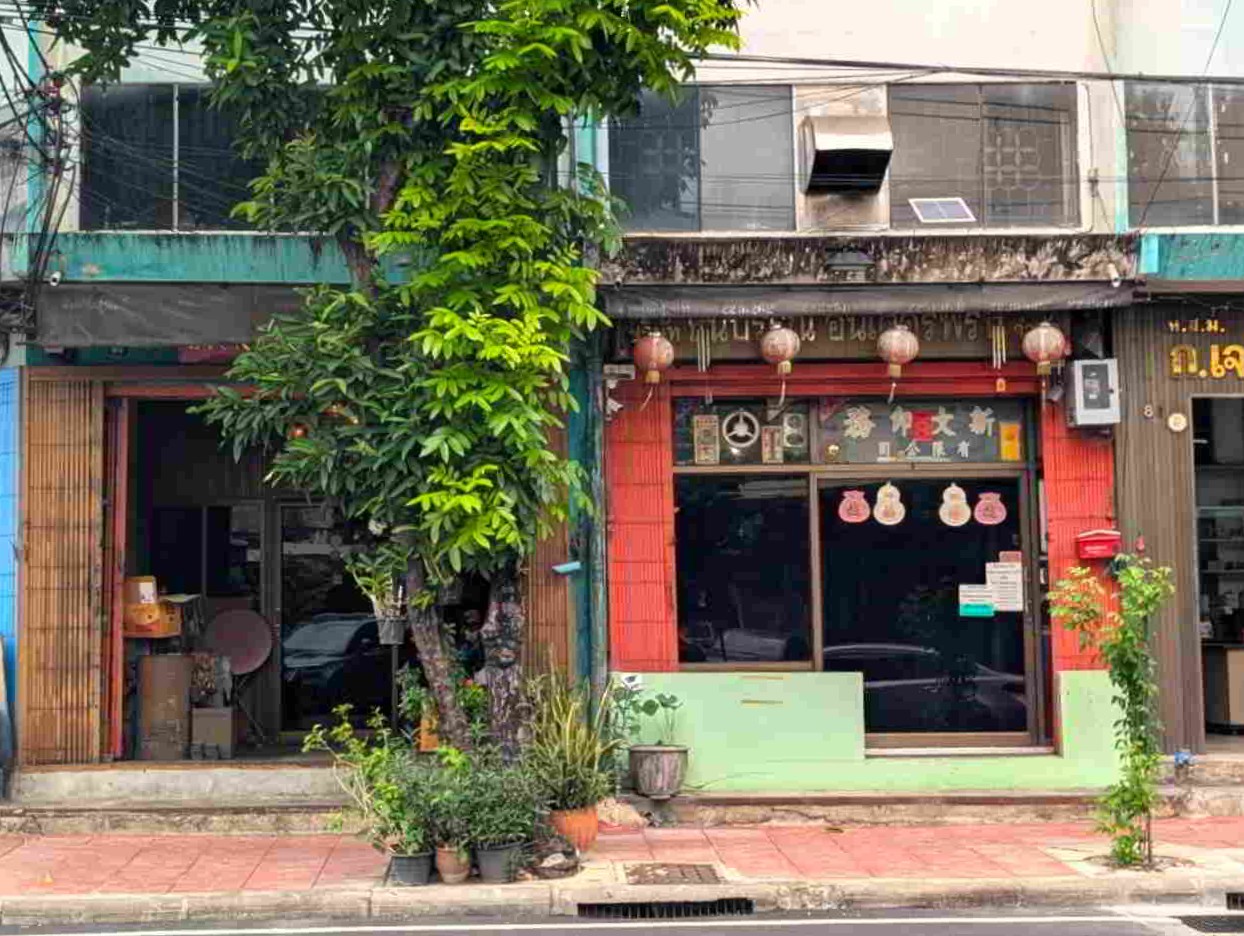
Song Wat is the prototypical cute touristic shopping street you find in East Asia, reminding me of the likes of Jalan Sultan in Singapore and Dihua Old Street in Taipei, with imaginatively designed storefronts, all equally tiny, set in two story buildings with residential upper floors characterized with wood louvered shutters, elaborately carved cornices, the early century detailing entirely detached from the contemporary pretentions of the ground level retail establishments.
Bangkok — Koh Rattanakosin — Song Wat
Bangkok — Koh Rattanakosin — Song Wat
Of course everything here is as cute as it is overpriced, and makes me think of the psychology that entraps many Asian tourists who would otherwise not be remotely as generous with their money. The souvenirs and foods offered are far from memorable, but the street nonetheless provides an experience of touristic Bangkok that is entirely wholesome, in stark contrast to the sleaze that attracts largely the older male Caucasian demographic to Khaosan road and the Sukhumvit and Pat Pong areas.
Bangkok — Koh Rattanakosin — Song Wat
Bangkok — Koh Rattanakosin — Song Wat
Some architectural details are anticipated whiles others are not as I navigate across the narrow street from one vantage point to another, viewing the upper stories of the continuous sequence of structures that line both sides of the narrow street, the sidewalks crowded with tourists, scooters and vehicles attempting to move forward through the thick morass. The commonality with Chinese shophouse architecture found in Malaysia is striking, although that is probably precisely what this is.
Bangkok — Koh Rattanakosin — Song Wat
Bangkok — Koh Rattanakosin — Song Wat
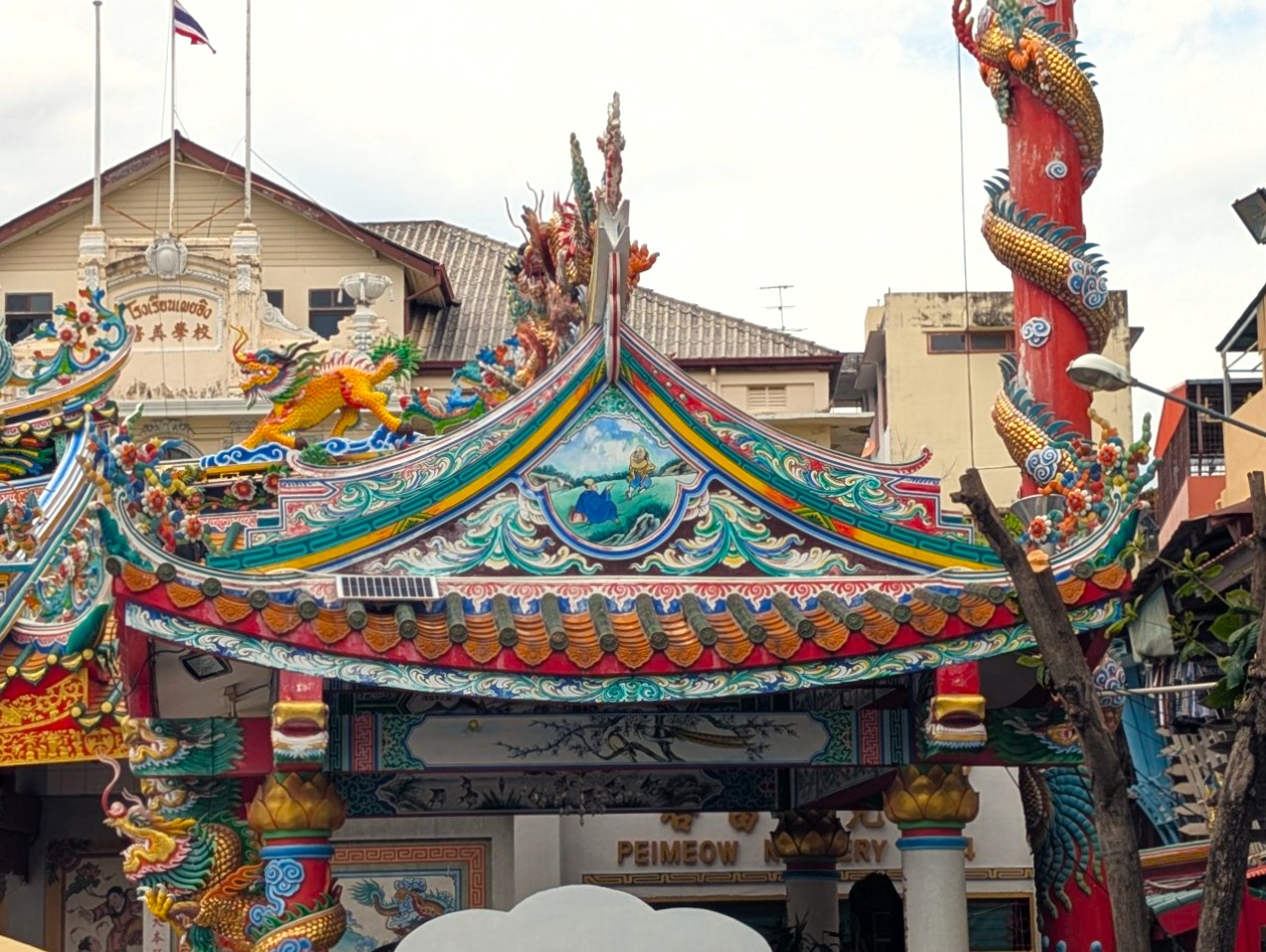
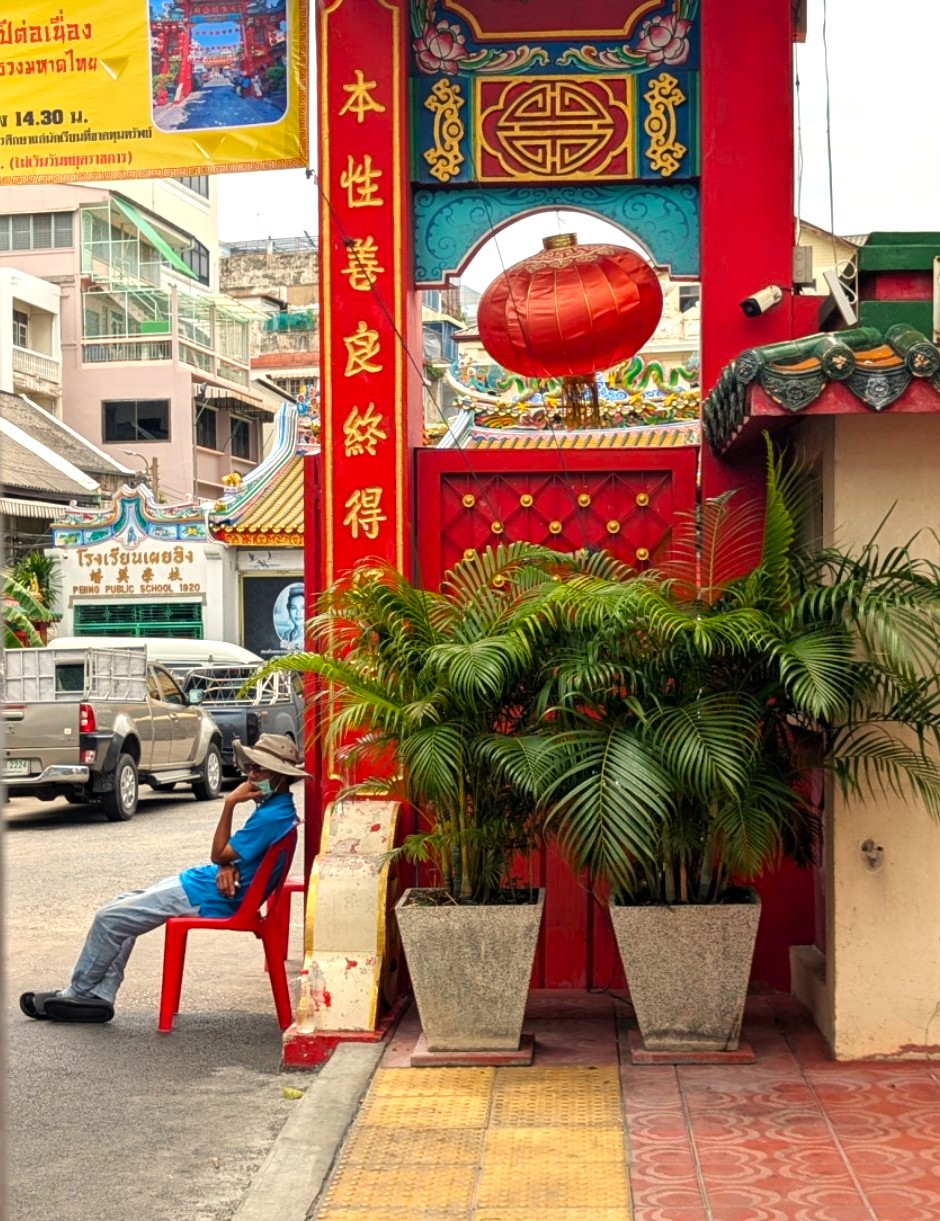
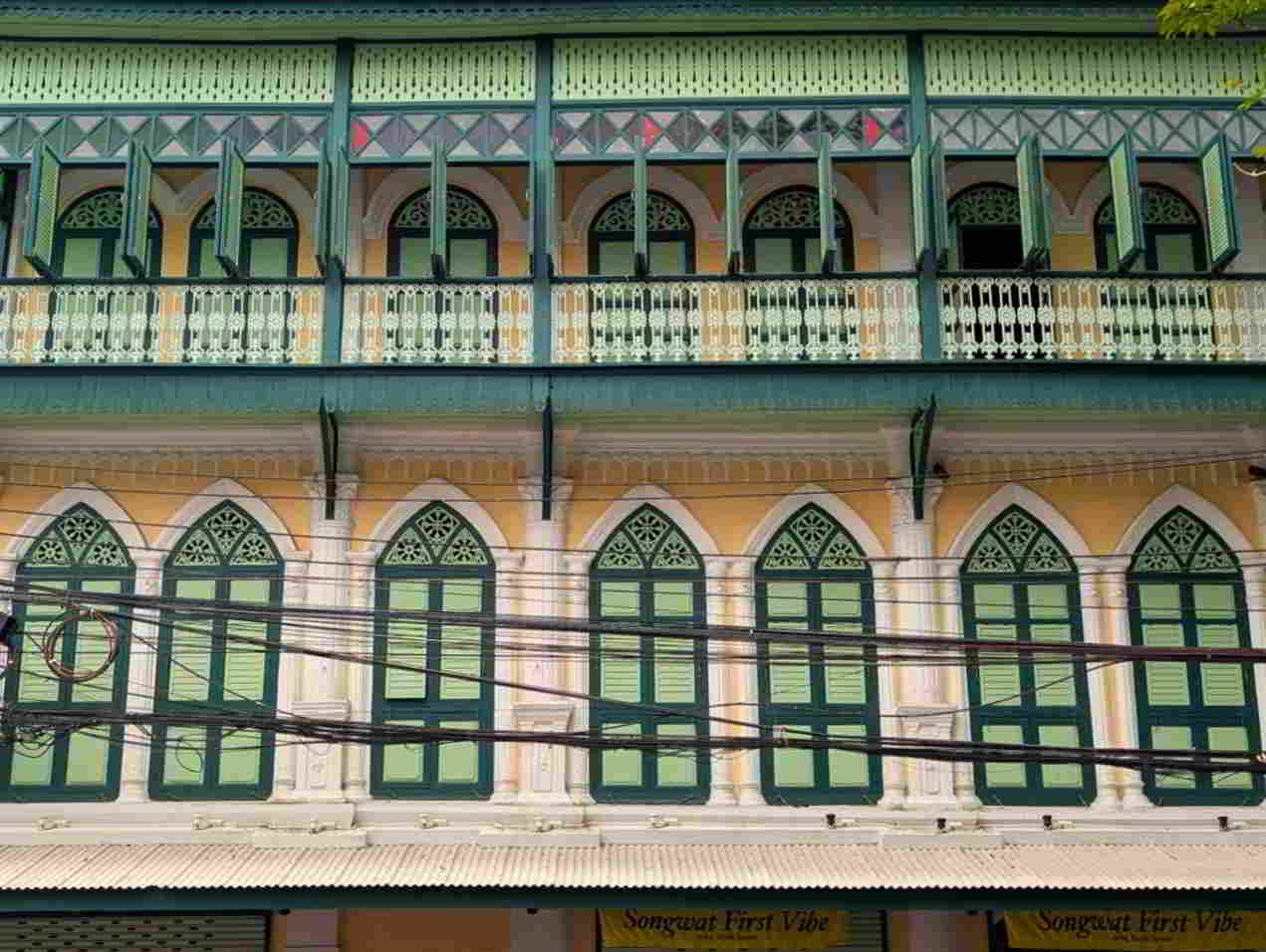
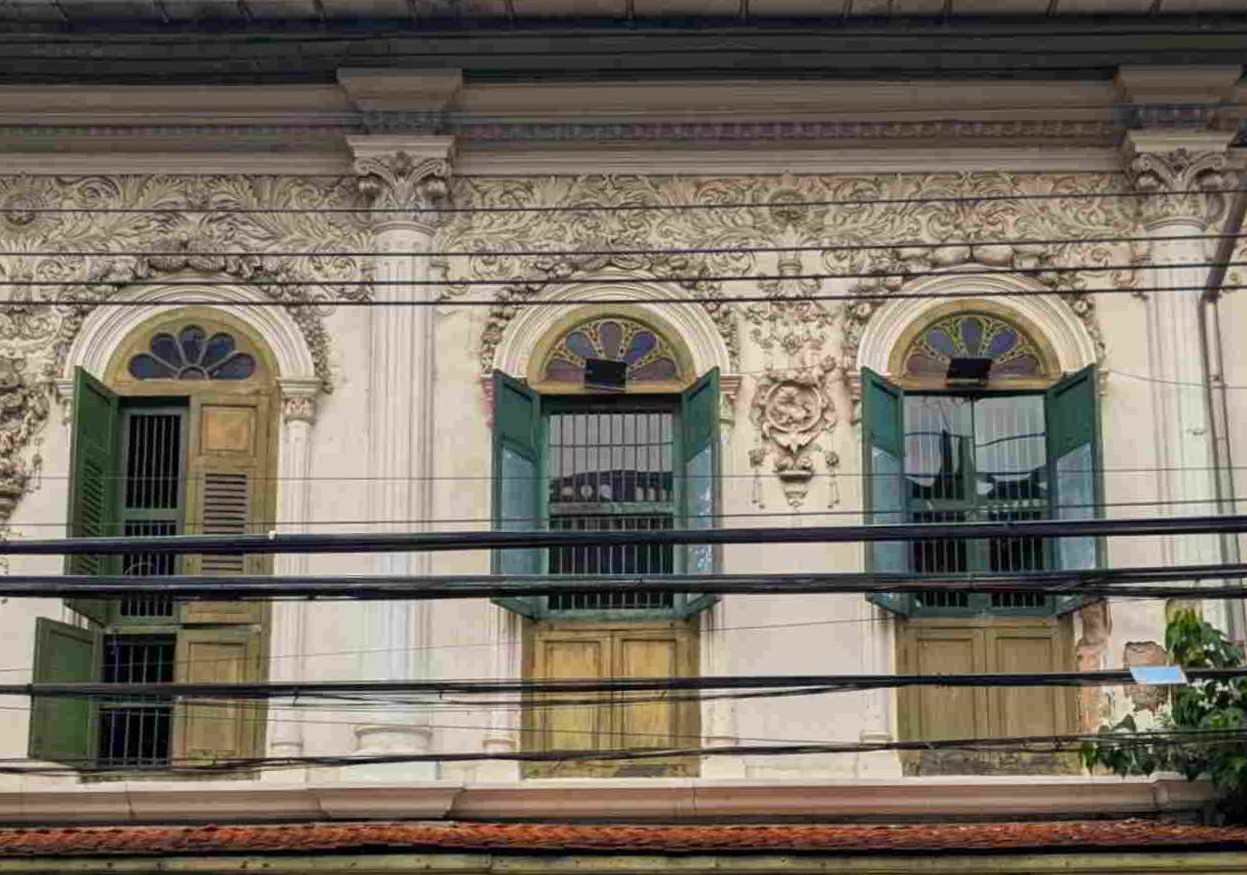
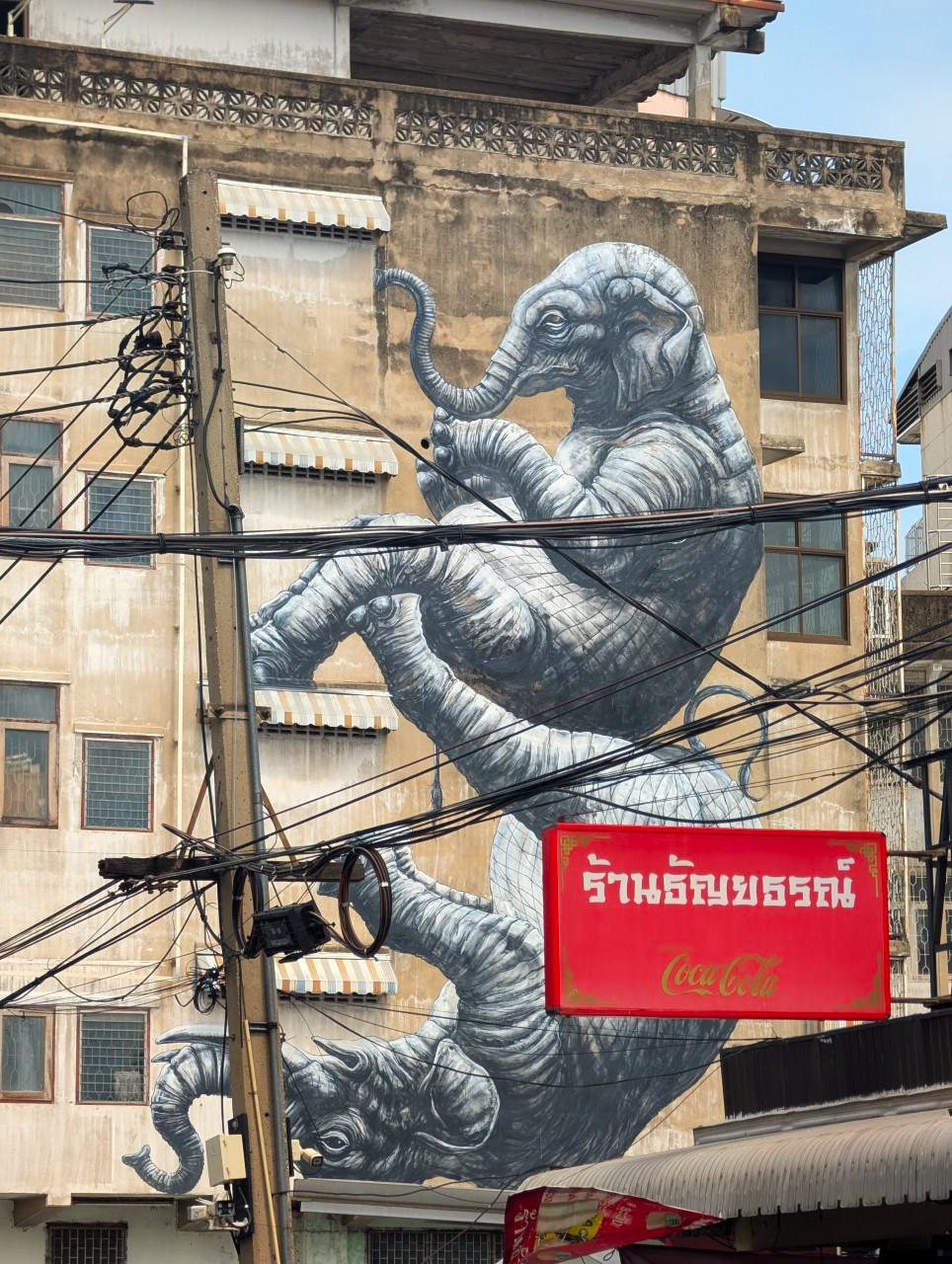
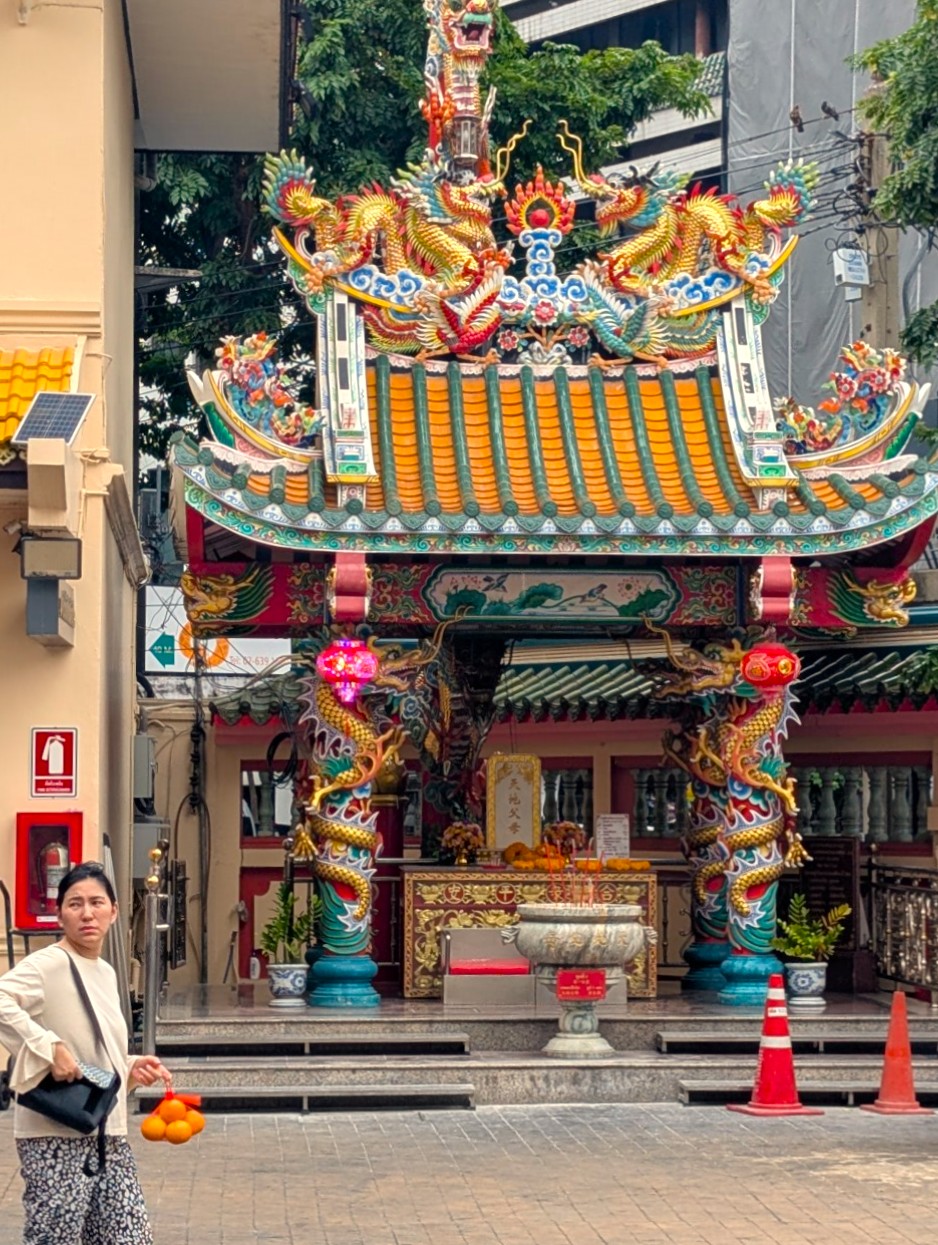
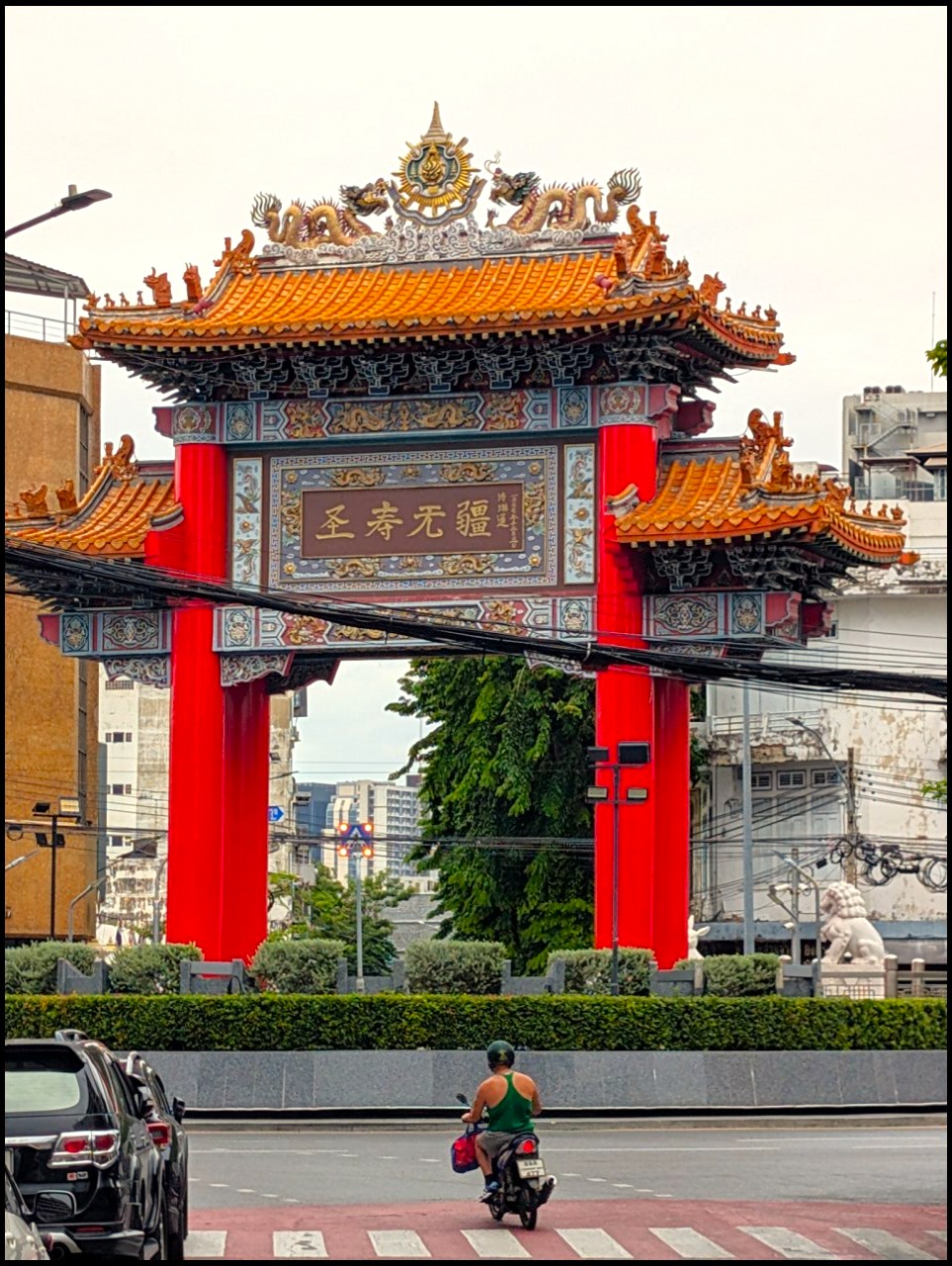
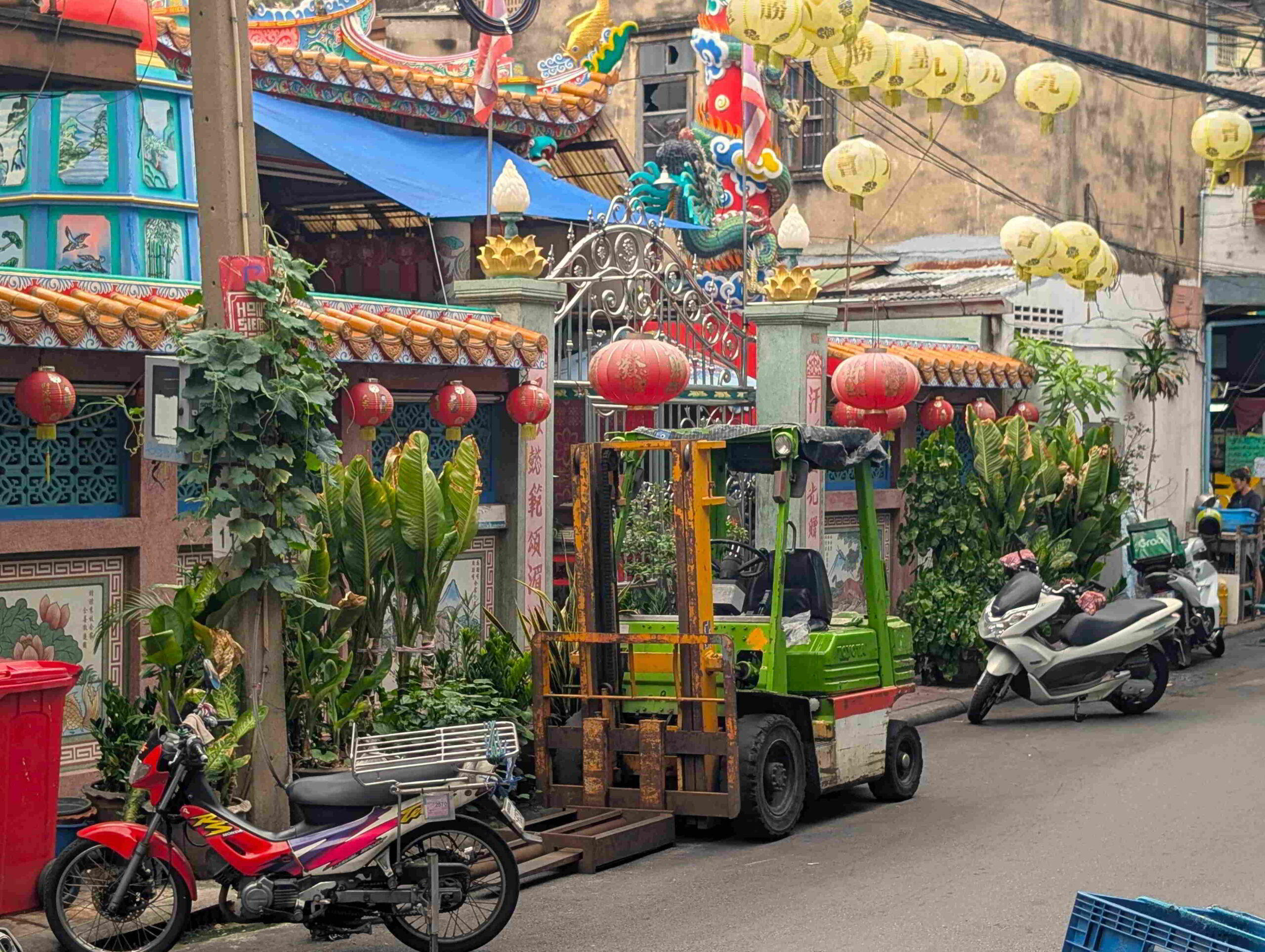
The Islamic character of one structure is incongruous, with its four-toned ivory, peach yellow, pale green, and olive shuttered windows set in pointed arches, with three-part fanlights. Conventionally, the shuttered windows on buildings are crowned with elaborately carved but round arches, often divided by decorative columns, the surrounding fascia embellished with all manner of bas-relief tracery. The squat Taoist temples enveloped in brilliantly-coloured writhing serpents come as no surprise in this stolidly Chinese commercial enclave, the parked cars vying for precious space amidst the cordons of red lanterns.
Bangkok — Koh Rattanakosin — Song Wat
Bangkok — Koh Rattanakosin — Song Wat
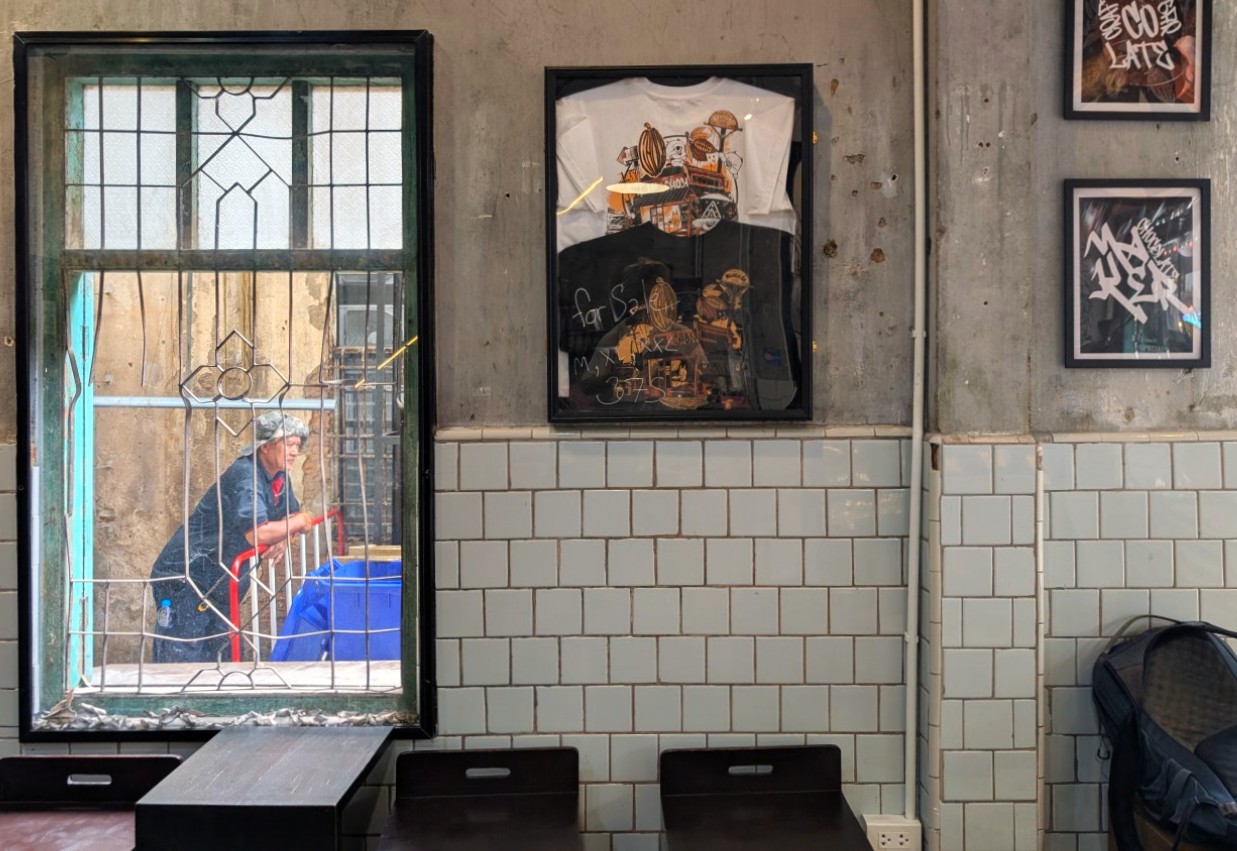
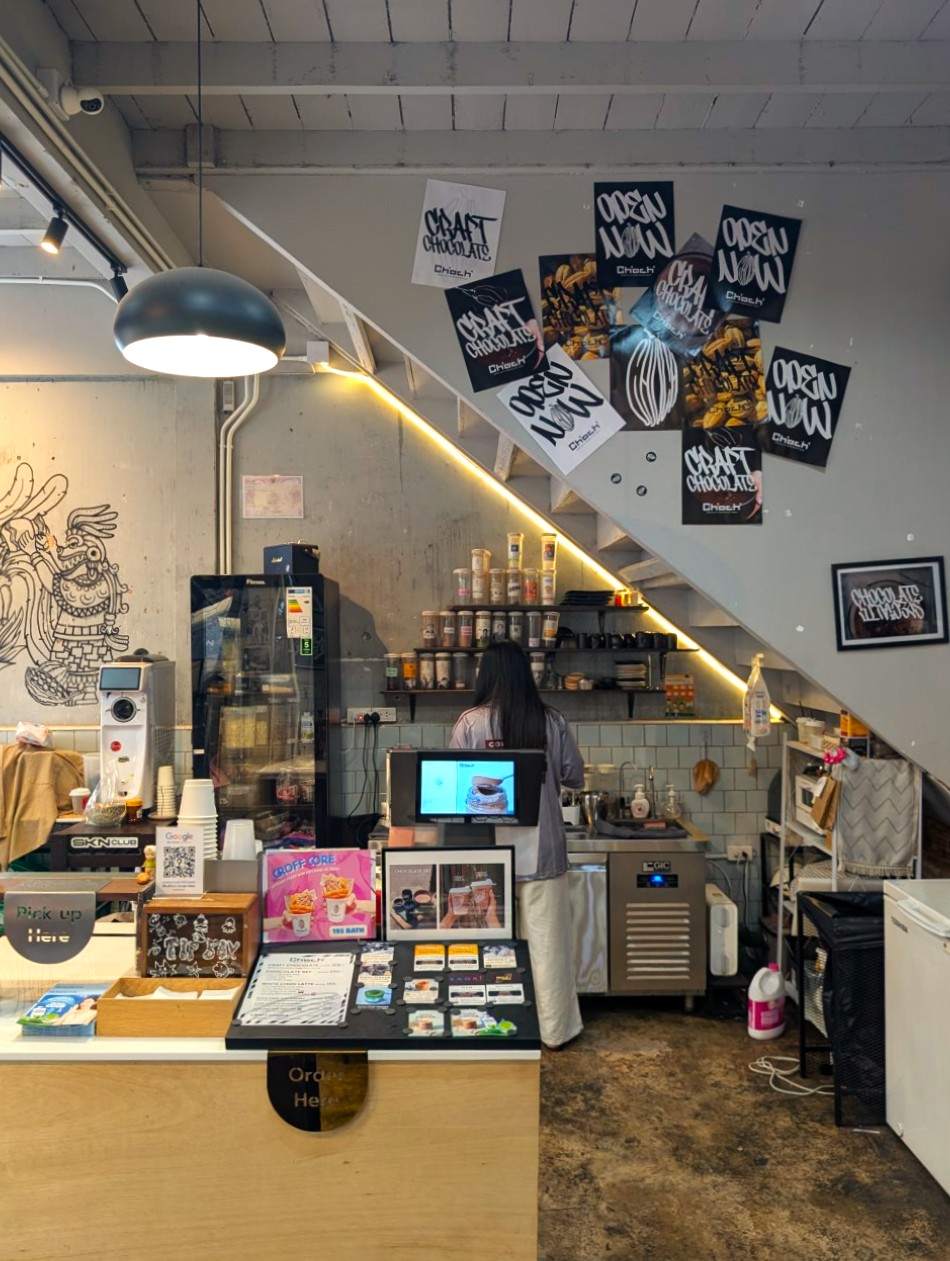
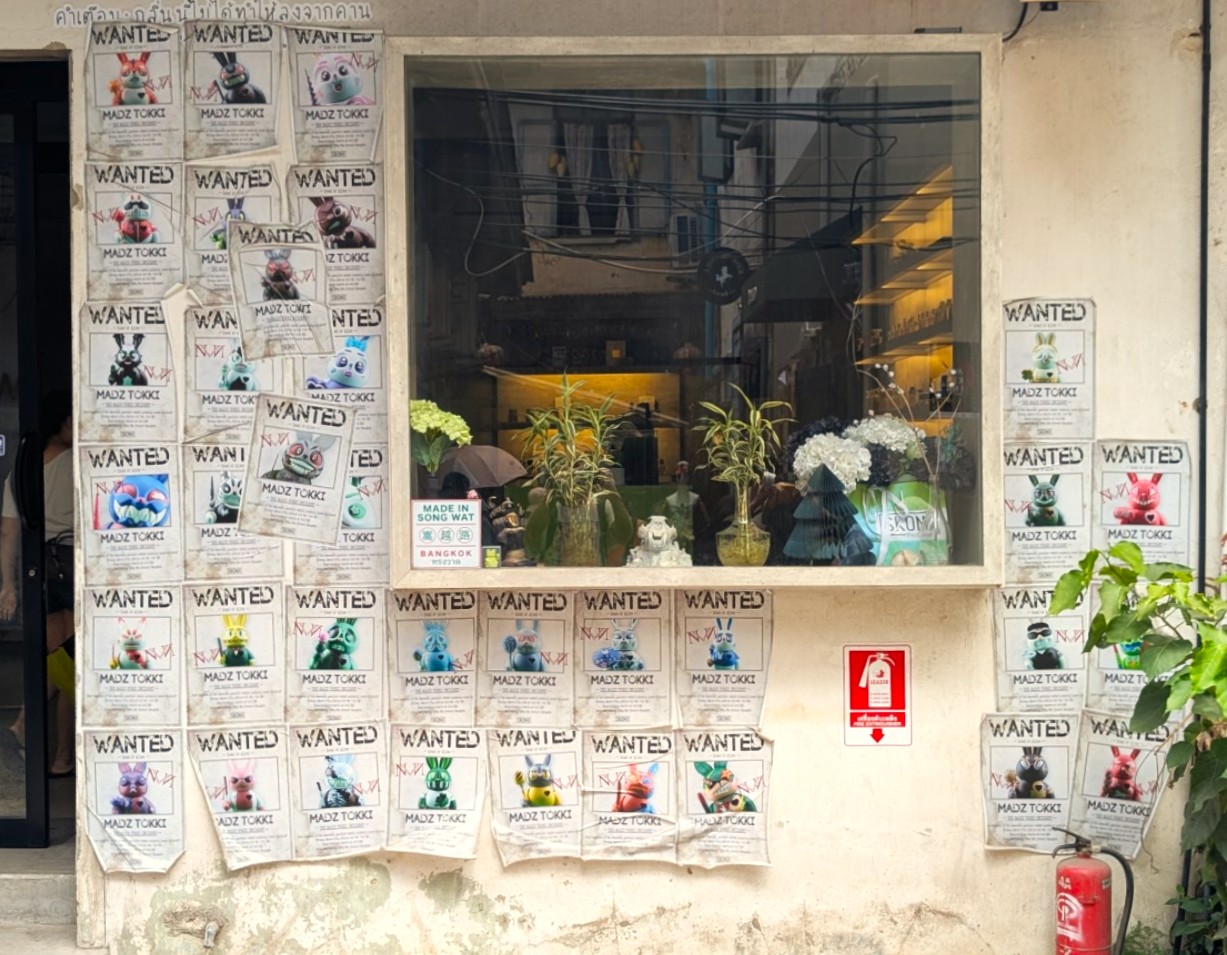
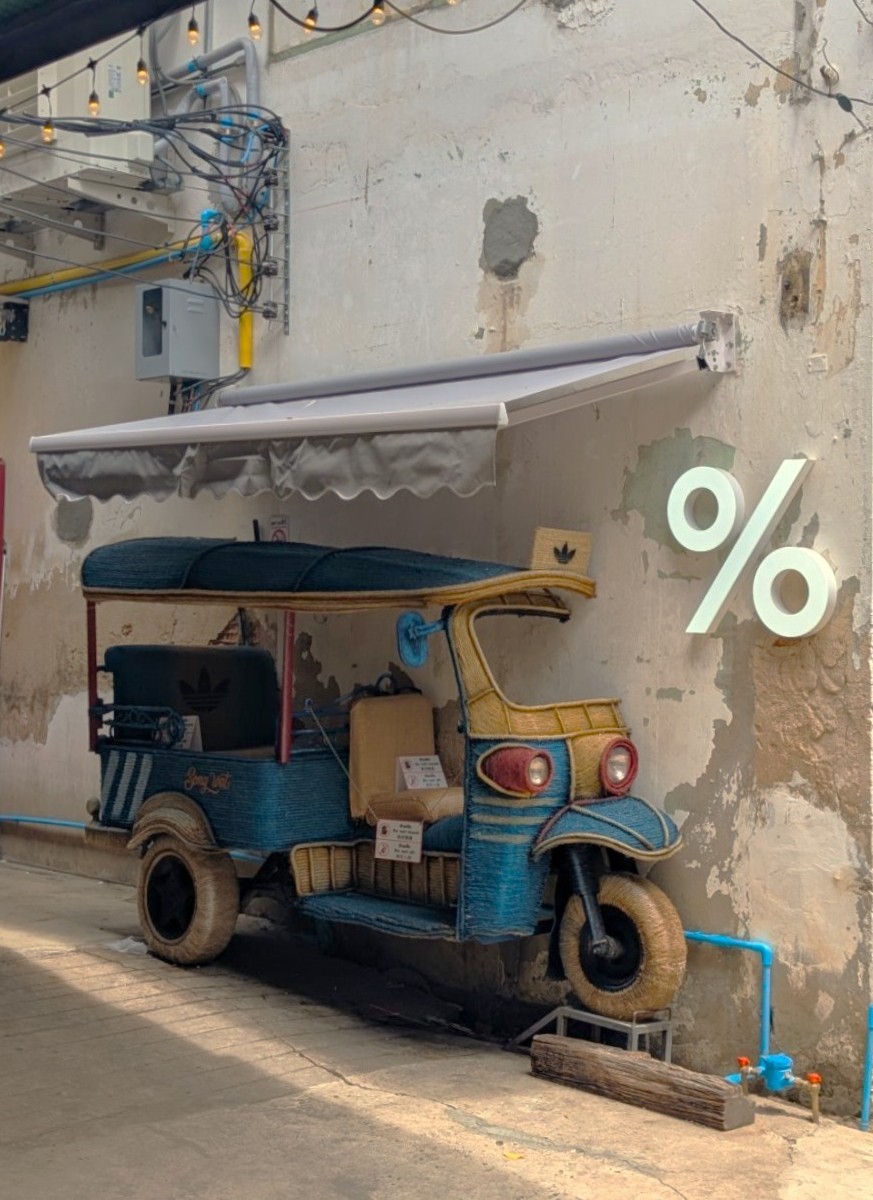
Shops that may once have provided valuable products and services to the local community are now relegated to selling items that could conceivably be aspirational for tourists, cute, portable, overpriced, but inexpensive enough to justify being purchased on a whim, ceramics, dolls, keychains, hipster clothing, souvenir T-shirts, and so on. Beyond the coffee shops, Thai eateries, and pizzerias, a specialized cocoa establishment provides a rarified view into the single-origin cocoas found around the periphery of the country, with esoteric flavour profiles that are very difficult to find in retail sources in the country. The syrupy elixir that I savour from a region to the southeast of Bangkok is no exception, with its buttery, delicate, and with subtle but pungent fruit notes.
Bangkok — Koh Rattanakosin — Song Wat
Bangkok — Koh Rattanakosin — Song Wat
Bangkok — Koh Rattanakosin — Song Wat
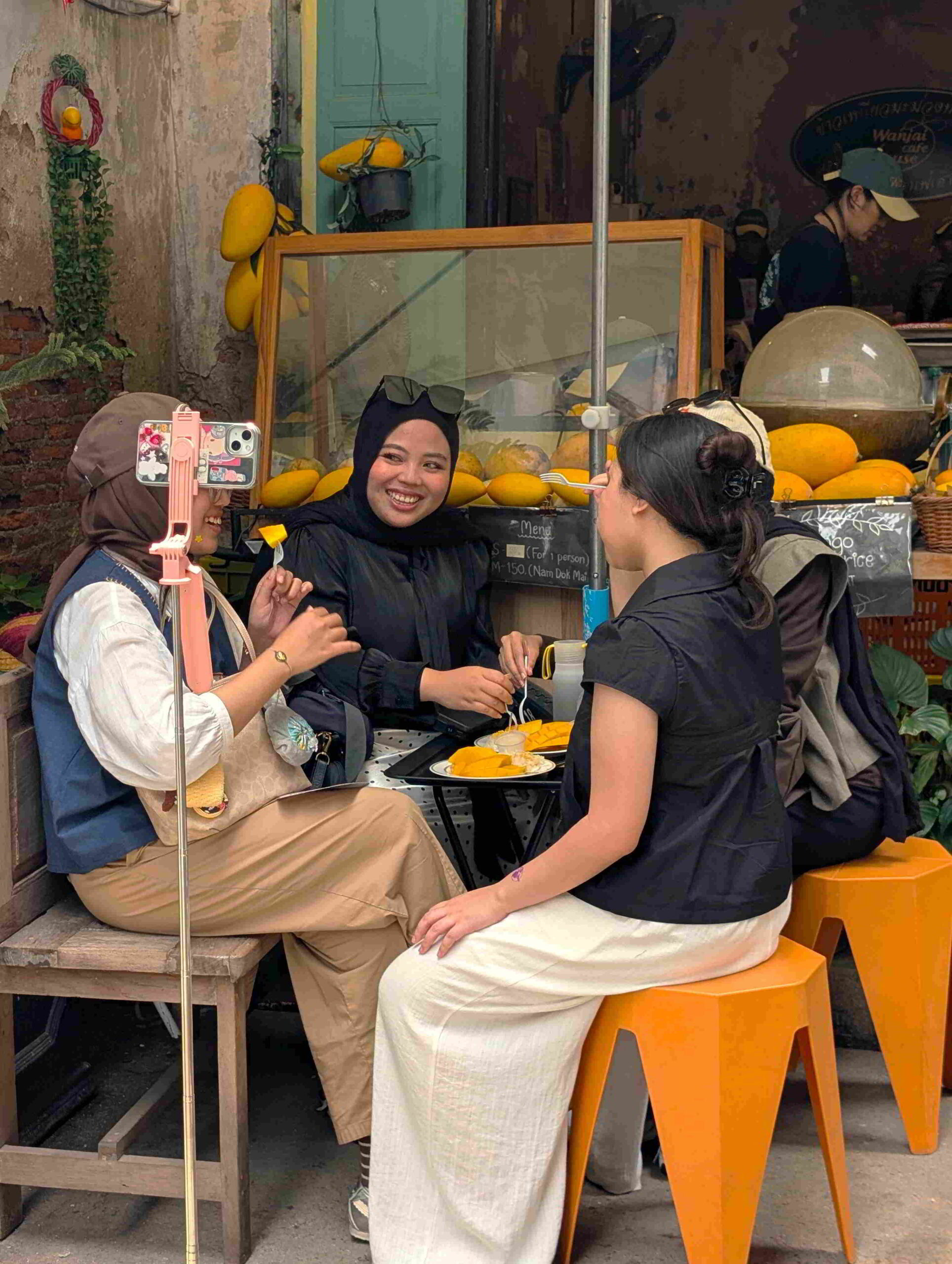
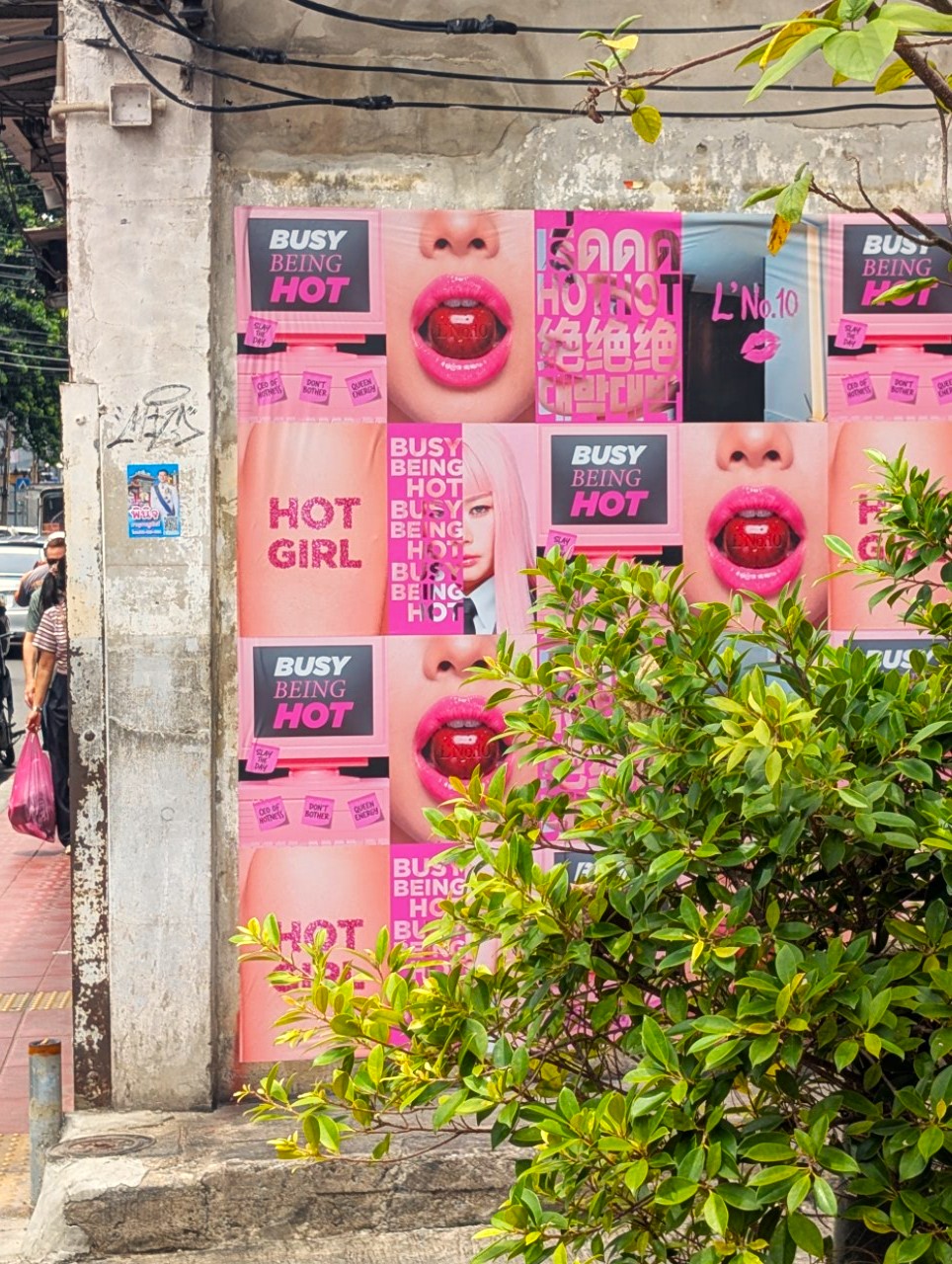
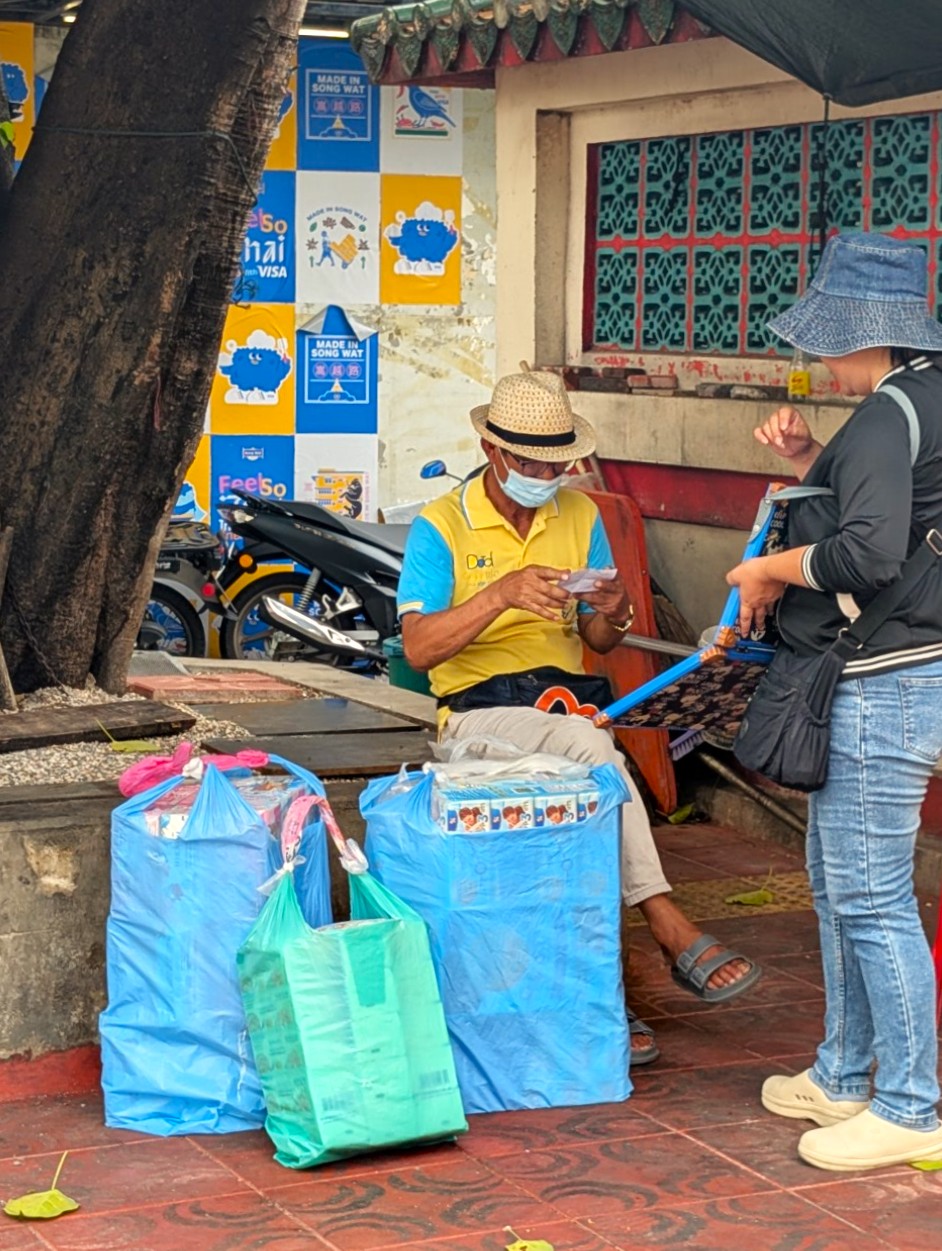
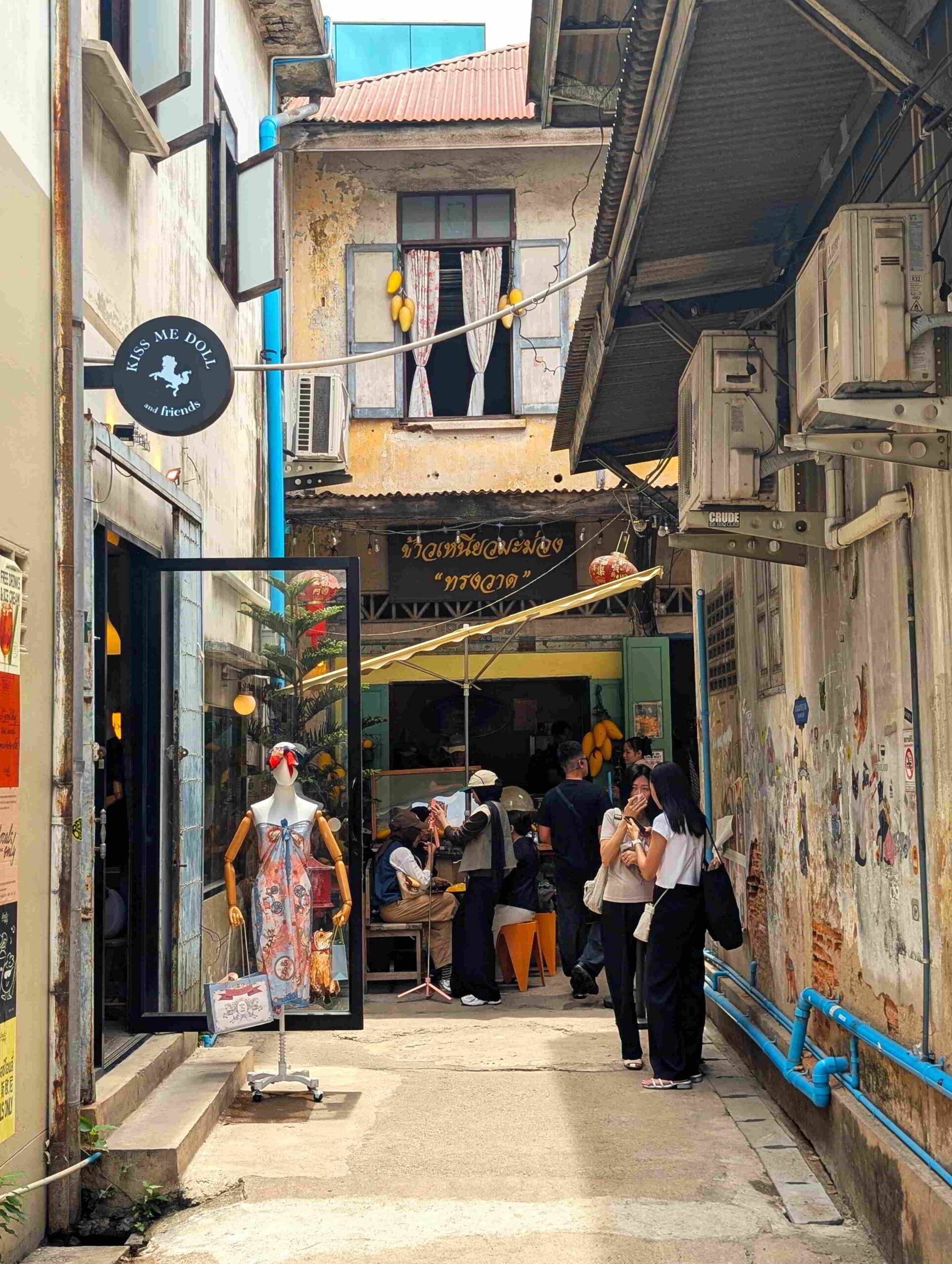
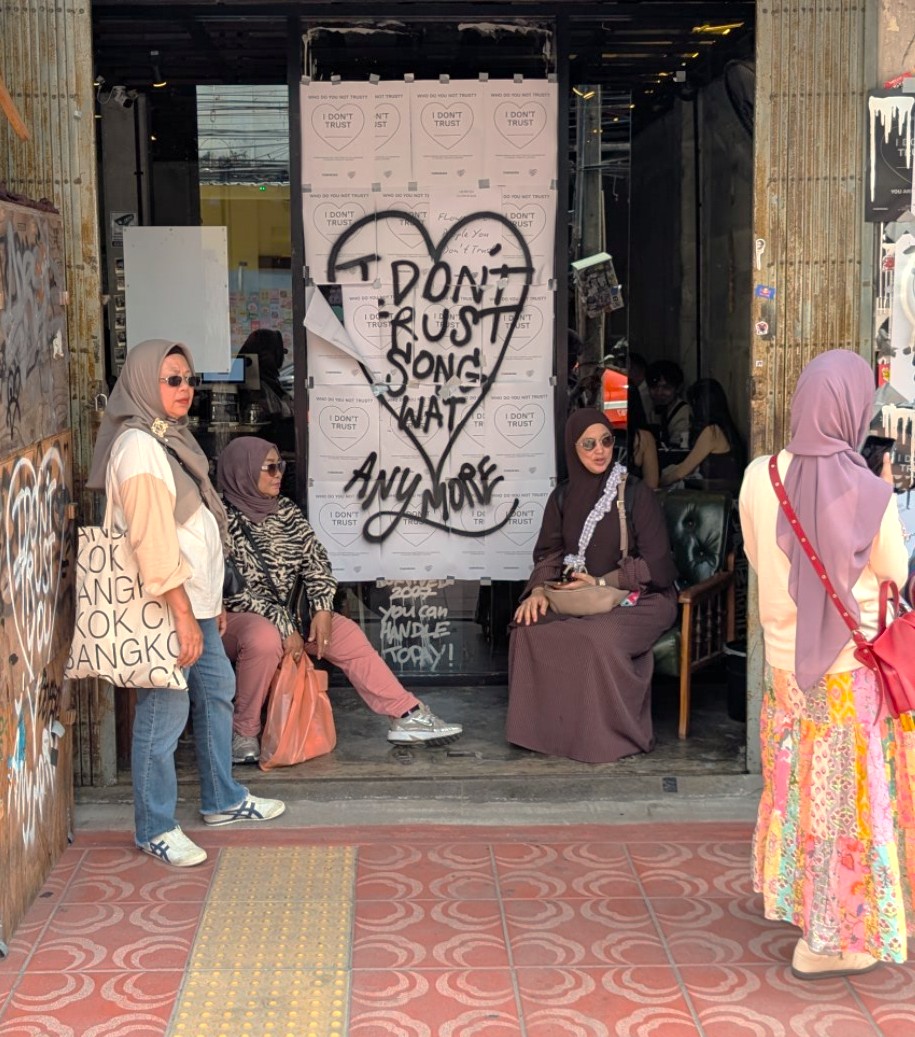
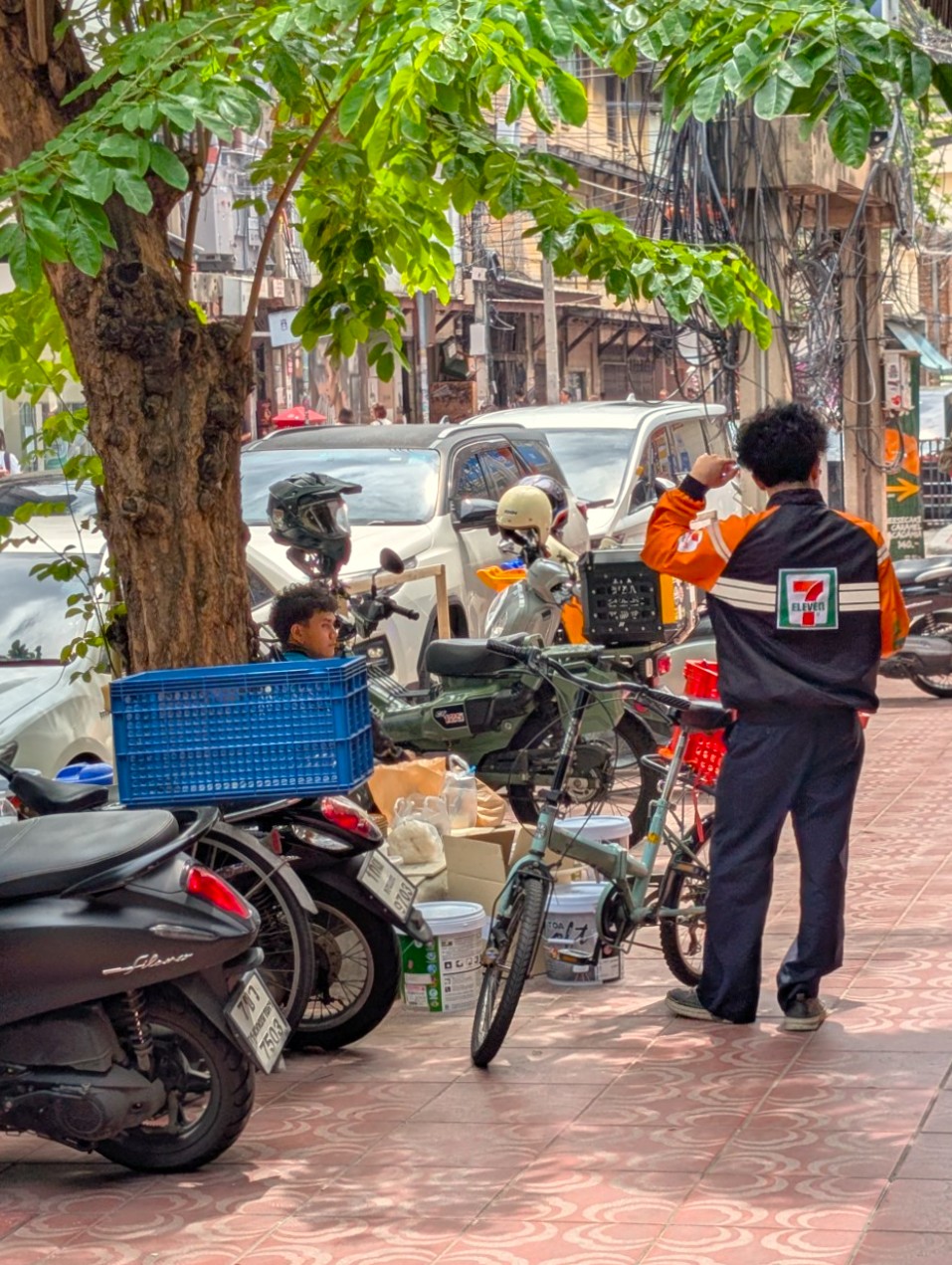
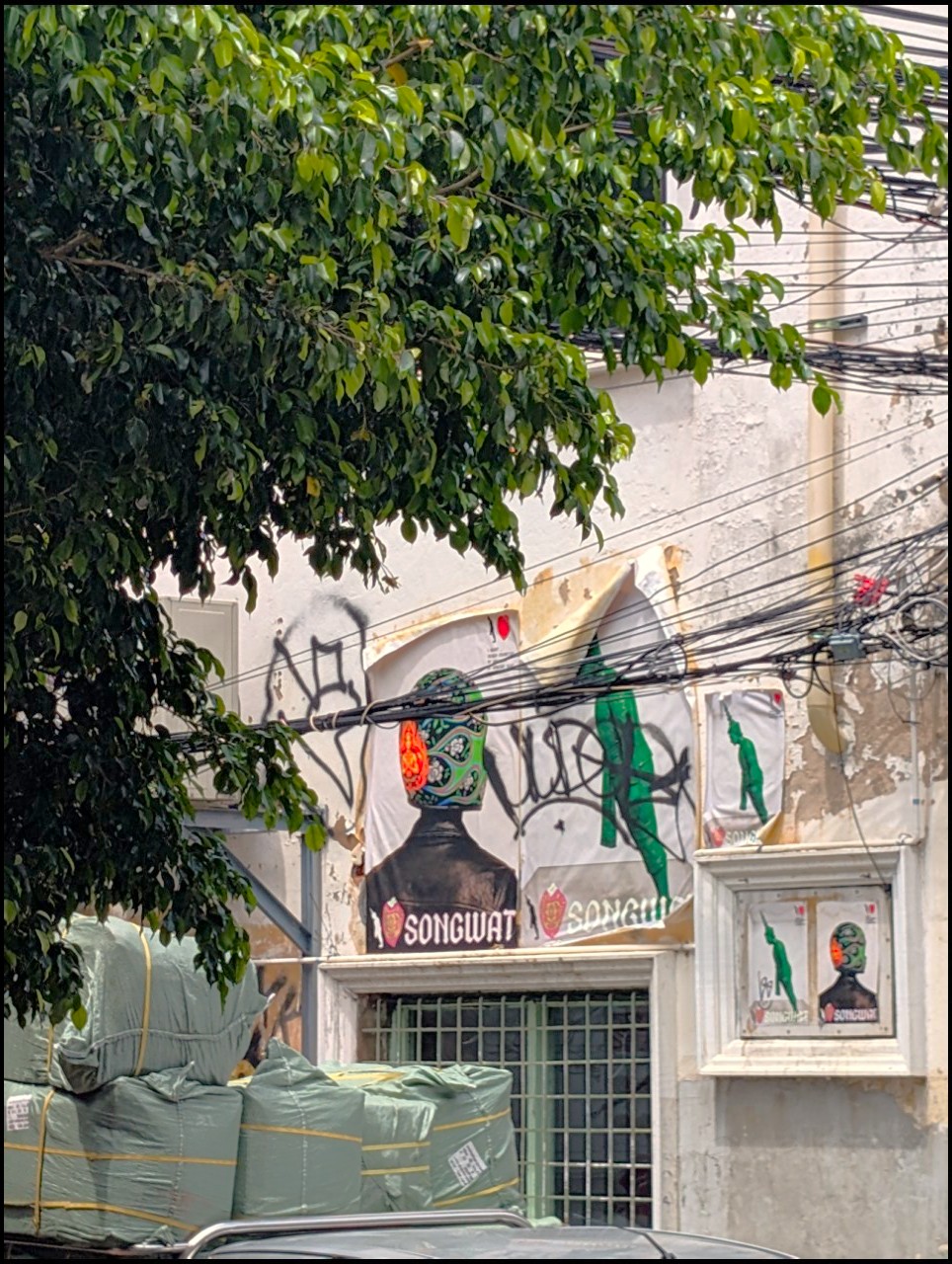
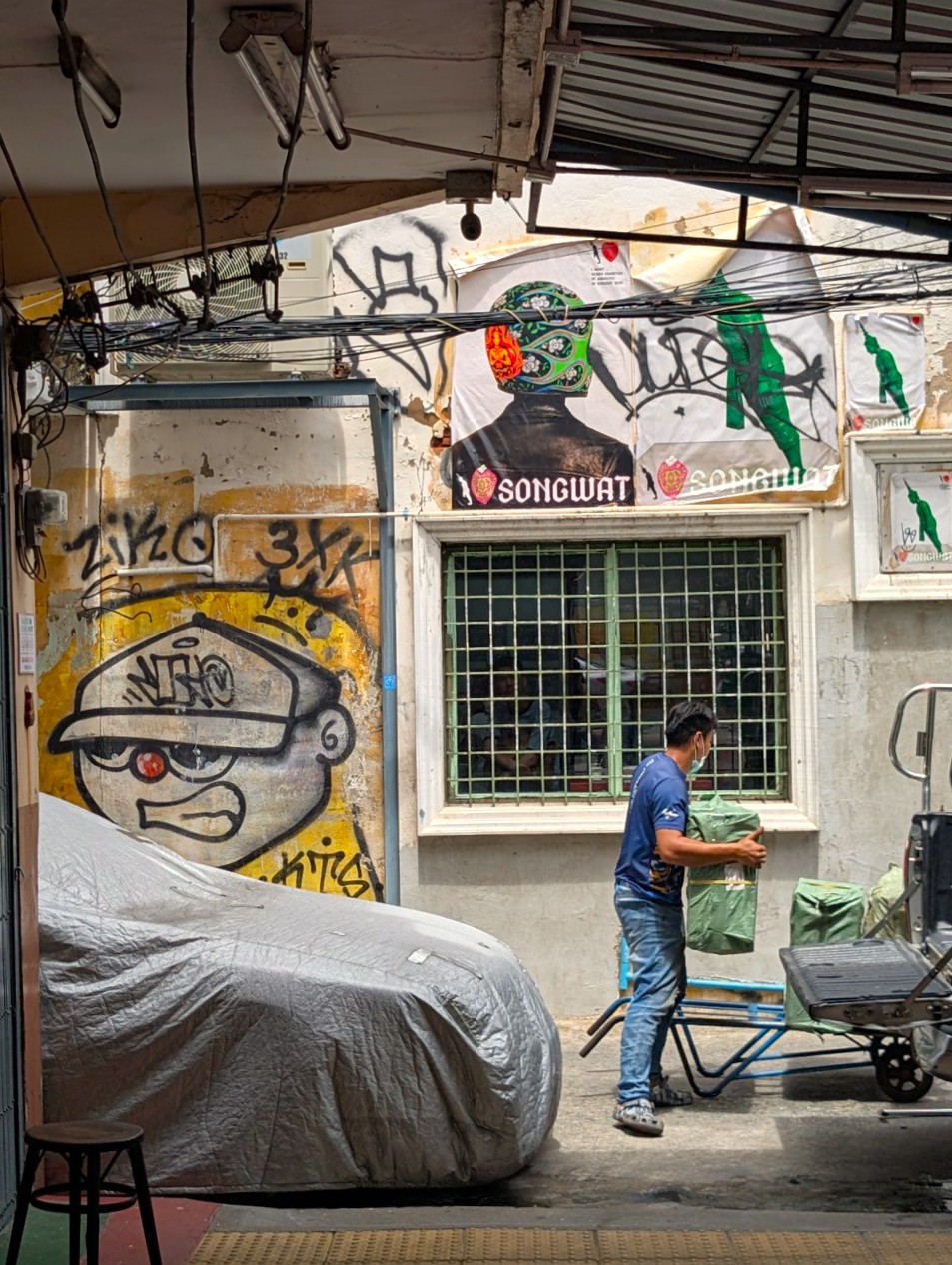
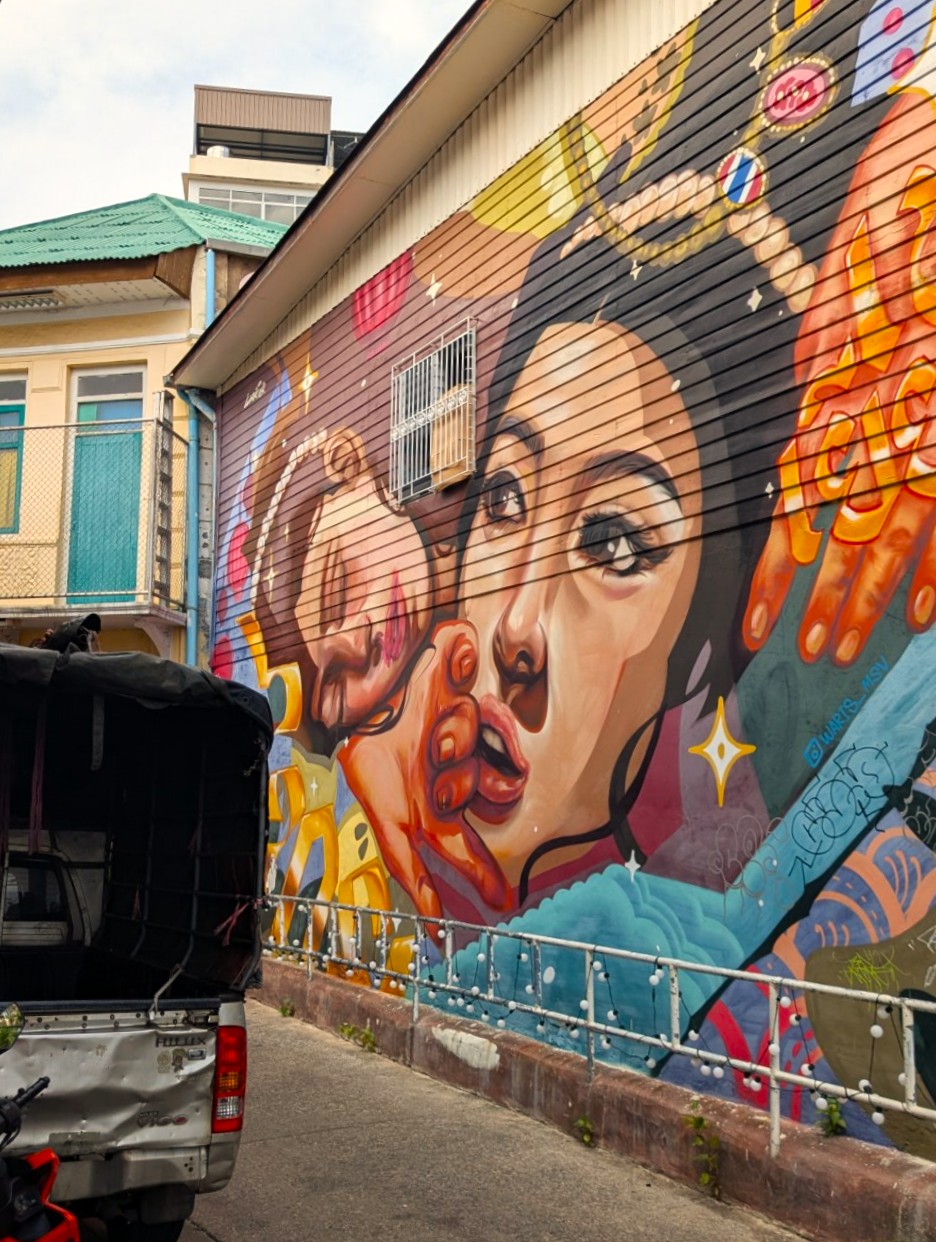
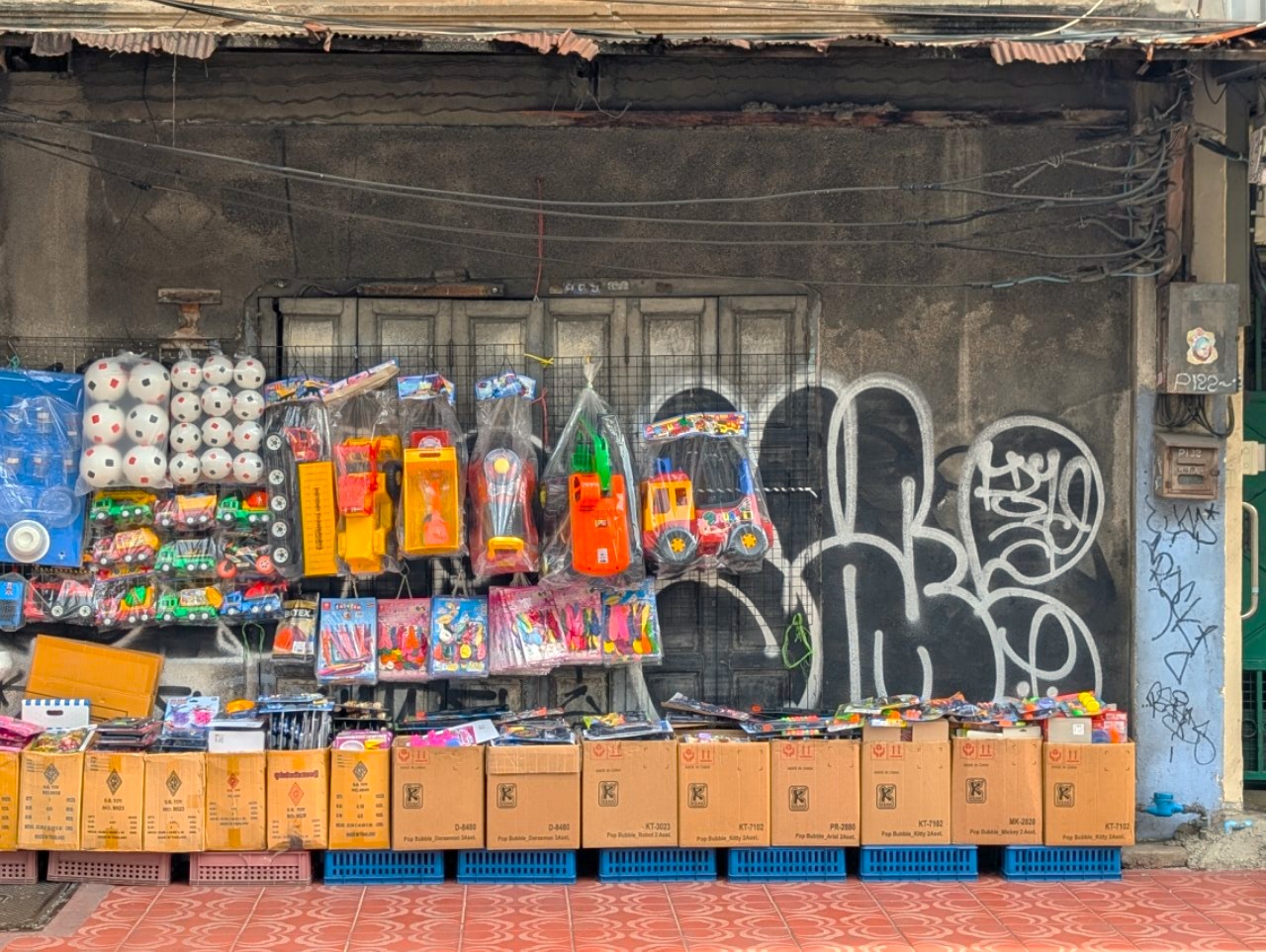
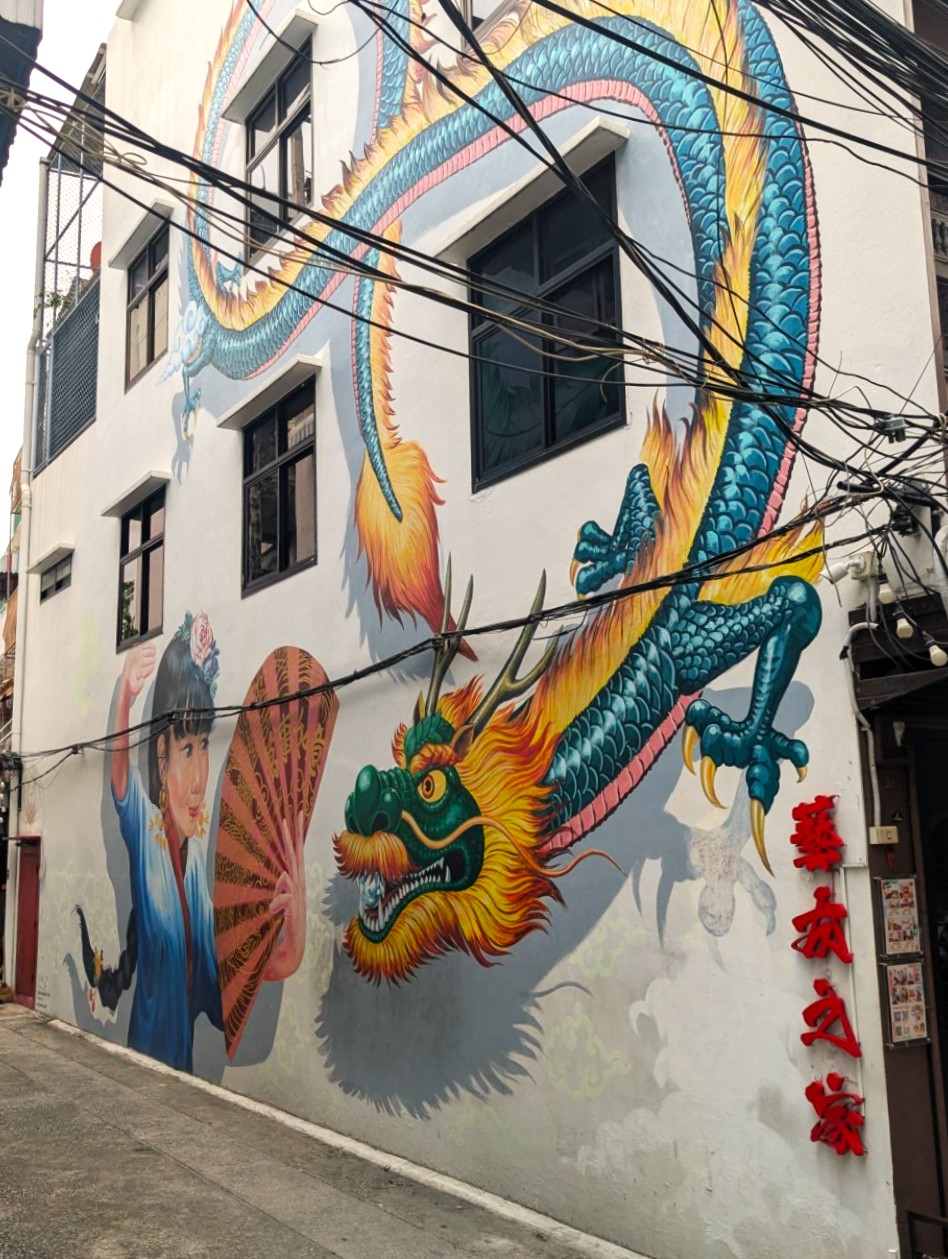
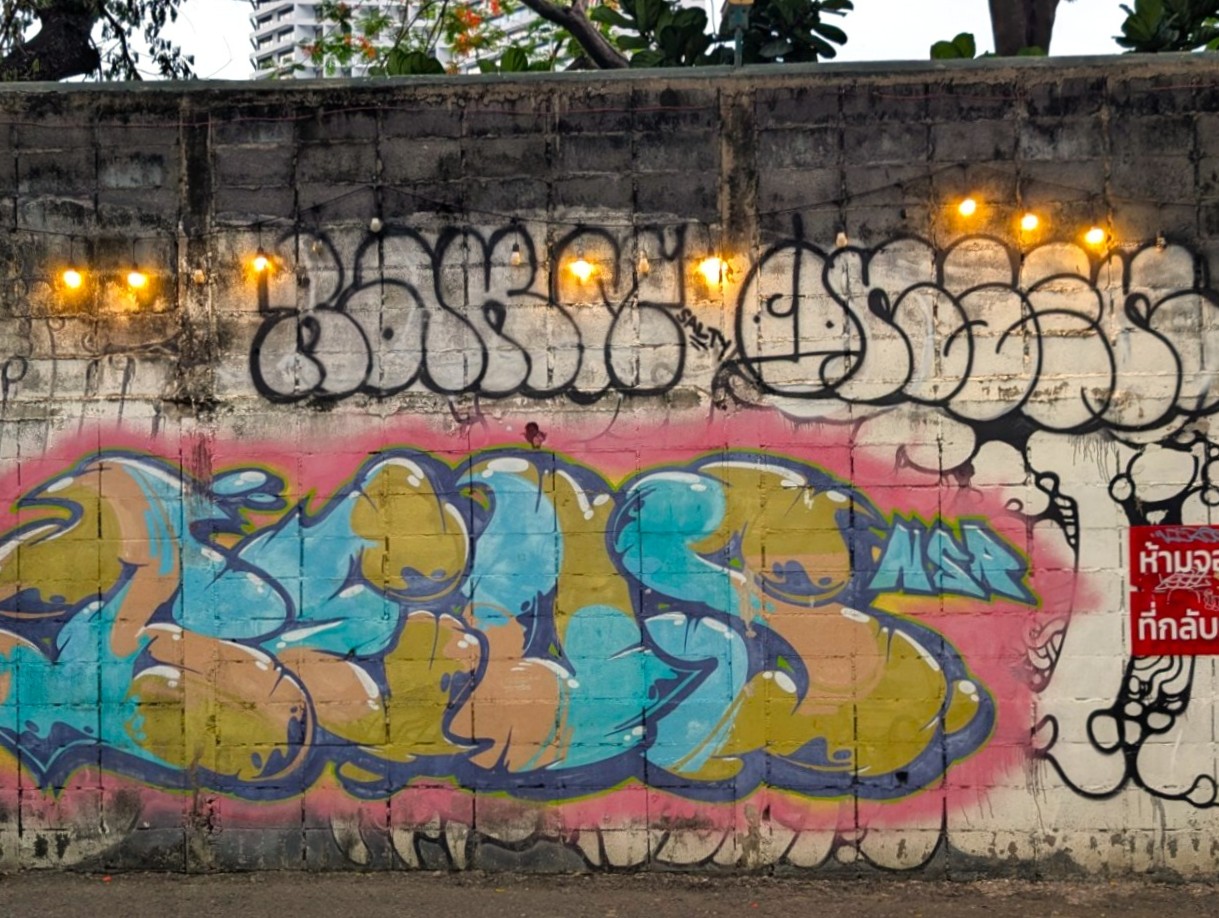
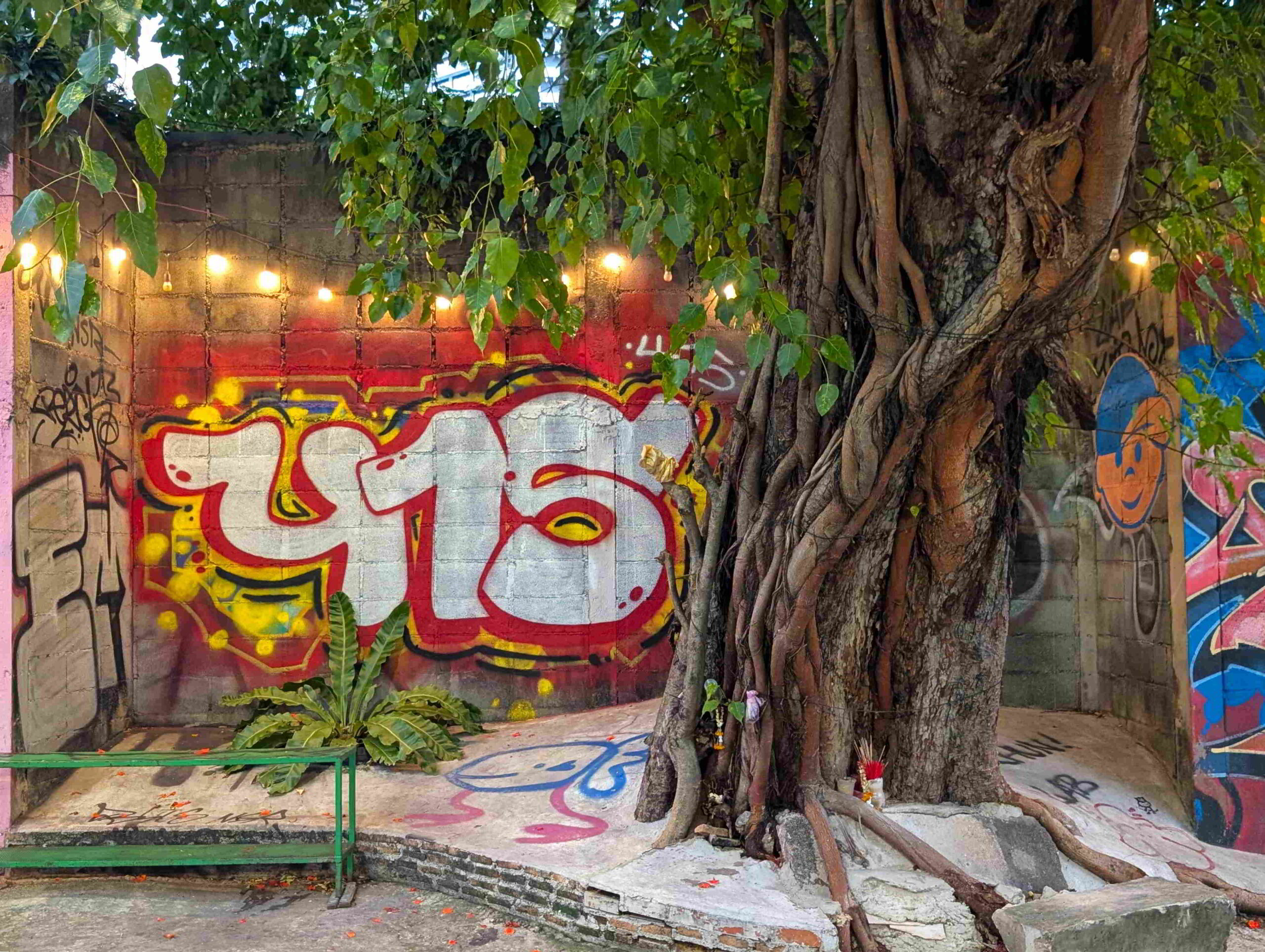
Small alleys radiate to the side of the already narrow main road, lined with even more colourful and imaginative boutiques, their obscurer location matched with higher prices, the walls spackled with oblique wallpaper shards and rivers of graffiti, some abstract, some whimsically representational. Most of the tourists here are from East Asia, many Chinese, but also many from Malaysia and Indonesia, witness the darker complexions, preponderance of hijabs, and beaming expressions. On the lower side, alleys lead to seating areas and terraces overlooking the river, the eating and drinking establishments desirable if only thanks to their stellar views over the water. Not everyone is amusing themselves here: hapless workers struggle to load and unload merchandise in the heat, sinuous if not underfed, working relentless hours in the punishing heat.
Bangkok — Koh Rattanakosin — Song Wat
Bangkok — Koh Rattanakosin — Song Wat
Bangkok — Koh Rattanakosin — Song Wat
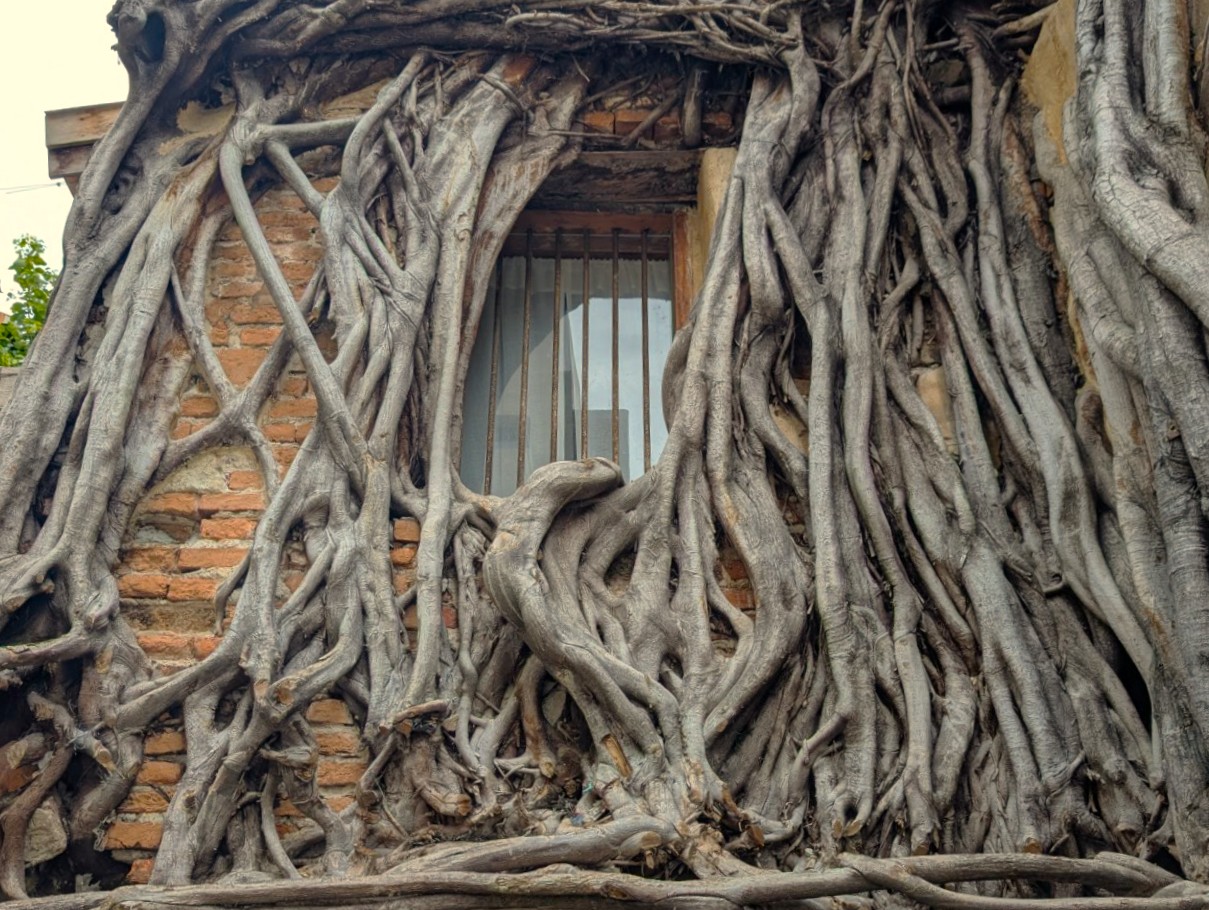
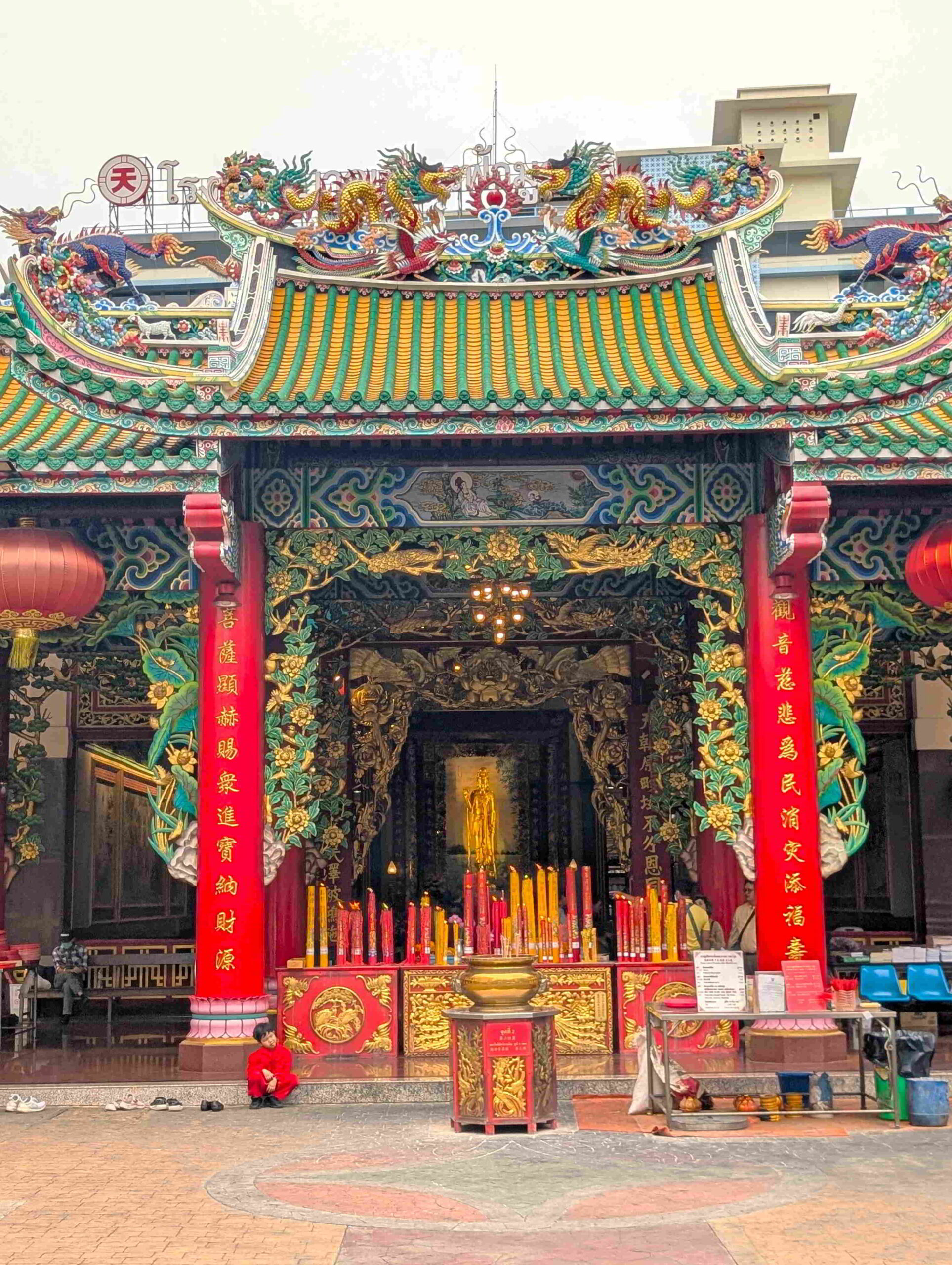
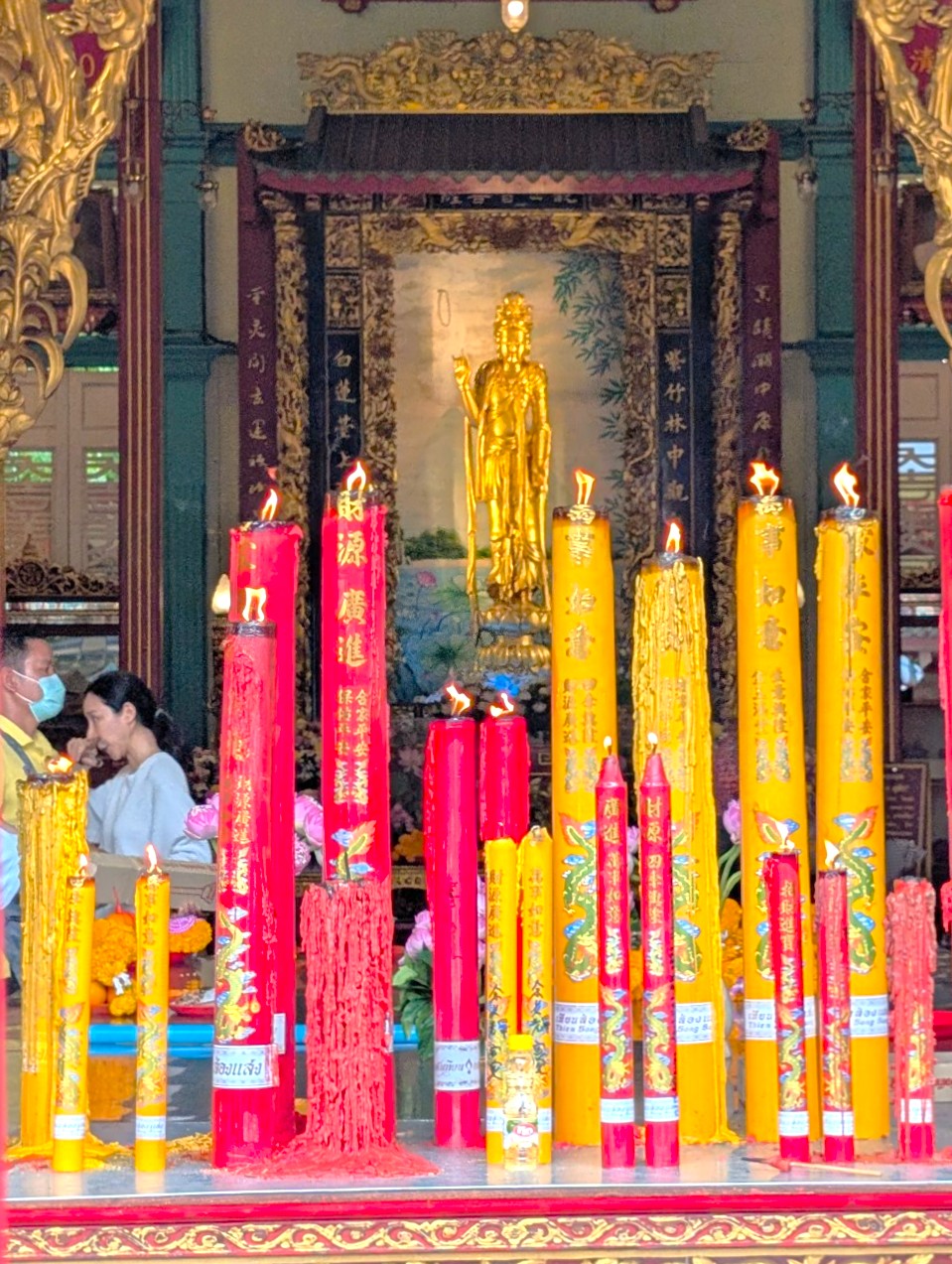
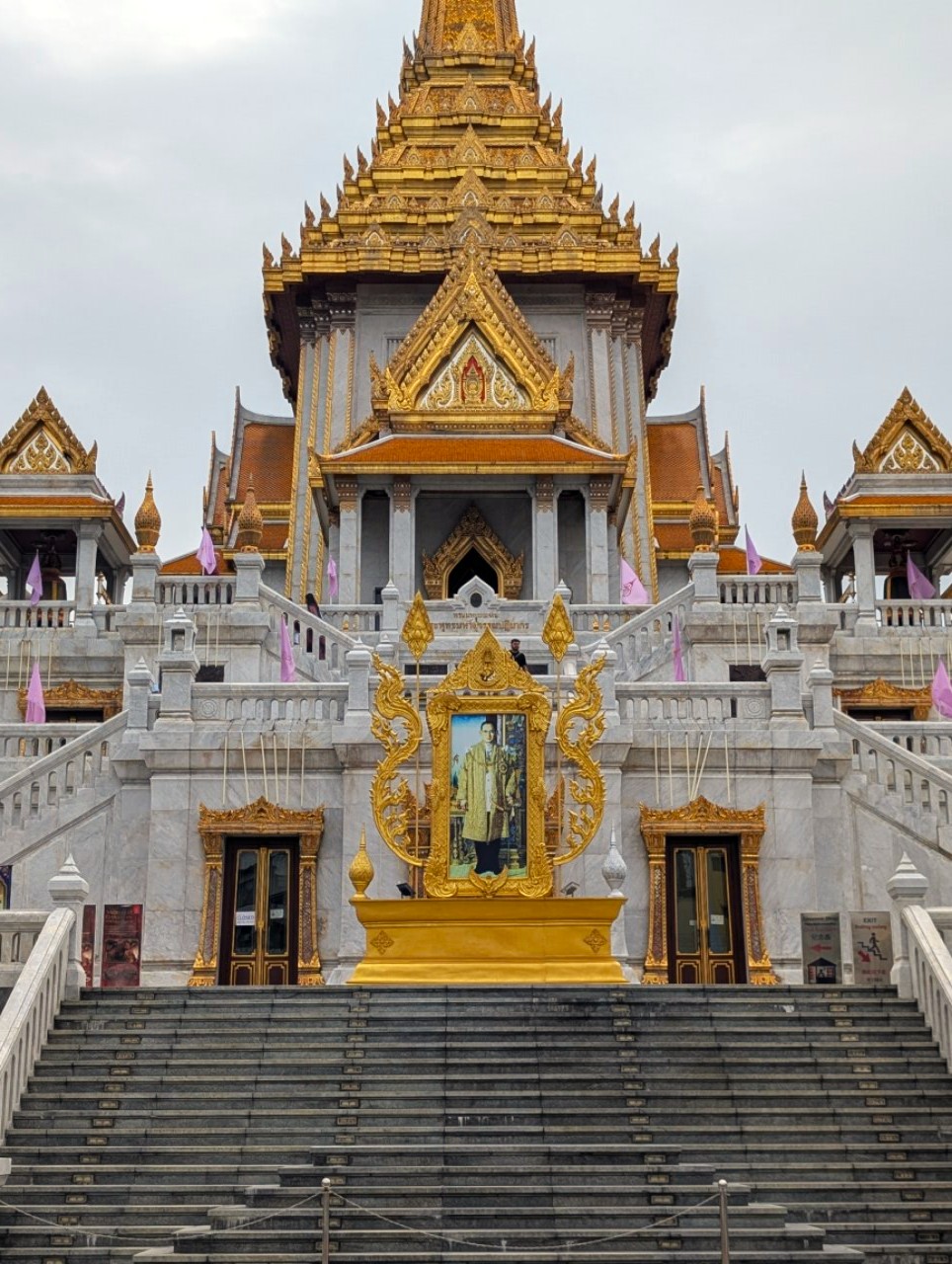
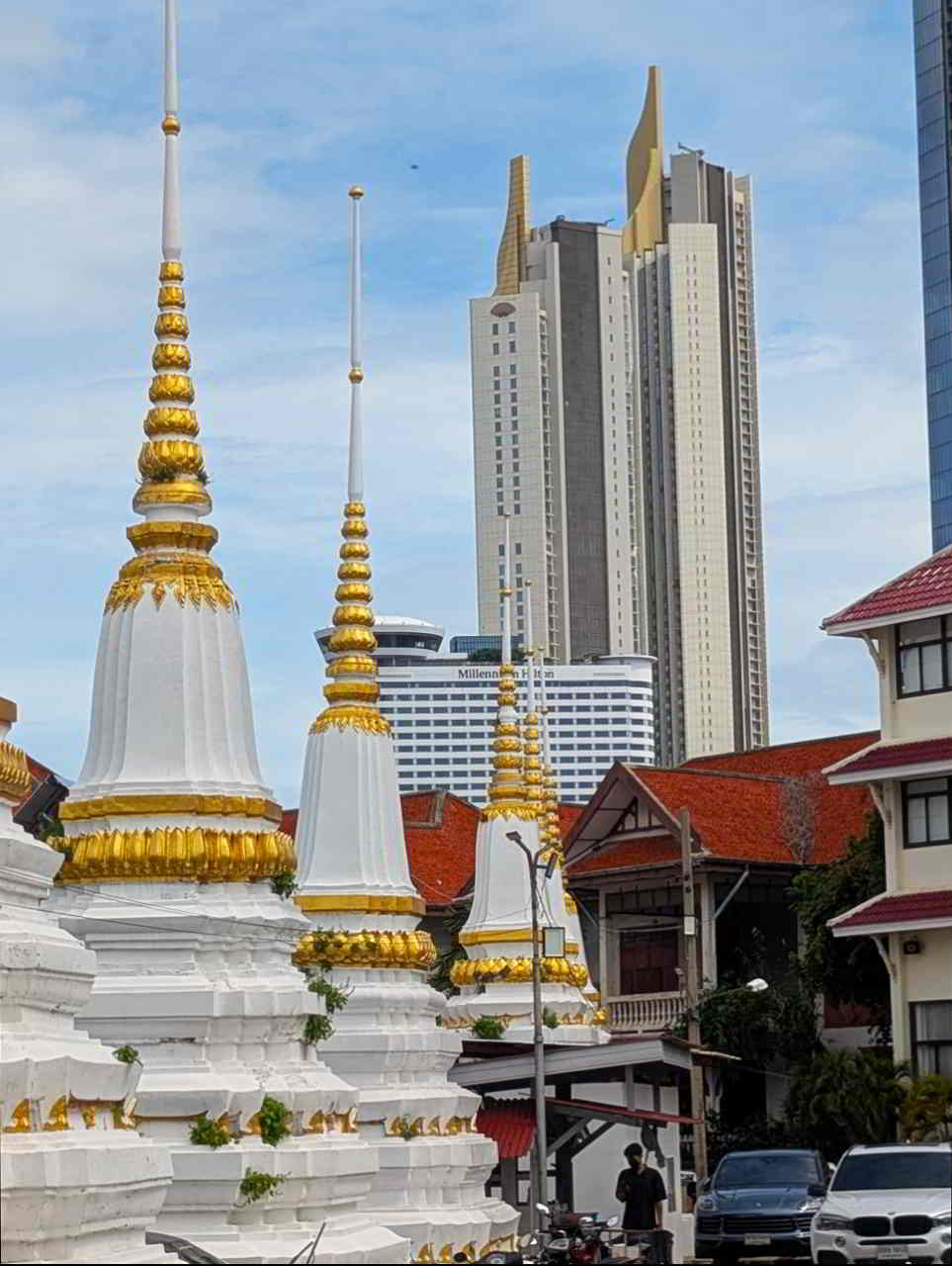
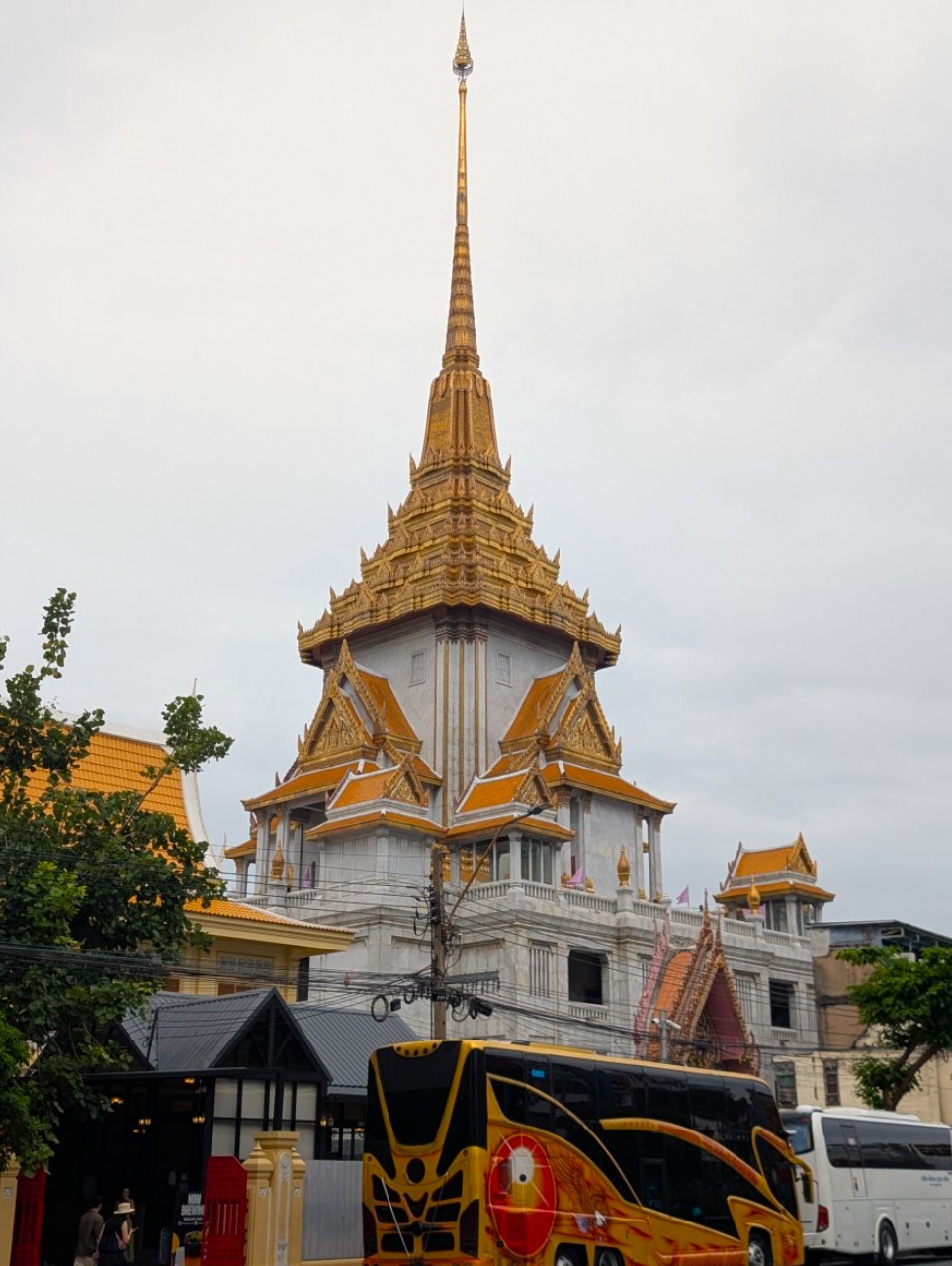
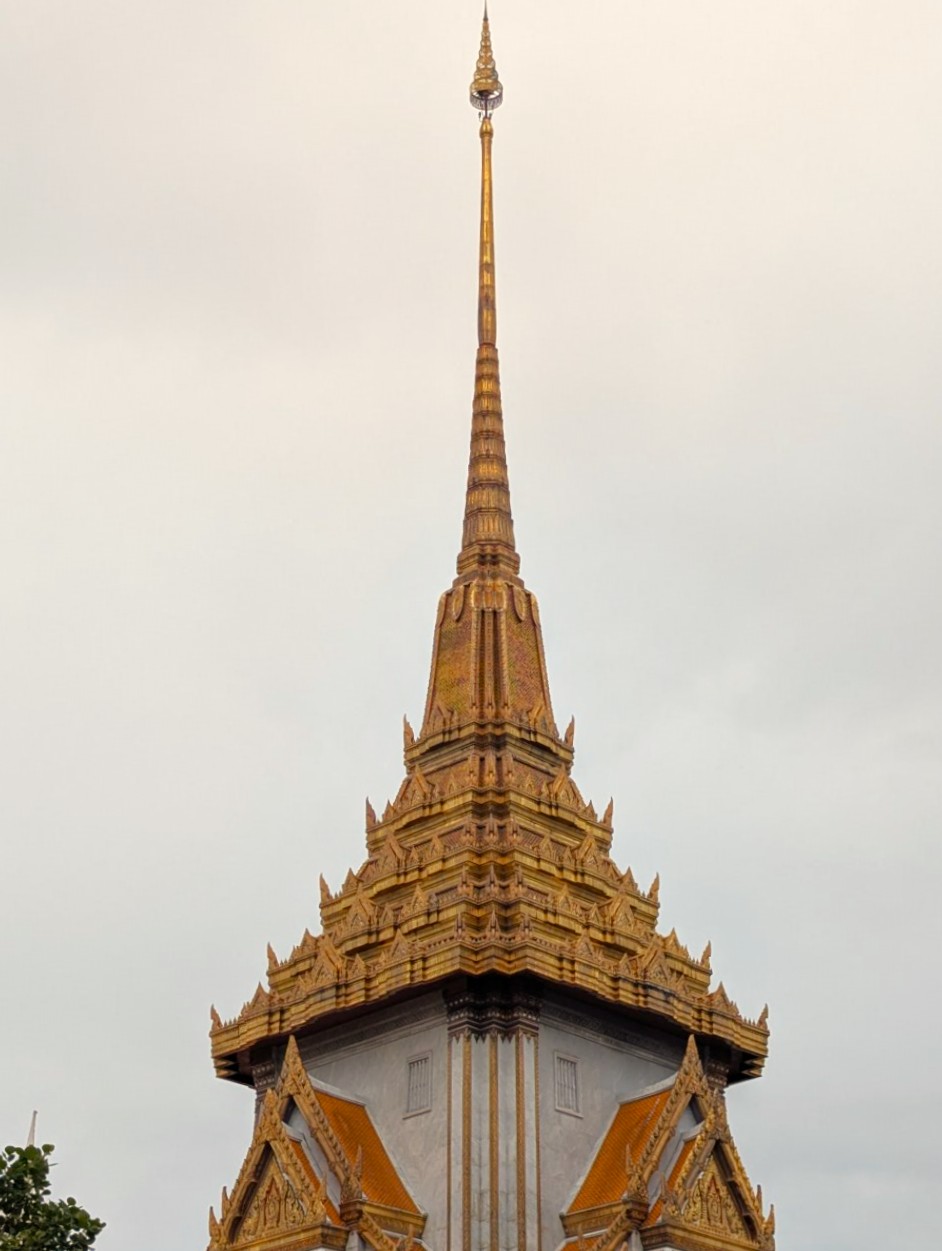
The eastern boundary of Song Wat is marked by the stately Wat Trai Mit Witthayaram Worawihan temple and relatively diminutive Taoist Kuan Yim shrine. The adjunct buildings of the Buddhist temple are under construction or substantial repair; it seems that while most of the spectacular temples in Thailand seem to be in impeccable shape, few are being built or renovated.
Bangkok — Koh Rattanakosin — Song Wat
Bangkok — Koh Rattanakosin — Song Wat
Bangkok — Koh Rattanakosin — Song Wat
The only other visitor meandering among the structures is a young Austrian, intelligent, thoughtful and modest, reflecting a very different perspective than a comparable person from other climes that comes to the country to party. I give him some advice for his three week trip, to perhaps visit the historic temple towns to the north of Bangkok prior to meeting up with his friends and traveling to Koh Phi Phi and some other island. Even interacting with a few travelers here reminds you of the innumerable possibilities there are available for experiencing this world.
Bangkok — Koh Rattanakosin — Song Wat
Bangkok — Koh Rattanakosin — Song Wat
Bangkok — Koh Rattanakosin — Song Wat
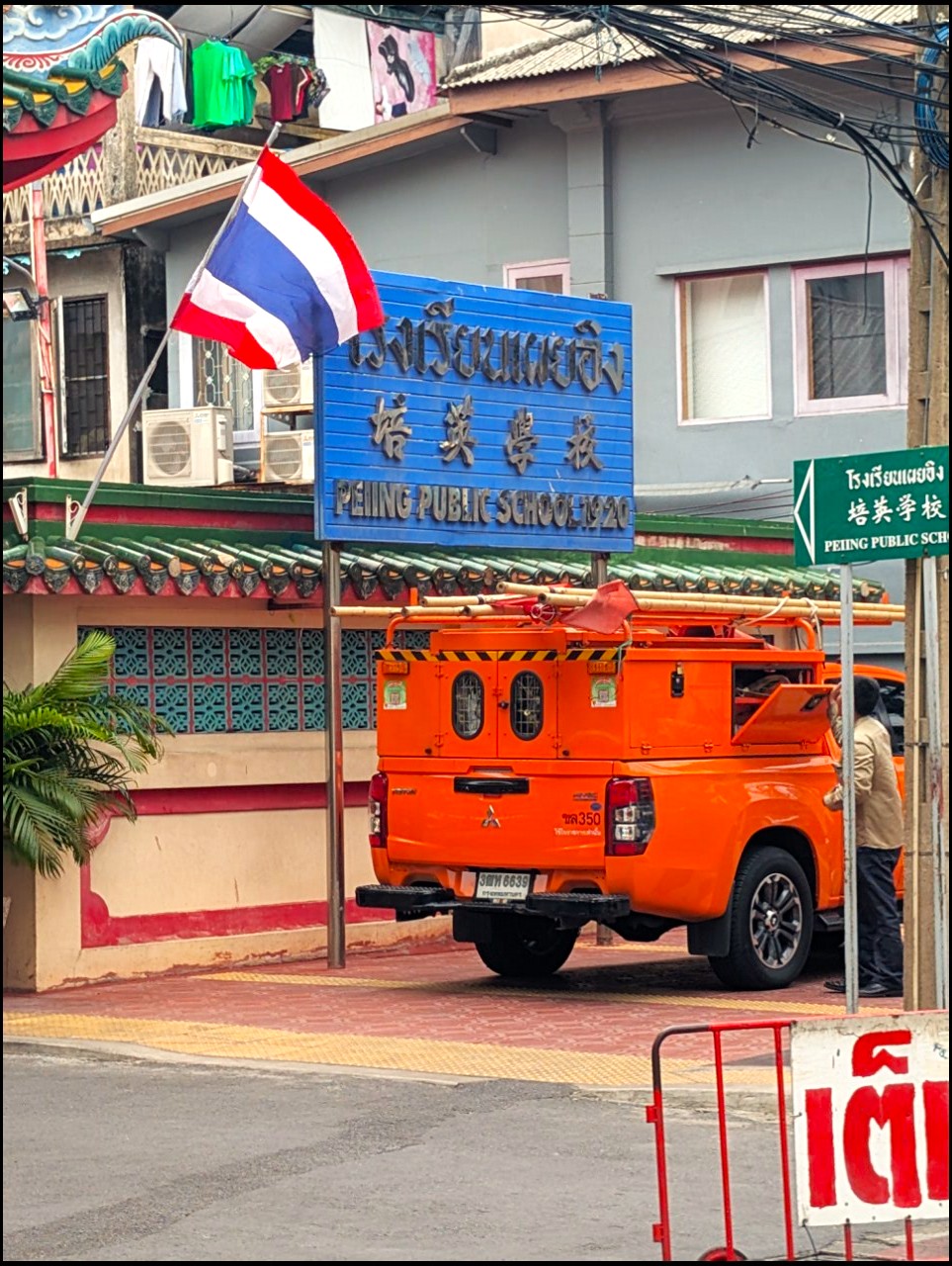
I leave the Buddhist temple and move on to the Taoist affair, people streaming in to make offerings, then leaving again after a brief interlude. The entire periphery of the island seems to be of Chinese heritage. The neighboring Buddhist temple’s huge stupa could be seductive to visit, but given that it is a paying tourist attraction, I consider that there is so much here of a comparable nature for free, and I do want to continue into the other apparently interesting area of Charoen Krung running to the south.
Bangkok — Koh Rattanakosin — Kuan Yim Shrine
Bangkok — Koh Rattanakosin — Kuan Yim Shrine
Bangkok — Koh Rattanakosin — Kuan Yim Shrine
The stocky Russian who wants me to take his photos in front of the stupa is another surprise, an itinerant physics professor from Volgograd who travels as much as he can, cramming seven countries into his current three week trip, and if I understand correctly, flies to some other exotic destination some seven times a year. He may have a sunny disposition and an outlandish sense of humour, but he is driven!
Bangkok — Koh Rattanakosin — Wat Trai Mit Witthayaram Worawihan
Bangkok — Koh Rattanakosin — Wat Trai Mit Witthayaram Worawihan
Bangkok — Koh Rattanakosin — Wat Trai Mit Witthayaram Worawihan
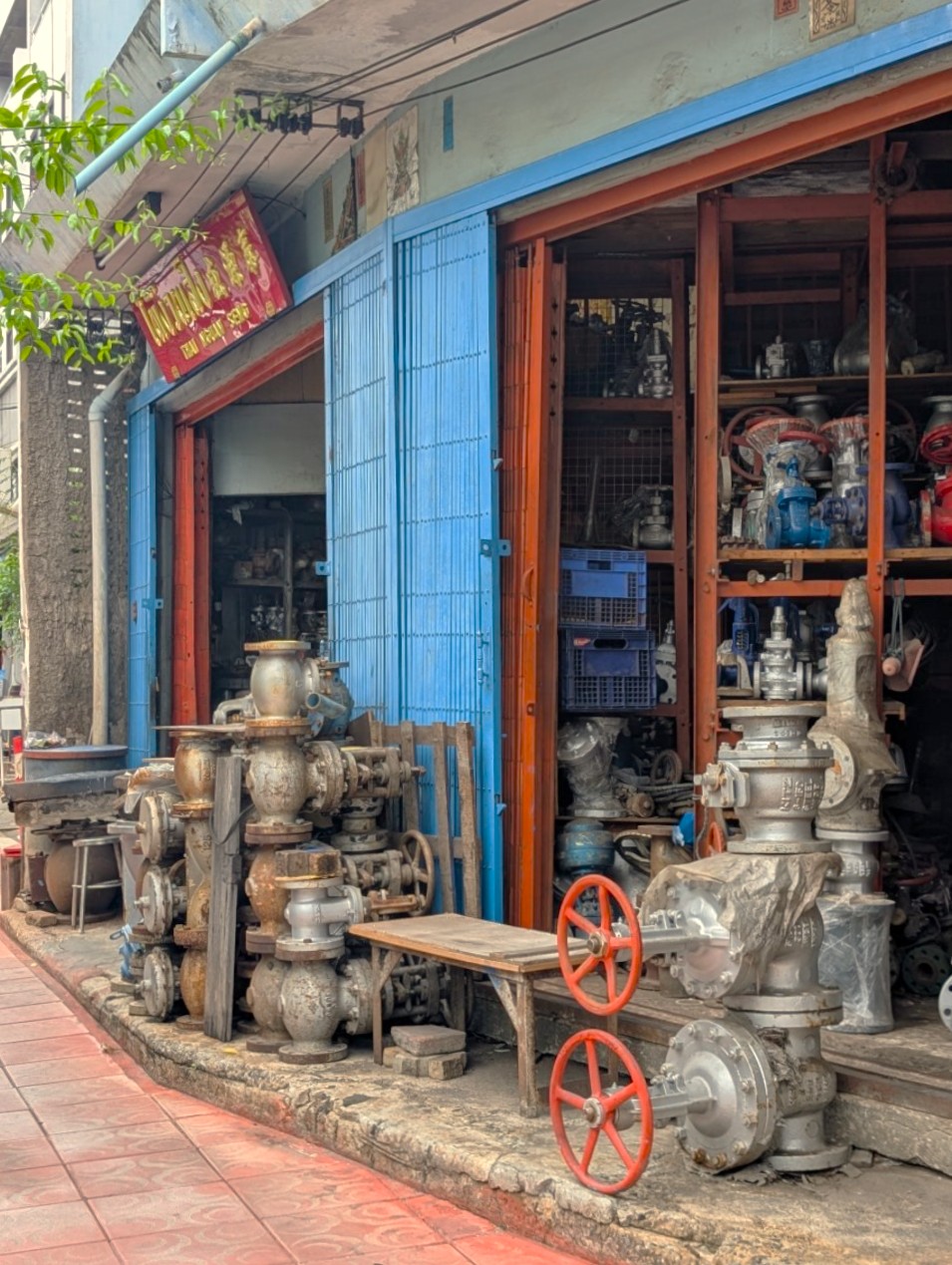
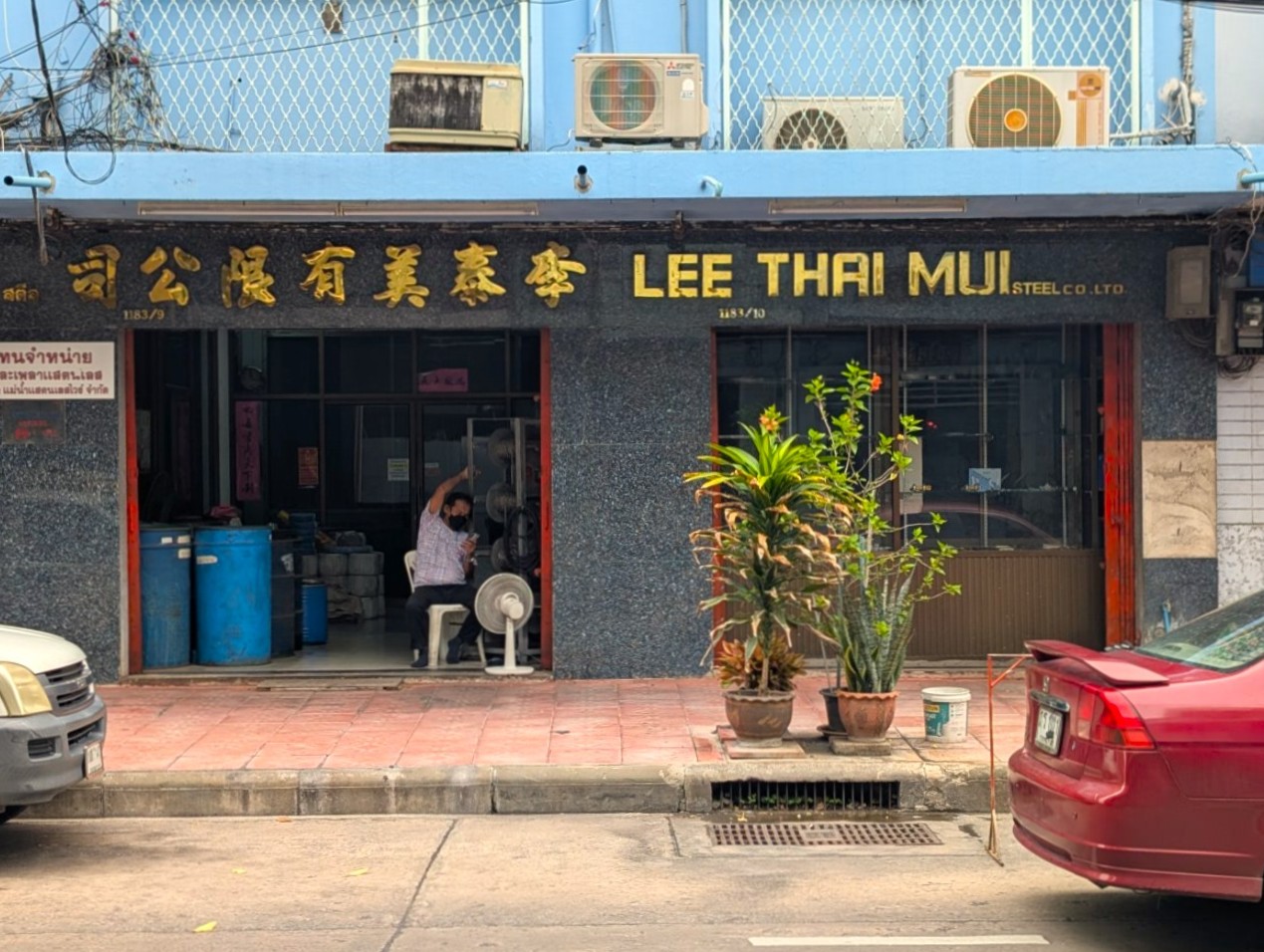
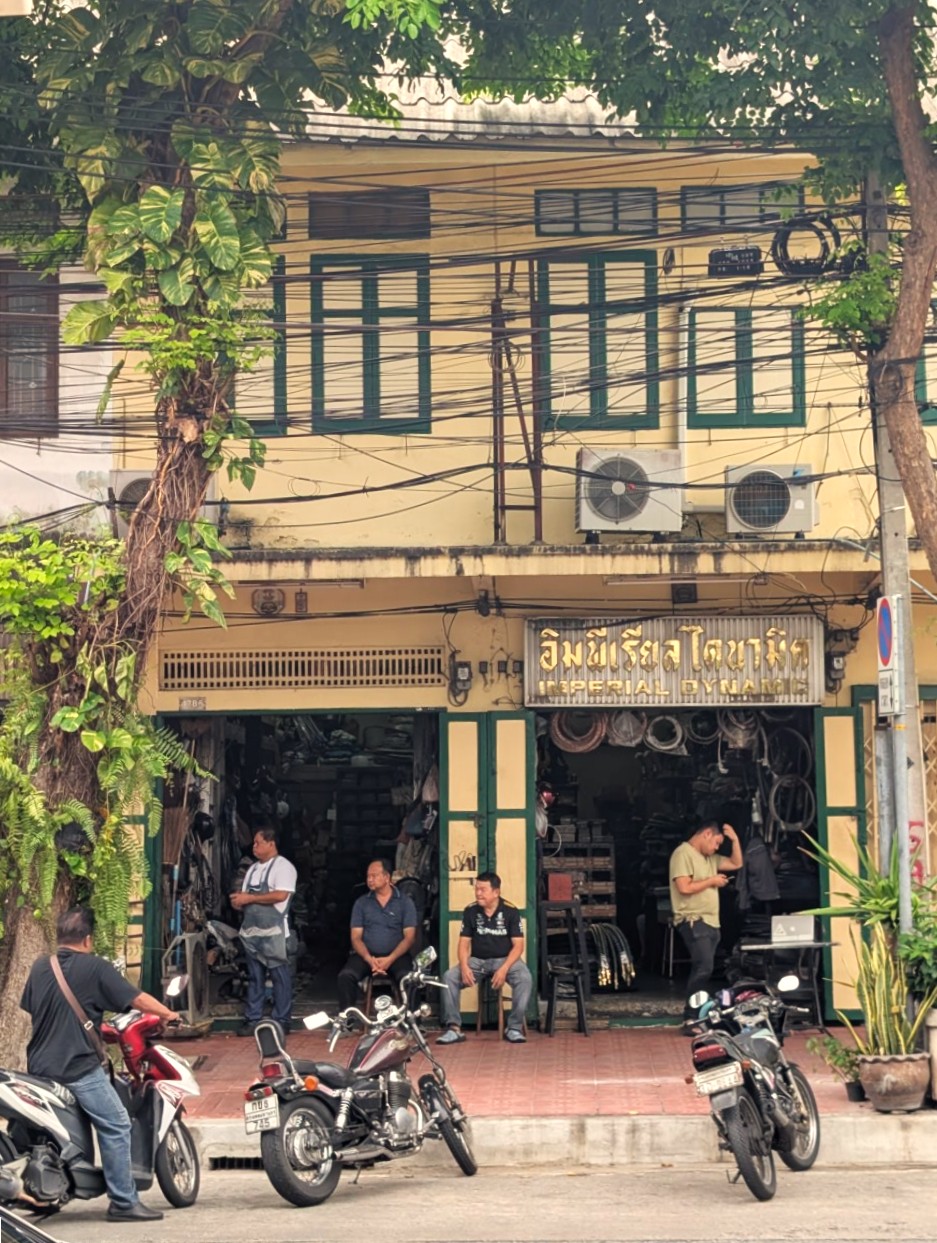
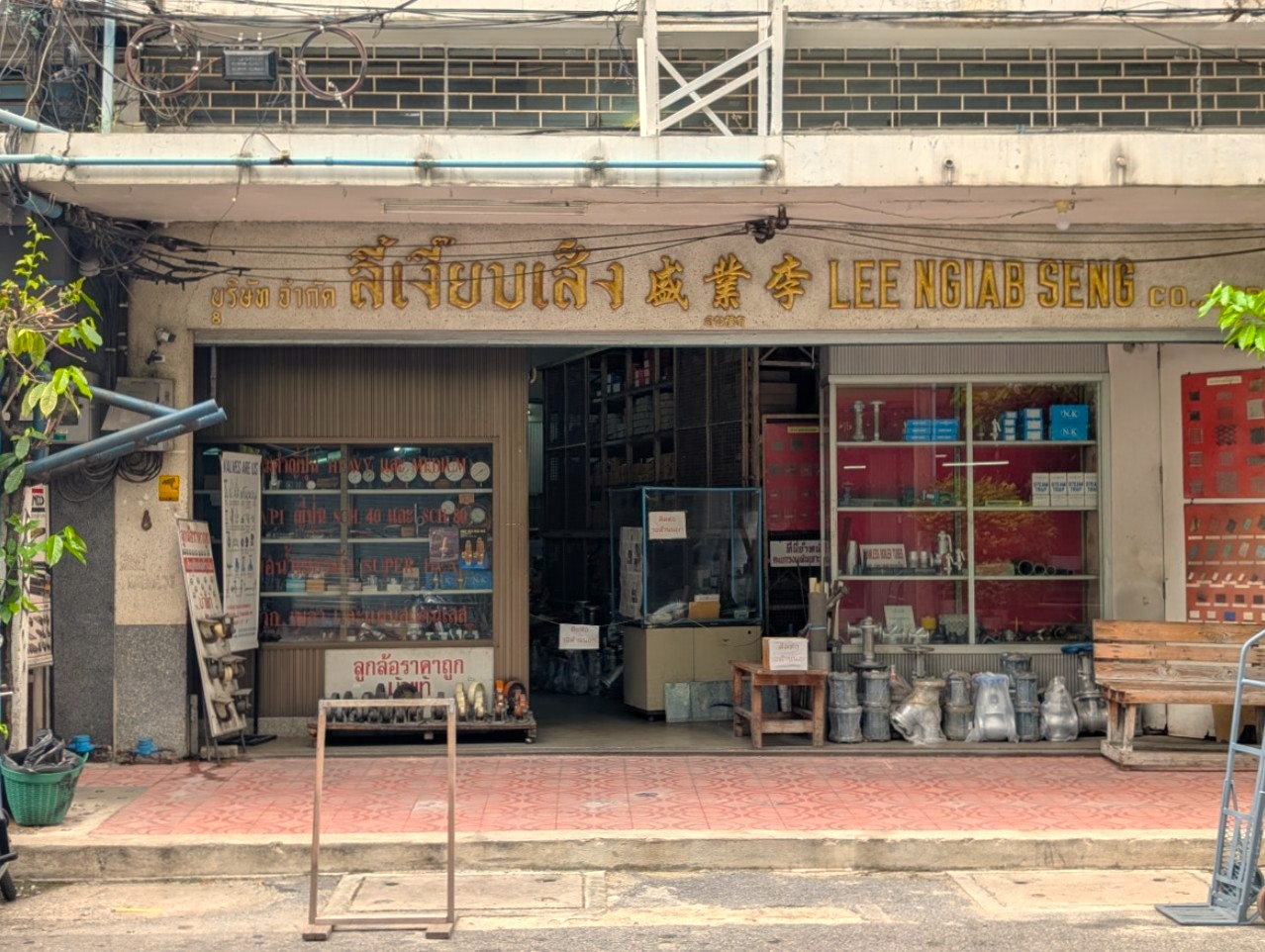
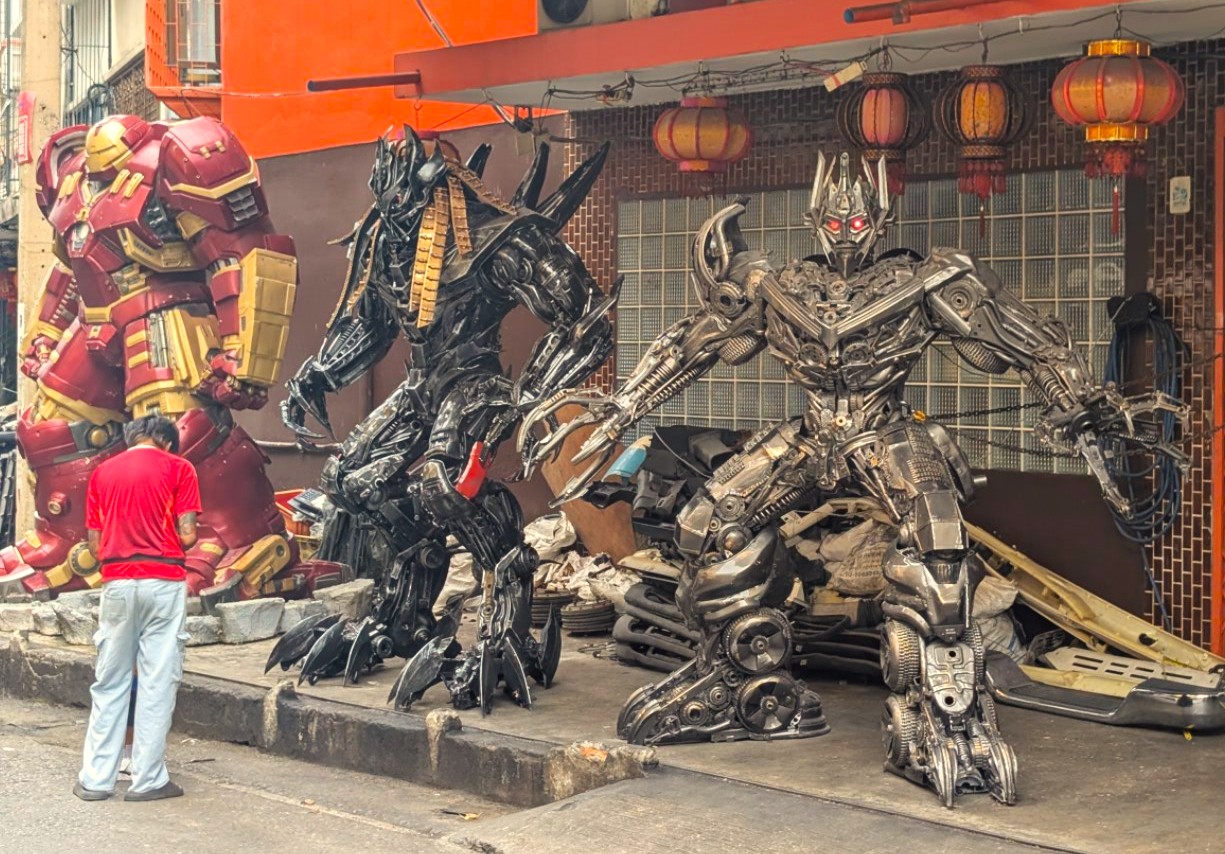
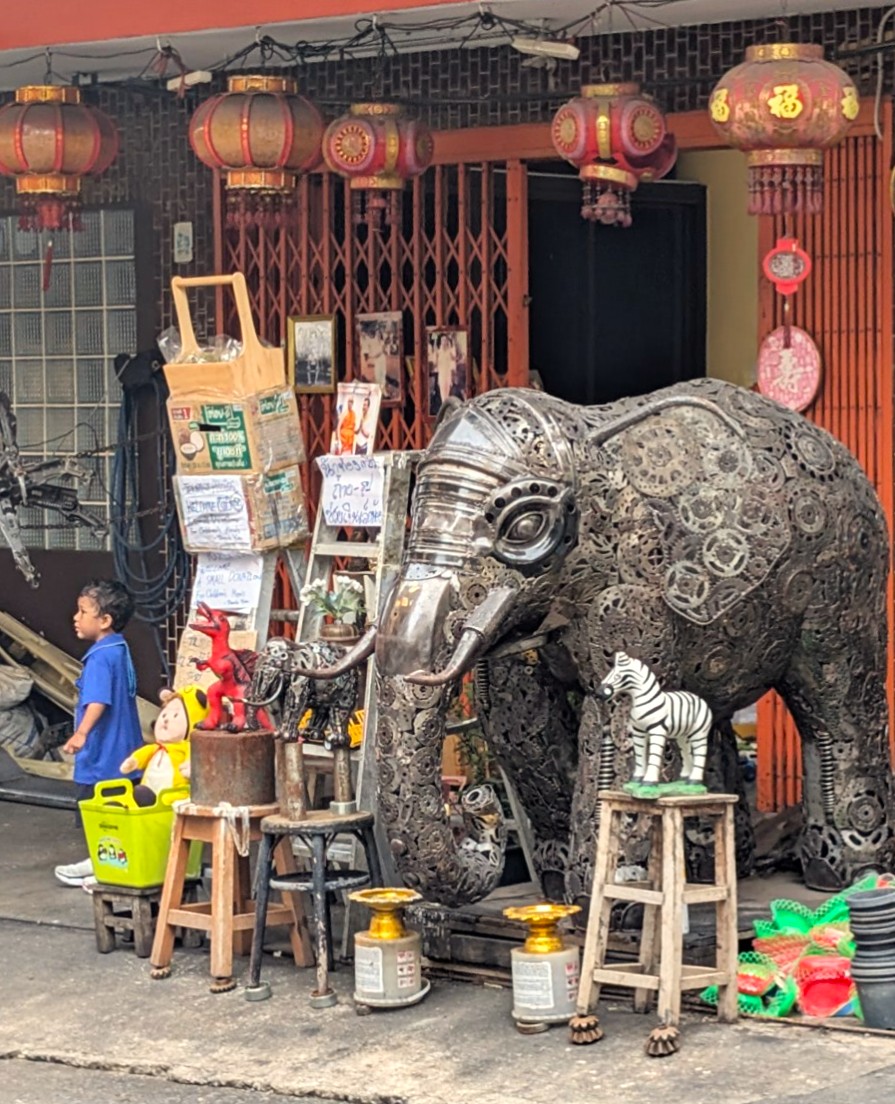
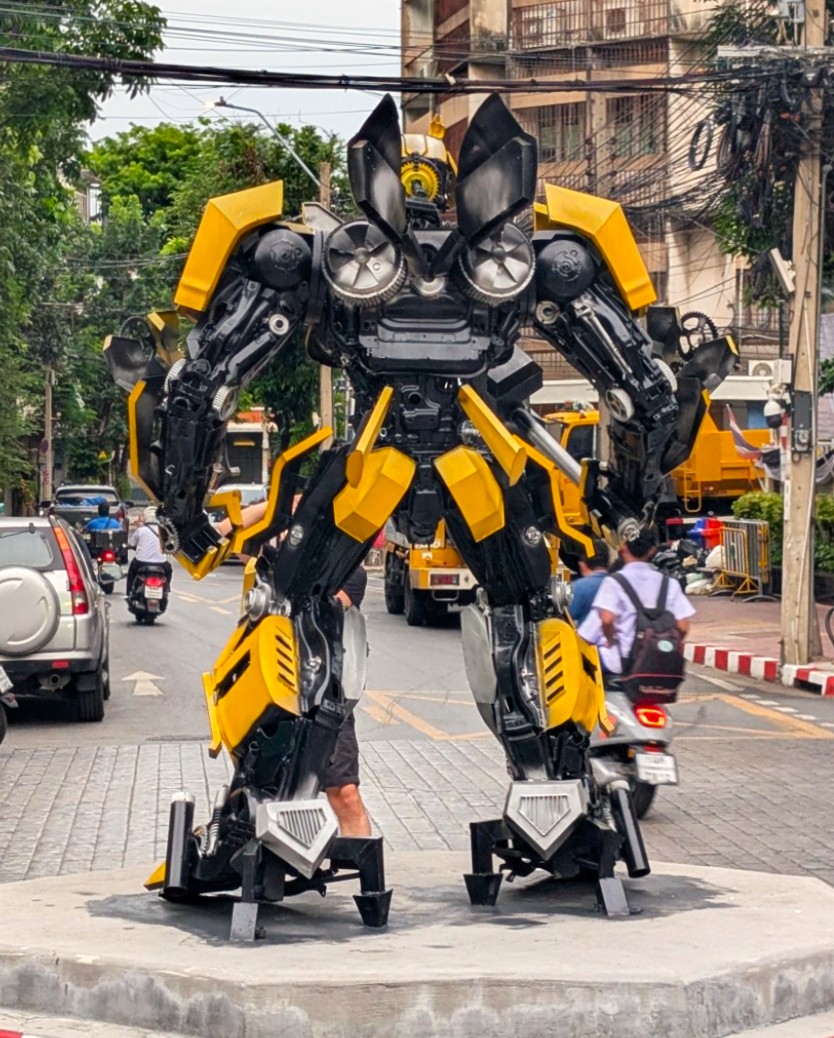
Charoen Krung is supposed to be another cool area but it amounts to a continuous series of warehouse storefronts crammed with meticulously organized steel fabrication components of all manner, including piping, plates, joining parts, and so on, the display of each venue an artful visual exercise. It may well have some allure, but it isn’t clear what exactly should be attracting so many of the tourists wandering back and forth in the area.
Bangkok — Koh Rattanakosin — Song Wat
Bangkok — Koh Rattanakosin — Song Wat
Bangkok — Koh Rattanakosin — Song Wat
Bangkok — Koh Rattanakosin — Song Wat
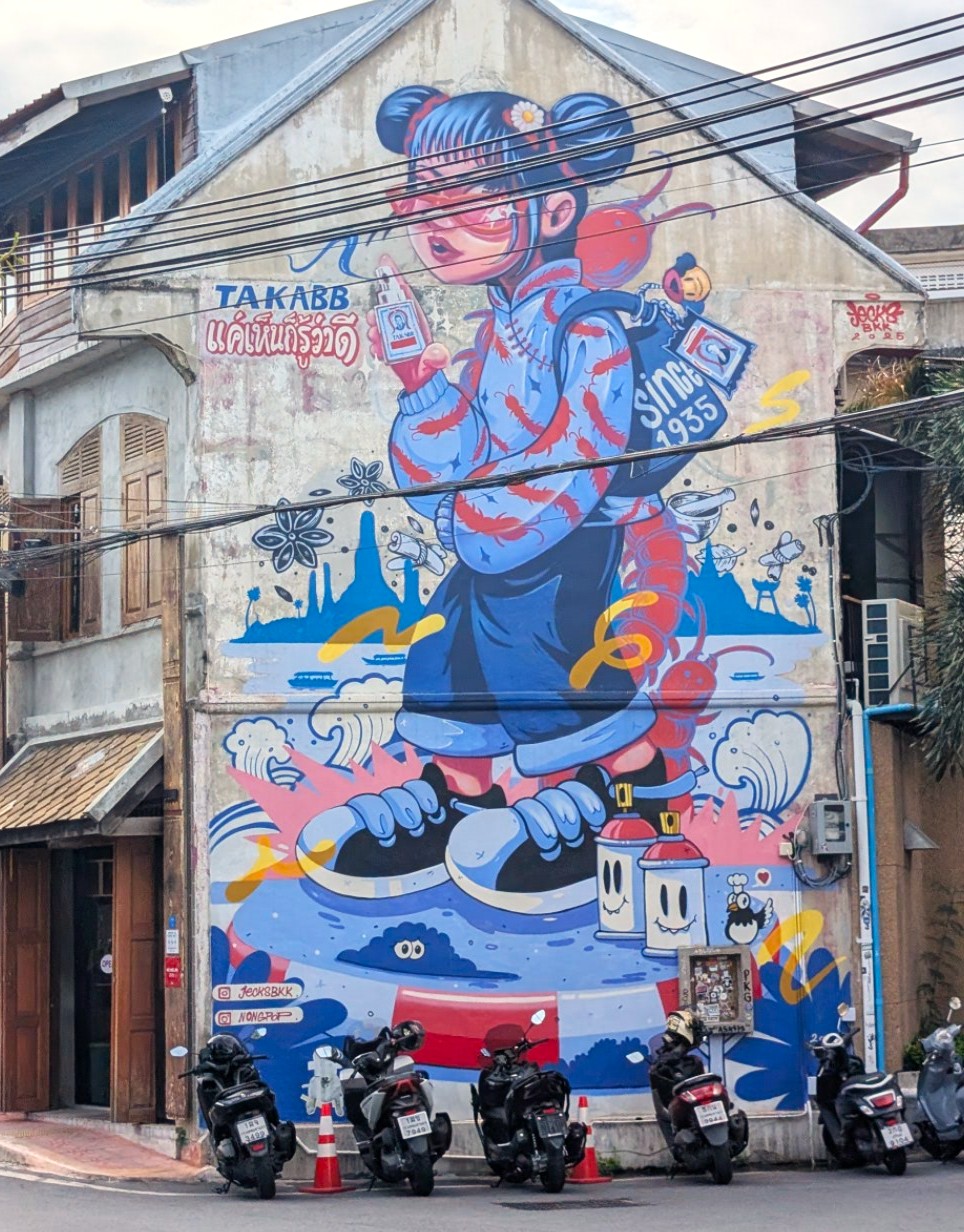
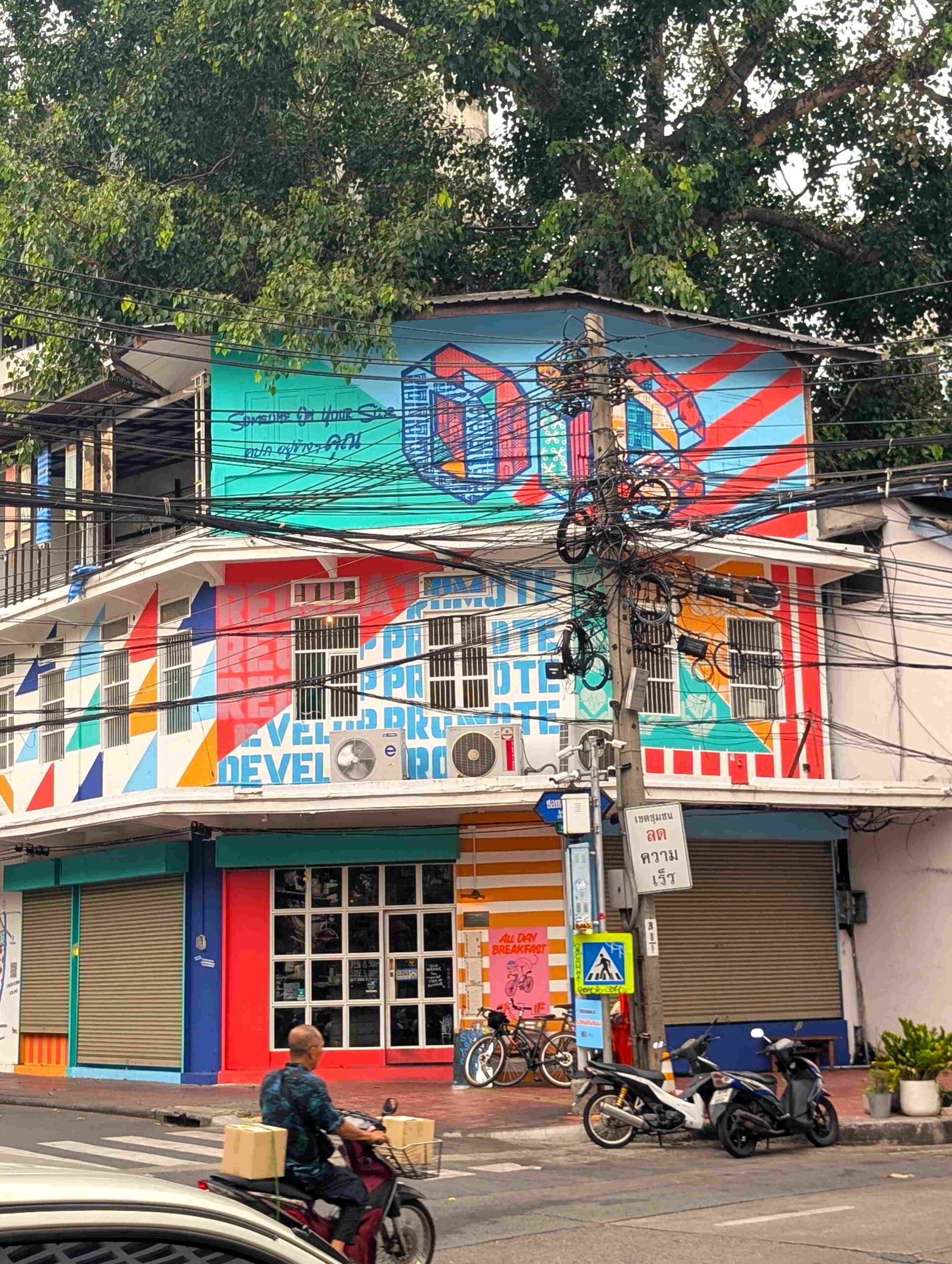
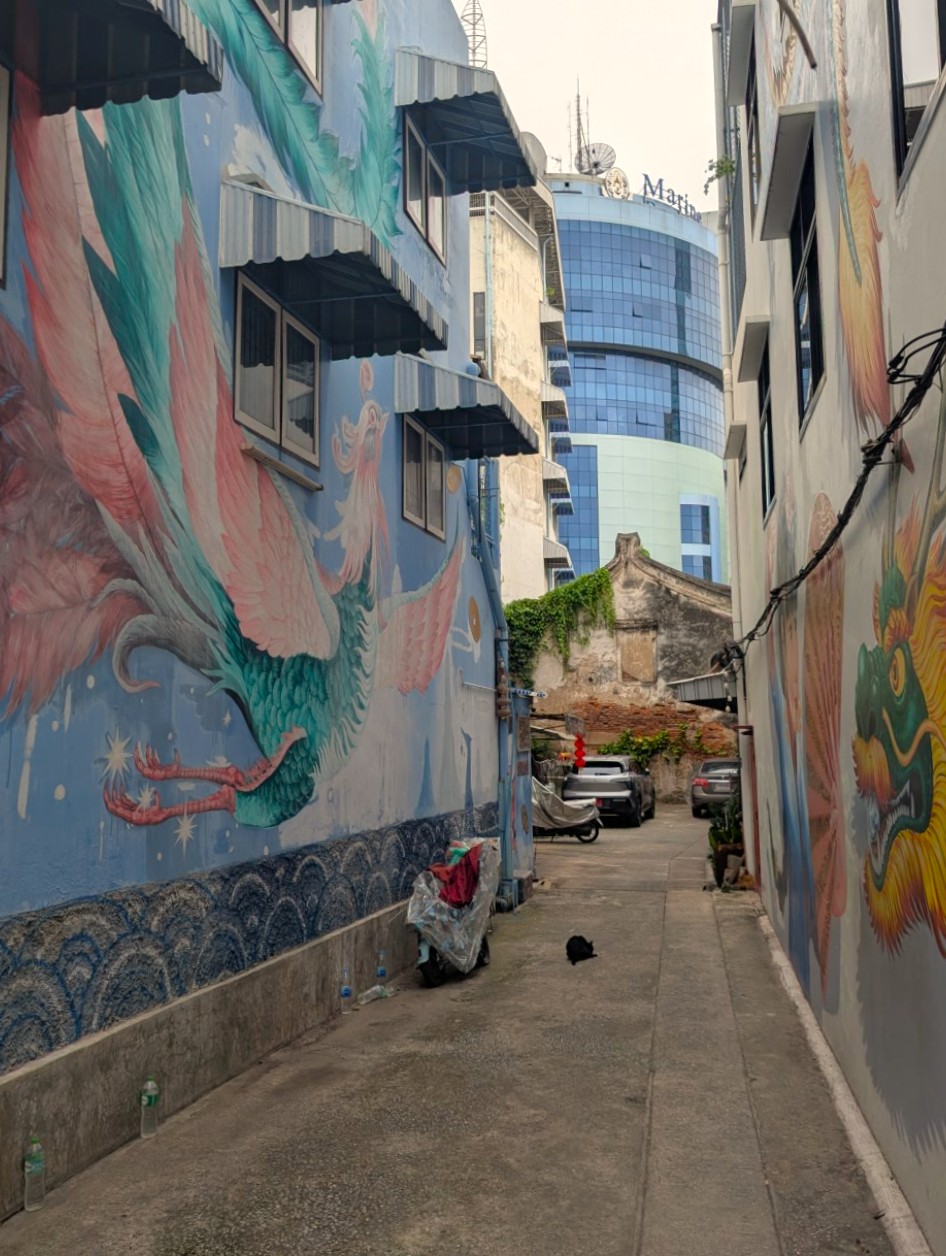
There are cafes, lounges and waterfront terraces sandwiched into the adjacent riverfront; walls are covered with brilliant graffiti, certainly an accessible way of making fundamentally unattractive area more appealing. Despite the industrial pallor there are prim and obviously affluent single family residences and multi-floor towers tucked away in back alleys. Irrespective of the presentation, the land here must be valuable, given its proximity to historic centre.
Bangkok — Koh Rattanakosin — Kuan Yim Shrine
Bangkok — Koh Rattanakosin — Song Wat
Bangkok — Koh Rattanakosin — Wat Trai Mit Witthayaram Worawihan
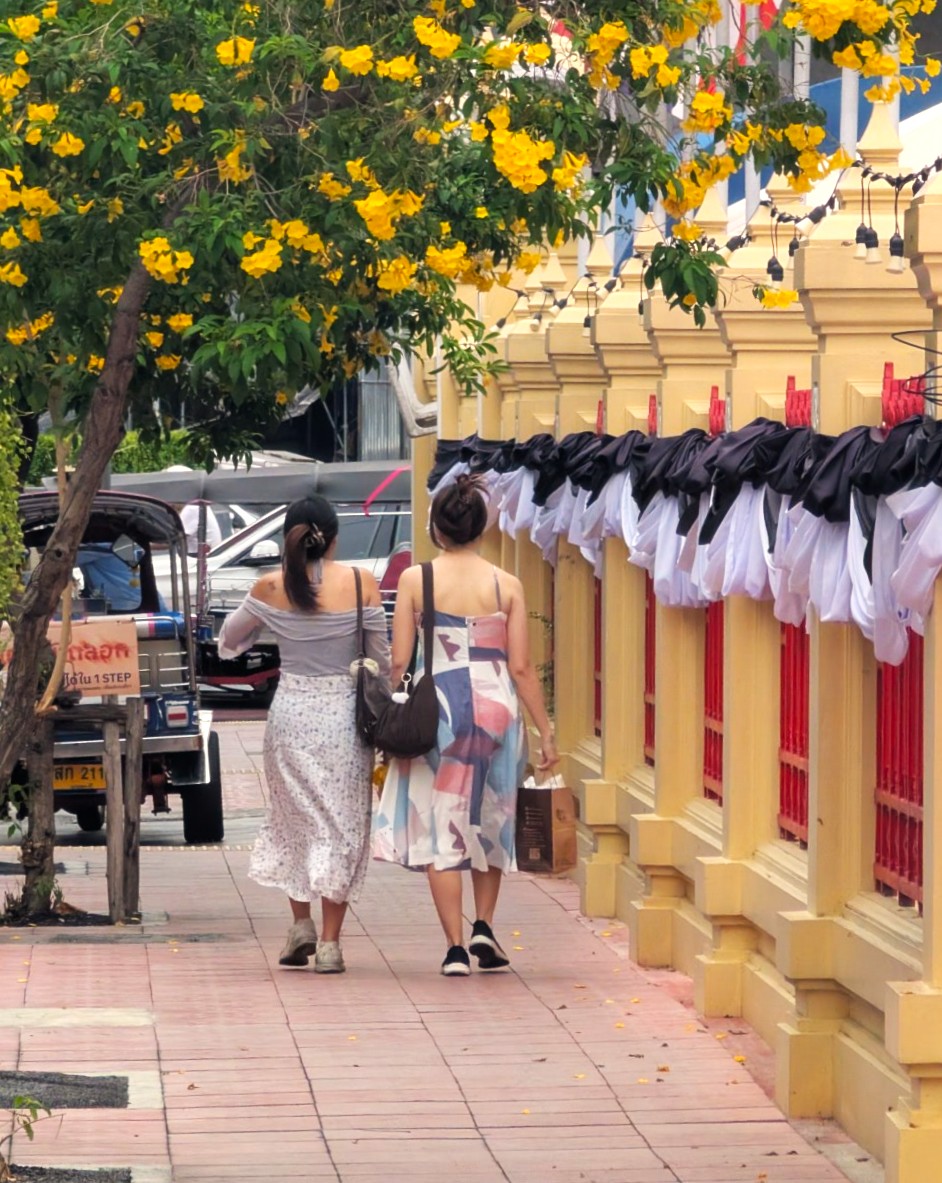
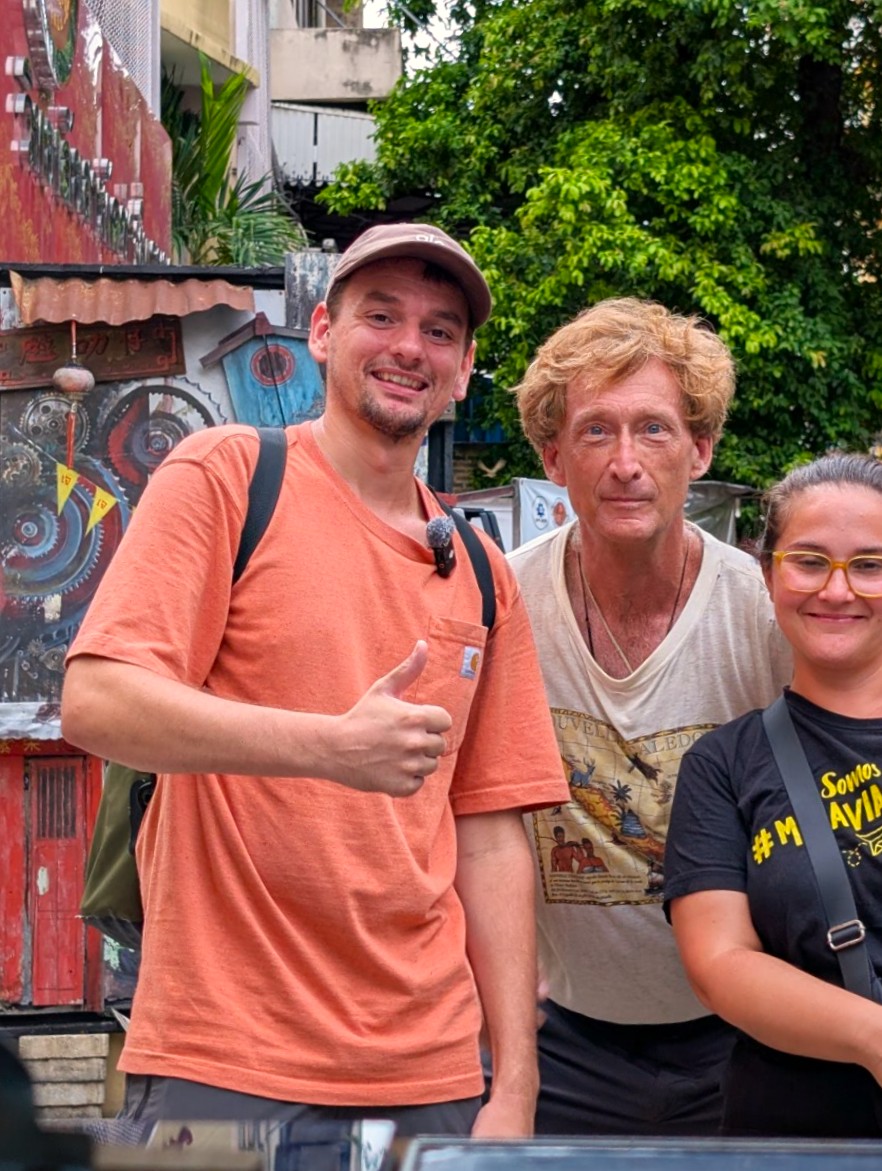
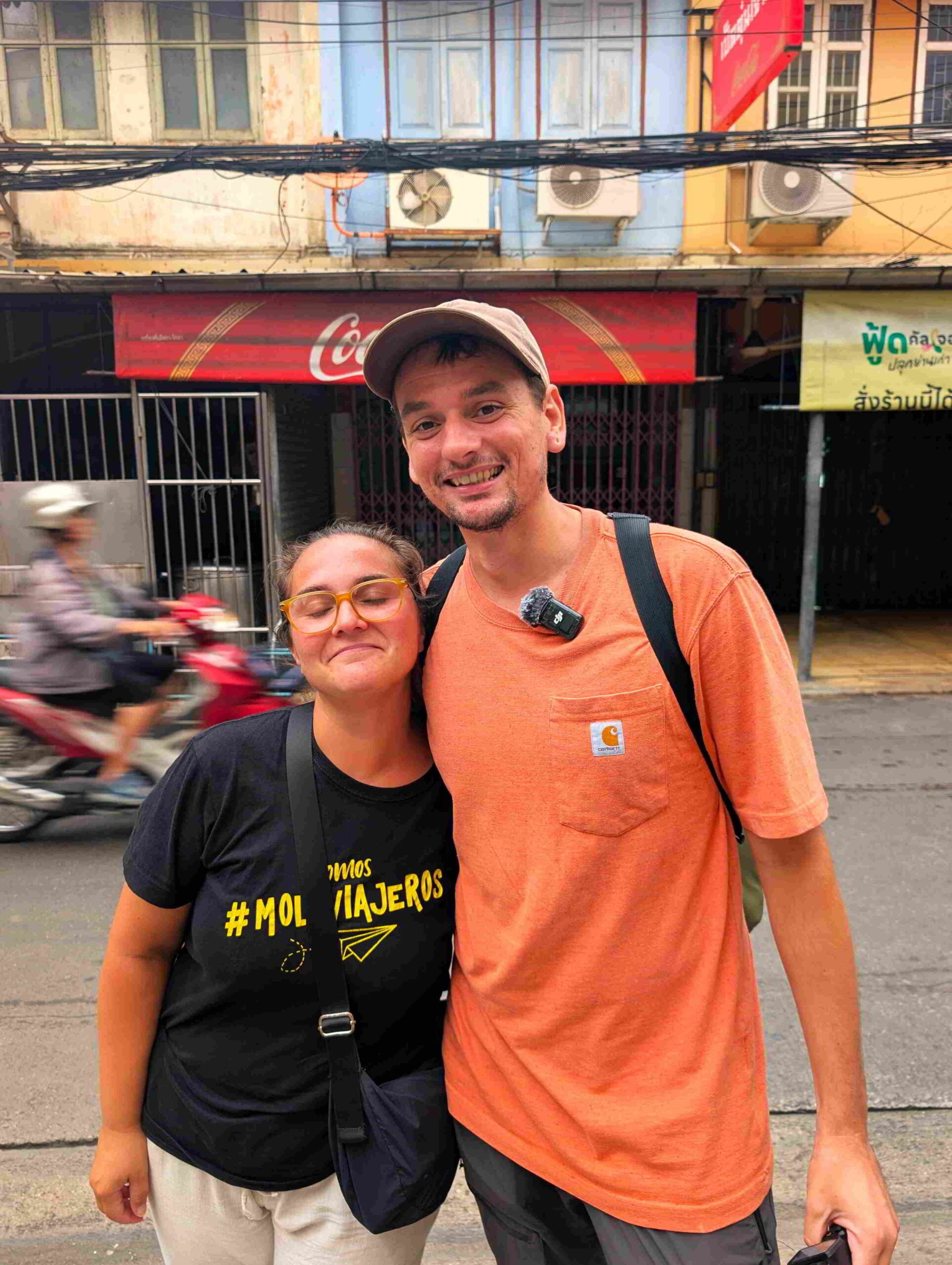
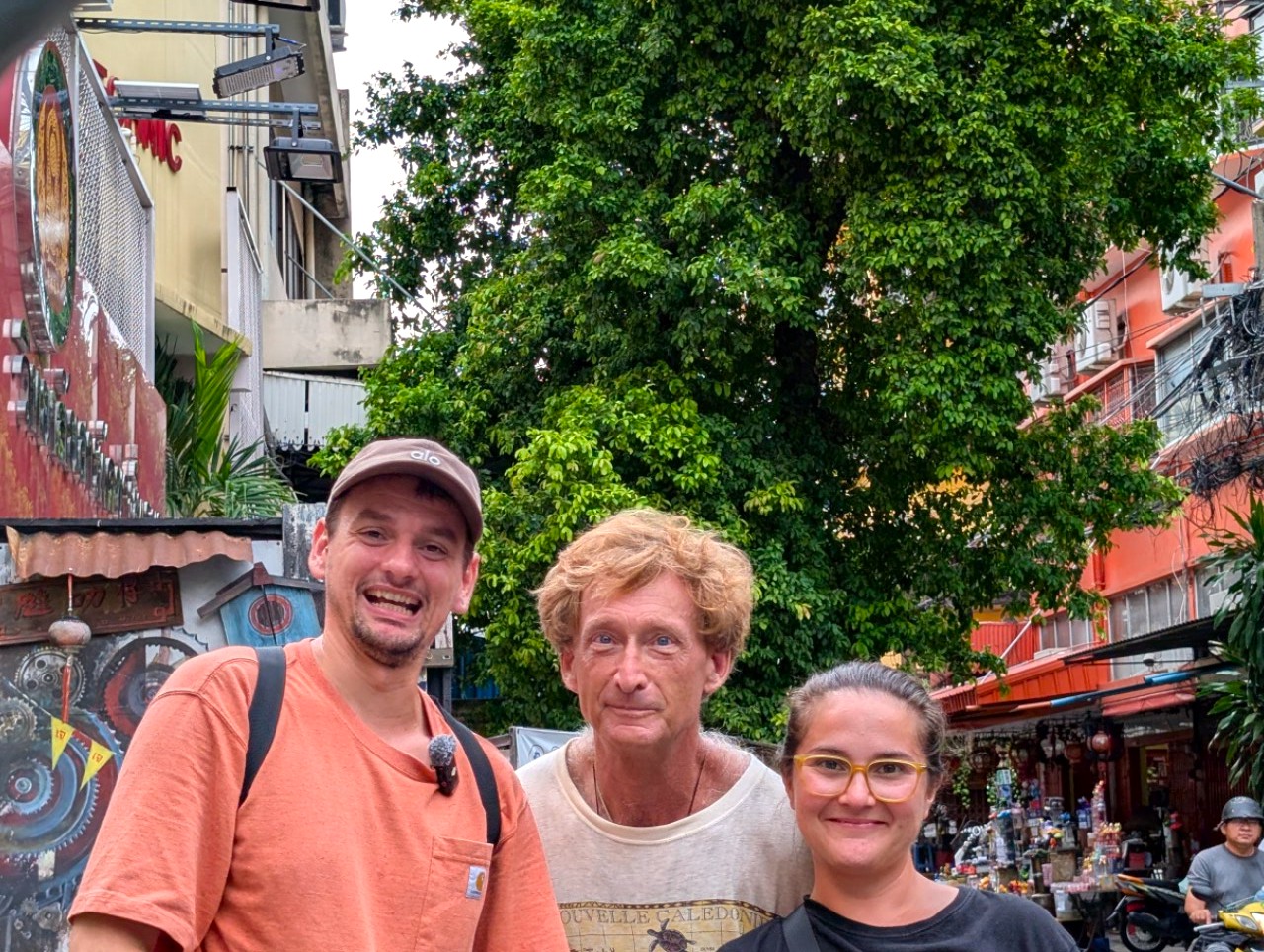
Farther from the overpriced climes of Song Wat, I find a small and modest juice stand with surprisingly low prices. But the owner has almost no fruit left. She does have mixed berries, which without any sugar are quite sour, but with a flavour profile I love and in fact very healthy. Even better, for the modest ฿40 consisting of mostly fruit and ice cold. Sucking on the drink I look at the people passing by, then who appears but Jack and Laura! The two are surprisingly still in Bangkok, currently staying in Nonthaburi.
Bangkok — Koh Rattanakosin — Charoen Krung
Bangkok — Koh Rattanakosin
Bangkok — Koh Rattanakosin — Charoen Krung
Coincidentally, I had wanted to take the boat there today; perhaps someone else would have managed to visit the area as well as come here in a single day, but my efforts are too nonchalant and limited at this point in my life. Admittedly, on another trip, I would like to start exploring the outlying areas that run along the riverside. Jack extolls the virtues of the markets in the area they are staying — I remember how impeccable and authentic the food was when I stayed in the north side of the city, far from the pretenses and tourist focus of the inner city.
Bangkok — Koh Rattanakosin — Charoen Krung
Bangkok — Koh Rattanakosin
Bangkok — Koh Rattanakosin — Charoen Krung
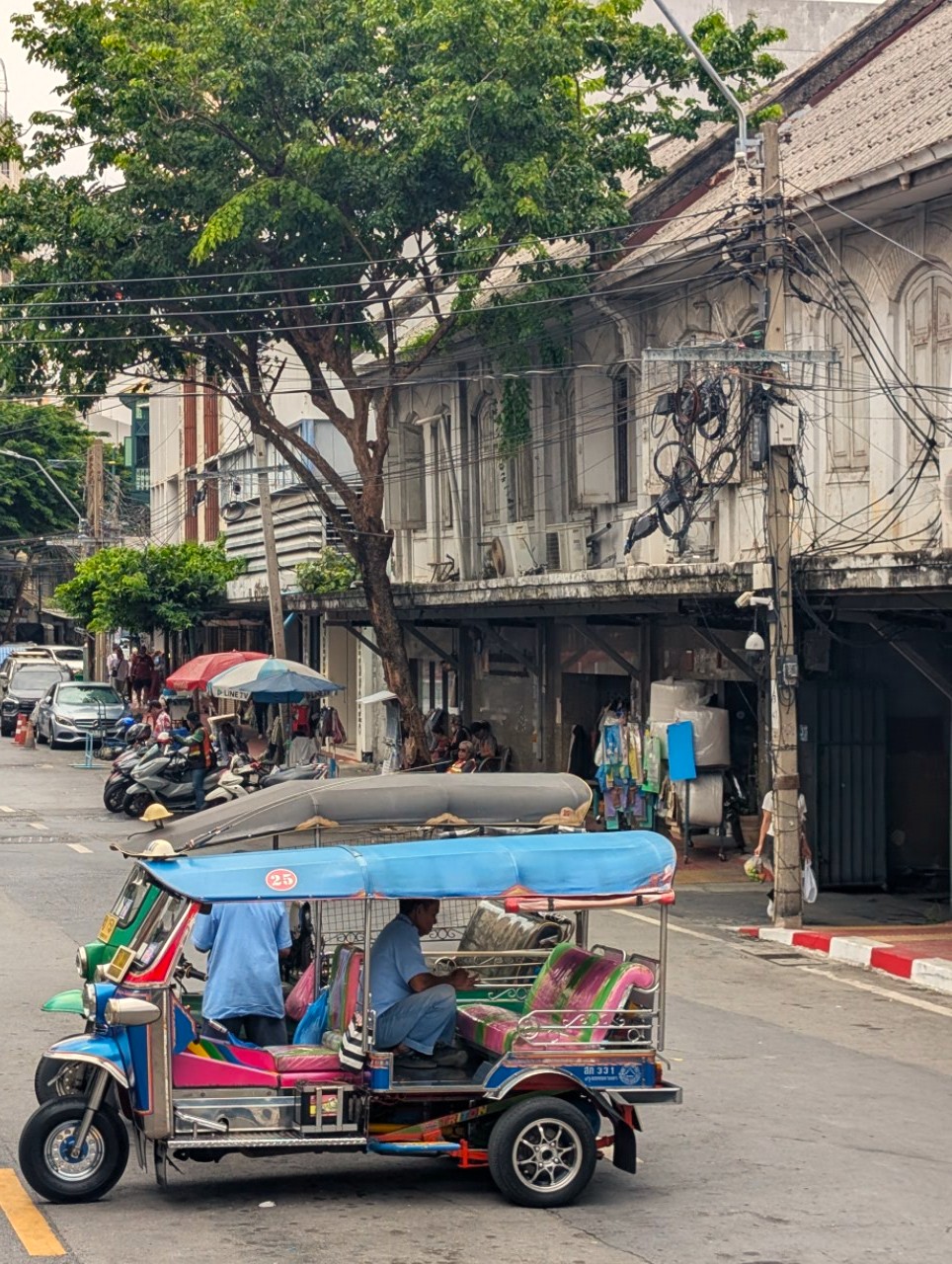
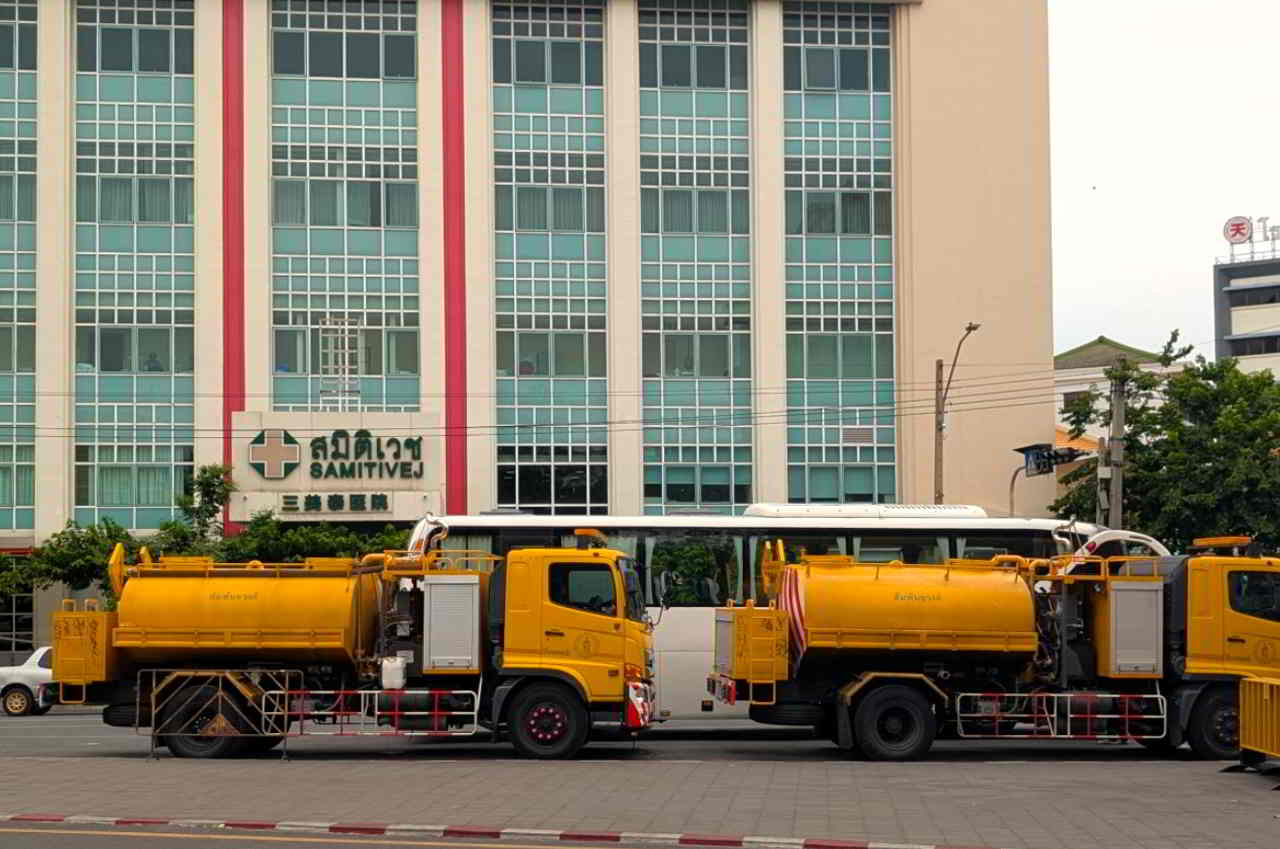
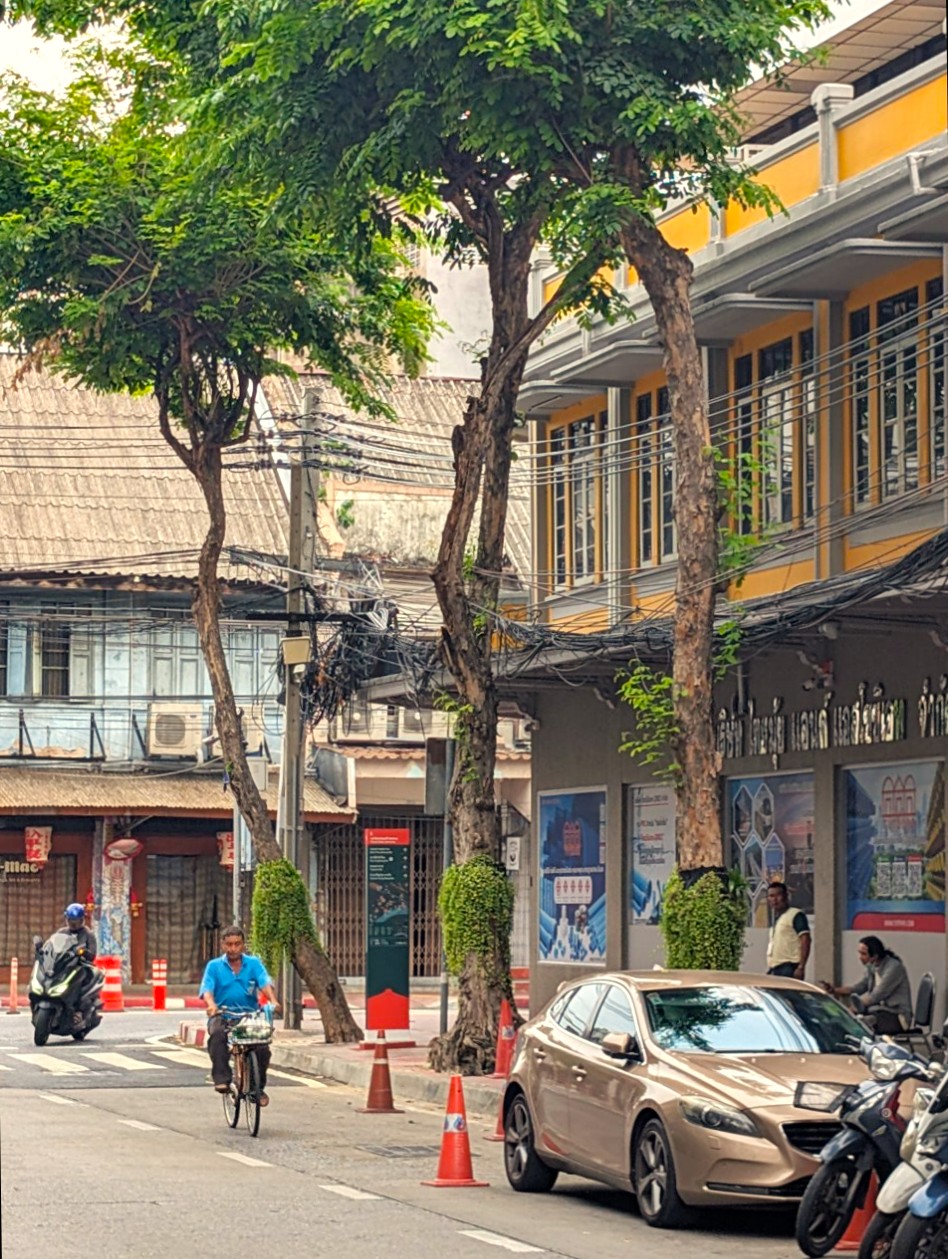
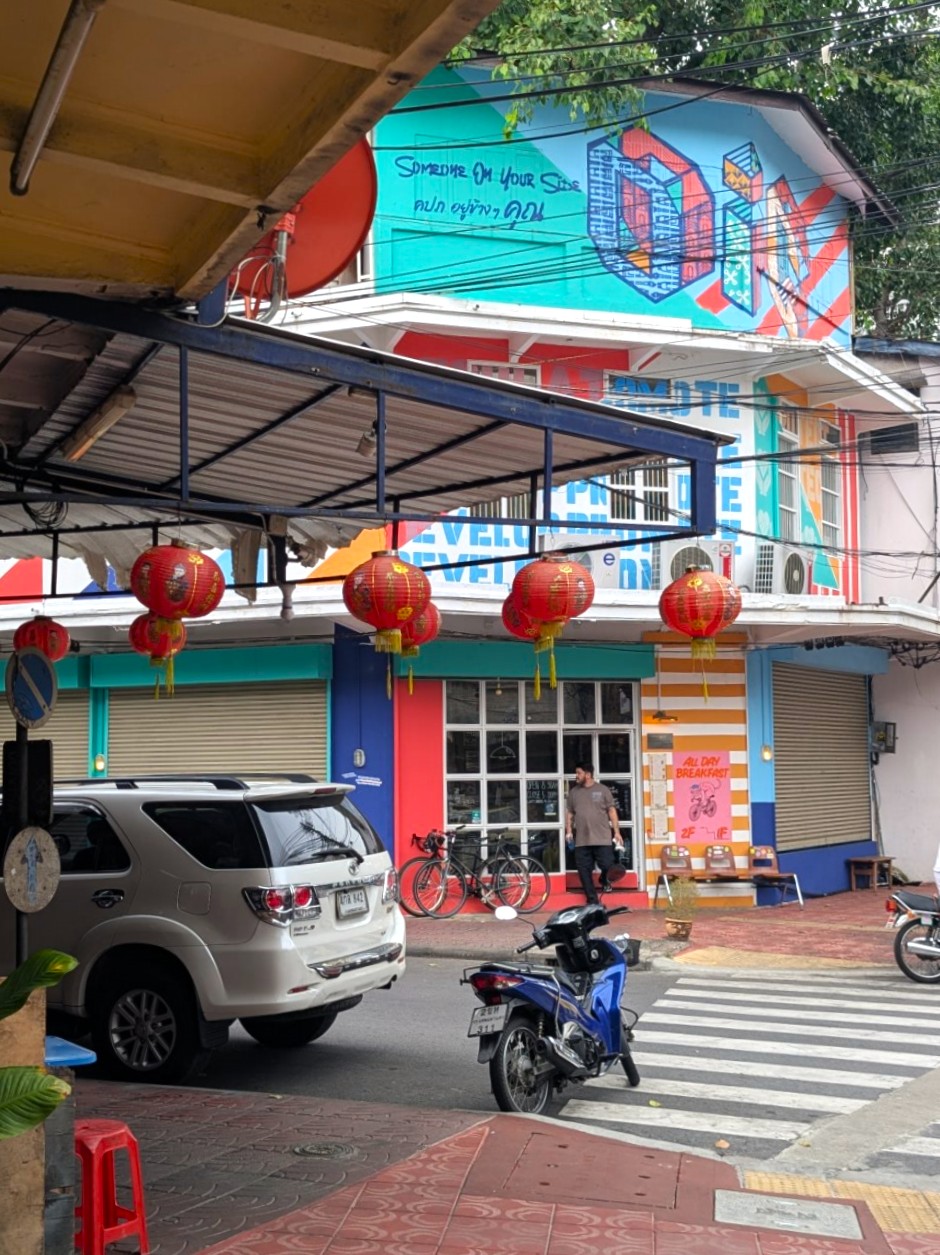
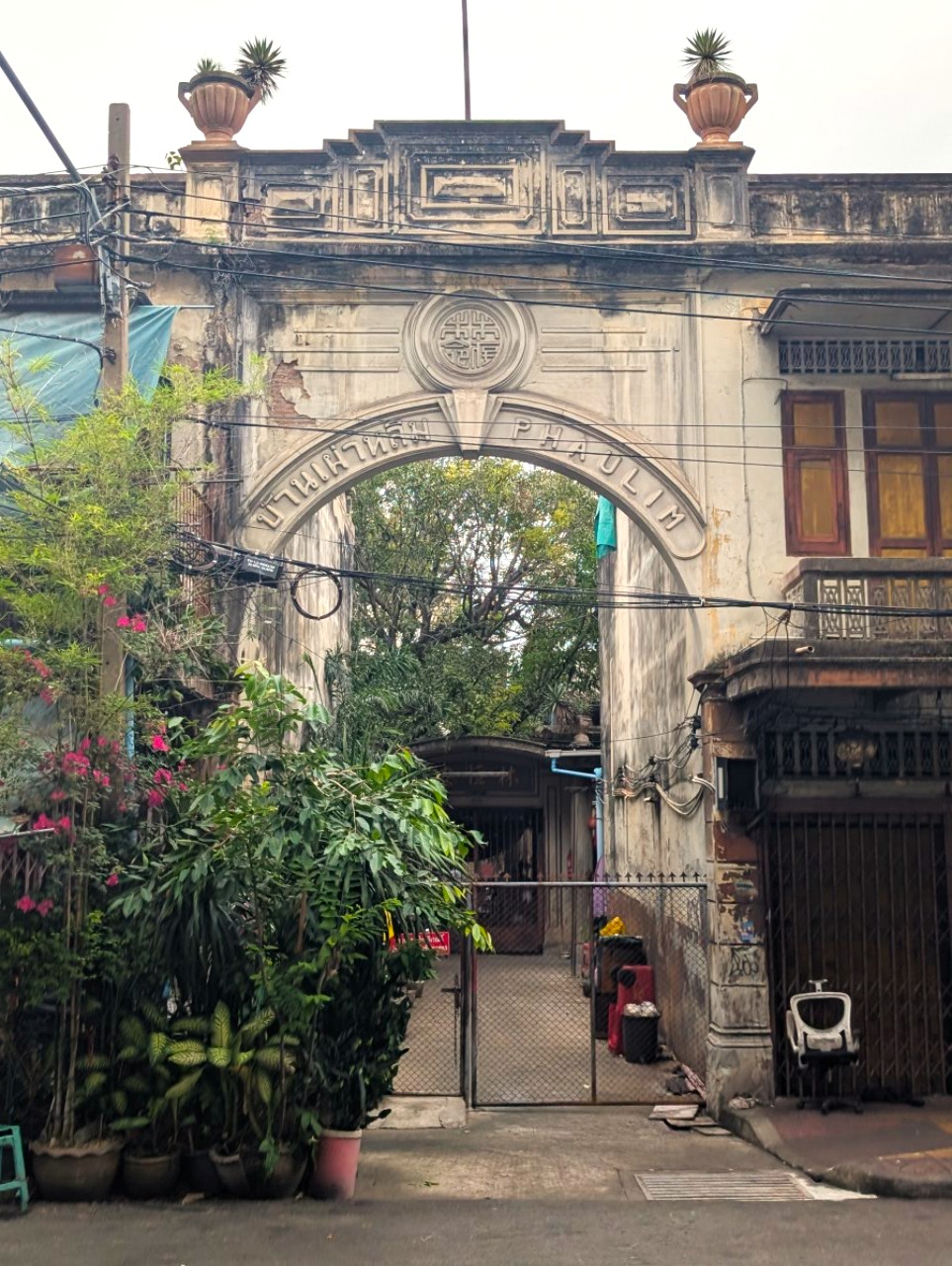
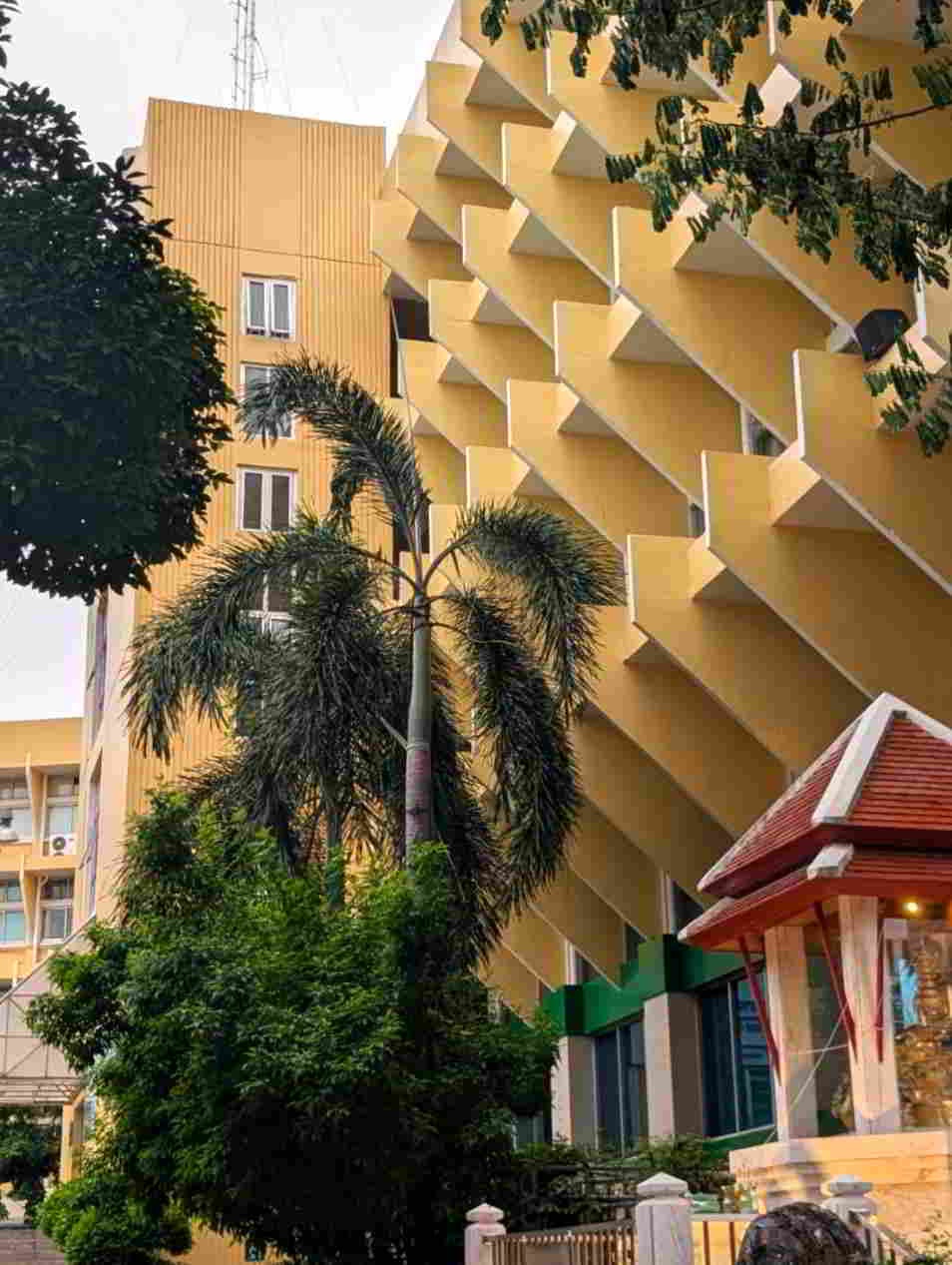
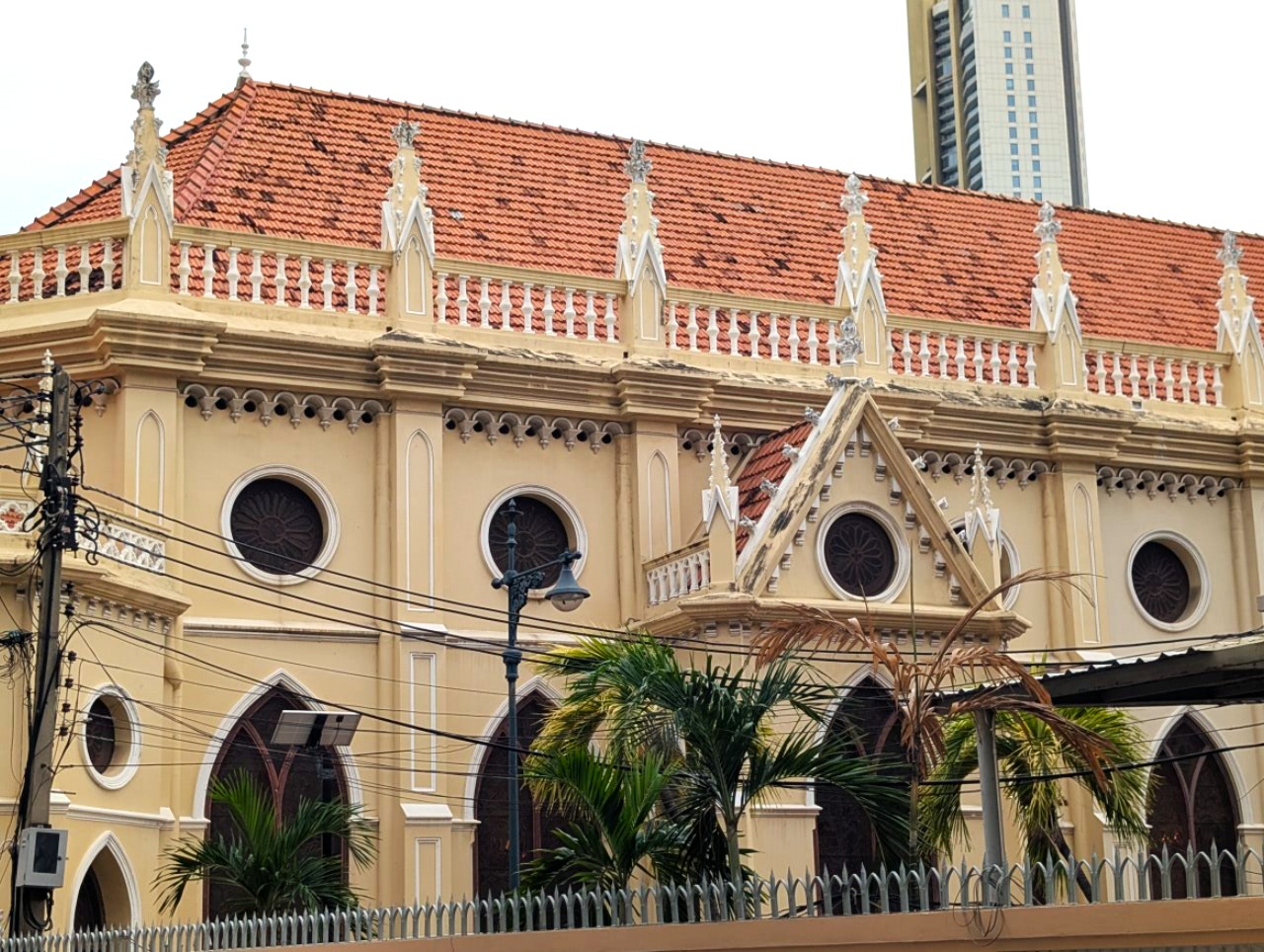
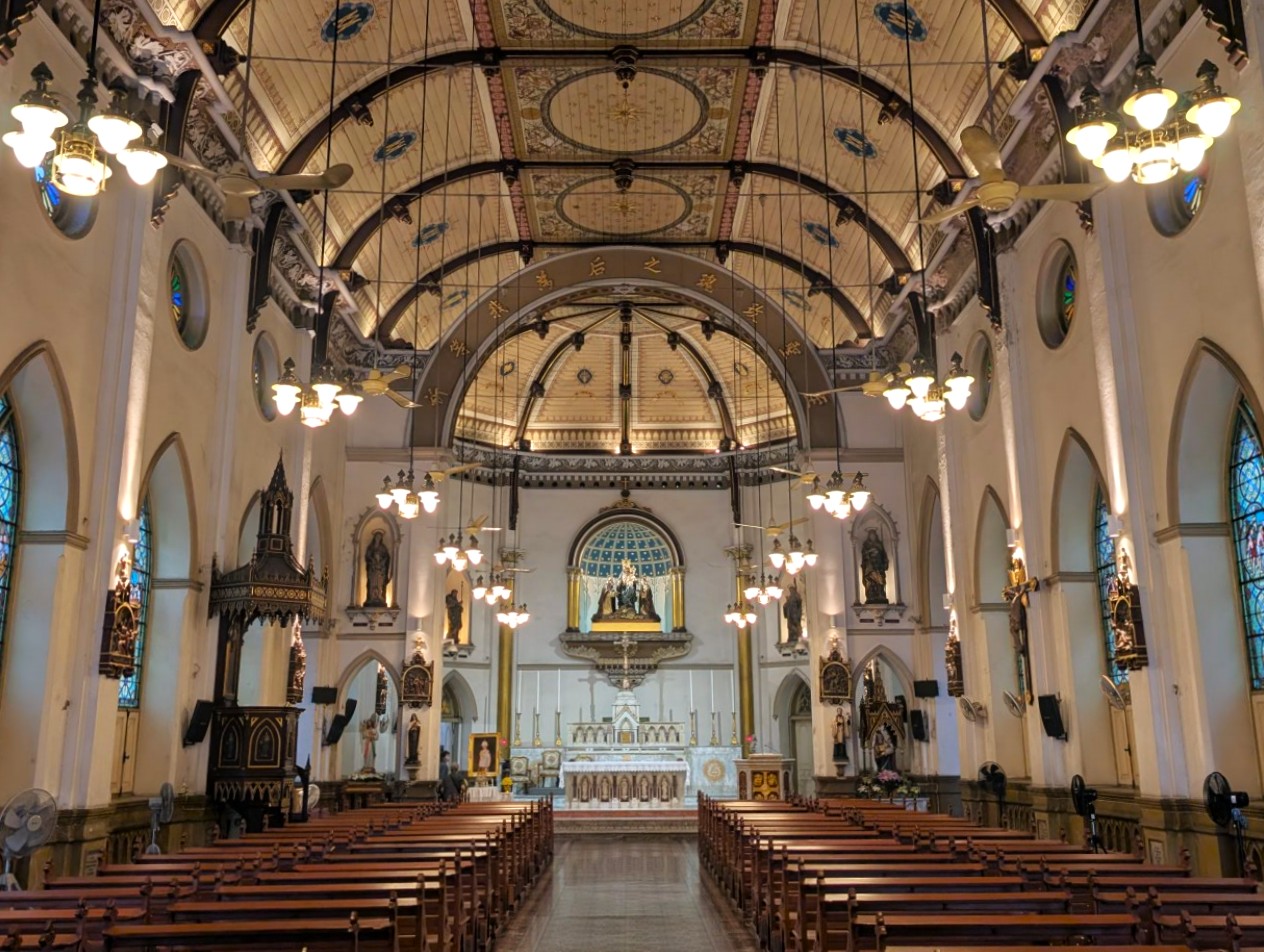
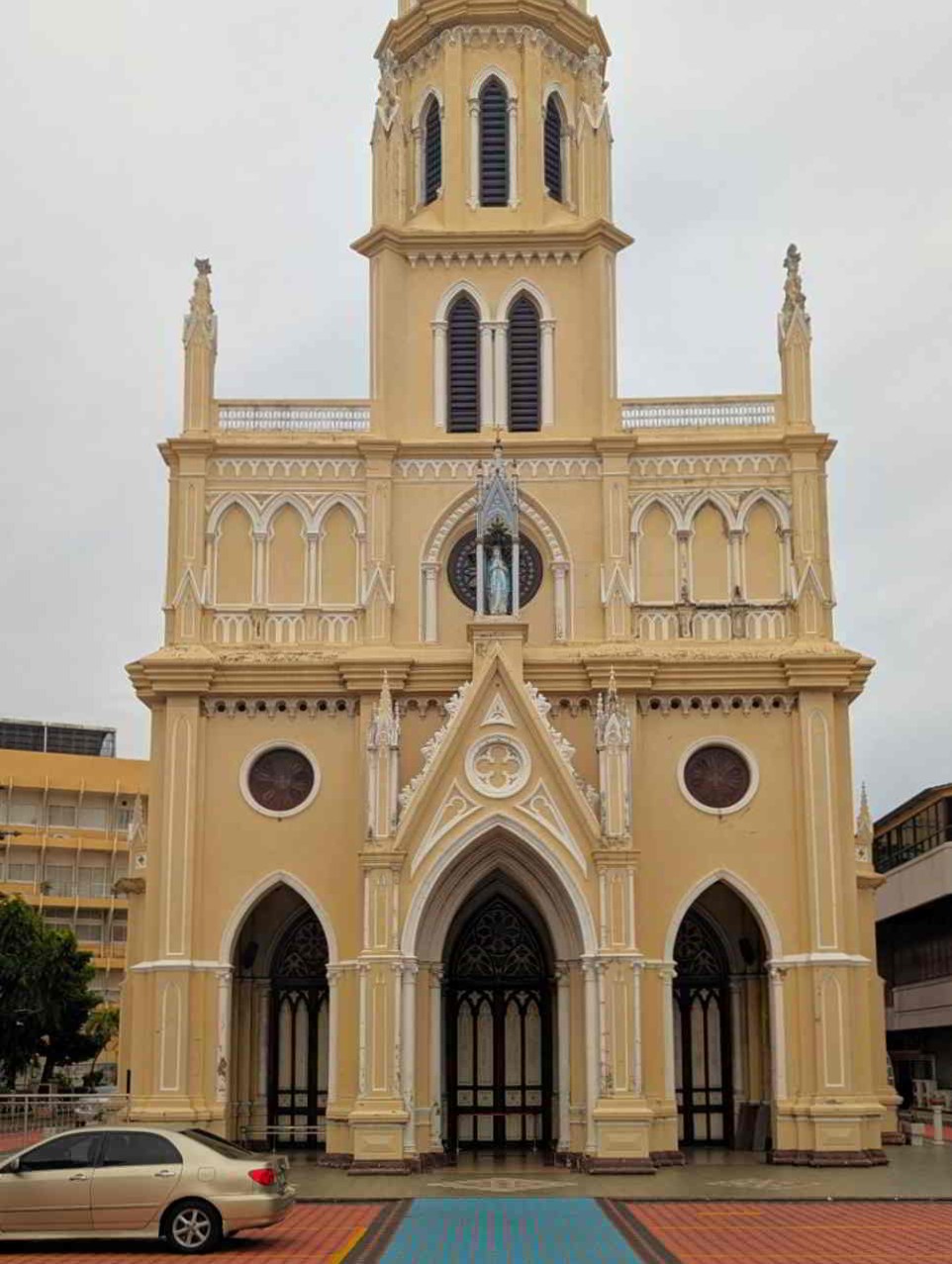
We both continue on our respective journeys; more farang pass by, although why people visit this nondescript area is somewhat mystifying. I suppose it’s been designated as worthy of visiting. There are several huge institutional and scholastic buildings en route, but they would hardly mean much to tourists. There are some boutique hotels but also the enormous Sheraton and others. The Kalawar church represents another historic Catholic enclave, founded centuries ago by Portuguese missionaries who came from Ayutthaya. I suppose the area could be compelling if you spend no more than a few days. Tuktuk drivers repeatedly call to me and I respond politely; given the volume of evidently recently arrived tourists they shouldn’t have too much difficulty conjuring lucrative rides.
Bangkok — Koh Rattanakosin — Charoen Krung
Bangkok — Koh Rattanakosin — Charoen Krung
Bangkok — Koh Rattanakosin — Charoen Krung
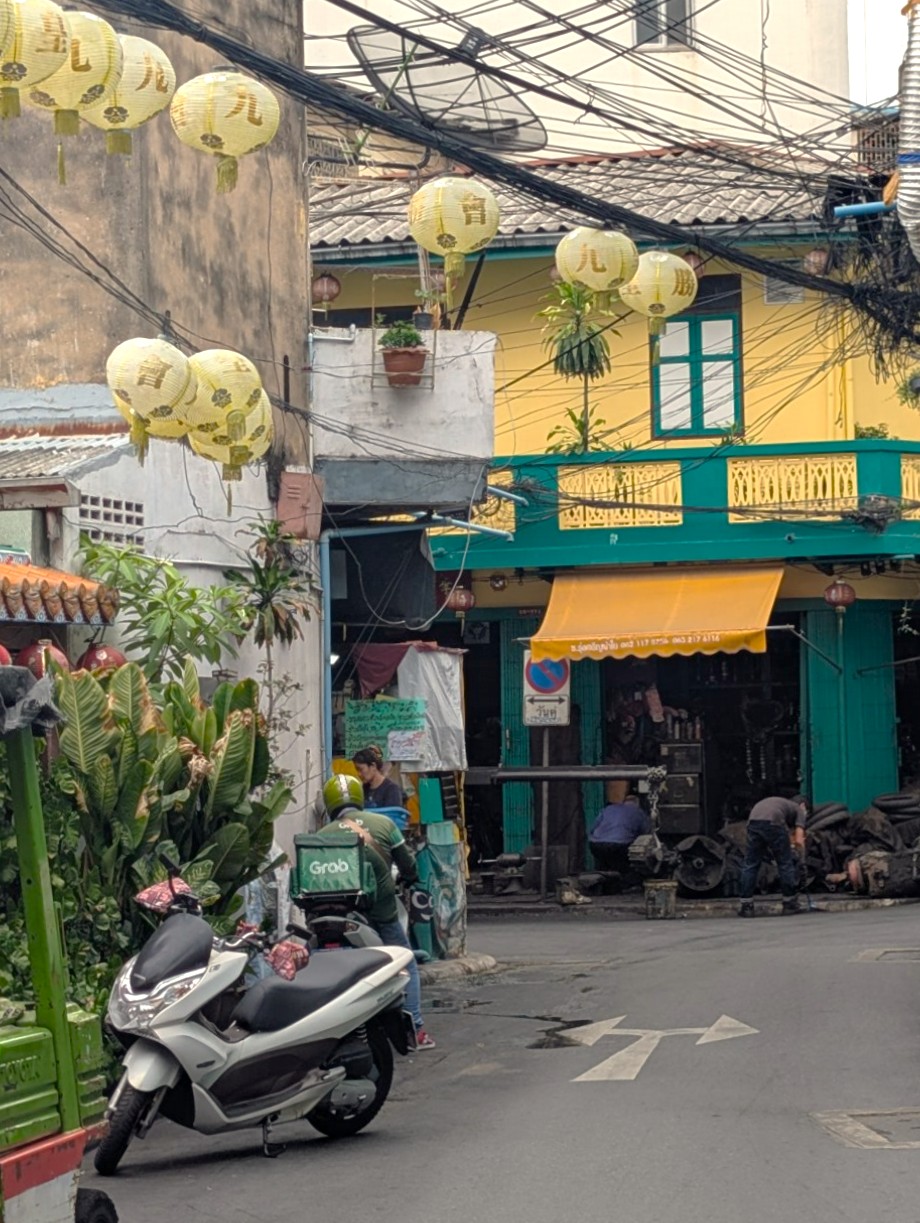
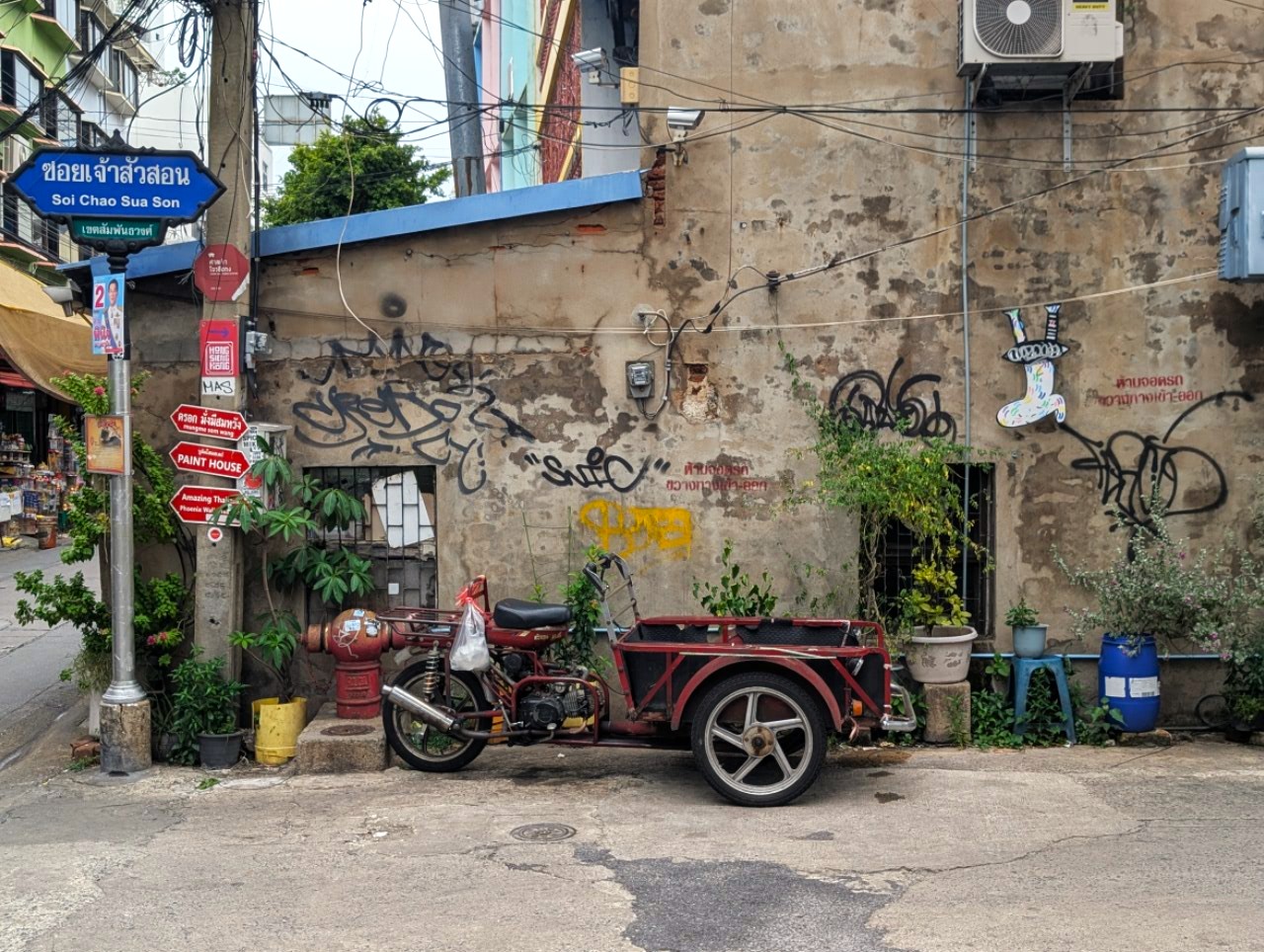
My ultimate destination is the TCDC (Thailand Creative Design Center), whose sister institution I visited in Khon Khaen. But getting there is virtually impossible, as it is blocked off by the giant telecommunications and post office structures. What terrible urban design! The area dies a sudden death as any kind of sense of intimacy and contiguity is ruined by the monstrous building that have barricaded the waterfront area without integrating in any way. There seem to be abundant small Indian restaurants and hotels, perhaps not surprising, given that Indians constitute a fair proportion of the tourists here now.
Bangkok — Koh Rattanakosin — Charoen Krung
Bangkok — Koh Rattanakosin — Charoen Krung
Bangkok — Koh Rattanakosin — Charoen Krung
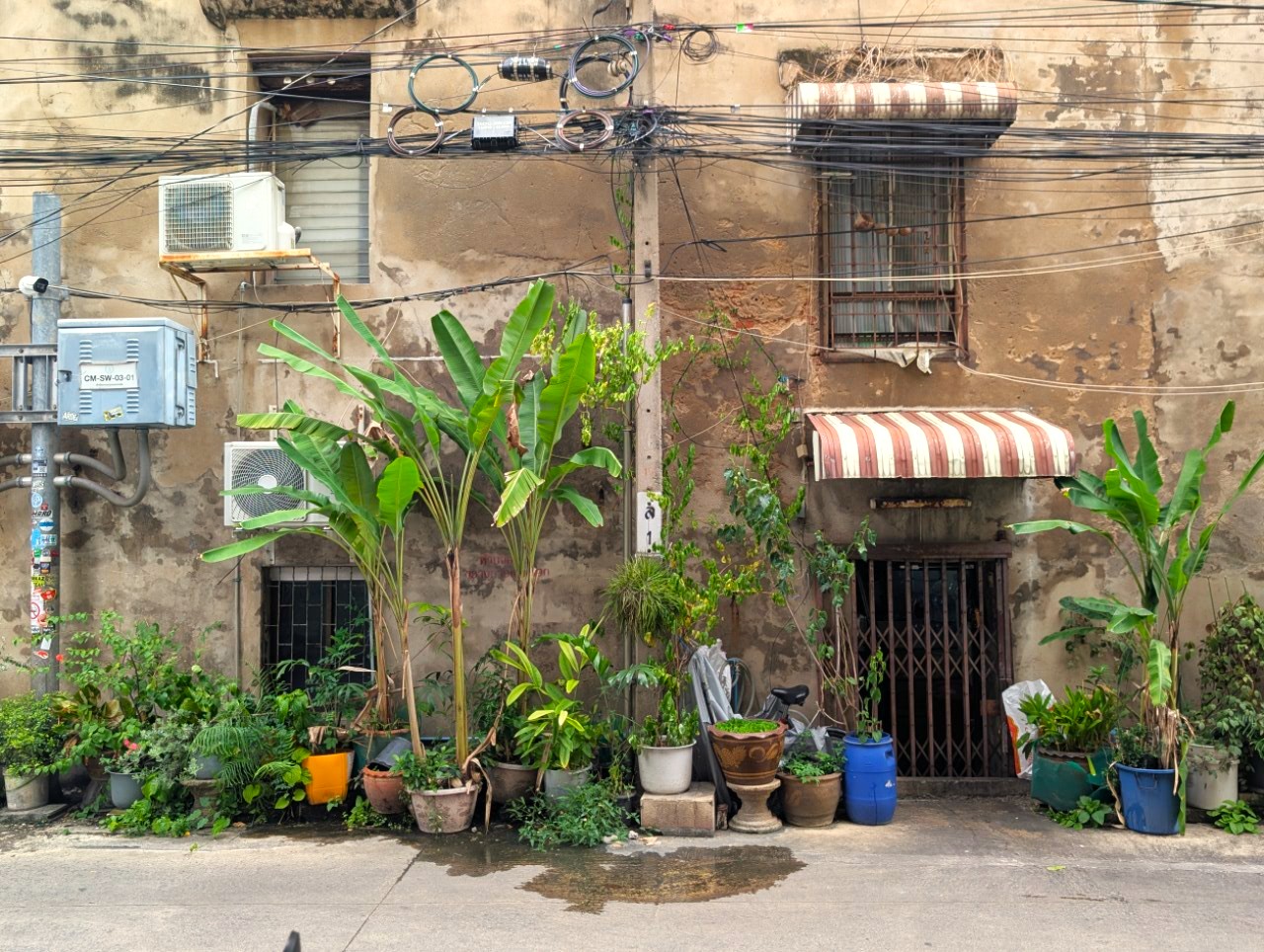
Walking to the north on Charoen Krung, I remember how bleak this stretch of road was. I do have one last task, just before I return home, and that is to get a haircut, something I have wanted to do for the last month. And I spot a small barbershop ahead of me; for 200 baht the cut should be fine, although I did pay less in Roi Et! The hairdresser has to be woken up first, though; as she snips away thoughtfully, I reflect on the fact that it’s pretty much a given that any local would be give a better haircut than anyone back home for many times the price, without the attitude, entitlement and expectations of a tip.
Bangkok — Koh Rattanakosin — Charoen Krung
Bangkok — Koh Rattanakosin — Charoen Krung
Bangkok — Koh Rattanakosin — Charoen Krung
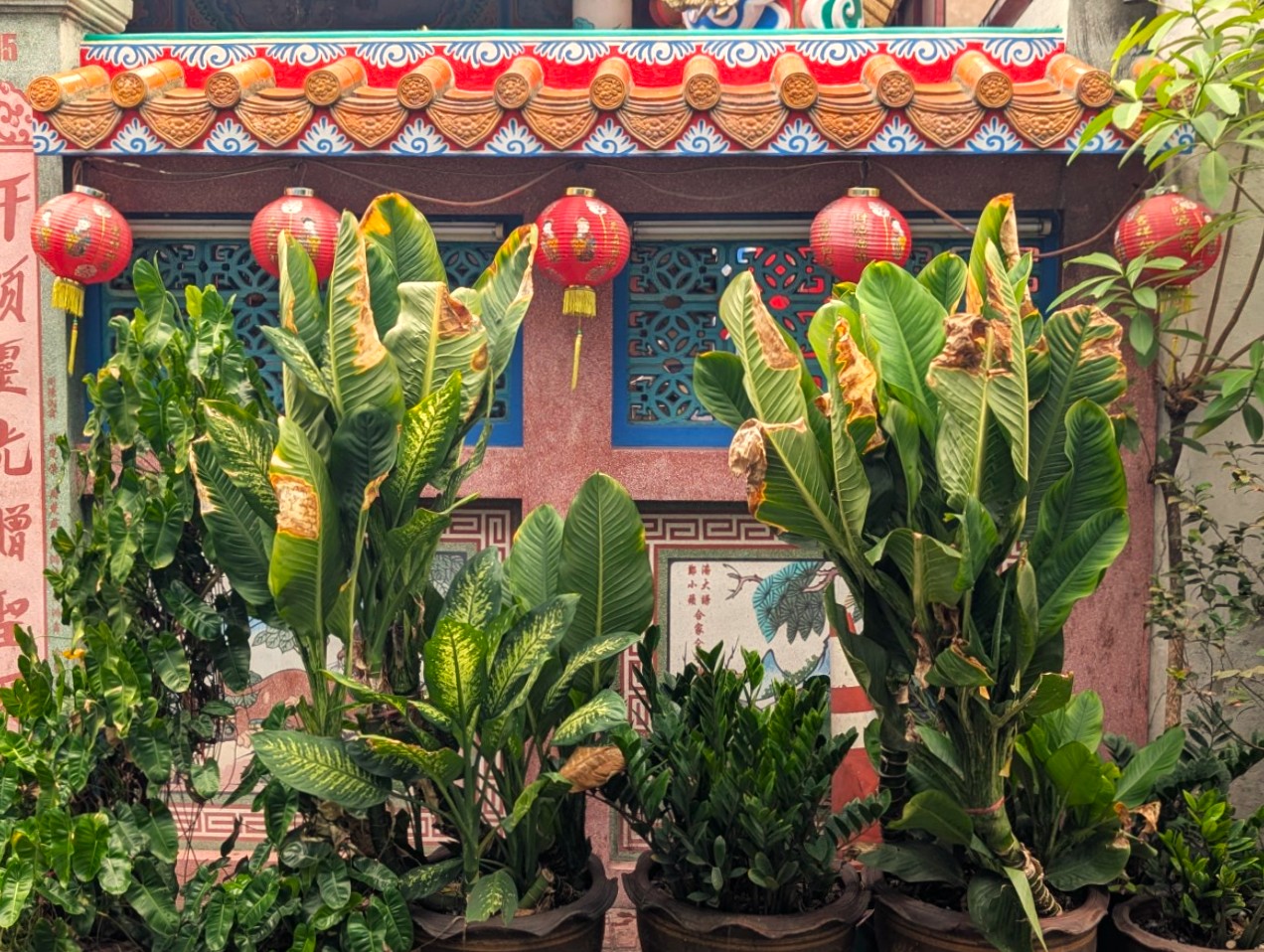
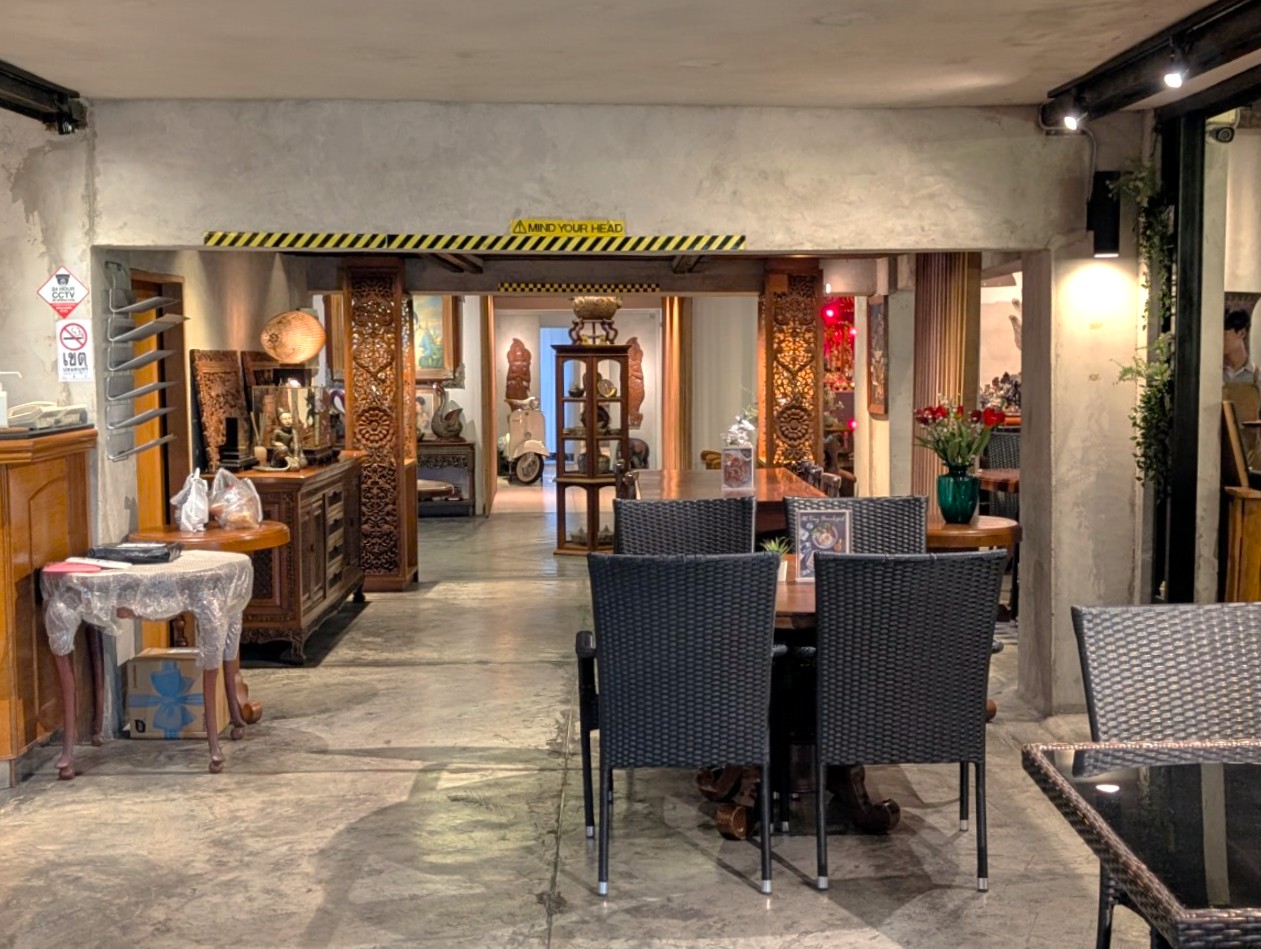
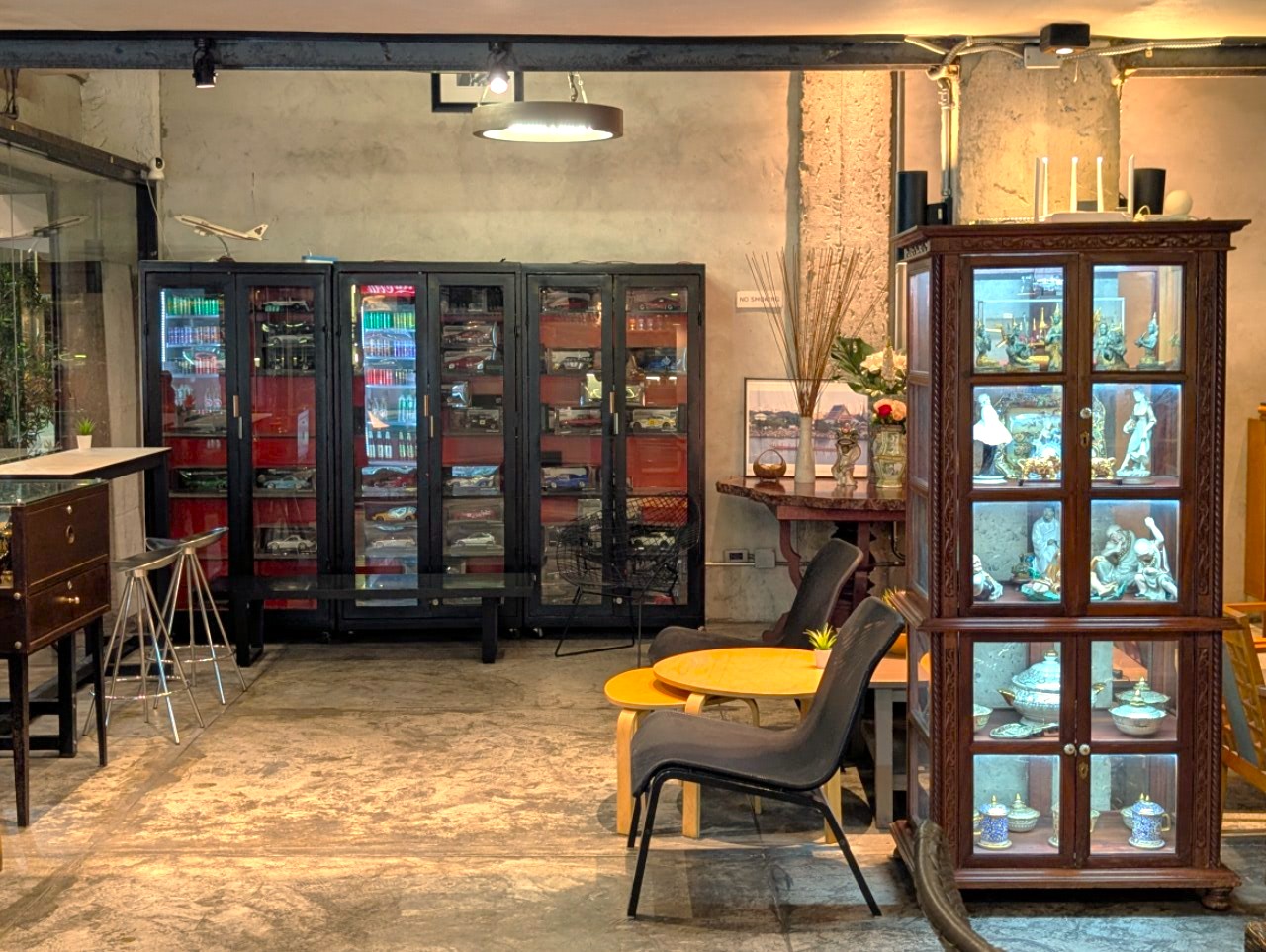
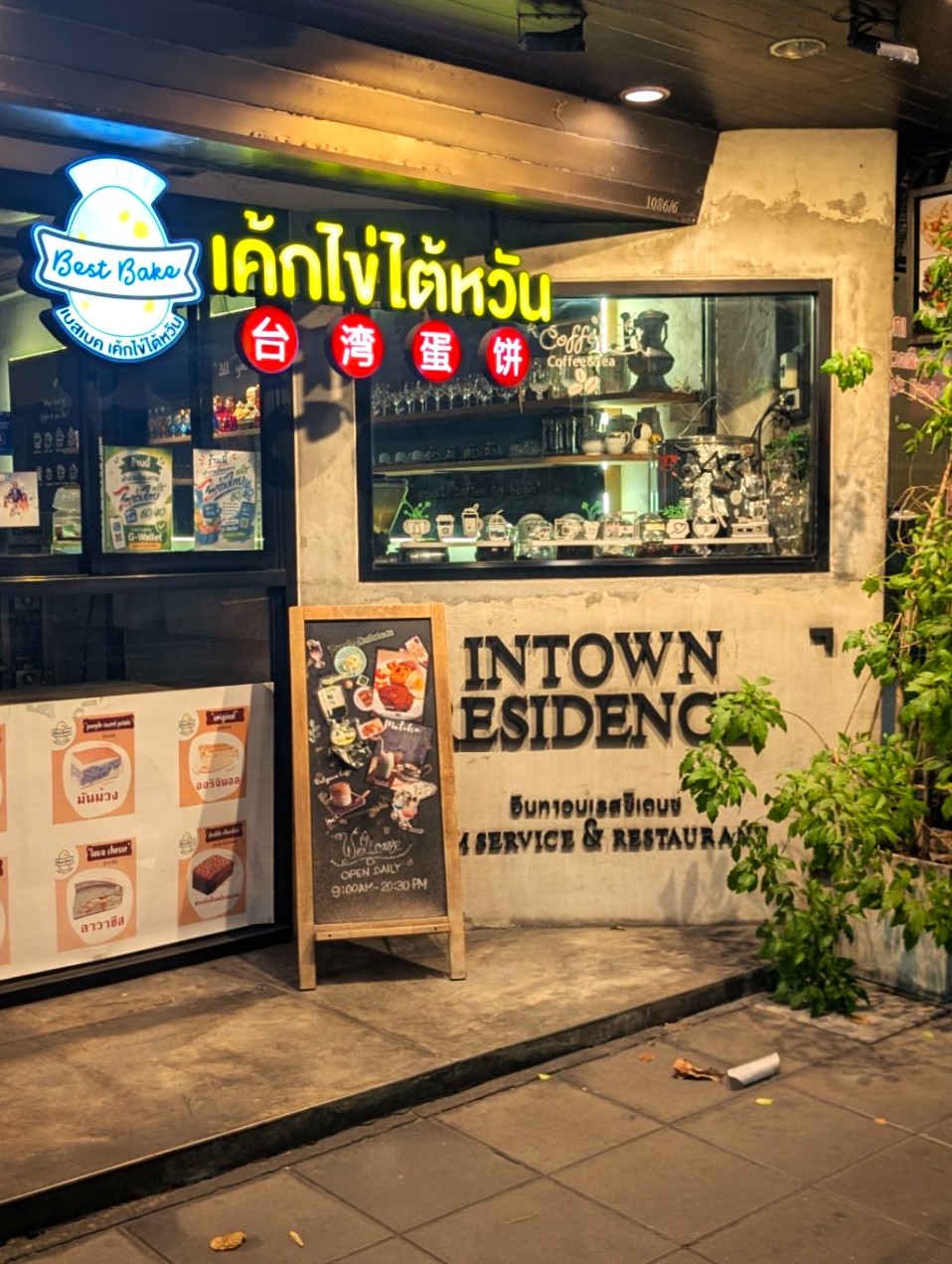
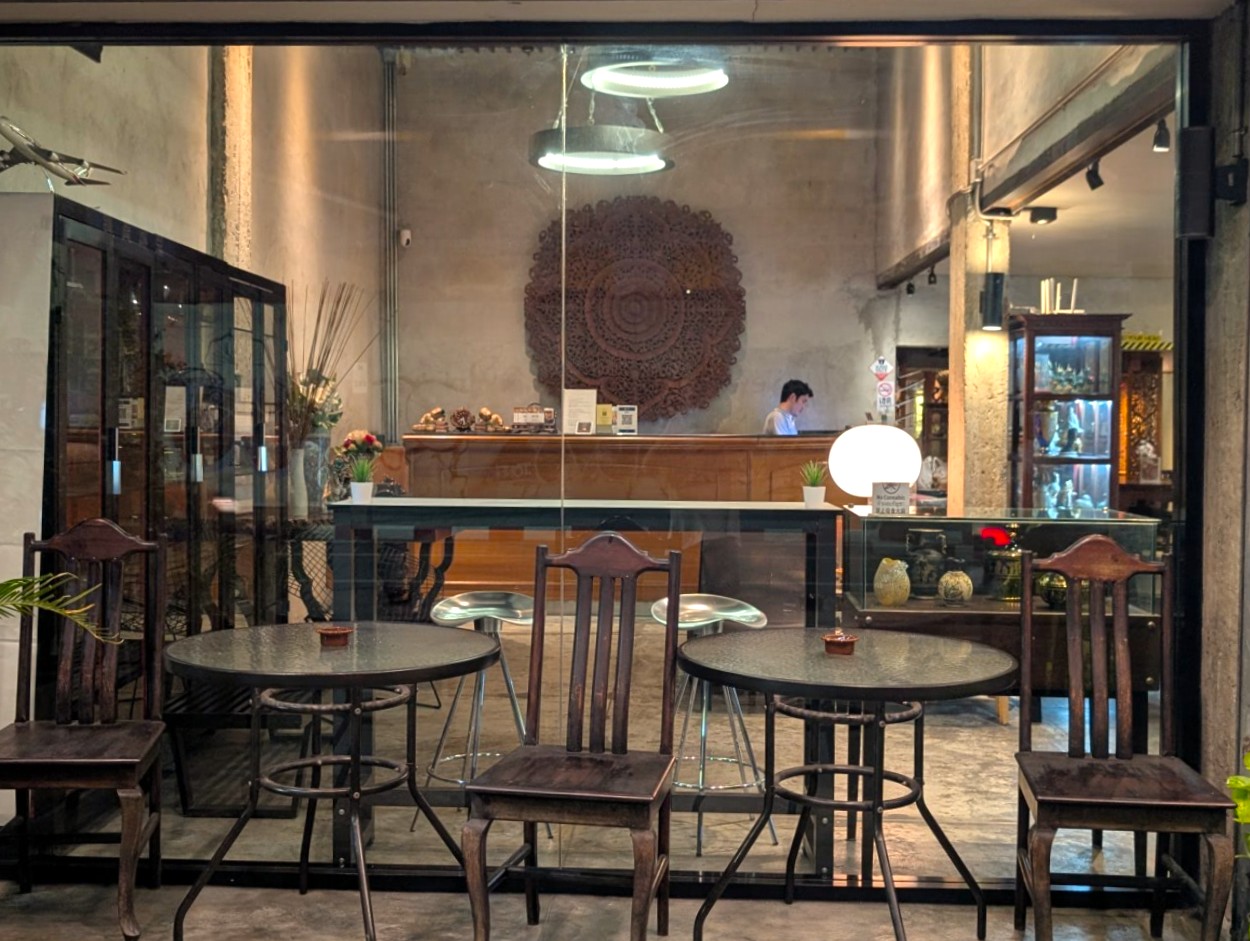
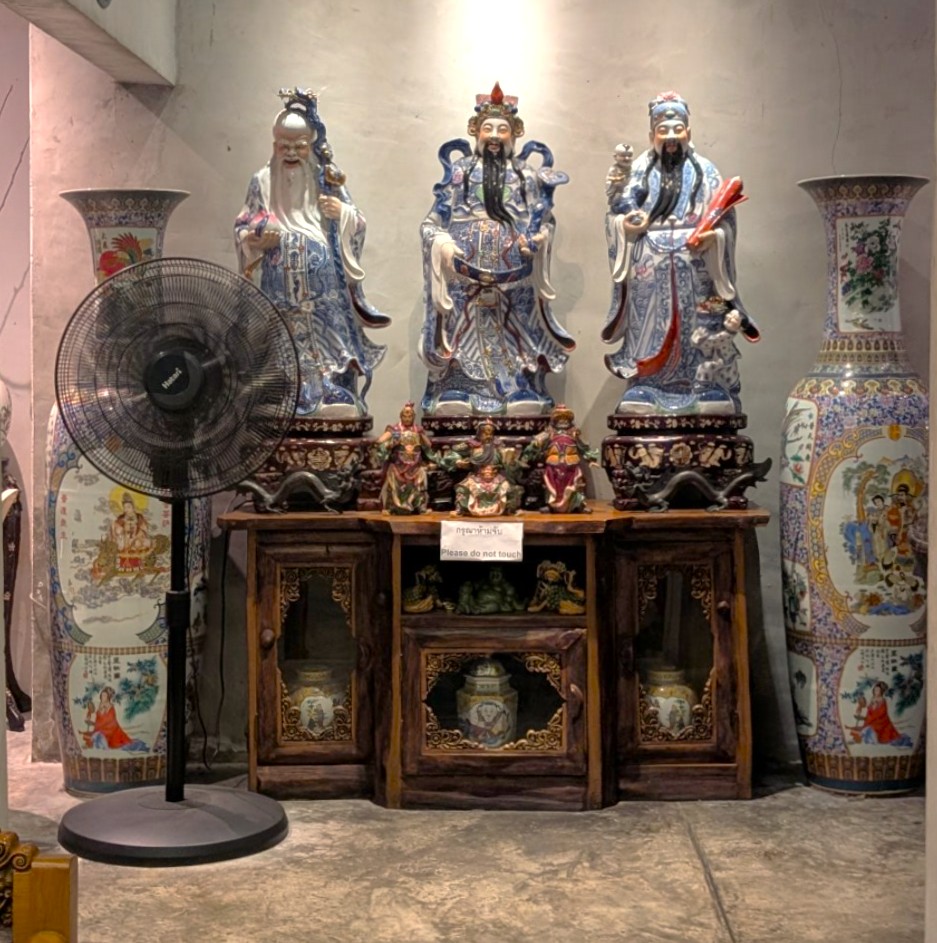
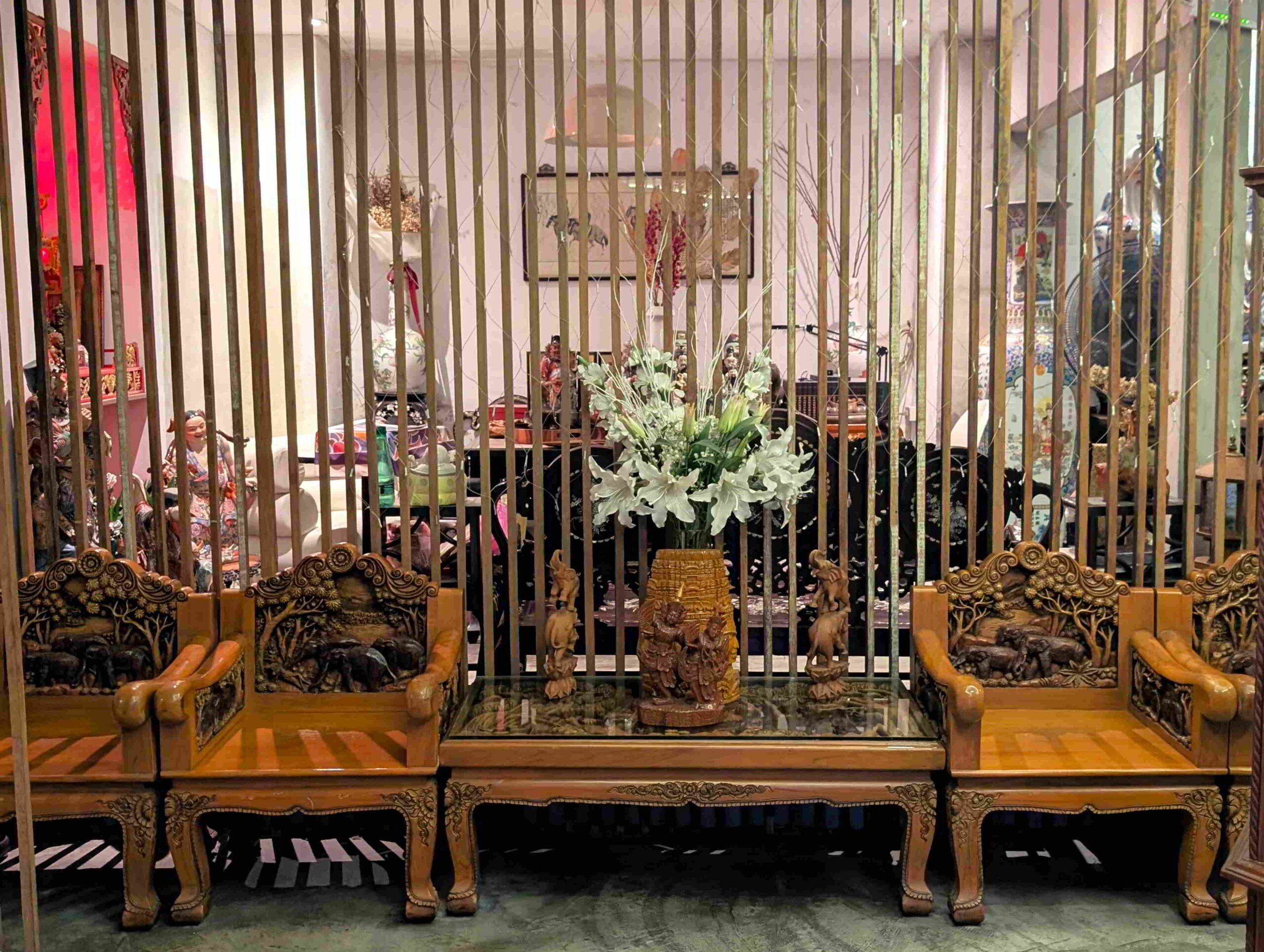
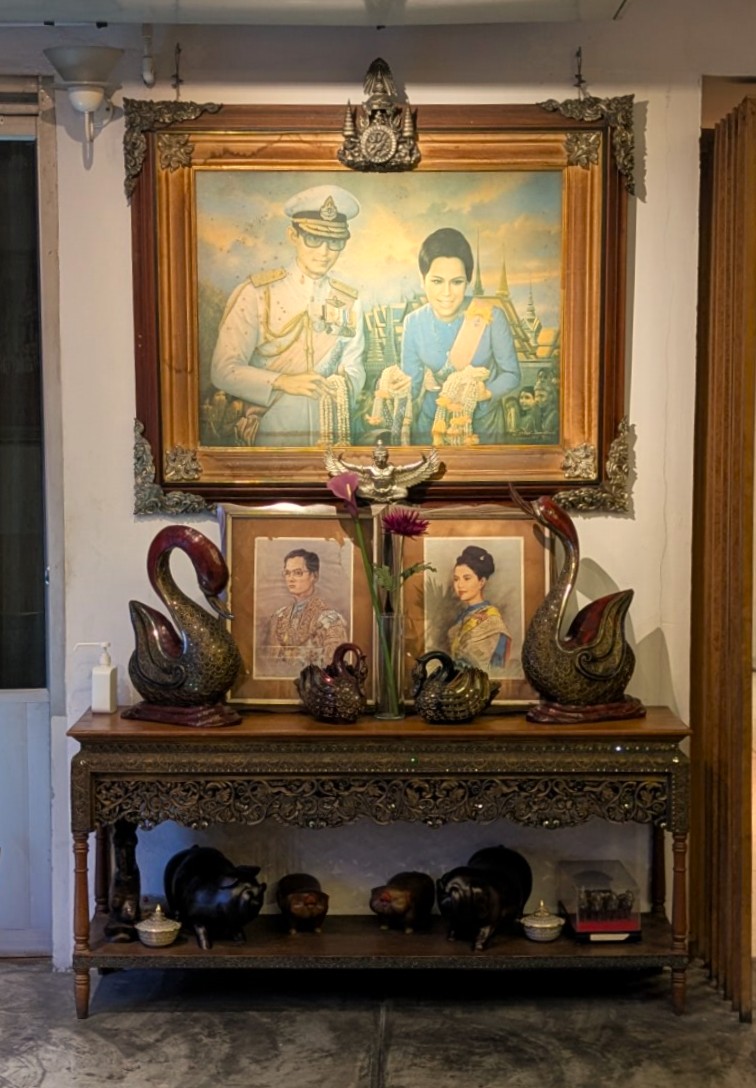
The street ahead of me is deserted but ahead I see a light, a guesthouse in a bleak location, but with a foyer that is remarkable, a throwback to a different era. The InTown Residence is replete with tasteful arrangements of Buddhist and Taoist wood carvings and ceramic figurines, displayed on countertops, in glass display cases, and composed in a manner that reflects an earlier century affluent Chinese townhouse . The opulent decor in the foyer certainly offers tremendous character to the guesthouse, even if the rooms seem to be drab. I could definitely stay here on a different occasion, although as I see further to the north of the road, there are similar colorful establishments as well. For now, one last dinner, a somewhat meager but altogether satisfying Penang curry.
Bangkok — Koh Rattanakosin — Charoen Krung — InTown Residence
Bangkok — Koh Rattanakosin — Charoen Krung — InTown Residence
The Grab bike ride back takes me through a whirlwind of nocturnal sights, exposing the reality that old Bangkok isn’t just beholden to a dense and nuanced web of attractions but that also differ in their appearance and experience during different times of day. As I repack my things in the hotel I reflect on how cathartic and instructive the day’s experiences have been; after so many visits to the city I have really taken in a much more nuanced exploration and appreciation of the outlying areas to the east of the old city center. My impressions of the city had been so tainted by the Siam, Sukhumvit, and Khaosan areas.
Bangkok — Koh Rattanakosin — Charoen Krung — InTown Residence
Bangkok — Koh Rattanakosin — Charoen Krung — InTown Residence
I can’t believe the onslaught of duty free shops at Suvarnabhumi Airport. If these shops actually sold goods at prices that reflect what they are marketed as, i.e. inexpensive as they are free of duty, but they are in fact inflated far beyond the norm. In the face of this sea of the products that inundates the shelves, does anyone actually think that they represent any kind of good deal? Why subject passengers to having to walk through miles of what is essentially a consumer garbage dump, the plague of every airport? Imagine an airport whose navigability and usability rocketed because the duty free shops were eliminated?
Bangkok — Koh Rattanakosin — Charoen Krung
Bangkok — Koh Rattanakosin — Charoen Krung
I trek to the gate, the distance thanks largely to the amount of retail spaces you have to walk past a far more time-consuming effort than should ever have been necessary. The imaginative tubular frame of the airport structure with its punctuated exoskeleton may be interesting to look at, but the arrangement of seating in the departure gate is far from ideal. Passengers are forced to sit on benches running along the edge of a platform suspended above the ground floor containing a much larger waiting lounge and bridge leading to the plane; the main floor waiting lounge isn’t used at all, rather, when the airline begins processing the passengers on the upper floor, they are led downstairs to a queue at the flight bridge, which seems ludicrous.
Bangkok — Koh Rattanakosin — Charoen Krung — Jack & Laura
Bangkok — Koh Rattanakosin — Charoen Krung — Jack & Laura
Bangkok — Koh Rattanakosin — Charoen Krung — Jack & Laura
My phone is being rapidly depleted, and so I want to charge it, but none of the power silos look like they have power plugs, only USB plugs — well, until the one next to the subsequent gate. I sit down, unpack my daypack, then realize that it doesn’t contain my Google phone. I review the belongings again — and it isn’t there. Another crisis I don’t need. I rush back to the gate I believe I cleared customs at, but the guard directs me back to an information counter in the direction I came from. I rush madly toward the counter, where the patient staff informs me after several calls that my phone is definitely not at the security gate. I could arrange for a staff of my airline to go themselves to the security gate and check, but there is now half an hour left prior to flight departure — and when I think about it, I am sure that I left the phone sitting next to me on the couch when I was repacking at the hotel in Bangkok.
Bangkok — Koh Rattanakosin — Charoen Krung
Bangkok — Koh Rattanakosin — Charoen Krung
Bangkok — Koh Rattanakosin — Charoen Krung
The loss of the phone may be shocking, but I am disconcerted by how wrong things have gone on a trip that should have been much easier. The phone is worth a lot, but the loss of even a days’ worth of photos is more of a blow. There is a powerful emotional connection with the photos and the experience of taking them special inasmuch it encapsulates the nuanced magic of the day, but in my mind I also know that they would quickly disappear into the morass of images I hold on to from years of travel that I have little distinct memories of.
Bangkok — Koh Rattanakosin — Charoen Krung — Kalawar church
Bangkok — Koh Rattanakosin — Charoen Krung — Kalawar church
Bangkok — Koh Rattanakosin — Charoen Krung — Kalawar church
Looking online for the kind of reviews Zipair gets, the airline I am returning to Vancouver with, an avalanche of scathing hatred emerges — the airline is incredibly unpopular for a lot of reasons, ostensibly cutting back on any type of nominal service just to deliver a basic flight service at a low price. The problem in my case is that I didn’t get the flight at a steep discount, as the bundled price sold by Kayak was not that low, although the bulk of the total price may have been allotted to Cathay Pacific that I flew on the outgoing segment — and it’s not as if I am that compelled by Cathay’s service either, despite their reputation and higher price.
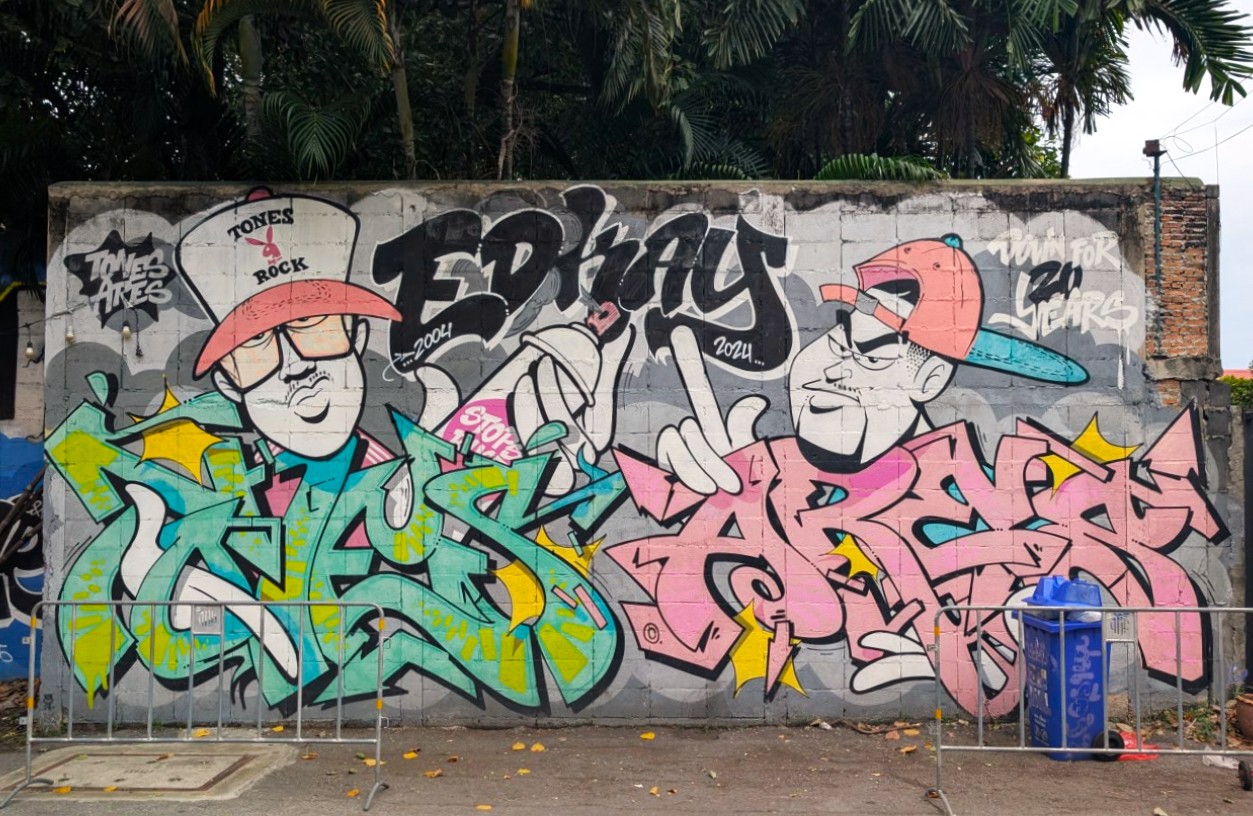
Bangkok — Koh Rattanakosin — Charoen Krung 32 Street Art
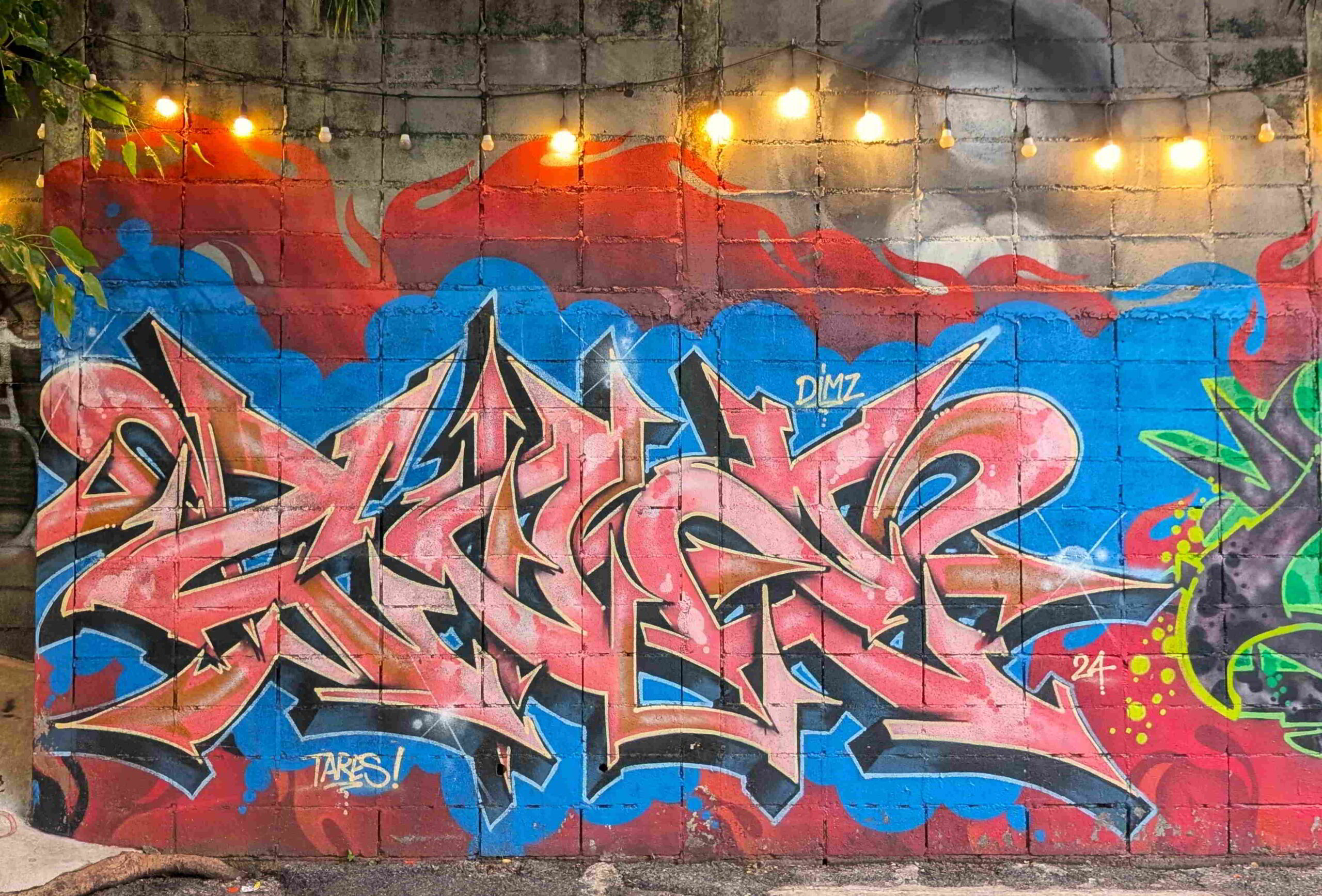
Bangkok — Koh Rattanakosin — Charoen Krung 32 Street Art
The flight to Tokyo is long enough, relatively free of turbulence, although it’s hard to get much rest when crammed into these tight seats. Disembarking in the early morning hours in Narita, the terminal has a quaint, restrained stylishness, with a combination of stolid utilitarian aesthetics with a sense of design that is utterly Japanese. The duty free shops abound but there is little in the way of eateries, although the familiar Dutour coffee outlet does beckon.
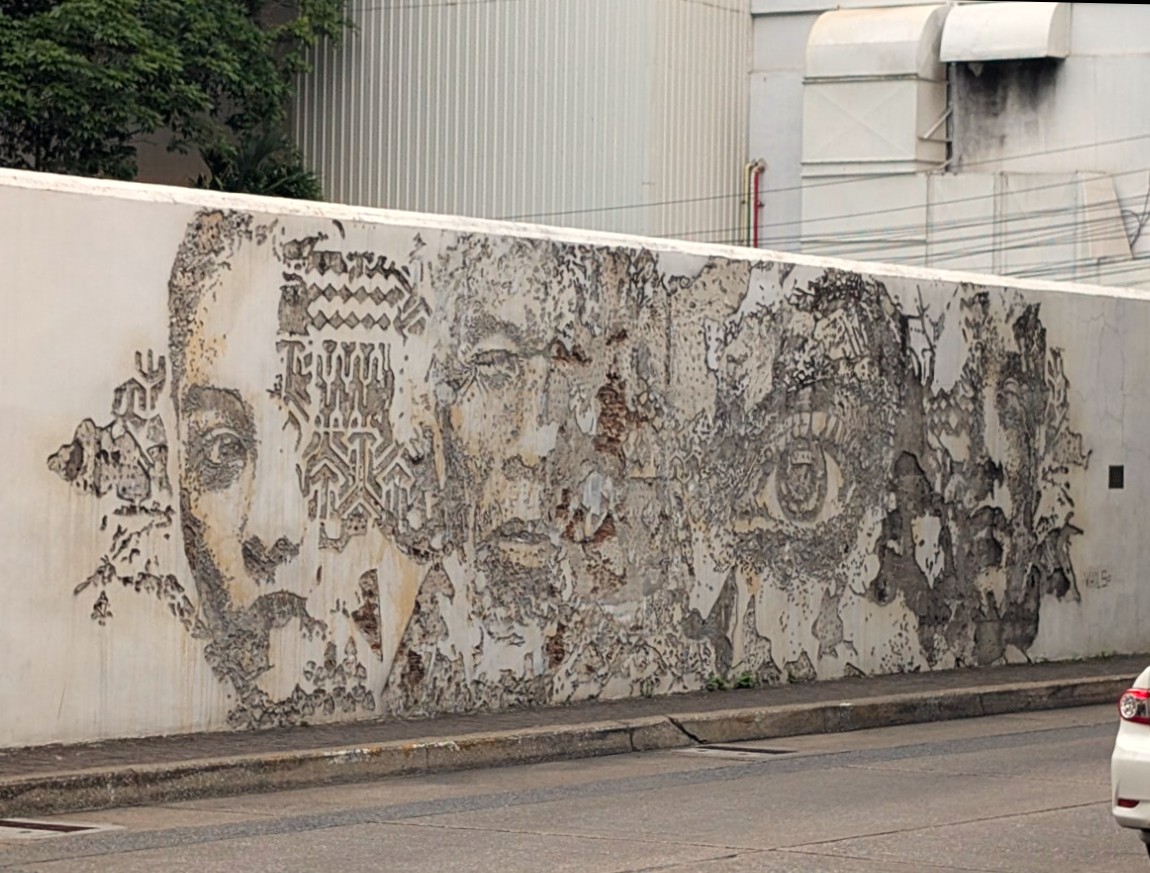
Bangkok — Koh Rattanakosin — Charoen Krung 32 Street Art
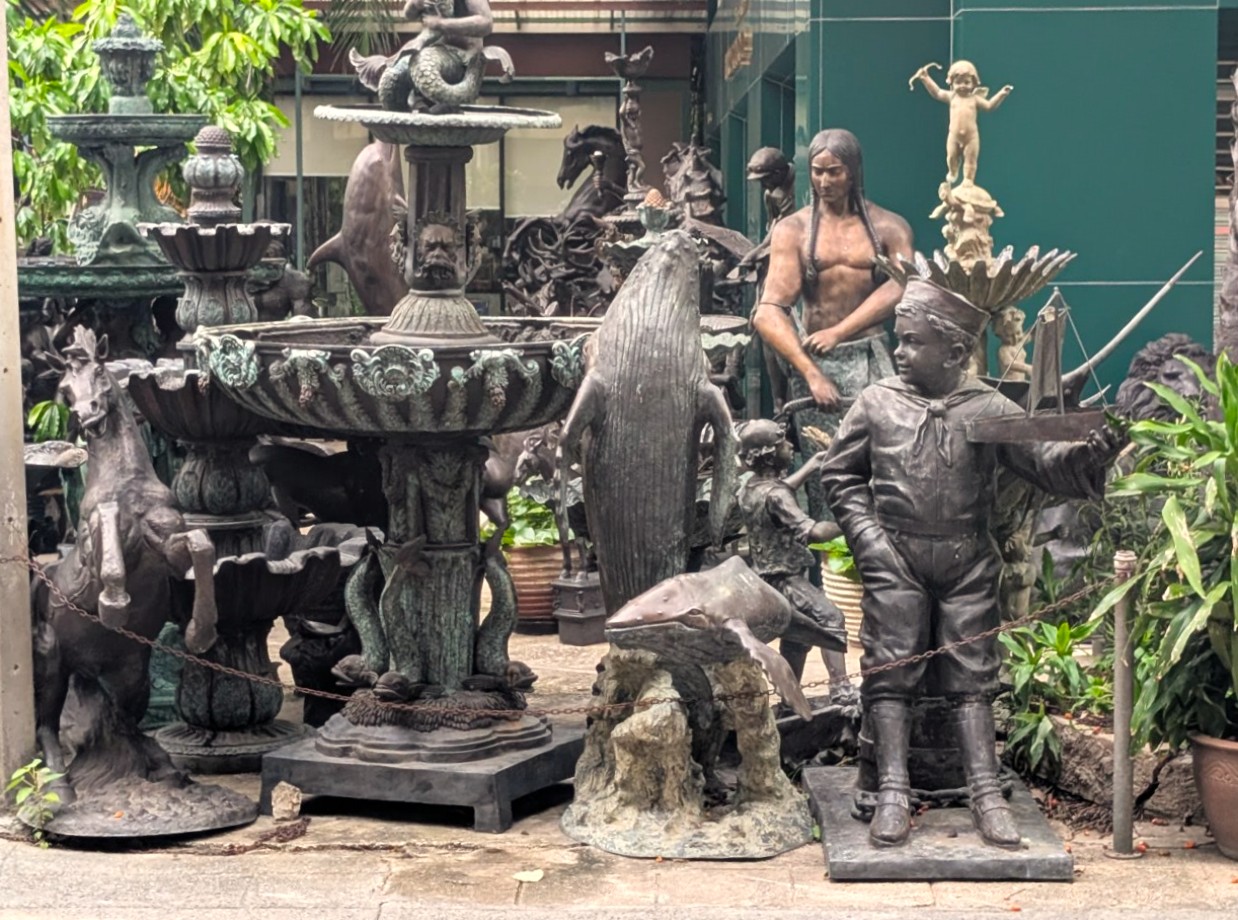
Bangkok — Koh Rattanakosin — Charoen Krung
Thankfully, I don’t have to walk that far from my arrival gate in Narita to my departure gate. The wing of the airport is quite modern, reflecting that unique Japanese aesthetic that is both utilitarian but also has a muted stylishness. Even here I have to wade through endless luxury goods shops that are apparently duty free, although it baffles the mind why anyone would waste their money on this dross, except perhaps because they are so utterly bored.
Bangkok — Koh Rattanakosin — Charoen Krung 32 Street Art
Bangkok — Koh Rattanakosin — Charoen Krung 32 Street Art
I happily find an expansive lounge with various types of seating near my assigned gate, some even quite comfortable, with banks of electric plugs on the walls, windows looking out over the tarmac, with few people present. Some groups of seats don’t have barriers, which means I can lie down in preparation with the next and longer segment of the flight, which is really great, except for the endless torrent of idiotic announcements that are broadcast into the deepest crevices of the airport.
Bangkok — Koh Rattanakosin — Charoen Krung — InTown Residence
For all the complaints about the Zipair airline, the staff is quite professional in a Japanese way. The airplanes on both flights are also brand new Boeing 787-8 jets. It is amusing to see the tiny Japanese flight attendants trying to reach inside the overhead compartments — so of course I have to spring into action and assist. It’s not really clear which passengers are Canadian on the flight to Vancouver although it may just be that everyone has a hyphenated identity, all after the cheap deal. Flying with the airline could make sense if you bring your own food and have no baggage …
Bangkok — Koh Rattanakosin — Charoen Krung — InTown Residence
I’m quite shocked as I’ve actually been sleeping through the flight — that’s a first! I’m also shocked that they offer free wifi and the food items for sale are not that expensive. There is limited proper food however. The Georgia black coffee bottle brings back memories of being on the hunt for coffee in Japan and settling on these affairs in the local train stations. I am also very grateful that my hernia isn’t acting up on these long flights; surprisingly, I have no upset stomach and digestion as is typical for my trips.
Bangkok — Koh Rattanakosin — Charoen Krung — InTown Residence